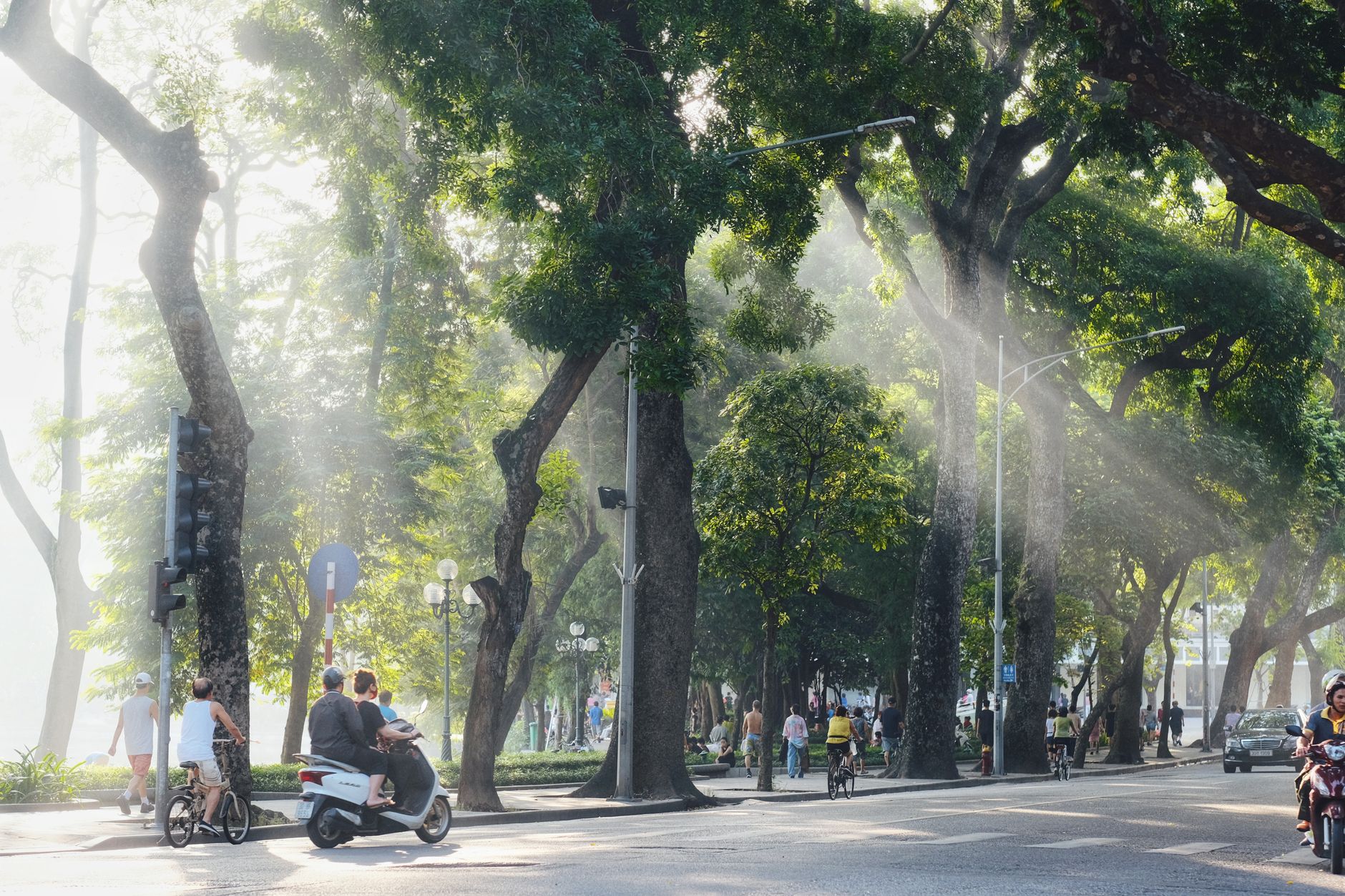
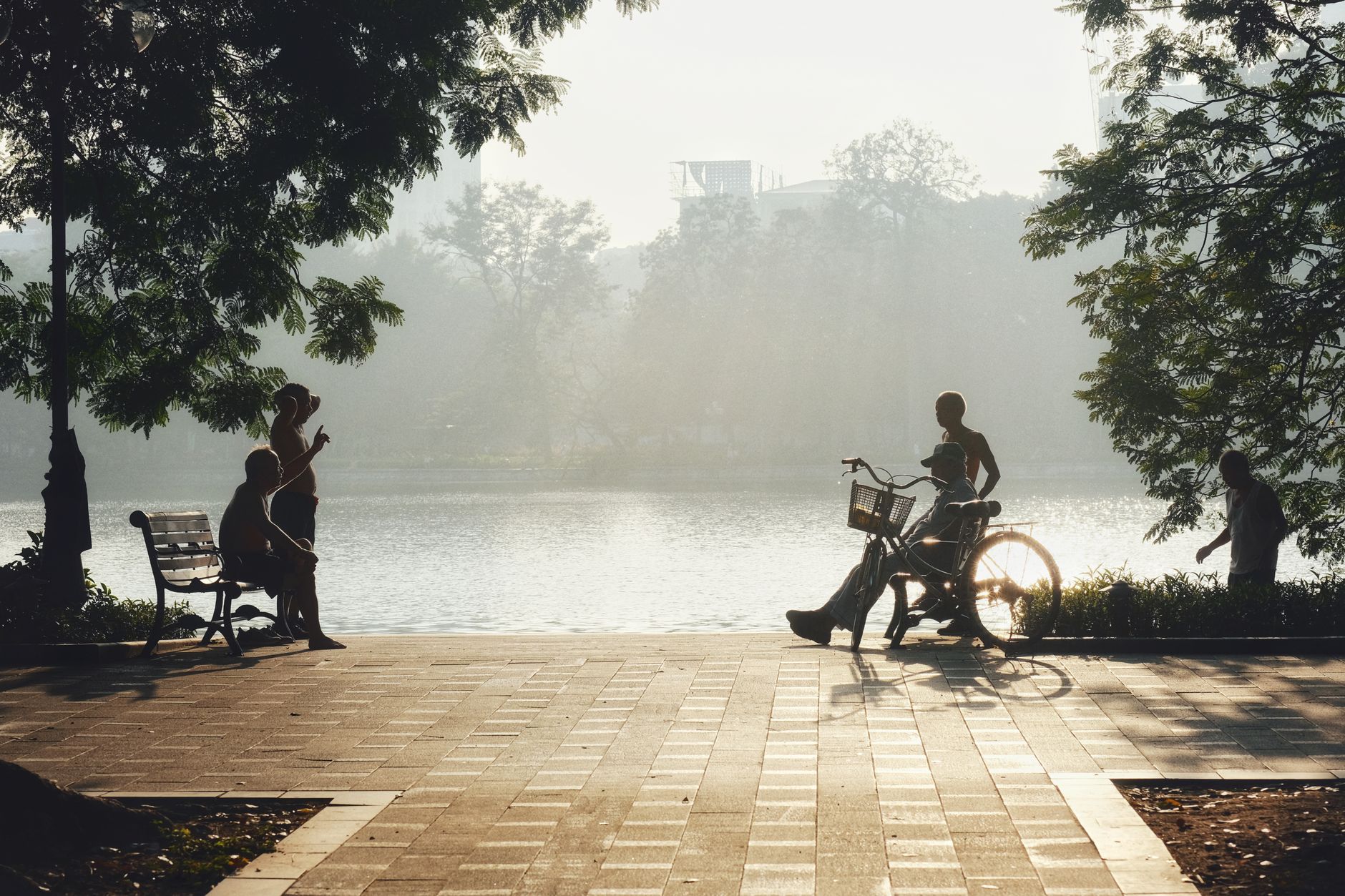
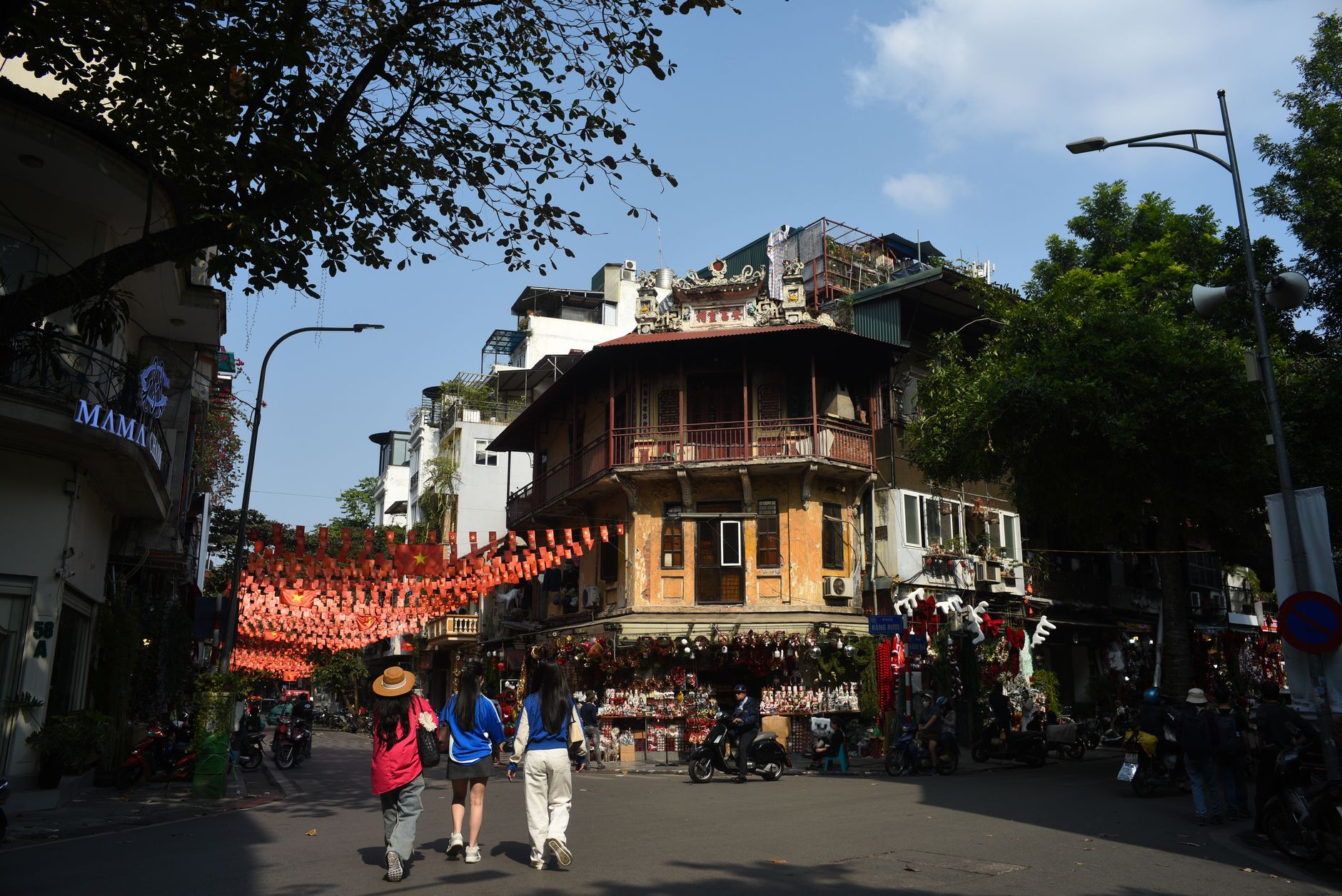
Hanoi's food scene isn't meant to be surveyed from a hotel restaurant. The real meal happens in alleys, over plastic stools, at dawn, and in homes that happen to sell breakfast. This three-day trail moves through Old Quarter staples, then hunts the specialists scattered across outer neighborhoods — the ones locals queue for.
Day 1 — Old Quarter: Dawn to Night
Start at 6 a.m. on Hang Hanh Street. The city is still soft-lit, motorbikes thin. Queue at one of the two or three "pho" stands — there's no sign, just a metal pot and a woman ladling broth that's been simmering since 3 a.m. Order a small bowl (around 30,000 VND). The beef is chewy, the broth is salt and marrow and time. Eat it standing, slurp it loud. This is how Hanoi wakes.
By 8 a.m., walk to Hang Thanh for "banh cuon". Banh cuon are rolled sheets of steamed rice flour, filled with ground pork and wood-ear mushroom, wrapped in a leaf. Eat four or five (about 2,000 VND each). Dip them in a sauce of fish sauce and vinegar that tastes like clarity. The vendor's been making them since dawn; you can feel it in the softness of the wrapper.
Walk the Old Quarter (Hoan Kiem district) mid-morning. These streets — Hang Hanh, Hang Gai, Cau Go — are narrow and loud and full of motorcycle exhaust. This is not scenic. It's a working neighborhood that happens to feed you extremely well. Browse Dong Xuan Market if you have time; it's chaos, but it's honest chaos.
For lunch, head to [Bun Cha](/posts/bun-cha-hanoi (하노이 / 河内 / ハノイ)-grilled-pork-noodles) Hang Manh (or any of the five identical stalls on that alley). "Bun cha" is grilled pork patty and belly, served over cold rice noodles with a dipping sauce of fish sauce, sugar, vinegar, and chili. It costs 50,000–60,000 VND. The charcoal scent sticks to your shirt. The pork is worth it.
Eat early (11:30 a.m.), because by noon the stools fill and vendors sell out by 1 p.m. Hanoi lunch is a 20-minute event.
Spend the afternoon wandering. Buy coffee at a street stand ("ca phe sua da" — iced coffee with condensed milk, 15,000 VND). Sit on a plastic stool. Do nothing for an hour.
At 5 p.m., make your way to Cha Ca Street (yes, that's the actual name). There are about six restaurants, all serving the same dish: "cha ca". It's chunks of fish and turmeric, cooked in a personal clay pot over a burner at your table, served with rice noodles, fresh herbs, peanuts, and fish sauce. You assemble each bite yourself. It's meditative and strange and costs 80,000–100,000 VND. Go to Cha Ca Thang Long (the oldest, since 1958). Arrive before 6 p.m. or you'll stand.
End the evening on Ta Hien Street. It's where backpackers drink cheap "bia hoi" (fresh beer on tap, about 10,000 VND for a glass). Sit at a plastic table spilling onto the alley. Watch motorbikes thread through. Eat grilled squid skewers from a vendor (20,000 VND). This is Hanoi's most obvious tourist moment, but it's also genuinely alive — locals and travelers mixed, no pretense, just cold beer and salt.
Day 2 — The Specialists
Day two is a hunt. These dishes exist in one or two places, made by families who've done only this for decades. You'll cross the city.
Start with "bun thang" — a thin noodle soup with shrimp, pork, and crab, finished with an egg custard that's barely set. Go to one of the handful of bun thang vendors near Hoan Kiem Lake (try the one near the Lycee Francais, or ask a local). It's 45,000 VND and tastes like autumn leaves and minerals. Eat it for breakfast (8–9 a.m.).
By mid-morning, find "banh duc" in the neighborhoods south of the Old Quarter — small stalls selling pandan-flavored custard cake, soft and almost liquid, served with a coconut sauce. It's disappearing; fewer people know how to make it. When you find it, buy two servings (25,000 VND). The texture is what matters — the way it falls apart on your tongue.
For lunch, hunt "banh tom" — a fried shrimp paste ball, usually sold from a corner stall in District 3. It's crispy, salty, slightly sweet. 30,000 VND for three or four. Eat them while they're still warm, with paper towels nearby.
Afternoon: "egg coffee" at a specialist cafe. The drink — invented in Hanoi in the 1940s — is strong espresso topped with a foam of whipped egg yolk and condensed milk. It tastes like a sweet custard cloud. Try Giang Cafe (the original, on Hang Manh Street, since 1947) or Cafe Pho Co (Old Quarter, good backup). 40,000–50,000 VND. Sit for 20 minutes and feel the tremor of the city soften.
Then, a second coffee: "ca phe trung" at a different spot. Yes, another egg coffee (에그커피 / 蛋咖啡 / エッグコーヒー). This time pay attention to how this vendor makes the foam — some use a copper bowl, some a blender, some their bare hands. The variation is minute and total.
Evening: light dinner of pate or nem chua (Vietnamese cured pork rolls) at a casual spot, or skip dinner and eat street snacks — grilled corn, custard apple, sticky rice. You'll be full from coffee and eggs.

Image by Cheong. Original uploader was Cheong Kok Chun at en.wikipedi via Wikimedia Commons (CC BY-SA)
Day 3 — Outer Districts and Closure
Day three pulls outward, then resets your expectations.
Morning: Take a taxi or Grab to Phu Cuong neighborhood (western Hanoi, about 7 km from Old Quarter, 30–40 minutes). Find the "bun dau mam tom" vendors. Bun dau is white noodles with fried tofu, served with a sauce of shrimp paste (mam tom) that smells like low tide and tastes like the sea and funk married into something profound. It's 40,000–50,000 VND. This is breakfast for locals, lunch for travelers. Eat it with conviction.
Spend mid-day in Tay Ho district, the old French colonial quarter west of Hoan Kiem Lake. Walk Hang Dau Street and the neighborhoods around it — Tran Hung Dao, Phan Dinh Phung. Eat at a local pho joint. Buy coffee at a cafe facing the lake. This area isn't a food destination, but it's where Hanoi breathes when the tourists aren't looking.
Final evening: dinner at a fine-dining restaurant to reset your palate and your sense of what Vietnamese food can be. Try Sericin (modern Vietnamese, French influence, in Old Quarter — mains 200,000–300,000 VND) or Nha Hang Sao Tom (traditional, Hoan Kiem area, mains 150,000–200,000 VND). This isn't a contradiction. Street food teaches you taste; fine dining teaches you technique. Both matter.
End with a drink at a rooftop bar overlooking the Old Quarter — SkyView or Chill Sky Lounge (both around 80,000 VND for a cocktail). You'll see where you ate, three days packed into a single panorama.

Image by CEphoto, Uwe Aranas via Wikimedia Commons (CC BY-SA)
Frequently Asked Questions
How much does a typical street breakfast cost in Hanoi's Old Quarter?
Street breakfast in Hanoi's Old Quarter is inexpensive. A small bowl of pho on Hang Hanh Street costs around 30,000 VND, while banh cuon (steamed rice rolls filled with pork and wood-ear mushroom) on Hang Thanh runs about 2,000 VND each — four or five pieces makes a full meal. Both are eaten early, between 6 and 9 a.m., at stalls that have been operating since before dawn.
What dish is cha ca and where should a first-time visitor eat it?
Cha ca is chunks of fish seasoned with turmeric, cooked tableside in a clay pot over a small burner, then assembled by the diner with rice noodles, fresh herbs, peanuts, and fish sauce. It costs 80,000–100,000 VND. Cha Ca Thang Long on Cha Ca Street is the oldest restaurant serving it, open since 1958. Arrive before 6 p.m. to avoid waiting for a seat.
When should you arrive at Hanoi street stalls to avoid selling out?
Most Hanoi street vendors operate on compressed schedules. Bun cha stalls on Hang Manh alley open around 11:30 a.m. but sell out by 1 p.m., making lunch a roughly 20-minute window. Pho vendors on Hang Hanh Street start at 6 a.m. with broth simmered since 3 a.m. Arriving early is not optional — it is how the system works.
Practical notes
Bring cash (many vendors don't take cards). Wear comfortable walking shoes; you'll cover 8–10 km daily on foot, often on uneven pavement. Eat when vendors are cooking, not when you're hungry — most Hanoi breakfast and lunch spots close by 1–2 p.m. Drink plenty of water. Ask locals for directions to specialty spots; addresses are imprecise, but "the bun thang place near Lycee Francais" will get you there.
Last updated · May 26, 2026 · independently researched, never sponsored.