
"Thang co" is not a dish that tries to impress you. It is a dark, funky, slow-cooked stew of horse meat and offal, simmered for hours with galangal, lemongrass, and a fistful of dried mountain spices, ladled into a bowl and eaten with a chunk of corn bread. It has been part of H'mong market culture for generations, most authentically at Bac Ha and Can Cau markets to the east of Sapa. The Sapa town versions are more accessible but vary widely in quality. This is where the locals eat, and what is actually worth your time.
What Makes a Good Bowl
The hallmarks of a proper thang co are a broth that is almost black with rendered fat and spice, tender chunks of horse meat (not dried out), and a sourness from the fermentation of the meat during prep. The dish traditionally uses every part of the horse — lung, intestine, liver — alongside the flesh. If a bowl looks pale and the broth is thin, someone took a shortcut. The corn bread, "men men", should be dense and slightly gritty, not the fluffy steamed stuff passed off at tourist-facing stalls.
Where to Eat Thang Co in and Around Sapa
Quan Ba Lieu — Sapa Town
This is the most consistent bowl in Sapa (사파 / 沙坝 / サパ) town itself, and the one most recommended by guesthouse owners who are not trying to upsell you. Ba Lieu runs a small open-fronted shop on Muong Hoa Street, about 300 meters south of the central market. The pot goes on at around 7am and is usually sold out by 11:30am. A bowl of thang co runs 45,000–55,000 VND depending on whether you add extra offal. The broth here is properly dark and earthy, the meat well-sourced from farms in the valley below Ta Van. No English menu — point at the pot.
Hours: 7am–noon (daily, but closed some Mondays) Address: Muong Hoa Street, Sapa town, roughly opposite the old post office building
Cho Sapa (Sapa Market) — Ground Floor Stalls
The covered market at the center of Sapa town has three or four thang co vendors on the ground floor, clustered near the wet-market section at the back. Quality varies stall to stall. The vendor second from the left as you enter from the Ham Rong Street side (no sign, blue plastic stools) tends to use better cuts and keeps her broth going with a proper bone base rather than stock powder. Prices are 40,000–50,000 VND. Go before 10am — by midday the remaining broth gets overseasoned as water is added to stretch it.
Hours: 6:30am–12:30pm
Bac Ha Sunday Market — The Original Setting
If you are serious about thang co, make the trip to Bac Ha, about 65 km northeast of Sapa by road. The Sunday market at Bac Ha is where this dish belongs. A dozen or more H'mong vendors set up cauldrons from around 6am, and the atmosphere — H'mong families in full dress, horses tethered outside, corn wine in ceramic cups — is the context the dish was made for. Prices at Bac Ha run 35,000–45,000 VND a bowl, and the quality is uniformly higher because the competition is stiff and the clientele local. Pair it with a small cup of "ruou ngo", the local corn spirit, the way everyone else does.
Hours: Sundays only, roughly 6am–1pm Getting there: Hire a motorbike or join a shared minivan from Sapa's bus station on Ngu Chi Son Street — around 150,000–180,000 VND per person return
Quan Nuong A Chu — Ta Van Village
Down in Ta Van, about 8 km from Sapa center along the Muong Hoa Valley road, A Chu's place is more of a lunch stop than a market stall. He runs a small terrace restaurant that does thang co as a weekend special (Saturday and Sunday), alongside grilled pork and "banh cuon" Sapa-style. The thang co here is lighter than the Bac Ha versions — he adjusts for the mix of trekkers and locals who pass through — but the meat quality is good and he will tell you exactly where the horse came from if you ask. Bowl is 60,000 VND, larger portion than town.
Hours: Weekends, 10am–3pm Address: Main road through Ta Van, look for the hand-painted sign after the first rice terrace viewpoint
Skip This: Most Restaurants on Cau May Street
The restaurants along Cau May Street in central Sapa that advertise thang co on laminated picture menus are almost universally serving a pale, mild version that has been softened for tourist palates — less offal, lighter spice, longer-cooked to remove the funk. It is not bad food, but it is not thang co in any meaningful sense. Save those restaurants for their hotpot and grilled meats, which they do well. Do not go there for this dish.
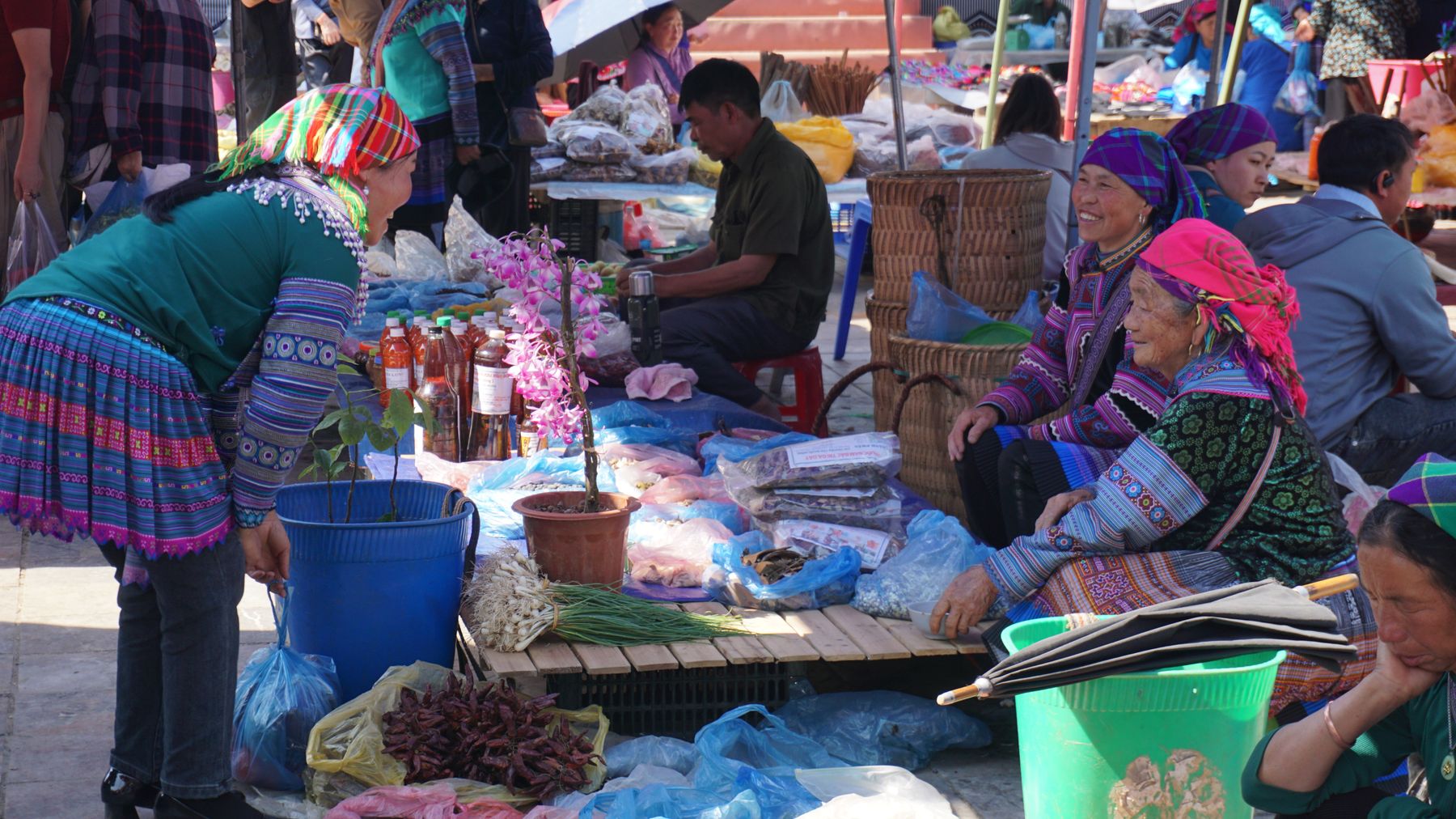
Photo by Duong Nguyen on Pexels
A Few Practical Notes on Eating It
Thang co is a morning and midday dish — you will rarely find it served at dinner anywhere. The offal content means it is not for everyone, and that is fine; nobody will pressure you. If you are in Sapa on a Saturday, it is genuinely worth rearranging your Sunday morning to make the Bac Ha run. The market, the dish, and the setting together are one of the more grounding food experiences in northern Vietnam (베트남 / 越南 / ベトナム) — the kind that Sapa's cable cars and silver jewelry shops cannot replicate.

Photo by Toàn Đỗ Công on Pexels
Practical Notes
Bowls range from 35,000 to 60,000 VND depending on location and portion. Bring cash — no vendors here take cards. If you are combining this with a Ha Giang loop or a Sapa trekking itinerary, building in a Bac Ha Sunday is easy from either direction.
Last updated · Jul 11, 2026 · independently researched, never sponsored.



