Hoi An Central Market sits on Tran Phu Street, a five-minute walk from the old town's lantern-lit core, and most visitors walk past it on the way to somewhere else. That's a mistake. The market runs from around 6am to early afternoon and packs more genuine eating into one block than most dedicated food streets in the city.
The Covered Food Court: Go Before 9am
The north end of the market, closer to the river on Bach Dang Street, holds a two-story food court that gets busy fast. Show up after 9am and half the stalls are already winding down; show up at 7am and you'll be eating alongside market vendors and delivery motorbike drivers.
"Cao lau" is the dish to start with here. It's specific to Hoi An (호이안 / 会安 / ホイアン) — flat, slightly chewy noodles with slices of char-edged pork, croutons fried in pork fat, bean sprouts, and fresh herbs. A bowl runs 35,000–45,000 VND depending on which stall you choose. The noodles are made with water allegedly drawn from a single well in the old town, though whether any given stall actually uses that water is another matter. It tastes good regardless.
If you want something lighter, a few stalls in the same section serve "banh cuon" — thin steamed rice rolls filled with minced pork and wood-ear mushroom, dressed with a diluted fish sauce dipping liquid and crispy shallots. Around 25,000–30,000 VND a plate.
"Mi quang" also shows up here. Unlike the turmeric-heavy versions you'll find in Da Nang, Hoi An's take tends to be a touch milder, though still served in that signature shallow bowl with just enough broth to coat the wide rice noodles. Expect shrimp, pork, and a pile of fresh herbs and rice crackers on the side.
What to Drink
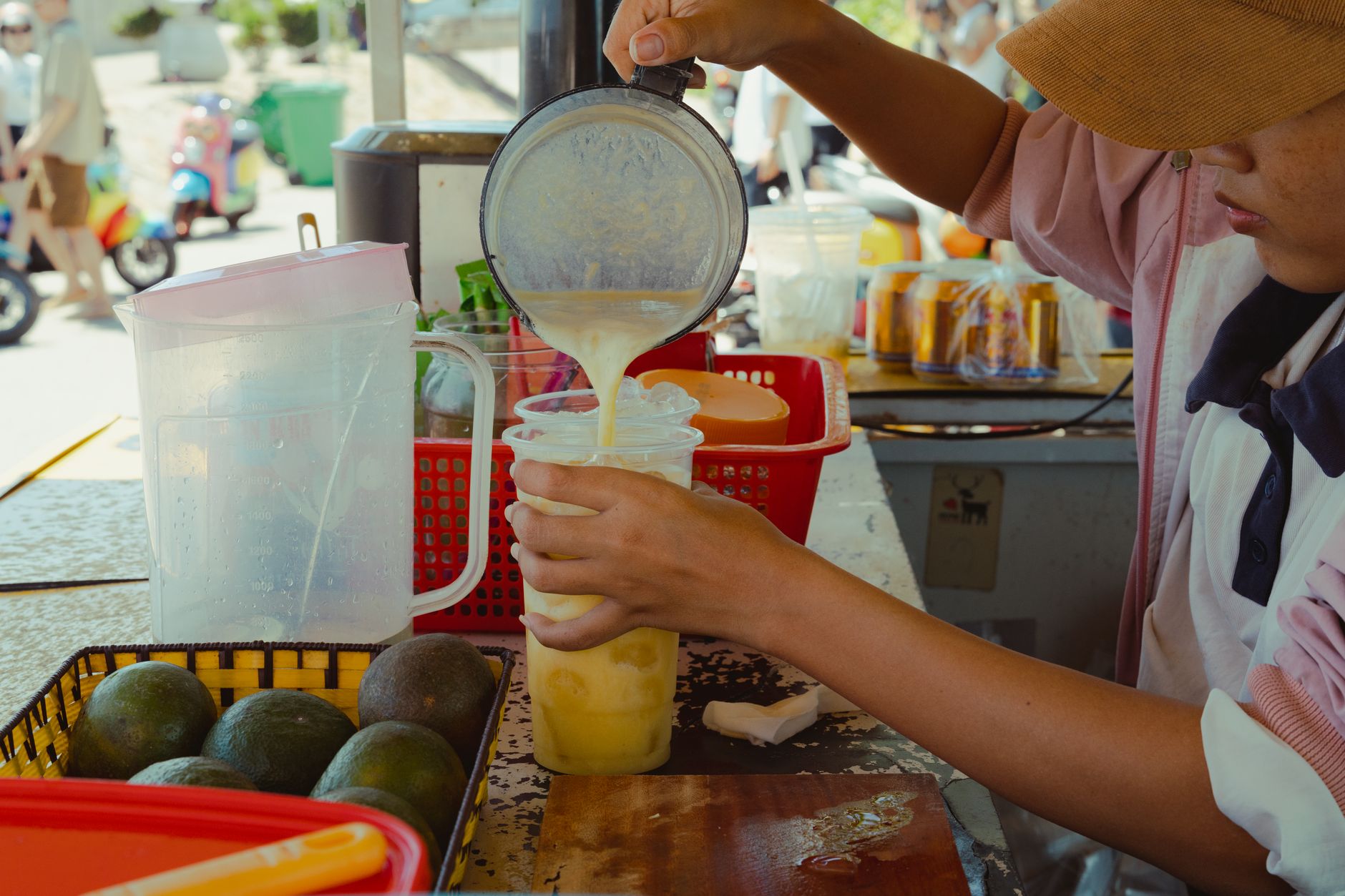
Vendors on the ground floor sell fresh-pressed sugarcane juice (nuoc mia) for 15,000 VND a glass, run through a hand-cranked press with a wedge of kumquat. There's also Vietnamese coffee available from a cart near the market entrance — strong iced drip over sweetened condensed milk, the kind of thing you need before navigating a market.
Banh Mi Phuong: Worth the Detour
It's technically not inside the market, but Banh Mi (반미 / 越式法包 / バインミー) Phuong on Phan Chau Trinh Street — about a 400-meter walk from the market's south entrance — is close enough to include in the same morning loop. "Banh mi" here has been famous since before the Anthony Bourdain visit in 2009 put it on international radar, and the queue at peak hours reflects that. A fully loaded banh mi with pate, char siu pork, pickled daikon and carrot, cucumber, cilantro, and chili runs 35,000–45,000 VND. Eat it standing on the street rather than carrying it — the bread softens fast in Hoi An's humidity.
If the line at Phuong is long, Banh Mi Phuong has a second branch nearby, or you can try Banh Mi Thu on Le Loi Street, which is less famous and equally good.
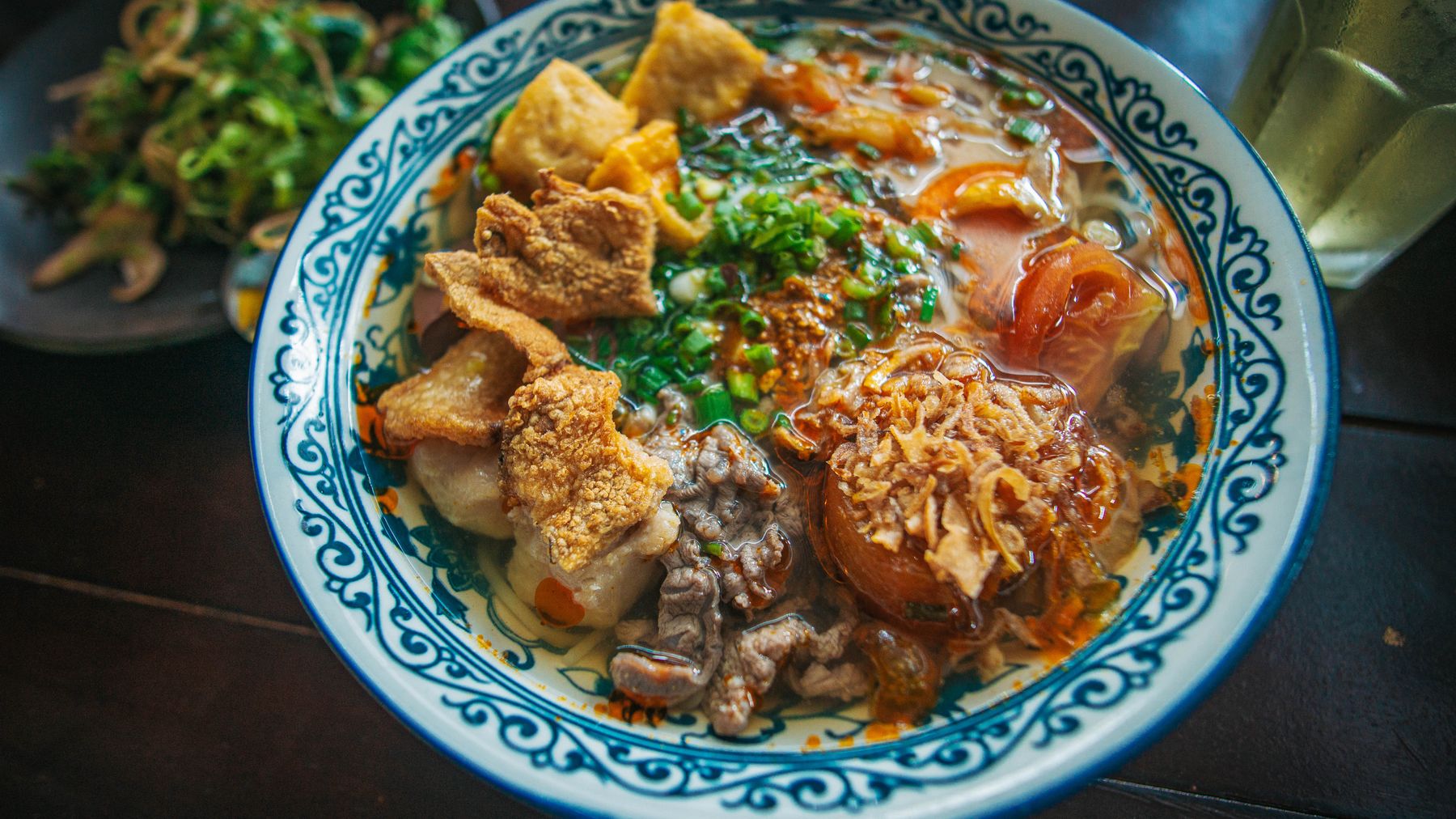
Photo by FOX ^.ᆽ.^= ∫ on Pexels
The Wet Market: What Locals Are Actually Buying
The interior of the market — the wet section — is where produce, meat, and dried goods are sold to restaurants and households. It smells like any working Southeast Asian market should: fish sauce, raw protein, bruised herbs, and cigarette smoke drifting in from the alley. Walk through it even if you're not buying. You'll see the dried shrimp, the fermented shrimp paste (mam tom), and the piles of fresh morning glory and water spinach that end up in the dishes you're eating around town.
Spice sellers near the market's southern section sell pre-mixed packets of "mi quang" seasoning and "cao lau" noodle kits aimed at tourists. Skip these. The texture of cao lau noodles doesn't survive export well, and the seasoning packets are oversimplified.
What to Actually Take Home
For edible souvenirs worth buying, focus on:
- Dried shrimp and squid: good quality, vacuum-packed versions available for 80,000–150,000 VND for 100g. Better than airport versions.
- "Cao lau" noodles, fresh: if you're staying in Vietnam for several more days and have a kitchen, buy them fresh. They won't travel internationally.
- Hoi An white rose (banh vac) dough: not available dry, but eating the dish fresh at the market or nearby is worth doing — rice dumplings shaped into open blossoms, steamed and topped with crispy shallots.
- Pepper from Phu Quoc: often sold here by spice vendors; better prices than airport shops.
- Handmade rice crackers (banh trang): sold in flat rounds, great with soups or eaten plain. Light, easy to pack, and around 30,000–50,000 VND a bag.

Photo by Quang Nguyen Vinh on Pexels
When to Go and What to Avoid
The market is most alive between 6 and 10am. By noon, the food court is mostly closed and the produce section is picked over. Afternoons are quiet and not worth a visit unless you need specific dry goods.
Avoid the tourist-facing stalls near the river entrance that sell packaged "specialty foods" at airport prices — lantern keychains, pre-ground coffee in decorative tins, and the like. The actual market is ten meters deeper inside.
Bring small bills. Most vendors don't carry change for 500,000 VND notes, and you won't need to spend more than 150,000–200,000 VND for a full breakfast with coffee.
Practical Notes
Hoi An Central Market is at the corner of Tran Phu and Nguyen Hue streets, walkable from anywhere in the old town. Go early, eat cao lau first, then loop to Banh Mi Phuong before the heat and the crowds settle in. Most food stalls are cash only.
Last updated · May 29, 2026 · independently researched, never sponsored.