Nha Trang (냐짱 / 芽庄 / ニャチャン) has a beach reputation, but its real morning ritual happens in plastic-chair shops a few blocks from the seafront. "Bun ca" — rice vermicelli soup built on a broth of simmered fish bones, topped with sliced fish cake, fresh herbs, and sometimes jellyfish — is what locals eat before tourists wake up. It's mild enough for kids, cheap enough for daily eating, and specific enough to Nha Trang that you won't find quite the same bowl anywhere else.
What's in the Bowl
The broth is the thing. Unlike the heavy, spice-forward soups of Hue or Saigon, bun ca Nha Trang runs clear and slightly sweet, cooked from white fish bones — usually snapper or mackerel — with lemongrass and a little salt. Into that goes a tangle of thin rice vermicelli, slices of cha ca (fish cake, sometimes pan-fried golden on one side), and a handful of fresh herbs: Vietnamese basil, bean sprouts, and shredded banana blossom. Jellyfish is optional but common — crunchy, mild, and a good texture contrast for kids who are willing to be adventurous. A squeeze of lime and a spoonful of shrimp paste on the side let adults dial up the intensity.
A standard bowl runs 35,000–50,000 VND. You're unlikely to pay more than 60,000 VND anywhere locals actually eat.
Quan Bun Ca Ba Lua
This is the shop that comes up first when you ask a Nha Trang native where they grew up eating bun ca. It's on Nguyen Thi Minh Khai street, close to the Dam Market end, operating roughly 6:00–11:00 a.m. The shop is multigenerational — the woman running the pot now is the daughter of the founder — and the broth reflects that: consistent, quiet, and not trying to impress anyone.
The fish cake here is thick-cut and slightly springy, pan-fried before it goes in the bowl so it holds a light crust. Kids who are skeptical of soup usually eat it without complaint. Seating is communal low tables; the shop fills fast between 7:00 and 8:30, so arriving at 6:30 means a calmer meal. Price: 40,000 VND a bowl.
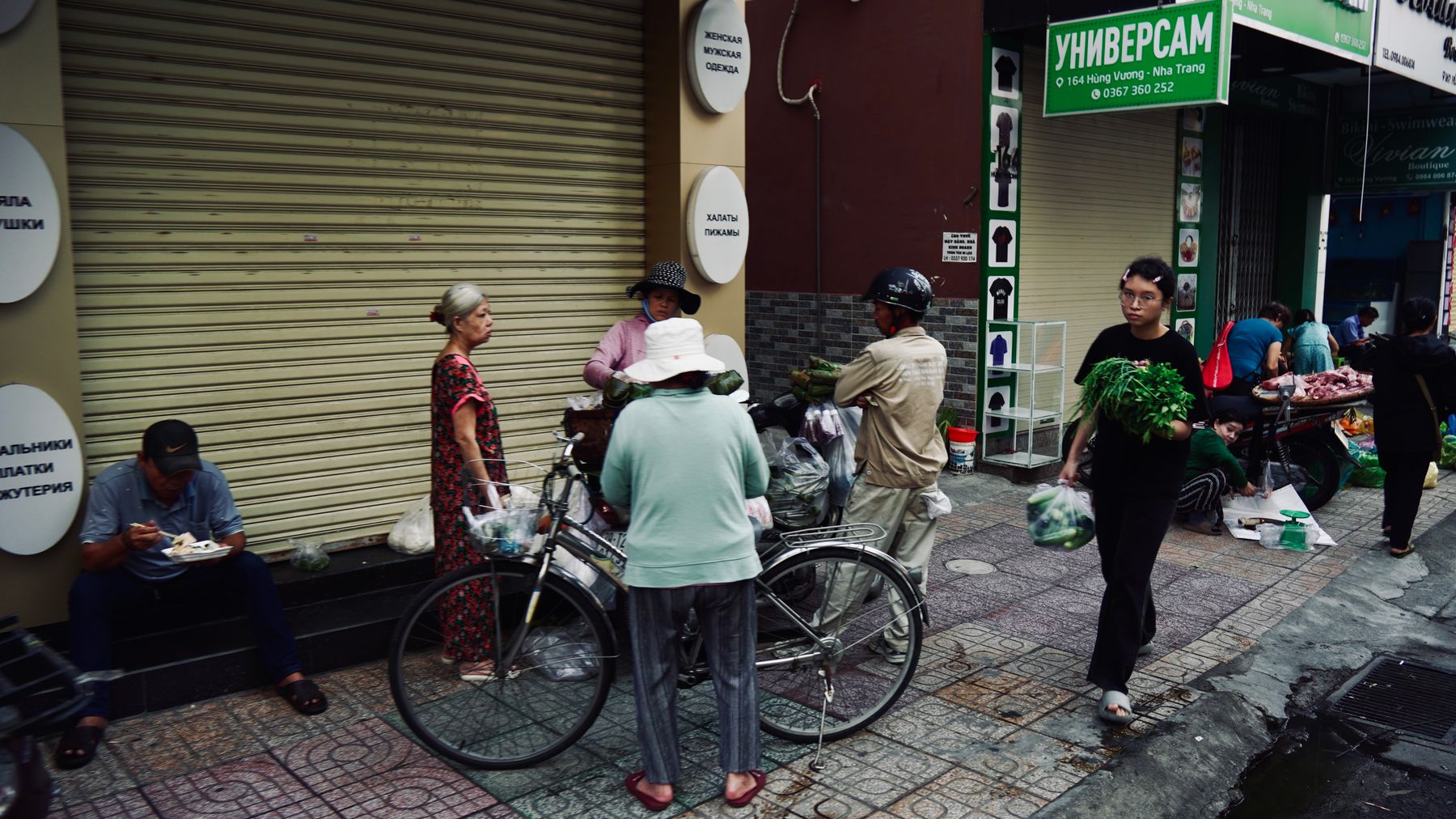
Photo by Tuan Vy on Pexels
Bun Ca Hang Duong (Near Cho Dam)
Cho Dam — Dam Market — is Nha Trang's main wet market, and the streets surrounding it have dense breakfast traffic. Hang Duong is a small stall (really more of an awning with eight tables) on the western side of the market, near the Nguyen Hong Son street corner. It opens at 5:30 a.m. and sells out by 9:30 most days.
What distinguishes this spot is the jellyfish — they prepare it daily and it shows up in nearly every bowl, still firm and lightly dressed in sesame. For families with curious kids, watching the proprietor assemble the bowl is half the entertainment. Bowls are 35,000 VND; an extra serving of fish cake is 15,000 VND.
Quan Bun Ca Co Thuy — Phan Boi Chau Street
Phan Boi Chau is a quieter residential street running parallel to the beach, and Co Thuy's shop at the northern stretch is a reliable fallback when the market-area spots are too packed. The setup is slightly more spacious than the Dam Market stalls — actual chairs, a fan, room for a stroller — which matters if you're travelling with small children.
The broth here has a slightly stronger lemongrass note than the other two shops; some people prefer it, some find it less traditional. The fish cake is softer, closer to steamed than fried. Hours are 6:00–10:30 a.m., price is 45,000 VND.

Photo by Tuan Vy on Pexels
Tips for Eating Bun Ca with Kids
Order the broth plain first — the shrimp paste (mam tom) that comes on the side is pungent, and adding it tableside means you control the flavor for younger eaters. Bean sprouts and herbs are served raw; rinse them in your broth for a few seconds if you're cautious. Jellyfish is safe and cooked; it tastes like almost nothing, which is usually fine with children.
Most bun ca shops close by 10:00–11:00 a.m. This is genuinely a breakfast food. If you arrive at noon expecting a bowl, you'll be disappointed. Plan accordingly.
Nha Trang's beach strip (Tran Phu road) has almost none of this. Walk or motorbike two to five blocks inland — toward Dam Market or along Nguyen Thi Minh Khai — and the price drops and the quality rises sharply.
Practical Notes
All three spots are cash only; bring small bills. None have English menus, but ordering is simple: hold up fingers for the number of bowls and point to the jellyfish if you want it. Parking motorbikes on the sidewalk is standard. If you're staying near the beach and want to make it a morning walk, the market area is about 1.5 km from the Tran Phu seafront strip.
Last updated · May 26, 2026 · independently researched, never sponsored.