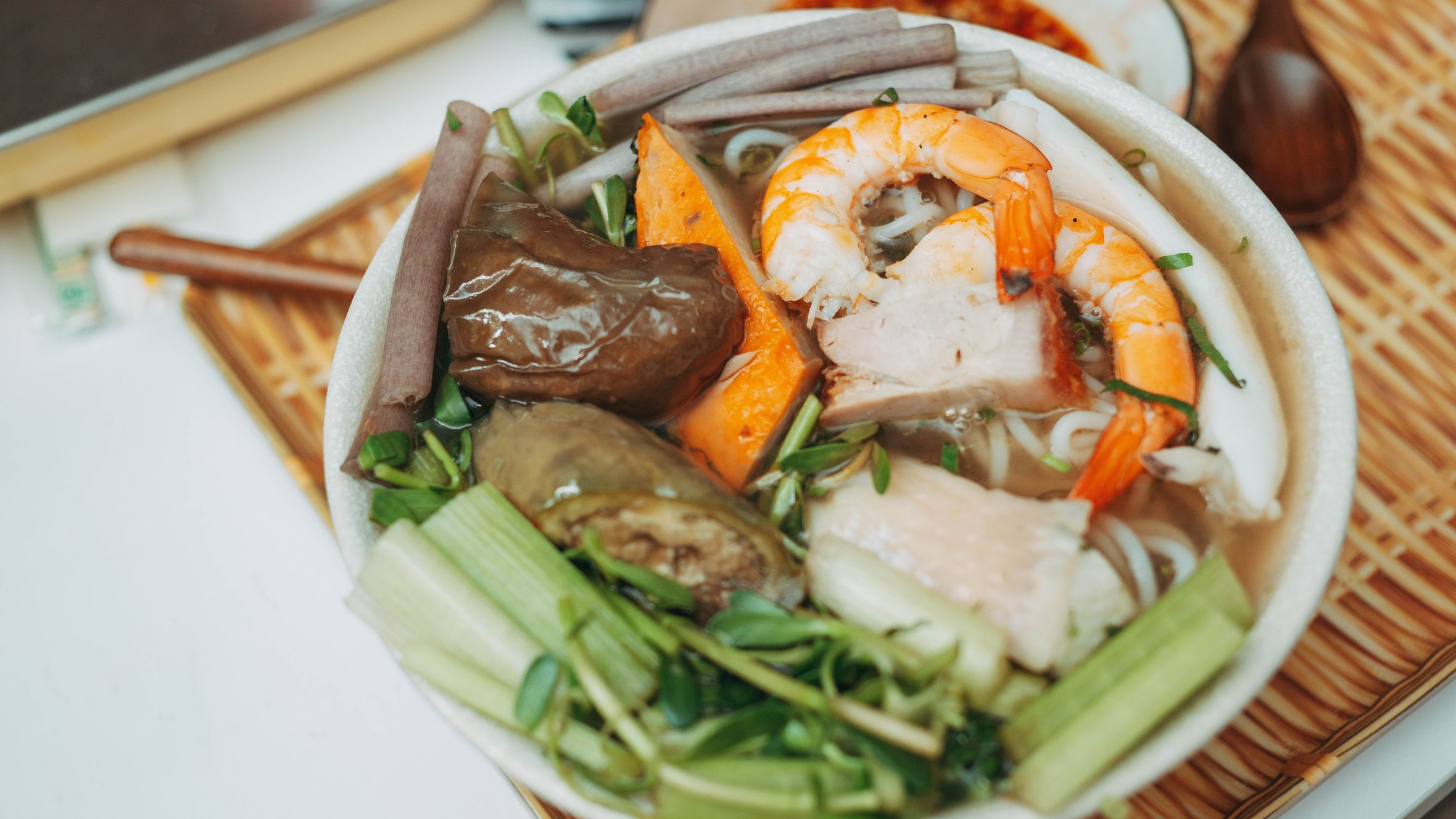
Few bowls capture the coastal identity of central Vietnam as cleanly as "bun cha ca" — a clear, fragrant fish broth served over round rice vermicelli and topped with slices of hand-formed fish cake. It is not flashy. It does not compete with the smoky pork fat of "bun cha" or the slow-burn spice of bun bo hue. What it does is taste unmistakably of the sea, and in the cities that claim it — Da Nang, Nha Trang (냐짱 / 芽庄 / ニャチャン), Phan Thiet — locals eat it at breakfast with the unsentimental regularity of people who grew up knowing exactly what a good bowl should taste like.
What Bun Cha Ca Actually Is
The name is easy to misread. "Bun" is rice vermicelli. "Cha ca" is fish cake — specifically, a paste of minced fish (usually Spanish mackerel, ca thu, or ca thac lac in the south) that is seasoned, shaped, and either pan-fried, steamed, or both. The soup is not a curry or a lemongrass bomb. At its best the broth is built from fish bones and heads simmered low for two to three hours with shallots, a little tomato, and dried shrimp — clear but deeply savoury, with a faint sweetness that has nothing to do with added sugar.
The fish cake itself is the differentiator. A good "cha ca" has bounce — that slightly springy, dense bite that only comes from fresh fish pounded by hand or ground to the right consistency before forming. The surface should be lightly browned from the pan, never grey or soft. Bad bun cha (분짜 / 烤肉米粉 / ブンチャー) ca reveals itself immediately through soggy, flavourless cake and a broth that tastes like hot water with a fish cube dissolved in it.
Regional Variants: Three Cities, Three Interpretations
Da Nang
Da Nang's version is the one most visitors encounter and arguably the most refined. The broth here leans cleaner and lighter than other regions. The fish cake is typically made from ca thac lac (snakehead fish) or ca thu, sliced thick and served both fried and steamed in the same bowl — you get the contrast of textures without having to choose. Toppings are minimal: a few sprigs of dill or spring onion, a handful of bean sprouts on the side, and chili. The garnish plate is never overwhelming. The bowl is about the broth and the cake.
Prices run 30,000–50,000 VND at street-level spots and neighbourhood shops. Portions are generous.
Nha Trang
Nha Trang's bun cha ca tilts richer. The broth often incorporates more dried shrimp and occasionally a light pineapple note, giving it a slightly sweet-sour quality that sets it apart. The fish cake tends to be fattier — mackerel is common — and you will frequently find tomato quarters simmered directly in the broth rather than added as garnish. Some shops serve it with fermented shrimp paste ("mam ruoc") on the side, which you stir in gradually to taste. It is a more assertive bowl, and it rewards slow eating.
Expect 35,000–55,000 VND for a full serving.
Phan Thiet
Phan Thiet, down in Binh Thuan province, sits at the southern edge of the dish's natural territory. The fish here is often ca thu tron (mixed mackerel varieties from the local fishing fleet), and the cake is denser, sometimes incorporating a small amount of shrimp paste into the mix for depth. The broth colour is darker than Da Nang's — more amber than gold — and the overall flavour profile is slightly bolder. Accompaniments lean southern: more fresh herbs, bean sprouts that you're expected to dunk in rather than leave on the side, and a sharper chili-lime dipping sauce for the fish cake itself.
Some Phan Thiet shops also top the bowl with "cha chien" — a thicker, pan-fried patty version of the fish cake alongside the standard slices. Worth asking for if you don't see it on the table automatically.

Photo by LUC PH@M on Pexels
How the Broth Is Built
The foundation is bones and patience. Fishmongers along the central coast sell fish carcasses cheaply — heads, spines, collarbones — and a proper bun cha ca shop goes through kilograms of them daily. The bones are blanched first to pull off any blood or impurities, then transferred to a clean pot with cold water, dried shrimp, shallots, and a light char of ginger. No star anise, no cinnamon — those belong to pho. The simmer is low and long, the surface skimmed regularly to keep the broth clear.
Tomato is added in the last forty minutes: enough to tint the broth faintly orange and add acidity, not enough to turn it into a tomato soup. Salt and a small amount of fish sauce adjust the seasoning at the end. The result should be clear enough to see the bottom of the bowl, with a golden sheen from the fish fat.
At home kitchens and small restaurants, this cycle starts before 5am for an 8am opening. The broth is never kept past a single service day at serious shops.
How to Order
Walk in, sit down, say "mot to bun cha ca" (one bowl of bun cha ca). In Da Nang and Nha Trang, portions often come in small (nho) and large (lon) — specify if you are hungry. You will be asked about cha: "cha chien" (fried cake only), "cha hap" (steamed), or "ca hai" (both). Take both.
The dipping sauce on the table — a thin, yellow-orange sauce made from fermented fish and chili — is for the fish cake specifically, not for the broth. Dip the cake, drink the broth separately. Add bean sprouts and herbs to your own taste. Don't stir everything into the broth at once.

Photo by Hoàng Giang on Pexels
Where to Try the Canonical Version
Bun Cha Ca 109, Da Nang — On Nguyen Chi Thanh street, open from around 6:30am until sold out (usually by 10am). Long-running family shop, clean broth, properly bouncy cake. No English menu, no problem — point and pay 40,000 VND.
Bun Cha Ca Hung, Nha Trang — Near the Xom Moi market area, this spot does the sweet-sour Nha Trang broth correctly. Busy from 7am, quieter after 9am. Mam ruoc on the side, ask for it if they don't bring it.
Quan 47, Phan Thiet — A small shophouse near the Phan Thiet fish market, known locally for the mixed cha (both fried patty and sliced cake in one bowl). Broth is the darkest and richest of the three; good starting point for understanding how far the southern variant drifts from the Da Nang original.
Practical Notes
Bun cha ca is a breakfast-and-early-lunch dish — most dedicated shops close by noon, sometimes earlier if the pot runs dry. Avoid ordering it at tourist-facing restaurants where the broth is likely made from powder. The further you are from a fishing port, the more you should manage expectations: this dish suffers most from distance and mediocre fish.
Last updated · May 29, 2026 · independently researched, never sponsored.