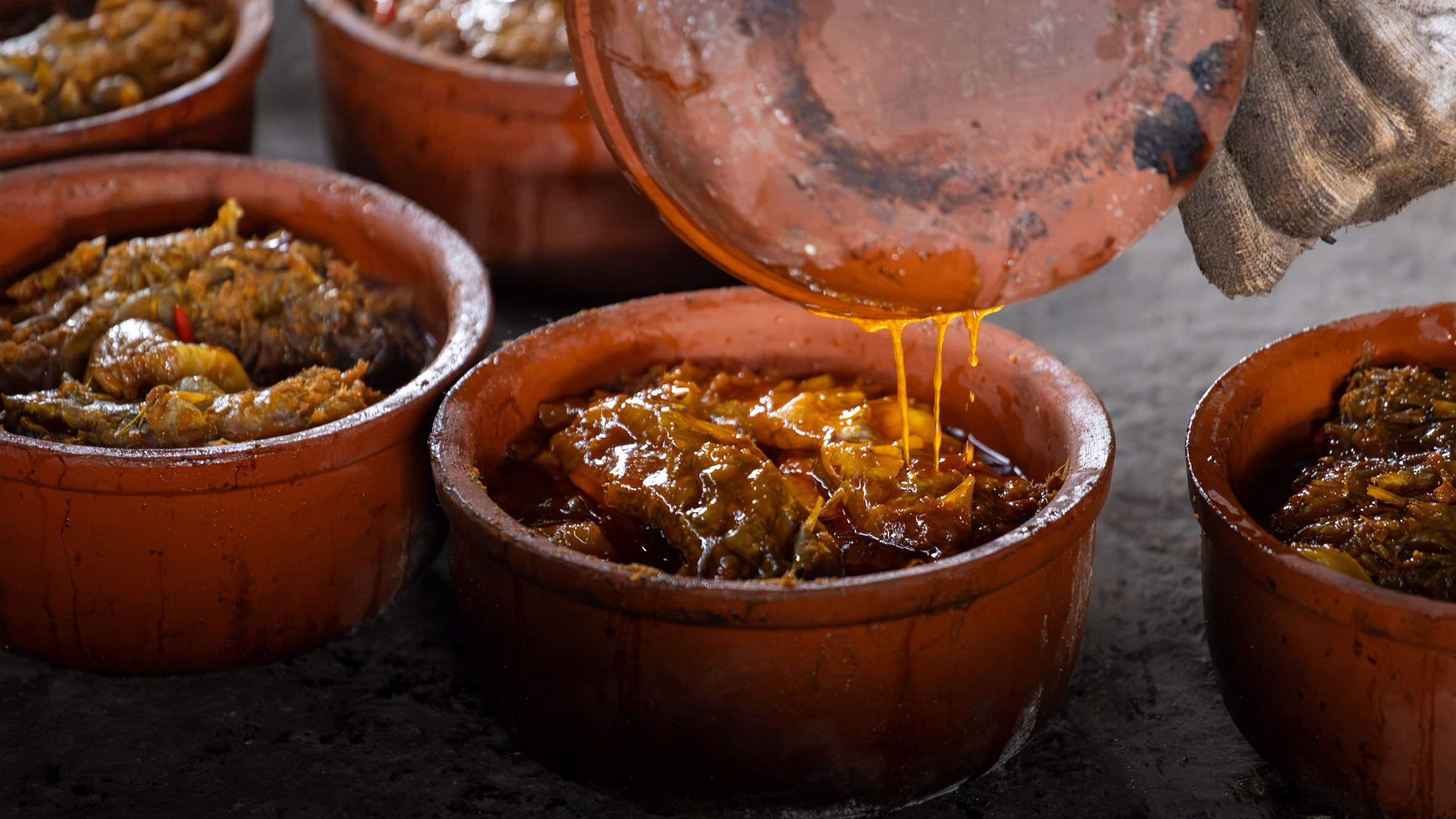
Sticky, salty, and almost black from a slow caramelization, "ca kho to" doesn't look like much in the pot. But crack the lid and the smell — fish fat, caramel, fish sauce, black pepper — hits you like a wall. This is one of those dishes that defines Vietnamese home cooking more than any restaurant menu ever could.
What Ca Kho To Actually Is
The name breaks down cleanly: ca means fish, kho means to braise in a reduced sauce (a technique applied across meat, eggs, and tofu too), and to refers to the clay pot it's cooked in. The pot matters. Clay conducts heat slowly and evenly, holds temperature long after the flame drops, and — critically — doesn't react with the fish sauce and caramel the way metal pans do. It also looks right on the table.
The core technique is a two-stage process. First, you build a caramel from sugar — white or palm sugar, depending on who's cooking — in the dry pot until it turns amber and just starts to smoke. Then the fish goes in, along with fish sauce, water or coconut water, sliced shallots, garlic, and a heavy hand of black pepper. The whole thing braises low and slow, sometimes for 45 minutes, sometimes for two hours, until the liquid reduces to a thick, glossy coating and the fish is tender enough to fall apart with chopsticks.
Coconut water is the southern signature. In the Mekong Delta (메콩 델타 / 湄公河三角洲 / メコンデルタ) — where ca kho to is most at home — cooks use nuoc dua (fresh coconut water, not canned) instead of plain water. It adds a faint sweetness that balances the salt and rounds out the caramel. Northern versions tend to be simpler, drier, and spicier.
The Fish Question
There's no single correct fish for ca kho to. What matters is that the fish is firm enough to survive long braising without disintegrating and fatty enough to stay moist.
Ca tre (catfish) is the Mekong default. Vietnam (베트남 / 越南 / ベトナム)'s rivers and fish farms produce enormous quantities of tra and basa catfish — the same fish exported globally — and their firm white flesh and mild fat content make them ideal for kho. Steaks cut crosswise through the body, bone-in, are standard.
Ca loc (snakehead fish) is considered a step up in quality and price. Snakehead has a denser, slightly more complex flavor than catfish, and it holds its shape well under long heat. In Ca Mau and Dong Thap provinces, ca loc kho to is a point of local pride.
Ca thu (mackerel) appears in central Vietnamese versions, particularly around Da Nang and Hue. The oilier flesh absorbs the caramel sauce differently — more intensely — and the result is richer and slightly fishier in the best possible way.
Thit heo (pork belly) sometimes gets added alongside the fish, especially in home kitchens where the braising liquid becomes a shared medium. This version — ca kho thit — is softer, sweeter, and considerably more filling.
Trung (eggs) are another common addition, hard-boiled and dropped into the pot for the final 20 minutes so they absorb the dark braising liquid. If you see them in the pot, order it.

Photo by FOX ^.ᆽ.^= ∫ on Pexels
Regional Variations Worth Knowing
The Mekong Delta version — think Can Tho, Sa Dec, Vinh Long — is the canonical template: coconut water base, palm sugar caramel, generous fish sauce, whole dried chili, and a cook time long enough that the sauce glazes rather than pools. Served at room temperature with steamed rice and a bowl of canh chua (sour tamarind soup), it's a combination that makes sense of itself immediately.
Hue's ca kho is hotter and drier. The imperial city's cooking tradition leans toward intensity and spice, so expect more chili, less sweetness, and a tighter sauce that almost fries the fish in its own reduced fat at the end.
Hanoi home cooks make a version called ca kho rieng — braised with galangal — that smells completely different: warmer, more medicinal, more northern. It's less common in restaurants but turns up at com binh dan (cheap rice canteen) spots around the Old Quarter.
How to Order It
Ca kho to is almost never a standalone restaurant dish in the Western sense. It's a mon man — a savory accompaniment to rice, meant to be shared. When you sit down at a com binh dan or a family-style Mekong restaurant, you'll typically point at what you want from trays or a display: a scoop of rice, a bowl of soup, and a portion of kho. Expect to pay 30,000–60,000 VND for a clay pot portion at a local spot, more at tourist-facing restaurants.
Ask for com trang (steamed white rice) alongside — don't skip it. The braising sauce that pools in the pot is essentially designed to be soaked up by plain rice. Some tables get a small plate of fresh herbs and sliced cucumber on the side; eat them between bites to cut the richness.
If you see ca kho to nguyen con on a menu, that means the fish is braised whole rather than in steaks — usually a smaller fish, and a more rustic presentation.

Photo by Hồng Quang Official on Pexels
Where to Try It
Quan Com Nieu Sai Gon — Saigon (District 3): This Saigon institution specializes in com nieu (rice cooked in clay pots that are smashed tableside) and serves a very solid ca kho to alongside. It's not the cheapest lunch in town — around 80,000–120,000 VND per person — but the fish is properly caramelized and the room has a chaotic, genuine energy.
Quan Bong — Can Tho: A short walk from the Ninh Kieu waterfront, this no-frills family restaurant does a ca loc kho to that most Mekong cooks would respect. The clay pots come out still bubbling, the snakehead is firm, and the sauce is dark enough to stain the rice on contact. Prices hover around 50,000–70,000 VND for a portion.
Quan An Ngon — Hanoi (Phan Dinh Phung): For visitors in Hanoi who want to try ca kho to without committing to a full southern road trip, Quan An Ngon's Vietnamese comfort food menu includes a decent version. It's slightly sanitized for the tourist market but the technique is sound and it arrives in an actual clay pot.
Practical Notes
Ca kho to reheats exceptionally well — better than most braised dishes — so leftovers at a guesthouse with a microwave are not a tragedy. If you're visiting Can Tho or the Mekong Delta, ask your guesthouse owner where their family eats ca kho to; the real spots are rarely on any app. Markets in Sa Dec and Cao Lanh sell raw clay pots for 30,000–50,000 VND if you want to cook the dish at home — they pack flat and survive checked luggage.
Last updated · May 29, 2026 · independently researched, never sponsored.




