Hanoi has a specific kind of Sunday morning that belongs entirely to "bun oc" — a bowl of thin rice vermicelli in a broth that somehow manages to be both light and aggressively funky. If you've walked past a low plastic-stool setup with a cauldron of rust-red soup and thought I'm not sure about this, that's the bowl worth reconsidering.
What the broth actually is
The base is a tomato-forward stock built on snail cooking liquid, soured with "dam bong" (rice vinegar or the juice from pickled vegetables, depending on the cook), and finished with a spoonful of "mam tom" — fermented shrimp paste — stirred in tableside or added by the cook. That last ingredient is what divides people. Mam tom smells confrontational in the way that fish sauce once did to outsiders, but in the soup it rounds out and adds a savory depth that tomato alone can't replicate. Don't skip it. Ask for "it mam tom" (a little shrimp paste) if you want to ease in.
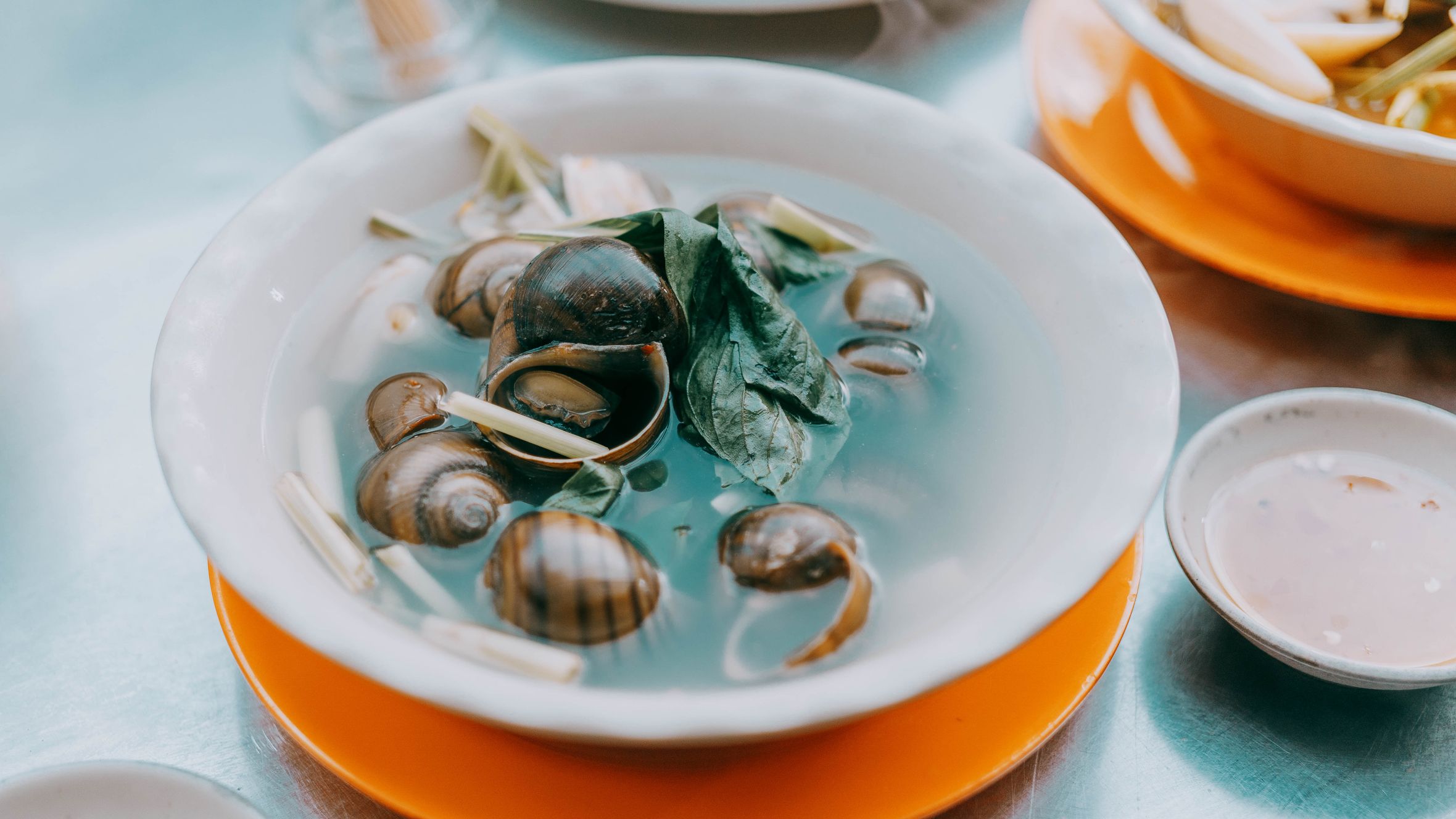
The snails — usually "oc buou" (apple snails) or the smaller "oc nho" — are pulled from their shells, cleaned carefully, and added either whole or sliced. Good bun oc has snails that are firm without being rubbery. If they're soft and falling apart, the kitchen has overcooked them or the batch isn't fresh.
Where to eat it in Hanoi
The most reliable spot for a tourist who doesn't know the neighborhood is Bun Oc Ba Tinh on Ngo Si Lien, roughly 600 meters south of Hoan Kiem Lake. She opens around 6:30 AM and is usually sold out by 10. A bowl runs 40,000–50,000 VND. The broth here leans more sour than most — pickled tomato adds an extra layer of acidity — and the snails are genuinely fresh, not the pre-blanched-and-frozen version you get at shortcuts.
For something deeper inside the Old Quarter, the alley off Hang Dieu near the junction with Bat Su has two or three competing vendors that set up by 7 AM. No signs, just pots and stools. Prices are around 35,000 VND and the mam tom is pre-stirred into the broth rather than offered separately, so the funk hits immediately.

Photo by Ama Journey on Pexels
What to pair with your bun oc
A single bowl of bun oc is breakfast, not a full meal on its own. Here's how Hanoi (하노이 / 河内 / ハノイ) locals build around it.
Banh Quay (fried dough sticks)
These are the same oil-fried dough sticks you'll see in Chinese-influenced breakfasts across Southeast Asia, but in Hanoi they're almost always eaten alongside bun oc or "bun rieu". Tear off a length, dip it into the broth, and let it absorb. The dough goes soft and sour and salty all at once. Most bun oc vendors sell them for 5,000–10,000 VND a stick, stacked in a basket on the cart. Order two.
Nem Chua
"Nem chua" — fermented pork rolls wrapped in banana leaf — are a logical companion because their sourness echoes the broth without competing with it. They're not always sold at bun oc stalls directly, but any street vendor within 50 meters of a popular bun oc spot in the Old Quarter will have them. Two rolls cost around 10,000–15,000 VND. Eat them between spoonfuls rather than with.
Rau Song (fresh herb plate)
Always ask for rau song if it's not already on the table. The standard plate includes perilla, mint, and sometimes sliced banana blossom. The perilla in particular cuts through the shrimp paste funk and resets the palate. It's usually free or 5,000 VND. Don't eat bun oc without it.
Ca Phe Trung (egg coffee) or Ca Phe Sua Da after
Bun oc doesn't pair well with coffee during the meal — the acidity on both sides is too much. But Hanoi's breakfast rhythm almost always ends with coffee. Walk ten minutes north to the Old Quarter and sit down with a "ca phe sua da" or, if you have time and patience, an "egg coffee" at one of the rooftop spots near Hoan Kiem. That contrast — tangy, funky soup followed by something sweet and dense — is a Hanoi morning done properly.
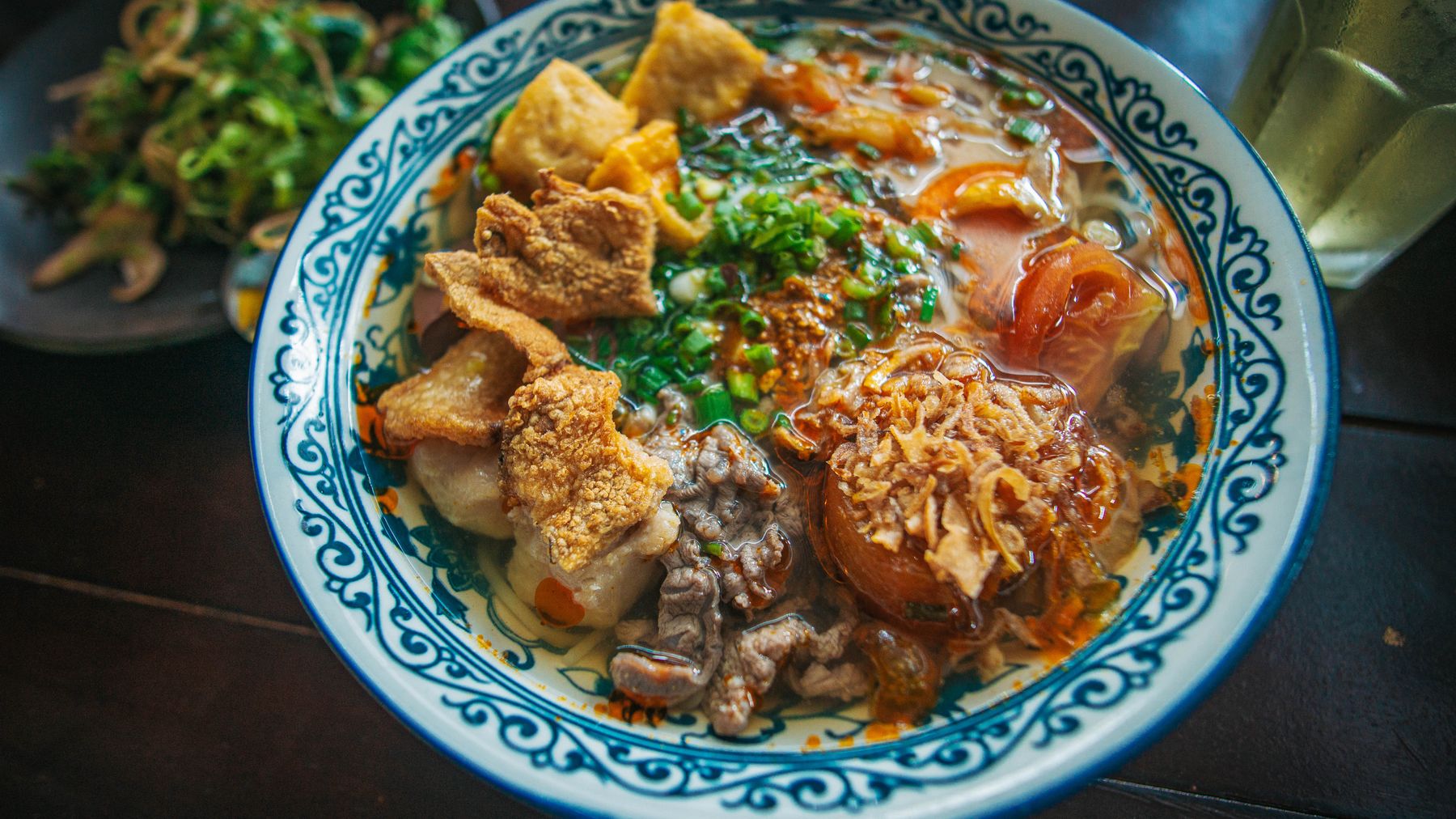
Photo by FOX ^.ᆽ.^= ∫ on Pexels
A note on timing
Bun oc is a morning dish. Most serious vendors are gone by 10:30 AM. The few that operate through lunch are usually the ones cutting corners on freshness. Go early, especially on weekends when competition for stools is real. Arrive at a busy stall, catch the eye of whoever's ladling, and hold up fingers for how many bowls you want. Sit wherever there's space. Don't wait to be seated.
Practical notes: Bring small bills — 50,000 VND notes or below. Most bun oc vendors don't run card payments. If the stall is packed and you're waiting, that's usually a good sign, not a reason to leave.
Last updated · Aug 25, 2026 · independently researched, never sponsored.