Cau Cua Dai is the cable-stayed bridge spanning the mouth of the Thu Bon River where it meets the sea, about 4 km north of Hoi An's old town. It opened in 2015 after years of construction delays, replacing the old ferry crossing that used to strand travelers during rough weather. The bridge runs roughly 1.5 km long, with a main span of 400 meters held up by fan-shaped cable stays — the kind of structure you notice from a distance when you're riding south along the coast road.
With the recent administrative expansion that folded parts of the former Quang Nam coastline into greater Da Nang, Cau Cua Dai now sits within Da Nang's city limits. For travelers, this mostly matters for ride-hailing apps (your Grab driver's zone might shift) and for understanding why locals still talk about the bridge as being "near Hoi An" even though the address technically says Da Nang.
Cau Cua Dai isn't a destination in the way a temple or a beach is. It's a crossing point — but a genuinely useful one that shapes how you move between Da Nang (다낭 / 岘港 / ダナン), Hoi An, and the beaches south of the river mouth. If you're staying anywhere along An Bang or Cua Dai Beach and want to reach Hoi An's old quarter without looping inland, this bridge is your route.
Beyond logistics, the bridge itself offers wide-open views of the Thu Bon delta spreading out to the east, fishing boats anchored in clusters below, and on clear mornings, the Cham Islands sitting on the horizon. Cyclists and motorbike riders treat the crossing as a highlight of the coastal route between Da Nang and Hoi An (호이안 / 会安 / ホイアン) — the 30 km ride along the coast road, with Cau Cua Dai near the midpoint, is one of the better half-day rides in central Vietnam.
Best time to visit
The dry season from February through August is when this stretch of coast is at its best. March to May hits a sweet spot: warm without the July heat, and the monsoon rains haven't started yet. The bridge and coast road are pleasant for cycling during these months, with morning temperatures around 25-28°C.
Avoid October through December if you can. Central Vietnam's rainy season hits hard here — the Thu Bon floods regularly, and while the bridge itself stays open, the surrounding roads can get waterlogged. January is cooler and occasionally drizzly, but manageable.
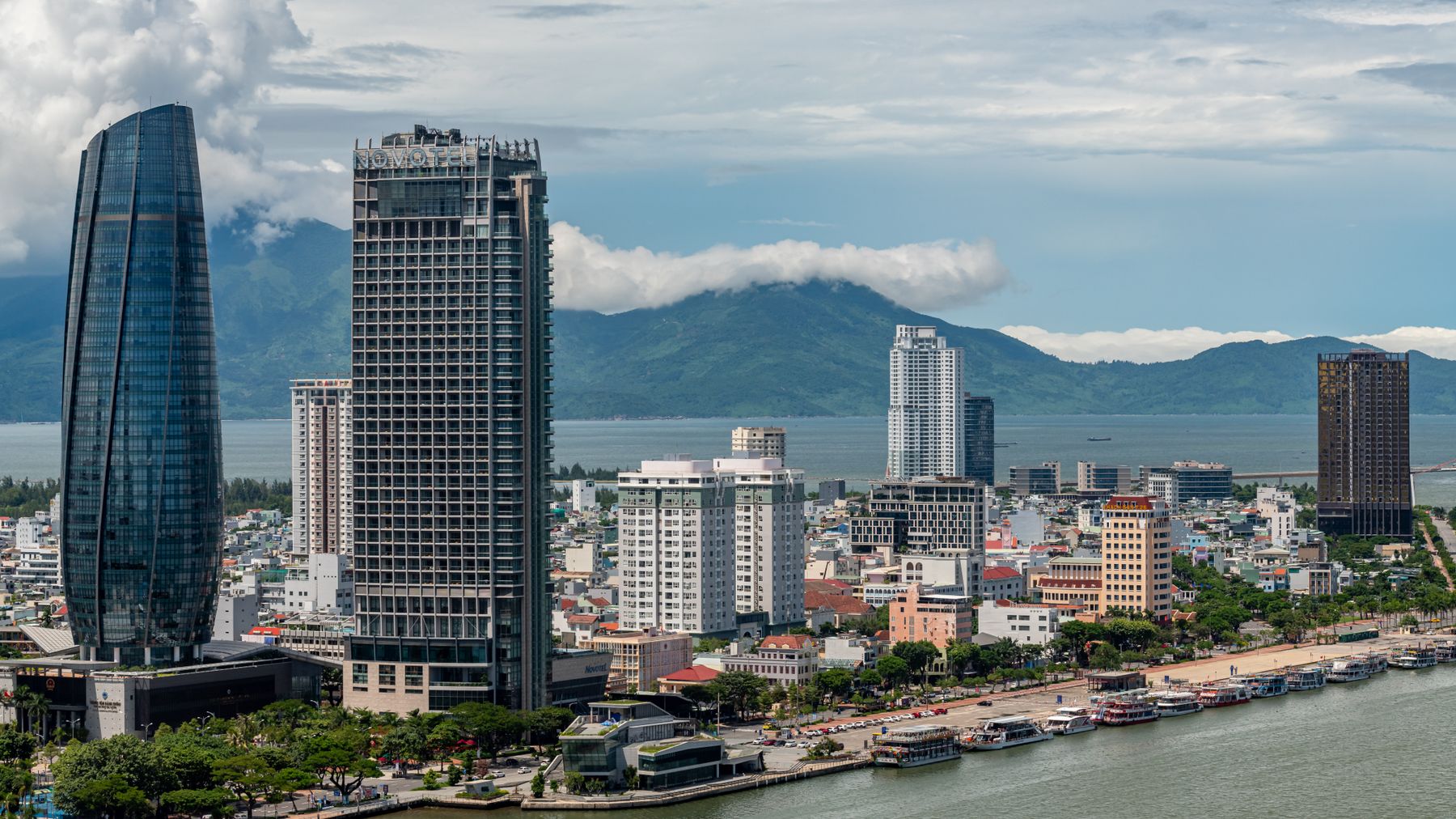
Photo by Kirandeep Singh Walia on Pexels
From central Da Nang (the Dragon Bridge area), Cau Cua Dai is about 28 km south along the coast road. A Grab car costs roughly 180,000-220,000 VND and takes 35-45 minutes depending on traffic. A Grab bike is cheaper at around 80,000-100,000 VND.
From Hoi An's old quarter, it's only 4 km north — a 15-minute bicycle ride or a 30,000 VND Grab. Most Hoi An hotels rent bicycles for 30,000-50,000 VND per day, and the ride out to the bridge along Cua Dai Road is flat and straightforward.
If you're doing the full Da Nang-to-Hoi An coastal route by motorbike or bicycle, the bridge is a natural waypoint.
Ride the coast road
The stretch from Da Nang's My Khe Beach south to Cau Cua Dai is about 25 km of mostly flat coastal road. Rent a motorbike in Da Nang (100,000-150,000 VND/day for a Honda Wave) or a bicycle from your hotel and take the morning to ride it. You'll pass through a string of seafood restaurants, empty beach sections, and a few resort developments. Stop at the bridge, then continue into Hoi An for lunch.
Watch the fishing boats at dawn
The river mouth below the bridge is a working fishing harbor. If you're up early — 5:30 or 6:00 AM — the boats come in with the night's catch and the light across the water is genuinely good. You can walk down to the riverbank on the south side of the bridge where a few dirt tracks lead to the water's edge.
Cross to Cam Kim Island
Just upriver from the bridge, small local boats ferry passengers to Cam Kim Island — a quiet, mostly agricultural island in the Thu Bon River. It's known for its traditional woodcarving villages. A boat across costs around 10,000-20,000 VND per person. Rent a bicycle on the island and spend an hour or two riding through rice paddies and small workshops.
Day trip to Cu Lao Cham
From the Cua Dai area, speedboats depart for Cu Lao Cham (the Cham Islands) most mornings during the dry season. The ride takes about 20 minutes and costs 150,000-200,000 VND round trip. Snorkeling, seafood lunch, and a few hours on the island make for a solid day trip.
Sunset from the bridge
The western side of the bridge faces upriver toward the mountains inland. If you time a walk or ride across for about 5:00-5:30 PM in summer, the light over the river valley is worth the stop. It's not a formal viewpoint — just pull over on the pedestrian walkway.
Where to eat nearby
The south end of the bridge puts you within easy reach of Hoi An, which means access to "cao lau" — the thick-noodle pork dish specific to Hoi An — and "mi quang", the turmeric-tinged noodle soup that's all over central Vietnam. For cao lau, head into the old quarter (Cao Lau Thanh on Thai Phien Street does a reliable bowl for 35,000 VND). For mi quang closer to the bridge, look for the small local shops along Cua Dai Road — prices run 30,000-40,000 VND.
On the north side of the bridge, the beach road has a line of seafood restaurants where you pick your fish from tanks. Expect to pay 200,000-400,000 VND per person for a proper seafood spread. The grilled squid and morning glory stir-fried with garlic are the consistent orders.

Photo by Quang Nguyen Vinh on Pexels
The Cua Dai Beach area on the south side of the bridge has accommodation at every price point. Budget guesthouses and homestays run 200,000-400,000 VND per night. Mid-range hotels with pools and beach access go for 800,000-1,500,000 VND. There are a handful of higher-end resorts in the 3,000,000-6,000,000 VND range closer to An Bang Beach.
Staying near the bridge puts you between Da Nang and Hoi An, which is convenient if you want access to both without committing to either.
- The bridge has a pedestrian and bicycle lane on both sides, but it's narrow. If you're cycling, stay tight to the railing and watch for motorbikes that drift into the bike lane. - Wind picks up on the bridge, especially in the afternoon. If you're on a bicycle or a light scooter, grip the handlebars firmly during the main span crossing. - There's no toll for motorbikes or bicycles. Cars pass freely too. - The area around the south bridge approach has a few small convenience stores for water and snacks, but no ATMs. Withdraw cash in Hoi An or Da Nang before heading out. - If you're riding from Da Nang, fuel up before you leave. Gas stations along the coast road are spaced out and a couple of them close early in the evening.
Don't plan the ride from Da Nang in the midday heat between May and August — the coast road has almost no shade, and 25 km under direct sun at noon is punishing. Go early morning or late afternoon.
Don't assume the Cham Island boats run year-round. During rough seas (typically October to February), services get cancelled without much notice. Check with your hotel the night before.
Don't skip the south side of the river entirely. A lot of travelers cross the bridge heading to Hoi An and never stop. The riverbank area below the bridge, the fishing village, and the Cam Kim Island crossing are all worth an hour of your time.
Last updated · May 26, 2026 · independently researched, never sponsored.