
Cau Dat Farm is one of the few places near Da Lat where the tourism infrastructure hasn't completely swallowed the agriculture. It's a working tea plantation first, a photo destination second — and that order matters if you want to enjoy it properly.
What it is
Cau Dat Farm is a tea estate about 25 km southeast of central Da Lat (달랏 / 大叻 / ダラット), sitting at roughly 1,650 m elevation in Xuan Truong commune. The French established tea cultivation here in the 1920s, and the operation has been running more or less continuously since. The farm covers around 230 hectares of Oolong, green tea, and a smaller amount of Arabica coffee. In recent years the owners opened parts of the property to visitors — a cafe, walking paths through the rows, and a small processing area you can peek into.
Administratively, this falls under Lam Dong province, which since 2025 also encompasses what used to be Dak Nong and Binh Thuan. For travelers, nothing has changed on the ground — Da Lat is still your base, and the farm is still in the same hills it's always been in.
Why travelers go
The draw is simple: long rows of manicured tea bushes rolling across hills, cool air, and relative quiet compared to Da Lat's increasingly congested center. The farm has become popular on Vietnamese social media for its geometric tea rows and the morning fog that settles in the valleys. But beyond the photos, it's genuinely pleasant to walk through — the smell of tea leaves drying, the temperature a few degrees cooler than town, the sound of wind through pine trees bordering the estate.
It's not a theme park. If you're expecting rides, gift shops, and organized tours, recalibrate. This is a place to walk slowly, drink good tea, and leave within a couple of hours.
Best time to visit
The tea rows are green year-round, but conditions vary.
- November to March is the dry, cool season. Mornings are misty — often dramatically so — and temperatures hover around 12-18°C. This is the best window for photography and comfortable walking. Weekdays are significantly less crowded than weekends.
- April to June brings warmer weather and occasional afternoon showers. The tea is lush but the fog is less reliable.
- July to October is proper rainy season. Roads can get slippery, and the farm paths turn muddy. Doable, but less enjoyable.
Arrive early — before 8:00 AM if you can manage it. The fog burns off quickly and the tour buses from Da Lat start rolling in by mid-morning.
How to get there from Da Lat
Da Lat is your nearest hub. From the city center, Cau Dat Farm is about 25 km southeast via Provincial Road 723 (now sometimes labeled DT723).
- Motorbike: The most common option and genuinely the best one. Rentals in Da Lat run 120,000-180,000 VND/day for a semi-auto Honda. The ride takes 45-60 minutes depending on your pace. The road is paved but winding, with some steep descents. Experienced riders only in wet conditions.
- Grab car or private taxi: Around 250,000-350,000 VND one way. Ask the driver to wait — getting a return ride from the farm can be slow.
- Organized tour: Several Da Lat operators bundle Cau Dat with other stops (typically strawberry farms, flower gardens). Expect 400,000-600,000 VND per person. These are efficient but rushed.
Entrance to the farm itself is 50,000 VND per person.
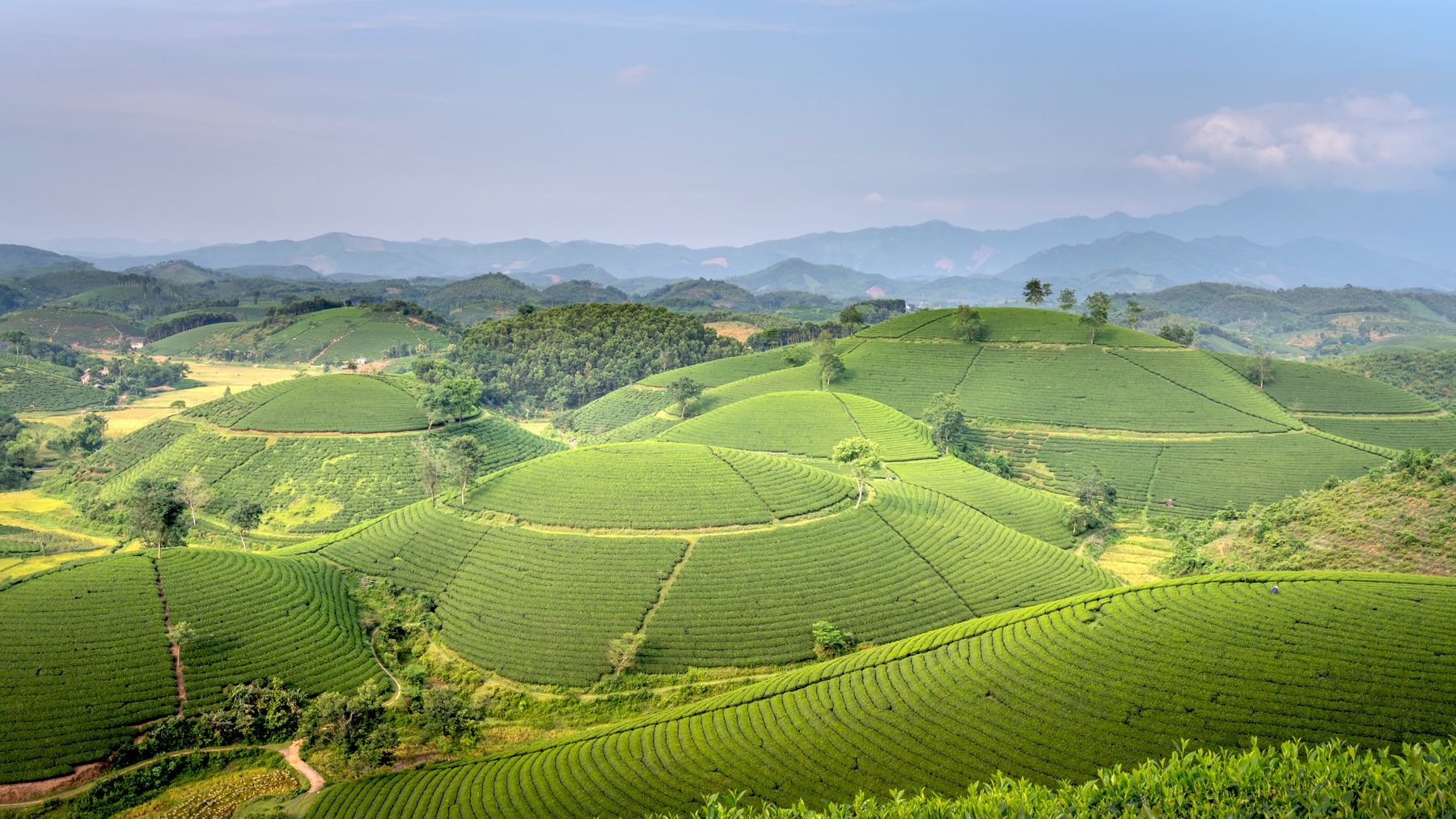
Photo by Quang Nguyen Vinh on Pexels
What to do
Walk the tea rows
The main paths loop through the Oolong and green tea sections. Give yourself 45-60 minutes to wander without rushing. The rows closer to the hilltops offer wider views across the valley. Stick to the marked paths — the tea plants are actively harvested and the workers don't love people trampling through.
Visit the processing area
Near the main building there's a small section where you can see tea being withered, rolled, and dried. It's not a formal tour — more of an open-door policy — but it gives context to what's growing around you. If the workers are in a chatty mood and you speak some Vietnamese, they'll explain the difference between their Oolong and green tea processing.
Drink tea at the on-site cafe
The farm's cafe serves their own Oolong brewed properly, plus Vietnamese coffee made from their small Arabica crop. A pot of Oolong runs about 60,000-80,000 VND. It's a nice spot to sit for 20 minutes and look out over the rows. The Oolong is legitimately good — light, floral, and worth buying a bag to take home (around 150,000-250,000 VND depending on grade).
Stop at the pine forest viewpoints
On the drive between Da Lat and the farm, you'll pass through stretches of pine forest with pull-off points. A few of these have become informal photo spots. The one about 5 km before the farm entrance, where the pines frame a valley view, is worth a five-minute stop.
Combine with Trai Mat
The village of Trai Mat is roughly on the route between Da Lat and Cau Dat. It's the terminus of the old Da Lat cog railway, and Linh Phuoc Pagoda there — covered entirely in broken ceramic and glass — is a legitimate curiosity. Adding Trai Mat makes a natural half-day loop.
Where to eat nearby
The farm cafe serves drinks but not real meals. For food, you have two good options:
- Back in Da Lat: Eat before you go or after you return. A bowl of "bun bo Hue" at the stalls along Nguyen Van Troi street runs 40,000-50,000 VND and warms you up after a cool morning. Da Lat also has its own take on "banh mi" — with pate, local sausage, and pickled daikon — best grabbed from the carts near the central market.
- Roadside com binh dan: Along DT723 between Trai Mat and the farm, a few rice-and-dish joints serve lunch. Basic "com tam" plates or rice with grilled pork and greens for 35,000-50,000 VND. Nothing fancy, all functional.
Where to stay
Most visitors stay in Da Lat and day-trip to the farm. Da Lat accommodation covers every budget:
- Budget: Hostels and basic guesthouses in the center from 150,000-300,000 VND/night.
- Mid-range: Boutique hotels and homestays around Ward 1-3, typically 500,000-1,200,000 VND/night. Many have balconies facing the valley.
- Upper: A few resort-style properties on the outskirts, 1,500,000-3,000,000 VND/night.
There's no accommodation at the farm itself.

Photo by Quang Nguyen Vinh on Pexels
Practical tips
- Layer up. Even when Da Lat feels mild, the farm sits higher and is more exposed to wind. A light jacket matters at 7 AM.
- Bring cash. The entrance fee and cafe are cash only. No ATMs nearby.
- Charge your phone before you go. No charging stations at the farm, and you'll use the camera more than you expect.
- Wear shoes with grip. The paths between tea rows are packed dirt, fine when dry but slick after rain. Sandals are a bad idea.
Common mistakes to avoid
- Arriving at midday. The light is flat, the fog is gone, and the tour groups are at peak density. Go early or skip it.
- Spending the whole day. Two hours is plenty. The farm is compact and you'll have seen it all by then. Plan other stops — Trai Mat, the pine forests, or a vietnamese coffee (베트남 커피 / 越南咖啡 / ベトナムコーヒー) spot back in Da Lat.
- Driving the motorbike too fast on the return. The downhill curves between the farm and Trai Mat tighten unexpectedly. Multiple accidents happen here each year, especially in wet weather. Take it slow.
- Expecting a resort experience. This is a working farm with a cafe bolted on. The bathrooms are basic, the paths are dirt, and nobody is going to hand you a welcome drink. That's the appeal.
Practical notes
Cau Dat Farm works best as a morning half-day trip from Da Lat, combined with a stop at Trai Mat on the way back. Budget around 300,000-500,000 VND total for transport, entrance, and tea if you're on a motorbike. It's one of the more honest agricultural tourism experiences near Da Lat — no frills, real tea, and a reason to get out of town before breakfast.
Last updated · May 26, 2026 · independently researched, never sponsored.








