
What it is
A single tree — a "cay co don" (lonely tree) — stands on a rounded hilltop along the road between Sung La valley and the Lung Cu flagpole area in the far north of Vietnam (베트남 / 越南 / ベトナム). It's a Fokienia hodginsii (Po mu conifer), and it became famous around 2015 when motorcycle tourers started posting photos of its silhouette against terraced rice fields and rolling karst. The tree itself is unremarkable in botanical terms. What makes it iconic is the composition: a lone vertical form on a bald green dome, flanked by deep valleys and layered mountains fading into mist.
The area that was formerly Ha Giang province has been administratively merged into Tuyen Quang, but travelers still refer to the highlands and the Ha Giang Loop by their old name. The tree sits roughly 25 km north of Dong Van town, near the village of Lung Tao in Sung La commune.
Why travelers go
It photographs extraordinarily well in almost any weather. Fog rolling behind the tree at dawn. Golden light at sunset with terraces glowing underneath. Even overcast days give it a moody, minimalist quality that works on camera. Beyond photography, it's a natural rest stop on the Ha Giang (하장 / 河江 / ハーザン) Loop — a place to cut the engine, stretch, and absorb the scale of the landscape without any ticket booth or tourist infrastructure getting in the way.
For riders doing the classic 3-4 day Ha Giang Loop, it slots in perfectly on the Dong Van to Lung Cu stretch, or as a short detour from the main road.
Best time to visit
September – November (rice season)
Terraces below the tree turn gold in late September and early October. This is peak season for photography, and you'll share the hill with dozens of others at sunrise. Still worth it — the color is genuinely extraordinary.
March – May (green season)
Everything is intensely green after spring rains. Fewer visitors, more fog. You trade golden terraces for a moodier atmosphere.
December – February
Cold, often foggy to the point of zero visibility. Temperatures drop to 5-8°C at this altitude. If you get a clear morning, the light is low and dramatic. But you might also see nothing.
Aim for sunrise (around 5:30-6:00 depending on season). By 8:00 AM, tour groups from Dong Van start arriving.
How to get there
From Dong Van town center, head north on QL4C toward Lung Cu. After roughly 18 km, you'll pass through Sung La — the valley with the Pao's House filming location. Continue another 7 km. The tree is visible from the road on your left, up a short dirt path (200 m walk uphill).
Total ride from Dong Van: about 25 km, 45 minutes on a motorbike allowing for the winding mountain road.
From Ha Giang city (the starting point for most loop riders): 150 km, typically a full day's ride with stops. Most people reach the tree on day 2 or 3 of a standard loop itinerary.
Transport options:
- Self-driven motorbike (most common, rent in Ha Giang city for 150,000-250,000 VND/day)
- Easy Rider with a local driver (600,000-800,000 VND/day including bike and fuel)
- Jeep/car tour from Ha Giang city (1,500,000-2,500,000 VND/day per vehicle, shared or private)

Photo by Vietnam Hidden Light on Pexels
What to do
Honestly? Not much — and that's the point. Walk up the hill, sit under the tree or nearby, take photos, watch the valley. The whole stop takes 20-40 minutes for most people. Some riders bring a thermos of vietnamese coffee and sit on the slope.
Combine it with nearby stops:
- Lung Cu flagpole (8 km further north) — the northernmost point marker
- Sung La valley — terraced fields, Hmong villages, Pao's House
- Lo Lo Chai village — homestays and a community tourism project, 12 km east
Where to eat
There's no restaurant at the tree itself — just occasional local vendors selling corn on the cob or instant noodles. Plan meals in Dong Van or Lung Cu.
In Dong Van:
- Lung Cam restaurant on the main street: solid "pho" and fried rice, 40,000-60,000 VND per dish
- Dong Van old quarter has a handful of family-run spots serving "thang co" (horse meat hotpot, a local Hmong specialty) and corn wine for adventurous eaters
- Market area for "banh cuon" in the morning — steamed rice rolls with minced pork
In Lung Cu village at the far end: a few basic eateries near the flagpole parking area, mostly noodle soups.
Where to stay
No accommodation at the tree. Base yourself in Dong Van (most options) or try a homestay closer to Sung La.
- Dong Van: Hostels from 100,000 VND/dorm bed, guesthouses 250,000-400,000 VND/double. Look for places along the main road or near the old quarter.
- Sung La homestays: 200,000-350,000 VND per person including dinner and breakfast. Simple rooms, shared bathrooms, spectacular valley views.
- Lo Lo Chai homestays: A quieter alternative, community-run, similar pricing.
Book a day ahead in October — the rice season fills up fast, especially on weekends.
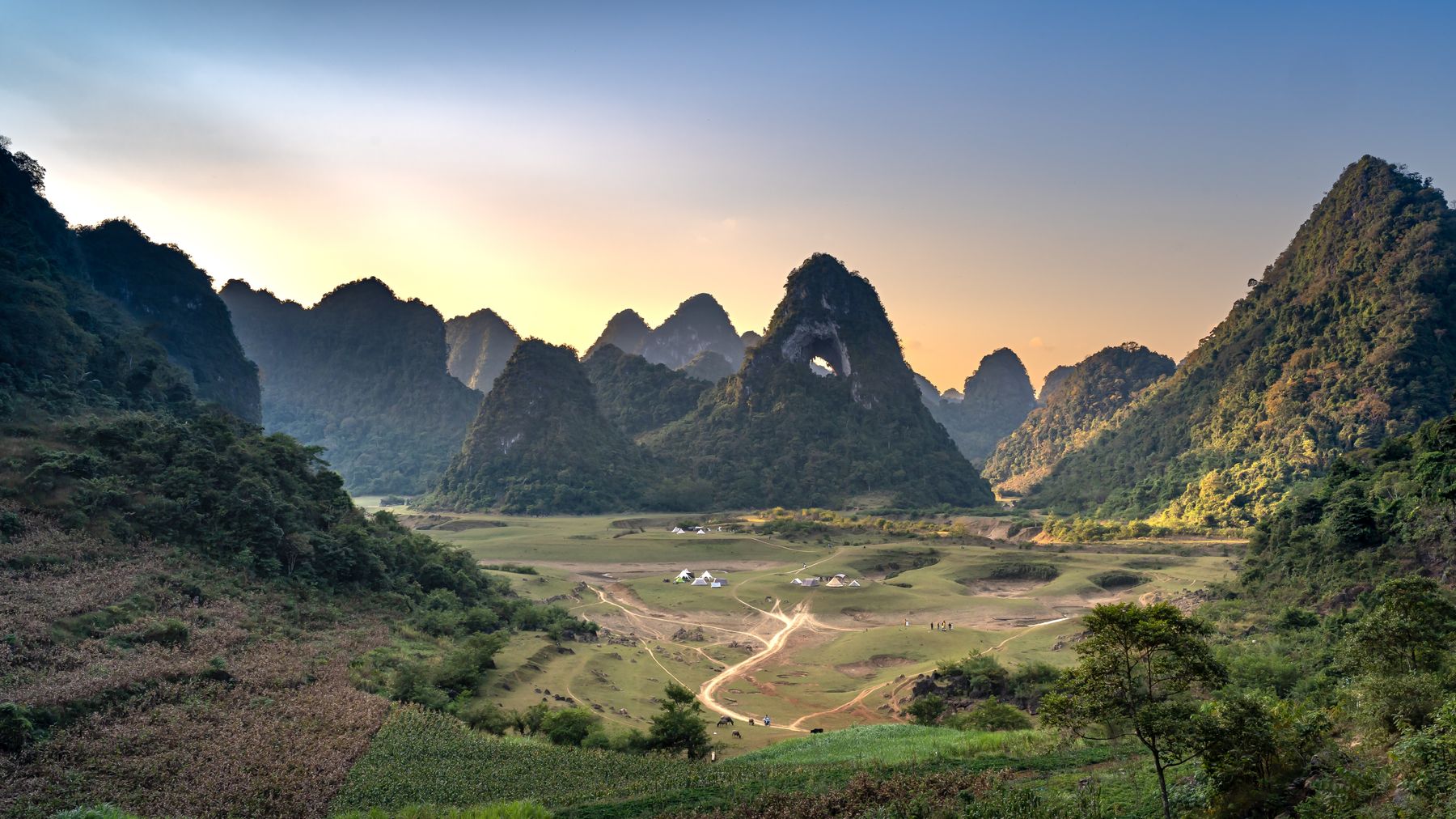
Photo by Quang Nguyen Vinh on Pexels
Practical tips
- The hill is exposed and windy. Bring a wind layer even in warm months.
- No entrance fee. No facilities (no toilet, no shelter).
- The path up is slippery after rain — proper shoes, not flip-flops.
- Phone signal is patchy (Viettel works best in the highlands).
- If riding yourself, fuel up in Dong Van. The next reliable petrol station north is Lung Cu town, and running dry on these mountain roads is no joke.
- Drone pilots: technically you need a permit for drone flights in border areas. Enforcement is inconsistent, but be aware.
Common mistakes
Arriving midday. The light is flat, the hill is hot, and you'll wonder what the fuss was about. Go at dawn or late afternoon.
Skipping it because it's "just a tree." Fair concern, but the setting sells it. The tree is a focal point in a landscape that would already be worth stopping for.
Not budgeting enough time for the Dong Van – Lung Cu stretch. People rush this section to hit the flagpole and miss quieter stops like the tree, Sa Phin Palace, and Sung La valley. Give it a full half-day.
Practical notes
The tree is free, always accessible, and requires no planning beyond timing your ride. If you're already doing the Ha Giang Loop — and you should be — it's a 10-minute detour that earns its reputation. Just show up early.
Last updated · Jul 20, 2026 · independently researched, never sponsored.





