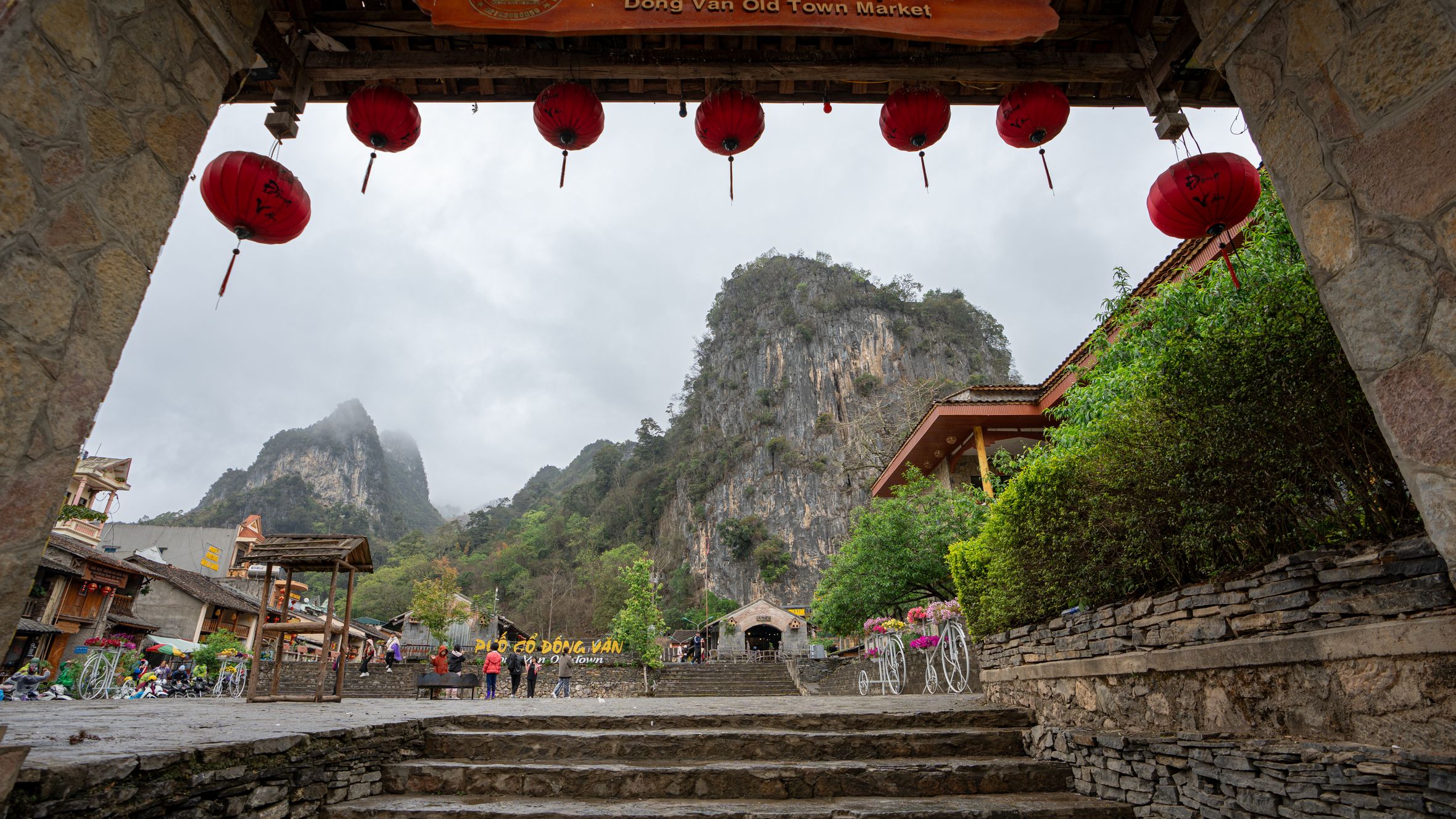
Dong Van Old Quarter is one of those places that rewards the effort it takes to reach. Perched at roughly 1,000 meters on the Dong Van Karst Plateau in Vietnam (베트남 / 越南 / ベトナム)'s far north, this compact settlement of stone-and-timber houses has been standing since the early 1900s. It's not a large site — you can walk through it in twenty minutes — but it anchors a region that feels genuinely remote in a country where "remote" is getting harder to find.
What it is and how it got here
The old quarter lines a short stretch of road in Dong Van town, about 150 km north of Ha Giang city. Most of the houses date from the French colonial period, built by Hmong, Tay, and ethnic Chinese merchant families who traded opium, silver, and textiles across the border. The architecture mixes Chinese shophouse layouts with thick local stone walls — practical for winters that drop near freezing. The Vietnamese government designated it a national cultural heritage site in 2009, and a handful of buildings have been restored, though many remain lived-in family homes.
Dong Van sits within the Dong Van Karst Plateau UNESCO Global Geopark, which covers four districts of dramatic limestone terrain. The old quarter is the most accessible piece of built heritage in the area.
Why travelers go
Most people pass through Dong Van as part of the Ha Giang loop, the three-to-four-day motorbike circuit that's become one of northern Vietnam's defining road trips. The old quarter offers a reason to stop and walk rather than ride. It's a chance to see how highland communities actually lived and traded before the roads improved — thick stone walls, interior courtyards, carved wooden doors. The Sunday morning market, held just beside the old quarter, brings Hmong, Lo Lo, and Tay families down from surrounding villages in traditional dress, selling livestock, vegetables, and local rice wine.
It's also a practical base. Dong Van town has the best concentration of guesthouses and restaurants between Ha Giang city and Meo Vac, so most loop riders spend a night here anyway.
Best time to visit
September through November is the sweet spot. Skies clear up after the summer rains, the terraced rice fields in the valleys turn gold before harvest, and temperatures sit around 15-22°C during the day. October brings buckwheat flower season — the hillsides flush pink and white, which is genuinely striking even if every photographer on Instagram has already shot it.
March through May is the second window. Warmer, less crowded than autumn, with peach and plum blossoms in the valleys.
Avoid June through August if you can. Heavy rain makes the mountain roads between Ha Giang (하장 / 河江 / ハーザン) city and Dong Van slippery and occasionally impassable due to landslides. December through February is dry but cold — lows near 3-5°C, sometimes with frost. Pack properly if you ride in winter.
How to get there
Dong Van is roughly 150 km north of Ha Giang city, which is itself about 300 km from Hanoi.
Hanoi to Ha Giang city
Overnight sleeper buses leave from My Dinh bus station in Hanoi. The ride takes 6-7 hours and costs 250,000-350,000 VND. Several operators run nightly departures around 21:00-22:00, arriving early morning. You can also take a daytime bus (similar price, same duration) or book a private car transfer for around 3,500,000-4,000,000 VND.
Ha Giang city to Dong Van
From Ha Giang city, most travelers ride motorbikes — either their own rental (150,000-250,000 VND/day for a semi-auto like a Honda Wave) or with a local "easy rider" guide (600,000-900,000 VND/day including bike and fuel). The ride to Dong Van takes 4-5 hours via the QL4C road, passing through Quan Ba and Yen Minh. Public buses also run this route for about 100,000 VND but depart early morning and are slow.
If you don't ride, several Ha Giang tour operators run jeep or minivan loop tours for 1,500,000-2,500,000 VND per person for three days, all-inclusive.

Photo by Vietnam Hidden Light on Pexels
What to do
Walk the old quarter itself
Start at the Hmong King's Mansion (Dinh Vuong Pho Ma), a restored courtyard compound built for the local Hmong clan leader in the 1890s. Entry is 20,000 VND. From there, walk south along the main lane past the old merchant houses. Look for the carved lintels above doorways — Chinese characters mixed with Hmong decorative motifs. The whole walk takes 20-30 minutes without stops.
Catch the Sunday market
The weekly market runs from early morning until around noon. It's one of the more authentic highland markets left in the north — less tourist-oriented than Sapa's weekend markets. Arrive before 08:00 for the livestock section. Expect chickens, piglets, and "thang co" (horse meat hot pot) bubbling in massive vats.
Ride to Lung Cu flag tower
About 25 km north of Dong Van, Lung Cu sits at Vietnam's northernmost point. The road is paved and scenic. At the top, a flag tower overlooks the border valley. It's a 30-minute ride each way.
Hike down to Tu San canyon
The Nho Que River carved a deep gorge between Dong Van and Meo Vac. Boat trips on the river (about 100,000 VND per person) run from the Ma Pi Leng pass area, roughly 20 km south of Dong Van. Combine it with the ride toward Meo Vac if you're continuing the loop.
Visit a buckwheat field (seasonal)
In October and November, fields of tam giac mach (buckwheat) bloom across the plateau. No entrance fee — just pull over on any side road between Dong Van and Lung Cu.
Where to eat nearby
Dong Van town has a handful of local restaurants along the main road. Two dishes to look for:
- "Thang co" — a Hmong stew made from horse organs and bones, simmered for hours with cardamom, ginger, and local herbs. It's an acquired taste, but it's the signature dish of the plateau. Sold at market stalls and a few restaurants for 30,000-50,000 VND per bowl.
- "Men men" — steamed corn flour, the historical staple grain of Hmong families in the rocky uplands where rice doesn't grow. Some guesthouses serve it alongside regular meals. Simple, slightly gritty, worth trying once.
For something more familiar, most restaurants serve "pho" and rice plates. A meal runs 40,000-80,000 VND.
Where to stay
Dong Van has about a dozen guesthouses and homestays. No luxury options up here.
- Budget homestays: 150,000-250,000 VND/night. Basic rooms, shared bathrooms, warm blankets. Some offer dinner and breakfast for an extra 100,000 VND.
- Mid-range guesthouses: 400,000-700,000 VND/night. Private bathroom, hot water, Wi-Fi. Places like Dong Van Old Quarter Homestay or Auberge de Meo Vac (if you continue south) are reliable.
- Book ahead on weekends in October-November. The buckwheat season draws domestic tourists and rooms fill up.
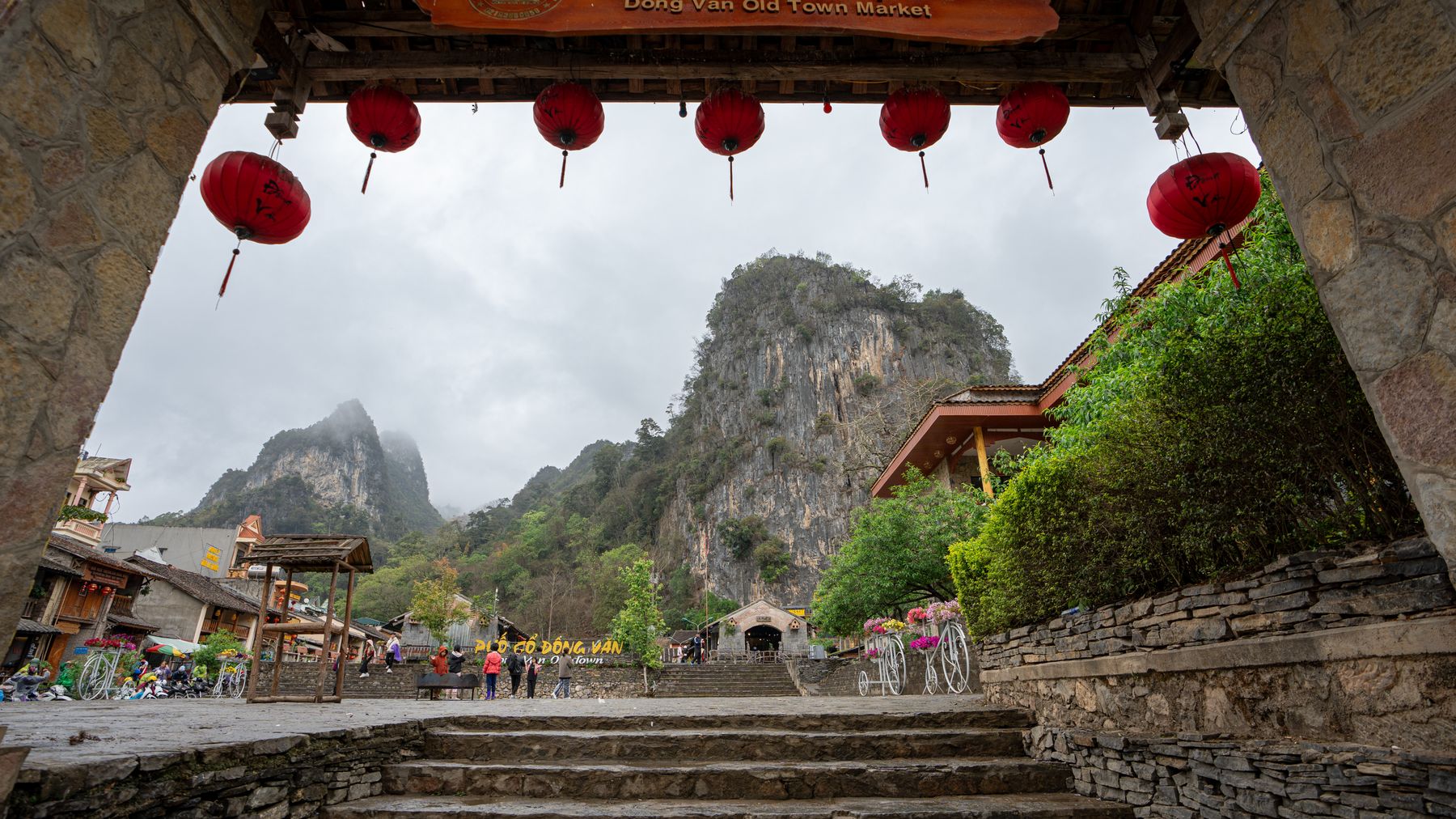
Photo by Nguyen Khuong on Pexels
Practical tips locals would tell you
- Bring cash. There's one ATM in Dong Van town (Agribank) and it sometimes runs dry on weekends. Load up in Ha Giang city.
- Dress warmly even in autumn. Dong Van sits at altitude and evenings drop fast once the sun sets.
- If you're riding a motorbike, carry a rain poncho year-round. Weather shifts quickly on the plateau.
- Vietnamese coffee is available in town — a few small cafes have opened along the main road. Don't expect Hanoi-level egg coffee, but the "ca phe sua da" is fine.
- Phone signal (Viettel) works in Dong Van town but drops out on many stretches of road between towns.
Common mistakes to avoid
- Rushing through. Many loop riders treat Dong Van as a lunch stop. Spend a night — the old quarter is better in early morning light when the market vendors are setting up.
- Skipping the Sunday market for the old quarter alone. The buildings are interesting, but the weekly market is when the town comes alive.
- Underestimating the cold. Riders in t-shirts and jeans in December regret it by noon. Wind chill on the passes is real.
- Forgetting the permit. Foreigners technically need a travel permit for certain border areas in the far north. Your hotel or tour operator in Ha Giang city can arrange one — it's free but takes a few hours. Don't skip it; checkpoints do exist.
Practical notes
Dong Van Old Quarter works best as part of a broader Ha Giang loop itinerary rather than a standalone destination. Budget two nights in the Dong Van-Meo Vac area to avoid rushing the best stretches of road. The old quarter itself is small but it anchors a stop in a town you'll want to linger in anyway.
Last updated · May 29, 2026 · independently researched, never sponsored.