What Che Chuoi Actually Is
If you've walked past a street cart in Saigon at dusk and seen small plastic cups filled with something pale, creamy, and studded with chewy pearls, you've already met "che chuoi". The name is straightforward: che covers the broad family of Vietnamese sweet soups and pudding-style desserts; chuoi is banana. Put them together and you get a warm or room-temperature bowl of ripe banana simmered in coconut milk, thickened with tapioca starch, loaded with "bot bang" (tapioca pearls), and finished with crushed roasted peanuts and a pinch of salt.
That pinch of salt is not an accident. It's the detail that separates a well-made che chuoi from a clumsy one. The contrast between sweet coconut, starchy banana, and a faint mineral edge is what keeps you reaching back into the cup.
A Brief History
Che as a dessert category has roots stretching back centuries across Vietnam, with heavy influence from Chinese sweet soups (tong sui) that traveled south with Hokkien and Cantonese migrants. But che chuoi as it exists today — coconut-forward, peanut-topped, built around the soft chuoi su (lady finger banana) — is a distinctly southern dish, shaped by the Mekong Delta (메콩 델타 / 湄公河三角洲 / メコンデルタ)'s agricultural abundance.
The delta produces more bananas than any cook could ever need, along with coconuts and tapioca (cassava), which means the raw ingredients for che chuoi have been cheap and available in the south for generations. It became a staple of the gánh chè tradition — the shoulder-pole dessert vendors who carried two baskets through alleyways and markets — long before it settled onto fixed street carts and into dessert shops.
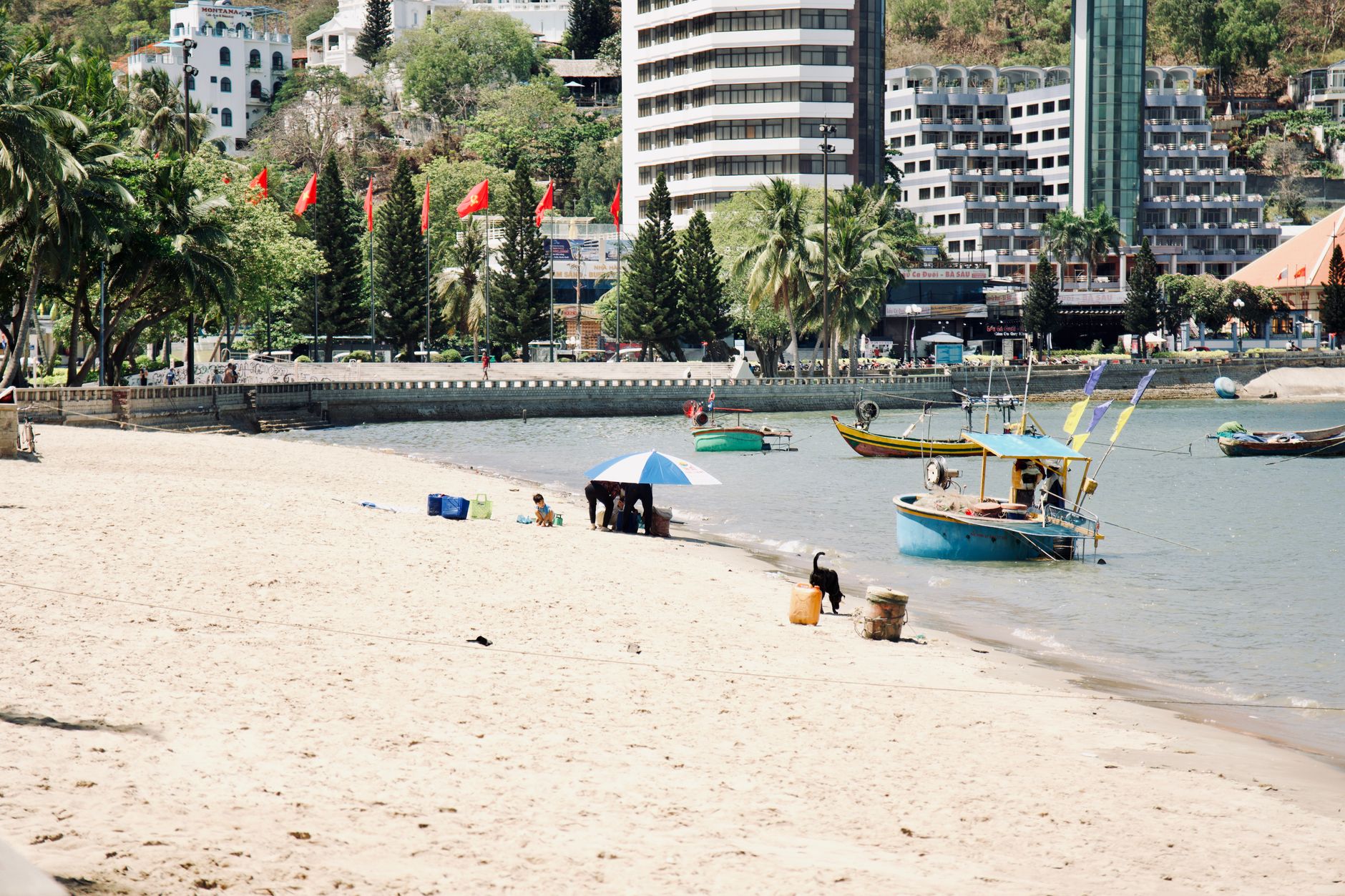
In Hanoi and Hue, the che tradition skews differently: bun thang country doesn't have much use for coconut-milk desserts, and northern che often leans on mung beans, lotus seeds, and black sesame. Che chuoi is not unknown in the north, but it always feels like a transplant there. In Saigon (사이공 / 西贡 / サイゴン) and the Mekong provinces, it belongs.
The Anatomy of a Good Bowl
The Banana
Variety matters. The best che chuoi uses chuoi su (also called chuoi ngu) — small, thin-skinned, intensely fragrant. These go soft quickly when simmered, which is exactly what you want. Chuoi tay (the big Cavendish-style banana) works in a pinch but turns mushy and loses its flavor into the liquid. Vendors who know what they're doing slice chuoi su into coins about 1.5 cm thick and add them to the pot only in the final few minutes of cooking.
The Coconut Base
The liquid is a blend of coconut cream (nuoc cot dua) and water, sweetened with sugar and lightly salted. Some vendors thicken it with a slurry of tapioca starch dissolved in cold water, stirred in at the end. The result should coat a spoon — not watery, not gluey. A thin che chuoi suggests the vendor skimped on coconut cream; a gluey one means too much starch or it's been sitting in a bain-marie too long.
Tapioca Pearls
These are cooked separately until translucent, then added to the pot. Small pearls (bot bang nho) are traditional. Some shops use the larger "boba" pearls now, which changes the texture profile significantly — chewier, more dominant. Neither is wrong, but the small pearls absorb more coconut flavor and feel more integrated.
The Peanut Finish
Dry-roasted peanuts, roughly crushed, go on top. They provide crunch, fat, and a toasty bitterness that cuts through the sweetness. Skip the peanuts and you have a pleasant dessert. Keep them and you have a complete one.

Photo by Nguyễn Thị Thảo Hà (Ha Nguyen) on Pexels
Regional Variants
Saigon standard: warm, moderately sweet, small tapioca pearls, crushed peanuts, sometimes a drizzle of extra coconut cream on top served from a small ladle. Sold from 15,000–25,000 VND per cup at street carts.
Mekong Delta version: often richer in coconut, sometimes with la dua (pandan leaf) steeped into the base for a faint green color and grassy fragrance. In Can Tho, it's common to find che chuoi sold alongside other Mekong fruit desserts on floating market-adjacent carts.
Che chuoi nuong: a baked variant — banana wrapped in glutinous rice and banana leaf, grilled or baked, then served with coconut sauce. Technically in the same family but a different eating experience altogether. More snack than dessert soup.
Northern-style: when you find che chuoi in Hanoi, it often comes chilled, thinner in consistency, and less aggressively coconut-forward. A cooling thing rather than a comforting one.
How to Order It
At a street cart, you'll usually just point — the che is visible in the pot. But if you're at a dedicated quan che (dessert shop) with a menu:
- "Cho toi mot che chuoi" — give me one che chuoi.
- "Nong hay lanh?" — the vendor may ask hot or cold. Nong is warm; lanh or da means served over ice.
- If you want extra peanuts: "Cho them dau phong".
- If you want extra coconut cream on top: "Cho them nuoc cot dua".
Cold che chuoi (over crushed ice) is more refreshing in the midday heat but slightly mutes the coconut aroma. Warm is the canonical serving style and the one worth trying first.

Photo by Trần Phan Phạm Lê on Pexels
Where to Try It
Quan Che Khuc Bach — Saigon (District 3): A dedicated dessert shop with a rotating menu of che; their che chuoi is consistently good — proper chuoi su, thick coconut base, not over-sweetened. Around 20,000 VND. Busy from 3 p.m. onward.
Cho Ben Thanh street-cart row — Saigon: The vendors working the perimeter streets around Ben Thanh Market sell simple, honest che chuoi out of battered aluminum pots. It's not fancy, but the turnover is fast so the pot is always fresh. 15,000 VND.
Che Co Tuyen — Can Tho: A well-known local dessert stall in the Ninh Kieu area with a Mekong-style che chuoi — richer coconut base, pandan-scented, sold in proper bowls rather than plastic cups. Worth the detour if you're already in Can Tho exploring the delta.
Practical Notes
Che chuoi keeps poorly — the tapioca pearls harden within a few hours and the banana oxidizes. Always buy it fresh from a cart with visible turnover rather than pre-packaged versions. If you're eating in Saigon, the late-afternoon hours (3–6 p.m.) are when street carts are at their most active and the che is most likely to be freshly made.
Last updated · May 29, 2026 · independently researched, never sponsored.