Most travelers treat Can Tho as a quick 24-hour pitstop to see a floating market before rushing back to Saigon. But if you are on a budget and want to experience the slow, river-life rhythm of the Mekong Delta (메콩 델타 / 湄公河三角洲 / メコンデルタ), staying here for ten days is a revelation. Accommodation is cheap, the street food is incredibly affordable, and the locals are some of the friendliest in Vietnam.
This ten-day itinerary is designed for travelers who want to stretch their dollars, eat like locals, and explore the hidden corners of the city.
Day 1 — Orientation and Alleyway Eats
Start your trip by getting your bearings around the Ninh Kieu Wharf area. This is the heart of the city, but you do not need to spend money on fancy river cruises to enjoy it. Walk the pedestrian path along the Hau River and visit the Ninh Kieu Park.
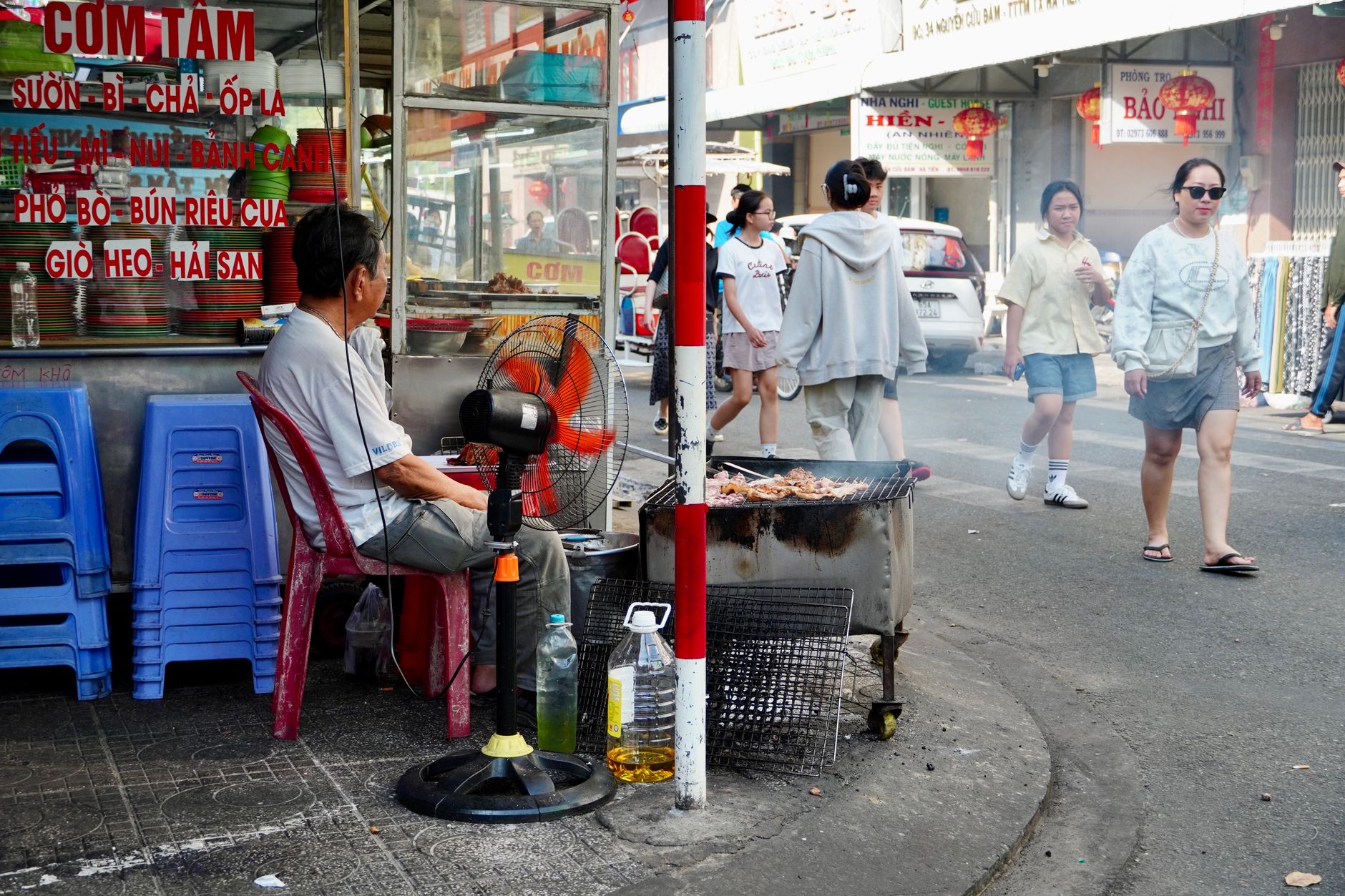
For dinner, skip the tourist-oriented restaurants on the main strip. Head instead to Hem 86 (Alley 86) on Mau Than Street. This is a favorite student hub packed with cheap food stalls. Try a bowl of "hu tieu" (Mekong pork noodle soup) or "com tam" (broken rice with grilled pork) for less than 35,000 VND.
- Off-script suggestion: Walk across the pedestrian bridge (Cau Tinh Yeu) at night when it lights up. It costs nothing and offers the best breeze in the city.
Day 2 — The Cai Rang Floating Market on a Budget
Most tour agencies will charge you 300,000 VND or more for a packaged tour to Cai Rang. Skip them. Instead, walk down to the Ninh Kieu pier at 5:00 AM and negotiate directly with a local boat captain. You can easily secure a private wooden boat for around 350,000 VND total, which you can split if you travel with friends.
Have breakfast on the water. Wave down a vendor boat selling hu tieu (후띠우 / 粿条 / フーティウ) and hot "ca phe sua da" (iced coffee with condensed milk). A bowl of noodles eaten while rocking on the river is an unforgettable experience.
- Off-script suggestion: Ask your boat captain to drop you off at the land side of the Cai Rang market on the way back. Walking through the chaotic, muddy wet market on shore is far more intense and authentic than just watching from the water.
Day 3 — Binh Thuy Ancient House and Back Canals
Take a local bus or rent a bicycle to head 6 km north of the city center to the Binh Thuy Ancient House. Built in 1870, this French-style villa with traditional Vietnamese interiors is famous as the filming location for the movie The Lover. The entry fee is a modest 20,000 VND.
After visiting the house, do not head straight back. Spend the afternoon exploring the quiet residential streets along the Binh Thuy River.
- Off-script suggestion: Walk down the small lane directly opposite the ancient house. It leads to a quiet canal where locals still wash vegetables and fish from wooden docks.
Day 4 — Con Son Islet Eco-Adventure
Con Son is a low-lying island in the middle of the Hau River that has embraced community-based tourism. Take a public ferry from the Co Bac pier for just 10,000 VND. Once on the island, you can walk or rent a bicycle to explore the fruit orchards.
While some attractions charge small entry fees (around 20,000 to 30,000 VND), the real joy is wandering the dirt paths lined with water hyacinths and banana trees.
- Off-script suggestion: Visit the floating fish rafts on the northern tip of the island. For a tiny fee, the farmers will show you how they train snakehead fish to jump out of the water for food.

Photo by Emily Le on Pexels
Day 5 — Slow Coffee and Local History
Use this day to slow down. Can Tho has a thriving cafe culture. Find a local "quan ca phe" (coffee shop) along the Xang Thoi lake. You can sit for hours with a cheap drink, watch the locals fish, and read a book.
In the afternoon, visit the Can Tho Museum. It is one of the largest museums in the Mekong Delta, featuring exhibits on Khmer culture, the anti-colonial struggle, and local biodiversity. Entry is free or very cheap (around 10,000 VND).
- Off-script suggestion: Seek out Cafe Muoi Cuong, a traditional home-based cacao farm where the owner will show you how he processes chocolate from scratch.
Day 6 — The Giant Ficus of Gian Gua
Rent a semi-automatic motorbike for the day (about 120,000 VND) and ride south to the Phong Dien district. Your destination is Gian Gua, a historical site featuring a massive, ancient ficus tree whose branches have grown into a giant, tangled canopy covering thousands of square meters.
It is a sacred site for locals, completely free to enter, and feels like stepping into a fantasy novel.
- Off-script suggestion: On the ride back, stop at any roadside stall displaying a sign for "banh xeo" (savory sizzling crepes). These rural stalls serve massive crepes packed with wild herbs for a fraction of the city price.
Day 7 — The Student District Food Crawl
Can Tho is a university town, which means there is a massive market for cheap, filling food. Spend today exploring the streets around Can Tho University, particularly Mau Than, 30 Thang 4, and De Tham streets.
Try "banh cong" (a fried muffin-like cake made of mung beans, taro, and shrimp) and "nem nuong" (grilled pork skewers wrapped in rice paper with herbs).
- Off-script suggestion: Head to the night market near the old Can Tho market building. Instead of buying souvenirs, look for the vendors selling grilled sweet potatoes and bananas wrapped in sticky rice.
Photo by Emily Le on Pexels
Day 8 — Khmer Culture and Pagodas
Can Tho has a significant ethnic Khmer population. Spend the day visiting the city's beautiful Khmer pagodas. Start with Chua Pitu Khosa Rangsay, a stunning multi-story temple featuring intricate Angkor-style carvings.
Remember to dress respectfully (shoulders and knees covered). These temples are active places of worship and do not charge entry fees.
- Off-script suggestion: Visit the temple during the late afternoon (around 4:00 PM) to hear the monks chanting. It is a deeply peaceful experience away from the city noise.
Day 9 — Bang Lang Stork Sanctuary
This requires a longer trip (about 45 km northwest of the city), but it is worth it. You can take a local public bus heading toward Thot Not district and ask the driver to drop you near the sanctuary, then walk or take a local motorbike taxi (xe om) to the entrance.
Thousands of storks and egrets return to this bamboo forest every evening. The best time to visit is just before sunset.
- Off-script suggestion: Stop in Thot Not town to try "banh bo thot not" (spongy cakes sweetened with local palm sugar), a specialty of this specific district.
Day 10 — Last-Minute Markets and Departure
On your final day, visit the Xuan Khanh market to see how locals shop for fresh produce, river fish, and herbs. It is much less touristy than Ninh Kieu. Grab a final "banh mi" from a street cart and sit by the river to watch the boats pass one last time.
Practical Notes
- Accommodation: Look for homestays or budget guesthouses (called "nha nghi") around the Xuan Khanh or Hung Loi wards. Rooms can be found for as low as 200,000 to 300,000 VND per night.
- Getting around: Walking is fine for the center, but renting a bicycle or a cheap manual motorbike is the most cost-effective way to see the rural outskirts.
- Daily Budget: You can easily get by on 400,000 to 500,000 VND ($17–$21 USD) per day, including food, transport, and basic accommodation.
Last updated · May 30, 2026 · independently researched, never sponsored.