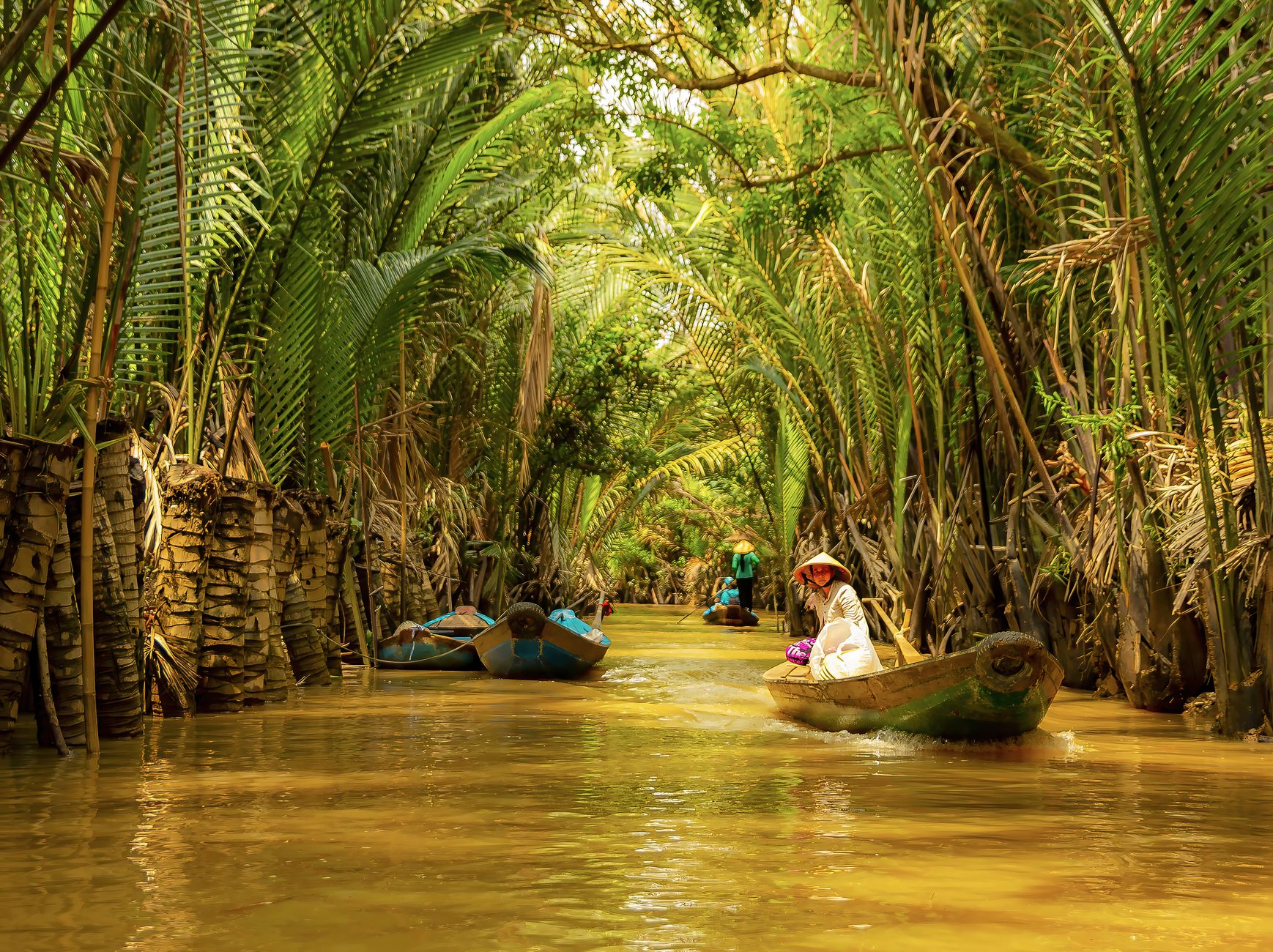
Chua Xiem Can sits about 7 km southeast of Ca Mau city center, and it's the kind of place that reshapes your assumptions about the deep Mekong Delta (메콩 델타 / 湄公河三角洲 / メコンデルタ). This is one of the largest and most elaborate Khmer pagodas in southern Vietnam, yet it draws a fraction of the visitors that temples in Soc Trang or Tra Vinh see. If you're already in Ca Mau — or passing through on a delta loop — it's worth the detour.
What it is
Chua Xiem Can (sometimes written Xiem Can Pagoda) is a Theravada Buddhist pagoda built by the local Khmer community. The original structure dates to the early 19th century, but the current complex is the result of major reconstruction work completed around 2010, funded largely by the local Khmer population. The main prayer hall rises with the steep, layered roofline typical of Khmer religious architecture — think Angkor-influenced spires, gilded naga serpents along the staircases, and interior murals depicting scenes from the Jataka tales.
The pagoda compound covers roughly 4 hectares. Beyond the main hall, you'll find a monks' quarters, a large open courtyard used for festivals, several smaller shrines, and mature trees that keep the grounds cooler than the surrounding countryside. The architectural detail is genuinely impressive — carved stucco work on the exterior walls, painted ceiling panels, and a towering central Buddha image inside the main hall.
Why travelers go
Most visitors come for two reasons: the architecture and the quiet. Ca Mau province doesn't get heavy tourist traffic, and Chua Xiem Can reflects that. You can walk the grounds for an hour without competing for space. Photographers come for the ornate rooflines and the warm afternoon light that hits the gold-painted spires. Cultural travelers come because this is a living Khmer community temple — monks live and practice here daily, and during Khmer festivals the compound fills with local families.
It's also a useful counterpoint if your Mekong Delta trip has been all mangrove forests and floating markets. Chua Xiem Can reminds you that the delta's cultural fabric includes Khmer, Chinese, and Cham communities alongside the Kinh majority.
Best time to visit
The dry season — roughly December through April — is the most comfortable window. Ca Mau gets seriously wet from May to November, and while the pagoda is accessible year-round, muddy access roads and heavy afternoon downpours make the rainy season less pleasant.
If you can time it, visiting during "Chol Chnam Thmay" (Khmer New Year, usually mid-April) or "Ok Om Bok" (the water festival, typically in November) transforms the experience. The courtyard fills with traditional dance performances, offerings, and community meals. These festivals aren't staged for tourists — they're community events, so dress respectfully and don't shove a camera in anyone's face during prayer.
Early morning (before 9 AM) or late afternoon (after 3 PM) gives you the best light and the fewest other visitors.

Photo by HIEU NGUYEN on Pexels
How to get there
From Ca Mau city center, Chua Xiem Can is about 7 km along the road toward the coast. You have a few options:
- Motorbike rental: The most practical choice. Rentals in Ca Mau run 120,000–150,000 VND per day. The ride takes about 15 minutes on mostly flat roads. Google Maps handles the routing fine.
- Grab/taxi: A Grab bike from Ca Mau center costs around 25,000–35,000 VND one way. A taxi runs 60,000–80,000 VND. Grab coverage in Ca Mau is decent but not instant — expect a few minutes' wait.
- Xe om (motorbike taxi): If Grab is slow, flag down a local xe om near the market. Negotiate before you hop on — 30,000–40,000 VND is fair for the distance.
If you're coming from Saigon, the most common route is a bus to Ca Mau (roughly 8–9 hours, 200,000–280,000 VND from the Mien Tay bus station). From Can Tho, it's about 3.5 hours by bus or private car.
What to do
Walk the main prayer hall
Remove your shoes before entering. The interior is a single large space dominated by a gilded Buddha statue. Look up — the ceiling murals are detailed and well-maintained. The side walls carry painted panels showing Buddhist parables. If monks are present and not in prayer, a polite nod is appropriate. Some speak basic Vietnamese; fewer speak English.
Study the exterior carvings
The stucco work on the outer walls and the naga balustrades on the front staircase are where the craftsmanship shows. The layered roof corners each terminate in carved serpent or bird figures. Bring a zoom lens if you're into architectural photography.
Sit in the courtyard
This sounds like nothing, but the compound is genuinely peaceful. Mature trees, swept paths, the occasional sound of chanting from inside. After days of delta humidity and market noise, twenty minutes on a bench here recalibrates you.
Visit the monks' quarters
The residential area behind the main hall is usually accessible. Don't enter rooms, but walking the path and observing daily routines is fine. Small donations are welcome — there's typically a donation box inside the main hall.
Explore the surrounding Khmer village
The neighborhood around the pagoda is a Khmer community. Simple houses, small shops, kids on bicycles. A short walk gives you context for the pagoda's role as a social and spiritual center.
Where to eat nearby
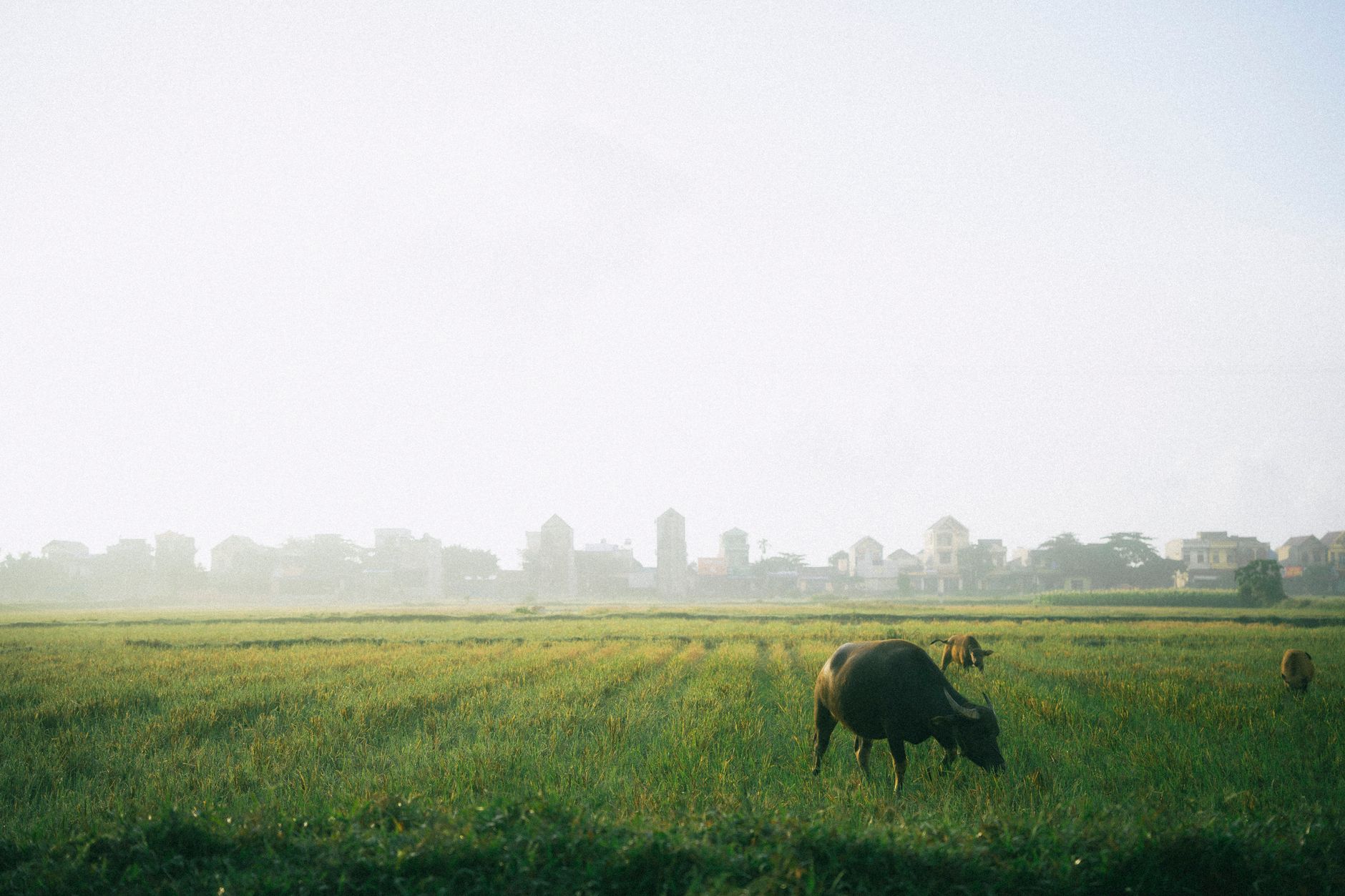
Chua Xiem Can sits in a rural area, so dedicated restaurants are thin on the ground. Your best bet is to eat in Ca Mau city before or after your visit.
- "Bun nuoc leo" is the Khmer-influenced noodle soup you should seek out in the delta — a rich broth built on fermented fish ("mam"), served with rice noodles, pork, and fresh herbs. Look for small shops near the Ca Mau market area.
- "Banh tam bi" — thick tapioca noodles with shredded coconut pork — is another delta specialty worth trying. Street vendors near Ly Bon street in Ca Mau city sell it for 20,000–30,000 VND a plate.
If you're hungry at the pagoda itself, there's occasionally a small stall near the entrance selling drinks and snacks, but don't count on it.

Photo by Valeria Drozdova on Pexels
Where to stay
Ca Mau city has a reasonable range of accommodation:
- Budget: Guesthouses and mini-hotels along Phan Ngoc Hien street start at 200,000–350,000 VND per night. Basic but clean, usually with air conditioning and Wi-Fi.
- Mid-range: Hotels like Muong Thanh Ca Mau or Anh Nguyet Hotel run 500,000–900,000 VND per night. Comfortable rooms, breakfast included at most.
- There's no luxury tier here. Ca Mau isn't set up for resort tourism. Manage expectations accordingly.
Practical tips locals would tell you
- Dress modestly. Shoulders and knees covered. This is an active religious site, not a museum. Monks and local worshippers notice.
- Bring water and sunscreen. There's limited shade between the parking area and the main hall, and Ca Mau heat is no joke — 35°C+ is standard in the dry season.
- Cash only. No card terminals anywhere near the pagoda. ATMs are in Ca Mau city.
- Combine it with the Ca Mau Cape. Dat Mui (the southernmost tip of Vietnam) is about 100 km further south. If you've come this far, the mangrove forests and the "end of the road" feeling at the cape make a solid day trip.
Common mistakes to avoid
- Rushing through. Some visitors snap three photos and leave in ten minutes. The pagoda rewards a slower pace — details in the carvings, the atmosphere of the courtyard, the rhythm of a working temple.
- Visiting midday. Between 11 AM and 2 PM the heat is brutal and the light is flat. Early morning or late afternoon is better in every way.
- Expecting English signage. There's minimal signage in Vietnamese, let alone English. Download offline maps and do your reading before you arrive.
- Skipping Ca Mau entirely. Most delta itineraries stop at Can Tho (껀터 / 芹苴 / カントー) or maybe Soc Trang. Ca Mau province has its own character — quieter, less polished, more Khmer and coastal influence. Chua Xiem Can is one reason to make the extra push south.
Last updated · May 26, 2026 · independently researched, never sponsored.