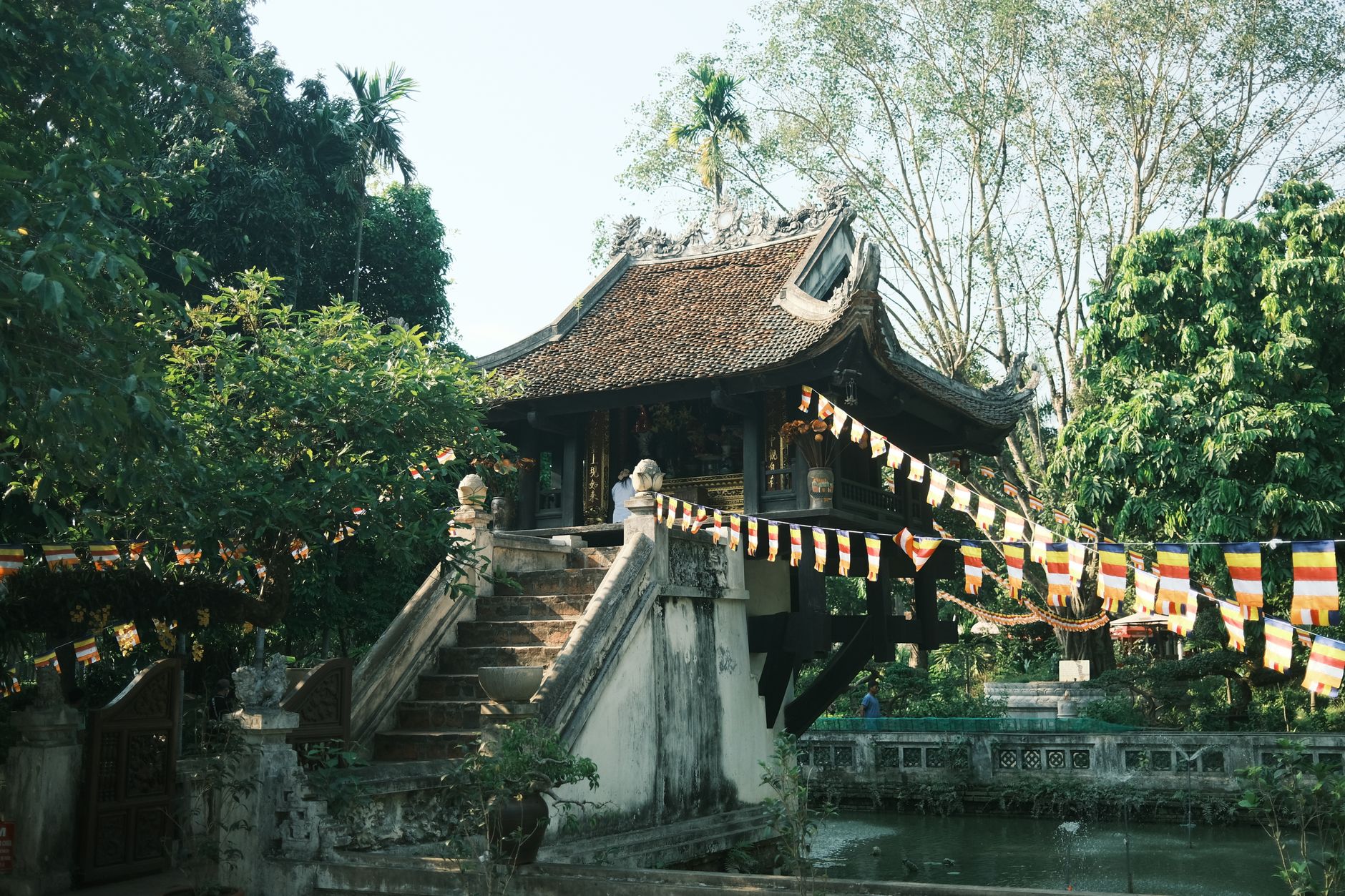
Co Loa doesn't make most Hanoi itineraries, which is part of what makes it worth the trip. This ancient citadel — roughly 16 km northeast of Hoan Kiem Lake — is where the Au Lac kingdom built its capital around the 3rd century BC. Today it's a lived-in village wrapped around concentric earthen ramparts, rice paddies, and a handful of temples that see more incense smoke from locals than camera flashes from tourists.
What Co Loa is — and why it matters
Co Loa is considered the earliest large-scale citadel in Southeast Asia. The layout followed a spiral pattern of three concentric earthen walls — the outermost stretching roughly 8 km in circumference. Much of those walls have eroded or been built over by village homes, but sections still rise visibly from the landscape, especially along the northern and eastern edges.
The site is tied to the legend of King An Duong Vuong, who founded Au Lac and allegedly used a magic crossbow to defend the citadel. You'll find this story everywhere here — in temple carvings, in the names of local shops, and in the well at the inner citadel where his daughter My Chau is said to have met her end. Whether you care about the legend or not, walking along the remnants of walls that predate the Roman Colosseum by a couple of centuries puts things in perspective.
Why travelers go
Co Loa appeals to a specific kind of visitor: someone who's already walked the Old Quarter, visited the [Temple of Literature](/posts/temple-of-literature-hanoi (하노이 / 河内 / ハノイ)-guide), maybe crossed Long Bien Bridge at sunset, and now wants something that feels genuinely off the tourist track without leaving greater Hanoi. There's no entrance fee for the village itself. The temples charge nothing or a nominal donation. You won't find souvenir stalls or guided tour buses. It's a real village where people farm, cook, and go about daily life inside the footprint of a 2,300-year-old fortress.
Best time to visit
Co Loa is an outdoor site with minimal shade, so timing matters. October through March gives you cooler, drier weather — ideal for walking the ramparts and exploring on foot. January and February are especially good if your visit overlaps with Tet or the Co Loa Festival (6th day of the first lunar month), when the village holds processions, ceremonies, and traditional games around the main temple.
Avoid June through August if you can. The heat is aggressive, the humidity worse, and afternoon downpours can turn the earthen paths muddy.
How to get there from central Hanoi
From the Old Quarter or Hoan Kiem area, you have a few options:
- Motorbike or scooter: The most practical choice. Head north on Route 3 (toward Thai Nguyen) and turn off at Dong Anh district. About 40-50 minutes depending on traffic. Parking near the inner citadel costs 5,000-10,000 VND.
- Grab car: Around 150,000-200,000 VND one way. Book the return in advance — Grab availability thins out in Dong Anh.
- Bus: Route 17 from Long Bien bus station gets you to Dong Anh town, then a short xe om (motorbike taxi) ride to Co Loa. Total cost under 20,000 VND, but expect 60-90 minutes with stops.
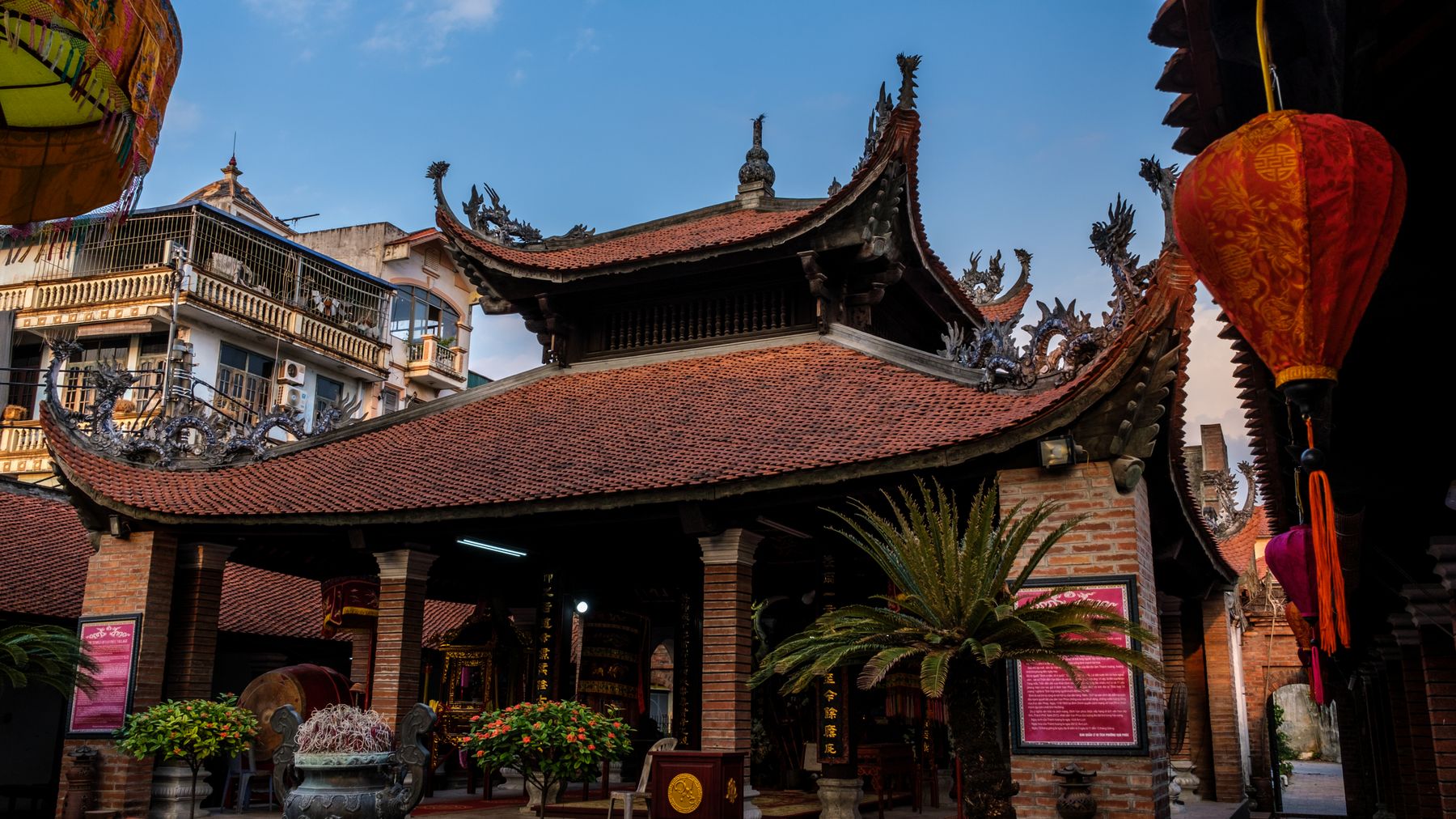
Photo by Nghĩa Văn on Pexels
What to do at Co Loa
Walk the rampart remains
Start at the inner citadel and work outward. The innermost wall is the best preserved and easiest to trace. Follow the dirt paths that run along its base — you'll pass village houses built directly into the old earthworks. The middle and outer walls are harder to identify but still visible in sections, particularly near the northern rice fields. Budget about an hour for a full loop.
Visit the An Duong Vuong Temple
The main temple sits inside the innermost wall and dates back several centuries (rebuilt multiple times). It's a working place of worship, not a museum — locals come here regularly with offerings. The architecture is classic northern Vietnamese: heavy timber columns, tiled roofs with dragon ridgepoles, and a dim interior thick with incense. The courtyard has a banyan tree that's been here longer than anyone can remember.
See the My Chau shrine and well
A short walk from the main temple, this smaller shrine marks the legendary spot where Princess My Chau was killed by her own father after he discovered her inadvertent betrayal. The well nearby supposedly turned its water to pearl when her blood touched it. Melodramatic legend aside, the shrine is peaceful and almost always empty of visitors.
Explore the village lanes
Co Loa village rewards wandering. The narrow lanes between brick-and-plaster houses open onto rice fields, lotus ponds, and small family temples. In the morning, you'll see vendors selling "banh cuon" — thin steamed rice rolls with minced pork — from their front doorsteps. This is where the experience shifts from historical site to something more personal.
Check the small archaeological display
Near the main temple compound, a modest exhibition room displays bronze arrowheads, pottery fragments, and dong (bronze drums) found during excavations. It's not the National Museum, but the arrowhead collection is genuinely impressive — thousands were unearthed here, lending some credibility to the magic crossbow legend.
Where to eat nearby
Co Loa doesn't have a restaurant scene. What it has are village eateries and home kitchens.
"Banh cuon (반꾸온 / 蒸米卷 / バインクオン)" is the local specialty — Co Loa's version uses a slightly thicker wrapper than the Hanoi Old Quarter style, with a generous filling of wood-ear mushroom and pork. Look for the small shops near the village market, open mornings only. A plate runs 25,000-35,000 VND.
For something more substantial, backtrack toward Dong Anh town center where you'll find "bun cha" joints and rice-and-meat stalls ("com binh dan"). Nothing fancy, but cheap and filling — 40,000-60,000 VND for a full meal.
Where to stay
Most travelers visit Co Loa as a half-day trip from Hanoi and sleep in the city. If you want to stay closer:
- Budget: Nha nghi (guesthouses) in Dong Anh town run 200,000-350,000 VND/night. Basic but functional.
- Mid-range: A few hotels along Route 3 near Dong Anh offer rooms at 500,000-800,000 VND with air conditioning and hot water.
- Better option: Base yourself in Hanoi's Old Quarter or Tay Ho district and ride out for the morning.

Photo by Duc Nguyen on Pexels
Practical tips locals would tell you
- Go early. The temples open around 7:00 AM. By 8:30 you'll have the place mostly to yourself. By noon it's hot and the food stalls close.
- Wear shoes you don't mind getting dirty. The paths along the ramparts are unpaved and can be muddy after rain.
- Bring cash. There are no ATMs at Co Loa itself. The nearest are in Dong Anh town.
- Dress modestly at the temples. Shoulders and knees covered — same rule as anywhere in Hanoi.
- Vietnamese coffee stop: Grab an iced "ca phe sua da" at one of the small cafes near the village gate before you start walking. It'll cost 15,000-20,000 VND.
Common mistakes to avoid
- Expecting a polished heritage park. Co Loa is a living village with ancient ruins woven into it, not a ticketed attraction with signage and audio guides. That's the appeal, but set your expectations right.
- Coming in the afternoon. The temples may be closed, the food stalls definitely will be, and the heat from April onward is punishing.
- Skipping the outer walls. Most visitors only see the inner temple and leave. Walking even part of the middle rampart gives you a sense of the citadel's real scale.
- Not arranging return transport. If you came by Grab, have your return sorted. Hailing a ride from inside Co Loa village can take 15-20 minutes or longer.
Practical notes
Co Loa works best as a morning trip paired with something else in northern Hanoi — Bat Trang pottery village is only about 20 minutes south and makes a natural combo. Budget three hours for Co Loa itself, more if you're the wandering type. It's one of those places that rewards curiosity over checklists.
Last updated · May 29, 2026 · independently researched, never sponsored.