Co Giang is not a destination most visitors stumble on by accident. It sits quietly in District 1, a short walk from the backpacker cluster around Pham Ngu Lao, but it operates on its own rhythm — one that rewards people who show up early and stay late.
Morning — Banh Mi Hoa Ma and the Breakfast Crowd
The street wakes up before 6 a.m. The most famous address here is Banh Mi Hoa Ma, at 53 Co Giang, which has been running since 1958. That is not a typo. The cart has been on this corner for generations, and on a weekday morning the queue forms before the city traffic fully kicks in.
The "banh mi (반미 / 越式法包 / バインミー)" here is the Saigon style — split baguette, pork pate, cha lua (pork roll), shredded pork skin, pickled daikon and carrot, fresh chili, cucumber, and a hit of Maggi. A single banh mi runs about 35,000–45,000 VND depending on fillings. The bread is baked to order in small batches, so the crust still has a crack to it when it arrives in your hand. There is no seating. You eat standing on the kerb or perched on a plastic stool someone drags out.
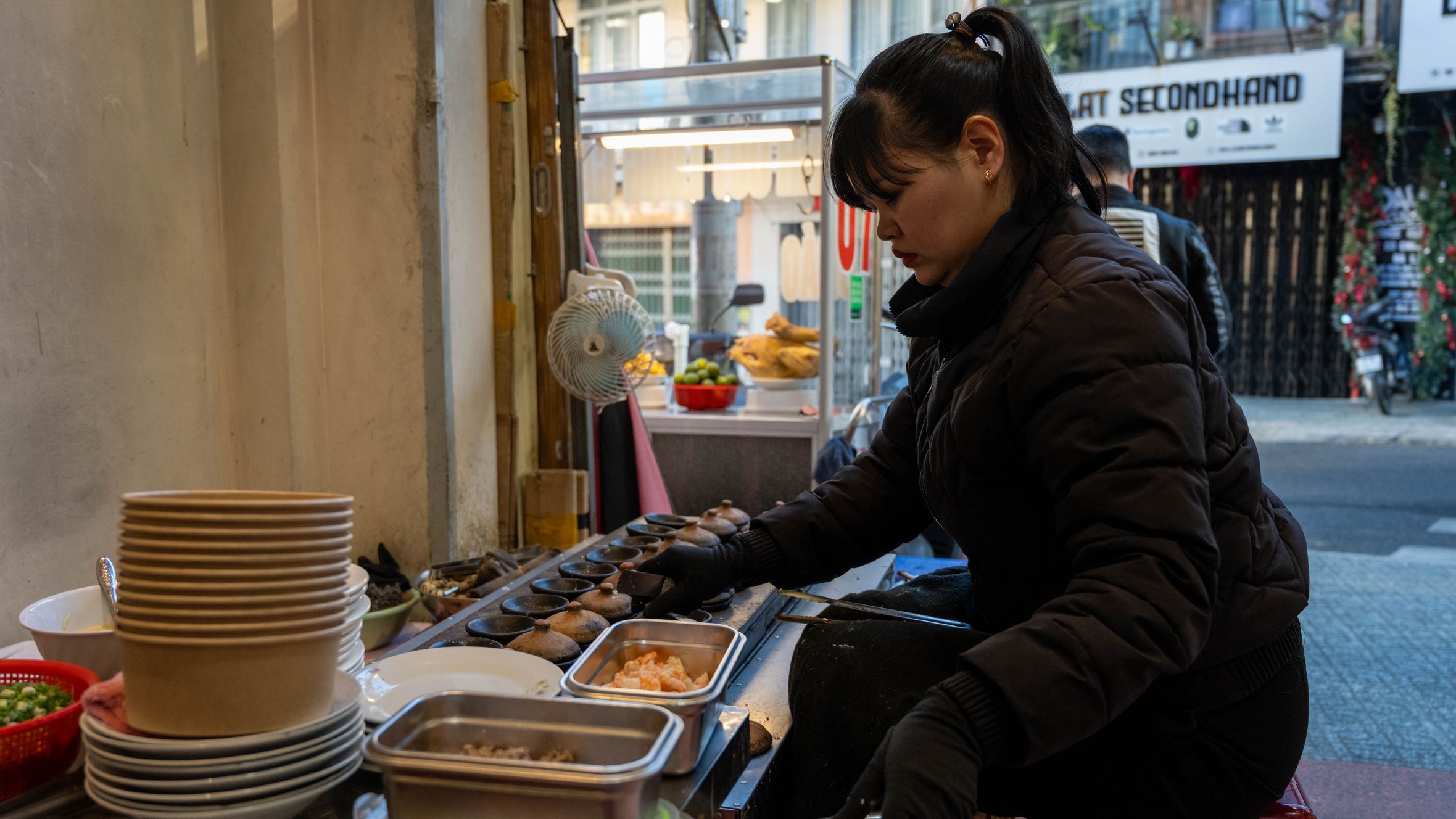
Around the same stretch you will find vendors selling "banh cuon" — steamed rice rolls filled with minced pork and wood-ear mushroom — and bowls of "hu tieu" for those who want something wet in the morning. Co Giang in the first hour of daylight feels less like a tourist attraction and more like a neighbourhood canteen where everyone knows what they want and no one lingers over menus.
Late Morning — Navigating the Alley Interior
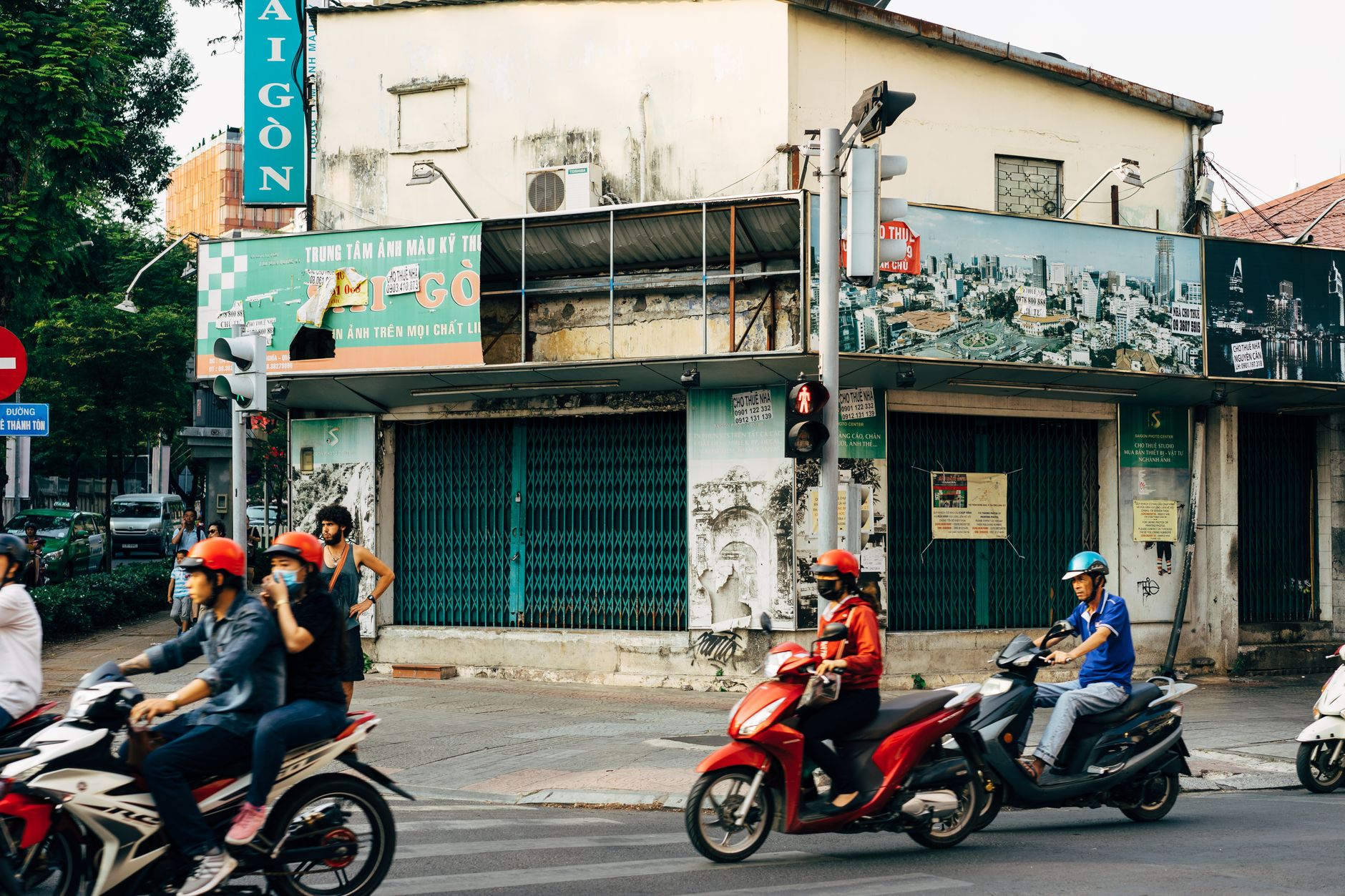
By 9 a.m. the banh mi crowd has thinned and the alley interior opens up. Co Giang runs roughly 400 metres between Co Bac and Tran Hung Dao, and the narrower side alleys branching off it are where the permanent stall kitchens operate. Follow the smoke.
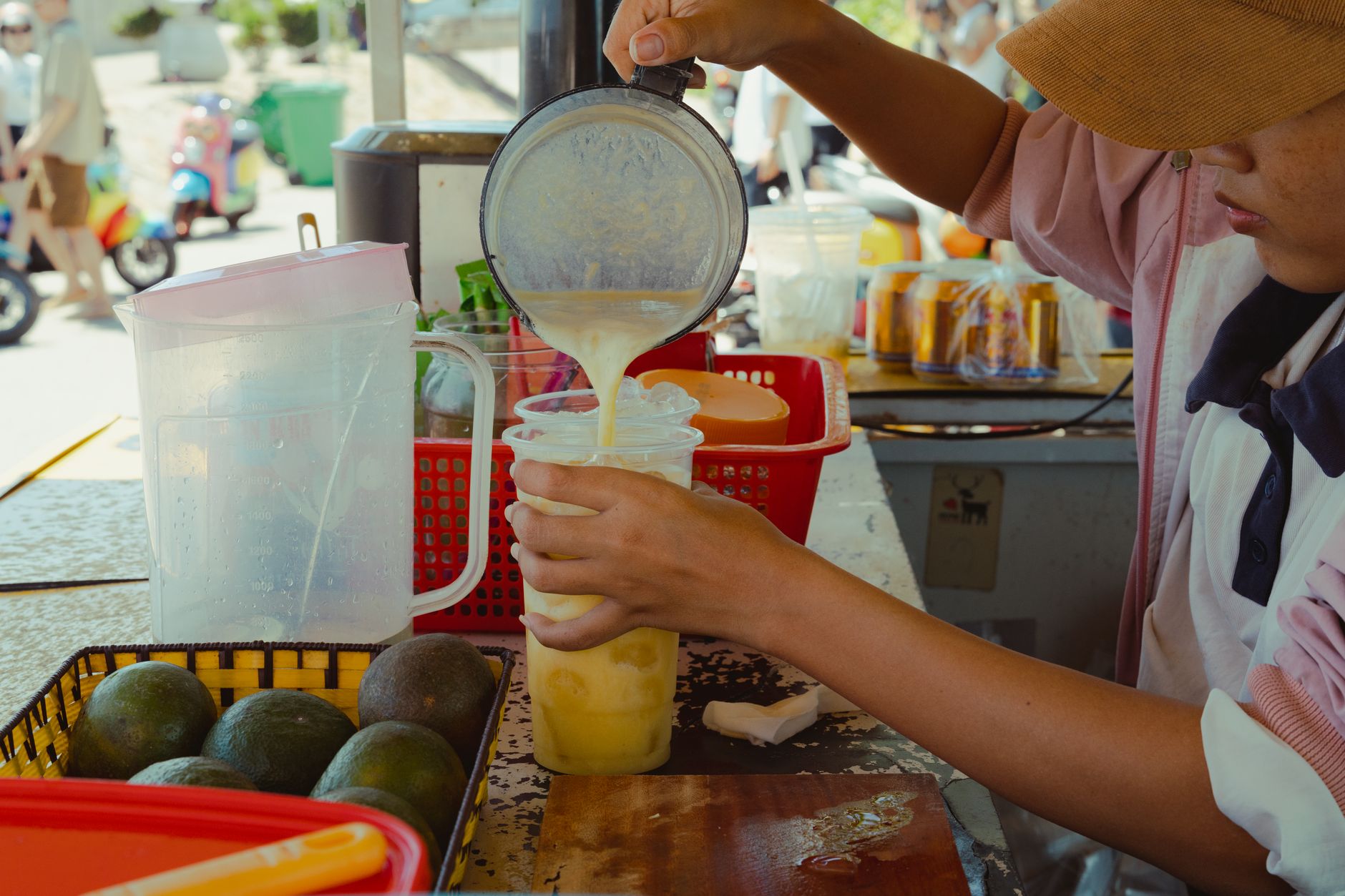
This is a good time to pick up Vietnamese coffee if you skipped it earlier. Several small ca phe spots along Co Giang serve "ca phe sua da (연유커피 / 越南冰咖啡 / ベトナムアイスコーヒー)" — iced coffee with condensed milk — in the old Saigon style: strong, slightly bitter, poured slow over a glass packed with ice. Expect to pay 20,000–30,000 VND. Sit long enough and you will watch the street shift from breakfast mode to lunch prep.

Photo by Pham Huan on Pexels
Midday — Com Tam and the Lunch Trade
"Com tam," broken rice, is the default midday meal across Saigon and Co Giang does it properly. The com tam stalls here typically open around 10 a.m. and sell out well before 1 p.m., so timing matters.
A standard plate — broken rice, suon nuong (grilled pork chop), bi (shredded pork skin), cha trung (steamed egg and pork cake), a small bowl of broth, and pickled vegetables — runs 50,000–75,000 VND depending on the stall and the number of toppings. The grilled pork chops are the thing to focus on: marinated in lemongrass and fish sauce, charred at the edges, served on rice that absorbs the juices. It is not complicated food. That is the point.
If you want something lighter, a few vendors around the middle stretch of Co Giang sell "goi cuon" — fresh rice paper rolls with shrimp, pork, vermicelli, and herbs, served with hoisin-peanut dipping sauce. Three rolls for about 25,000 VND is a reasonable ask.
Afternoon — The Quiet Hours and Snack Stops
Between 2 and 4 p.m. the street quiets down. This is the best time to walk the full length without fighting pedestrian traffic. A few dry goods vendors and small household shops fill the gaps between food stalls.
If you are looking for something to do with your hands, this stretch also has a couple of banh chung vendors — though more commonly you will find "banh mi" shops doing a slower afternoon trade, selling to office workers on their way back from lunch breaks.
A bowl of "bun rieu" — crab and tomato-based noodle soup — appears at one or two stalls that operate specifically in this window. It is worth seeking out if you see the sign. The tomato broth is sharper and more acidic than pho, and the crab paste gives it a funk that divides people cleanly into fans and non-fans.

Photo by Vuong on Pexels
Evening — Che Stalls and the Wind-Down
By 5 p.m. Co Giang transitions again. The "che" vendors set up — che being the umbrella term for Vietnamese sweet dessert soups and puddings. On Co Giang you will find che ba mau (three-colour dessert with mung bean, red bean, and pandan jelly over crushed ice), che hat sen (lotus seed pudding), and seasonal variations depending on the month.
A cup or bowl of che runs 15,000–25,000 VND. It is cold, sweet, and textured in ways that take some getting used to if you have never encountered it. The che stalls here are unpretentious — plastic stools, styrofoam cups on request, a handwritten price board.
As the evening settles in, a few beer stalls open at the Tran Hung Dao end. Nothing elaborate — "bia hoi" on tap, 10,000–15,000 VND a glass, served alongside dried squid and peanuts. The crowd is local, the conversation loud.
Practical Notes
Co Giang runs in District 1, accessible on foot from Pham Ngu Lao in about 10 minutes. The best single window is 6–9 a.m. for banh mi and breakfast, or 10 a.m.–noon for com tam. Bring cash in small denominations — most stalls do not take cards. Weekdays are significantly less crowded than weekends.
Last updated · May 29, 2026 · independently researched, never sponsored.