
Ban Lao Chai sits in the Muong Hoa Valley about 7 km southeast of Sapa town center. It's one of the first villages trekkers hit on the classic Sapa valley route, but most people blow through it in 20 minutes on a guided group walk. That's a mistake. The village rewards anyone willing to slow down, eat lunch, and actually talk to the Black Hmong families who live here.
What it is
Ban Lao Chai is a Black Hmong settlement of roughly 150 households strung along the lower slopes of the Muong Hoa Valley in Lao Cai province. The village has been here for generations — families grow rice on the terraced paddies that cascade down toward the valley floor, raise pigs and buffalo, and produce indigo-dyed textiles using techniques passed between grandmothers and granddaughters. Tourism arrived in the early 2000s when Sapa (사파 / 沙坝 / サパ)'s trekking trails got formalized, and today the village straddles a line between working agricultural community and tourist stop.
It's not a museum. People live here, kids run around, laundry hangs on fences. That's what makes it worth visiting properly rather than speed-walking through.
Why travelers go
Three reasons keep pulling people down the valley road:
- The terraces. Muong Hoa's rice terraces are genuinely impressive — not just photogenic but enormous in scale. Ban Lao Chai gives you ground-level access without the crowds that cluster around Cat Cat village closer to town.
- Textile culture. Black Hmong women here still produce hand-batik cloth using beeswax and indigo. You can watch the process and buy directly. Prices start around 150,000 VND for small pieces and climb to 800,000–1,500,000 VND for full tablecloths or wall hangings.
- Trekking base. The village sits on the standard route connecting Sapa → Ban Lao Chai → Ta Van → Giang Ta Chai. Most people walk through. Staying overnight flips the experience — you get the valley at dawn before groups arrive.
Best time to visit
September through October delivers the golden rice harvest — terraces turn amber and the valley practically glows in afternoon light. March through May is green season: the paddies are flooded or bright green, and the weather is mild if occasionally misty.
Avoid late December through January unless you like 5°C fog with zero visibility. The terraces are bare stubble, the trails are slick mud, and homestay rooms have no heating. June through August works but expect rain — heavy, daily, and sometimes trail-closing.
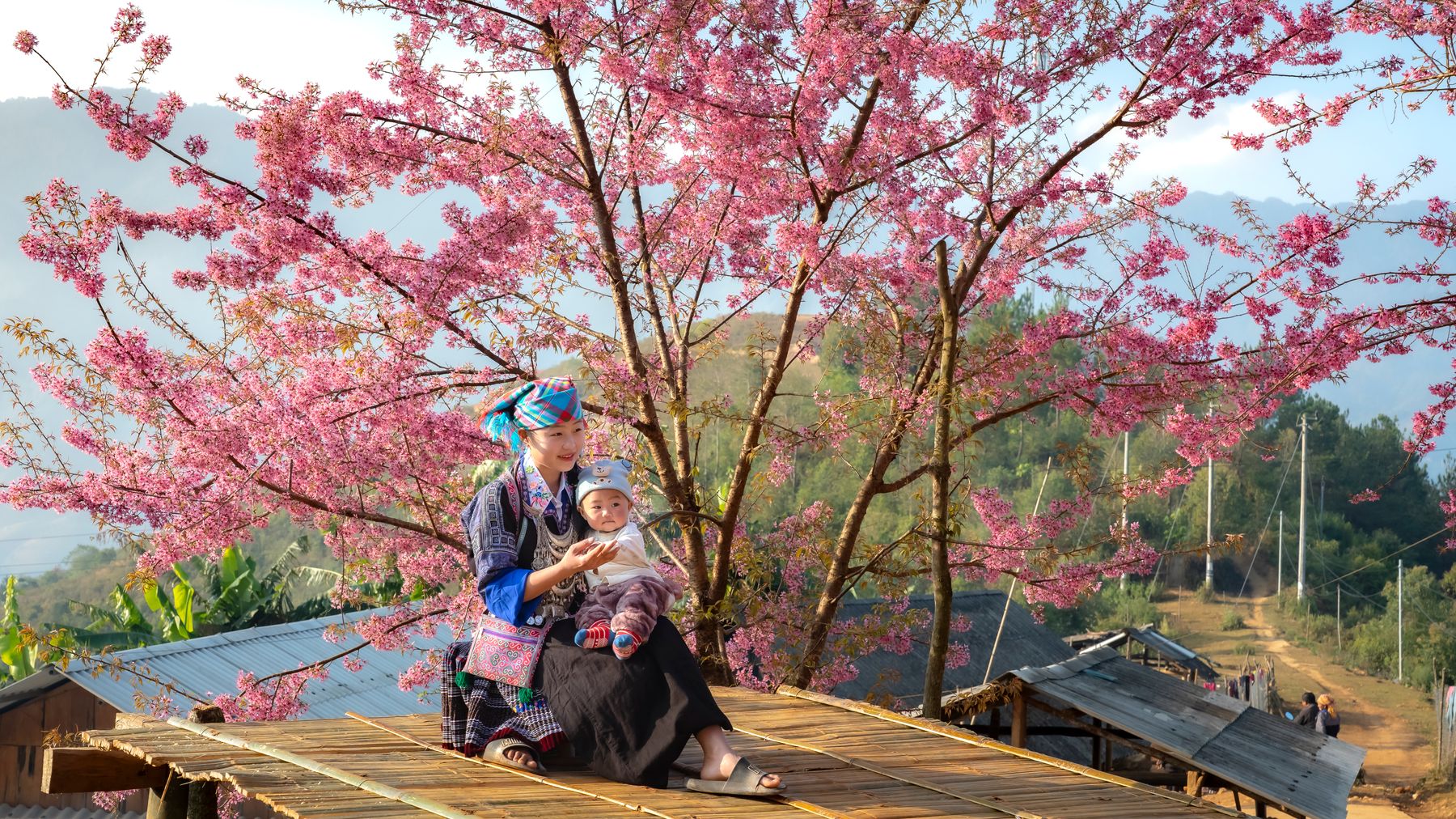
Photo by Quang Nguyen Vinh on Pexels
How to get there
From Sapa town, Ban Lao Chai is about 7 km by road. Options:
- Walk. The most common approach. Take the path from Sapa town past Cat Cat village and continue south into the valley. It's roughly 2–2.5 hours on foot, mostly downhill. The trail is well-marked but slippery after rain — proper shoes matter.
- Motorbike. Ride the road toward Ta Van and turn off at the signed junction. Takes 20 minutes. Parking is informal — just pull up near a homestay or shop.
- Xe om (motorbike taxi). 50,000–80,000 VND one way from Sapa center. Negotiate before you climb on.
Getting to Sapa itself: overnight train from Hanoi to Lao Cai station (7–8 hours, berths from 500,000 VND), then a 35 km bus or taxi up the mountain. Alternatively, direct sleeper buses from Hanoi's My Dinh station run overnight and drop you in Sapa town.
What to do
Trek the valley loop
The full Sapa → Ban Lao Chai → Ta Van → Giang Ta Chai loop takes 5–6 hours at a comfortable pace. You don't need a guide for navigation — the path is obvious — but hiring a local Hmong guide (200,000–300,000 VND for a half day) supports the community and gives you someone to translate and explain what you're seeing.
Watch textile production
Several households welcome visitors to observe indigo dyeing and batik work. This isn't a performance — it's ongoing labor. Ask before photographing. If you want to try your hand at beeswax drawing, some families offer informal workshops for around 100,000 VND.
Visit the Muong Hoa rock carvings
A short detour from the main trail leads to ancient petroglyphs carved into riverside boulders. Nobody knows their exact origin — estimates range from 2,000 to 3,000 years old. The carvings are abstract: circles, human figures, lines. They're easy to miss without a guide pointing them out.
Eat
Homestays serve family-style meals — expect sticky rice, stir-fried vegetables, grilled pork or chicken, and "thang co" (a Hmong organ-meat hotpot that's polarizing but worth trying once). Lunch at a homestay runs 80,000–120,000 VND per person. A few small shops along the main path sell instant noodles, fruit, and bottled water.
For something more refined, head back up to Sapa town where you can find pho, "banh mi", and egg coffee at the cluster of cafes near the church square.
Where to stay
Ban Lao Chai has a handful of homestays — most are simple wooden houses with shared bathrooms, thick blankets, and communal dinners. Expect to pay 250,000–400,000 VND per person including dinner and breakfast. Booking ahead isn't always possible; some homestays only take walk-ins or bookings via phone. A few are listed on booking platforms now.
If you prefer more comfort, Ta Van village (another 3 km further into the valley) has slightly more developed guesthouses, or you can always retreat to Sapa town where hotels range from 300,000 VND dorm beds to 3,000,000 VND boutique rooms.
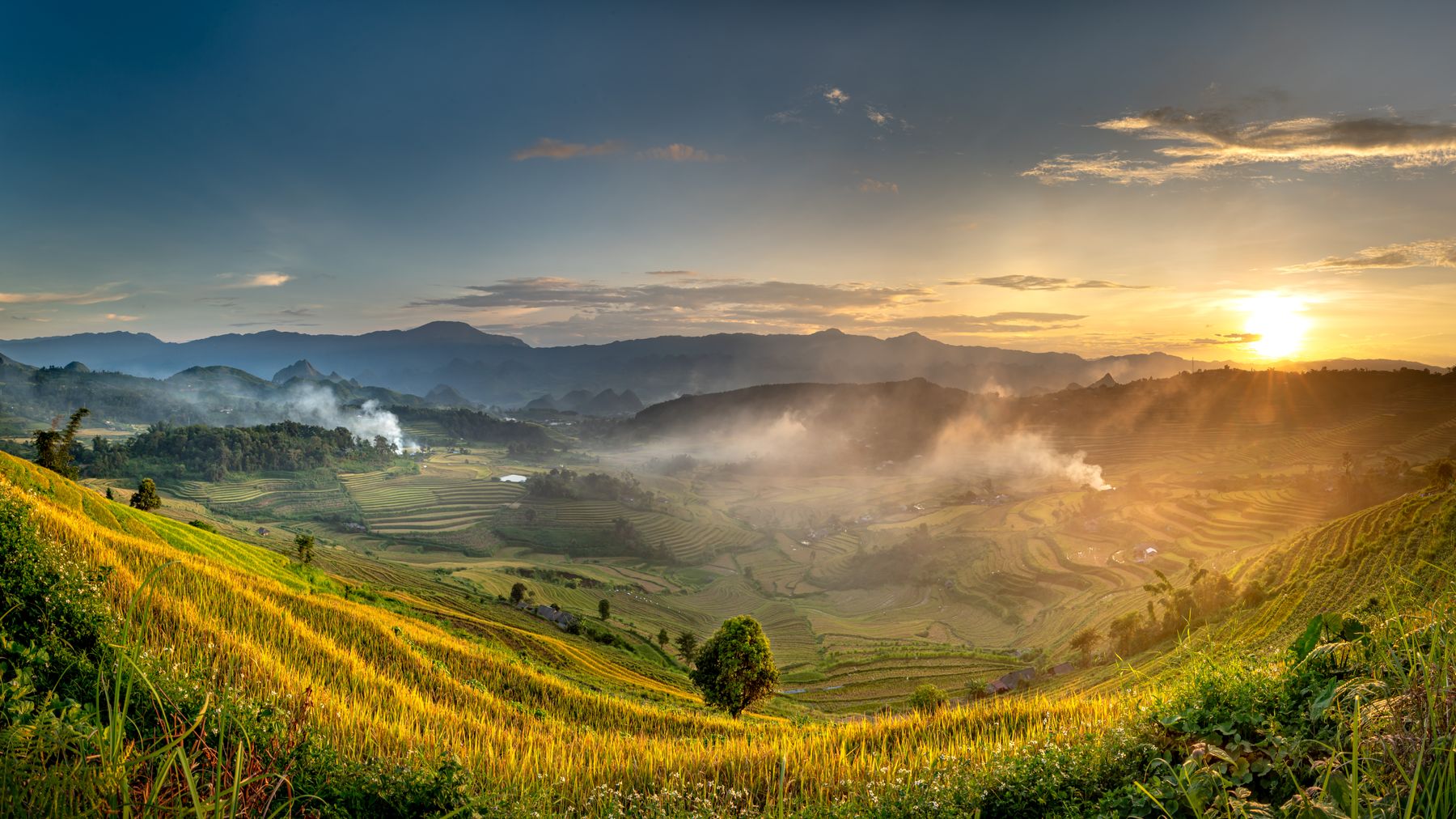
Photo by Quang Nguyen Vinh on Pexels
Practical tips
- Cash only. No ATMs in the village. Withdraw in Sapa before you descend.
- Footwear. Trail shoes or boots with grip. Flip-flops on the muddy valley paths are a fast way to twist an ankle.
- Bargaining. Textile sellers expect some negotiation but prices are already reasonable. Don't haggle aggressively over a 200,000 VND piece of cloth someone spent days making.
- Phone signal. Viettel works in the valley. Mobifone is patchy.
- Guides and porters. If you're doing the full loop with a heavy pack, you can hire a porter in Sapa for around 300,000 VND/day.
Common mistakes
Treating it as a photo stop. Groups walk through in 15 minutes, snap terraces, leave. You miss everything — the food, the textiles, the quiet of the valley at 6 AM.
Skipping the overnight. The valley empties after 3 PM when day-trippers head back uphill. Staying overnight means you get the sunrise terrace views alone.
Wearing sandals. Every week someone limps back up to Sapa with a muddy ankle sprain.
Not carrying small bills. A 500,000 VND note is hard to break at a village shop selling 10,000 VND water bottles. Carry denominations of 10,000–50,000.
Final note
Ban Lao Chai works best as a slow destination — one night minimum, ideally two if you want to explore the full valley without rushing. It's not remote or difficult to reach, but it does ask you to adjust your pace. The valley rewards that.
Last updated · May 26, 2026 · independently researched, never sponsored.





