Den Doc Cuoc isn't a major tourist circuit stop, and that's part of what makes it worth the detour. This clifftop temple sits at the northern end of Sam Son Beach in Thanh Hoa province, perched on a granite outcrop called Truong Le mountain that drops straight into the sea. It's been a site of worship for centuries, it's still very much active, and on a clear day the view alone justifies the trip.
What it is and why it matters
Den Doc Cuoc — roughly translated as the One-Footed God Temple — is dedicated to a figure from Vietnamese mythology: a giant who split himself in two to fight off invaders from the sea, leaving one half on land and the other in the water. The legend is specific to this stretch of coastline, and you'll see statues and carvings referencing the story throughout the complex.
The temple dates back to the Tran Dynasty (13th-14th century), though the current structures have been rebuilt and restored multiple times. It's classified as a national historical relic. The compound is compact — you can walk the whole thing in 30 minutes — but the layered architecture, incense-heavy atmosphere, and the way the rock face has been incorporated into the temple design give it more weight than its size suggests.
Locals from Thanh Hoa city and Sam Son come here regularly to pray, especially fishermen asking for safe voyages. This isn't a museum piece. People burn offerings, light incense, and treat it as a living religious site. Respect that.
Why travelers go
Three reasons. First, the location: the temple is built directly into and on top of a rocky headland, with the East Sea on three sides. The elevation isn't dramatic — maybe 30 meters — but the combination of old stone, crashing waves, and open sky is genuinely striking. Second, it's a window into local religious life outside the major tourist cities. You'll likely be one of few foreigners there. Third, Sam Son Beach itself is a popular domestic resort town, so Den Doc Cuoc slots easily into a beach day without requiring a separate expedition.
Best time to visit
April through June is ideal. The weather is warm and mostly dry, Sam Son Beach is lively but not yet at peak summer madness (July-August, when domestic tourists flood the town and hotel prices spike). September and October bring occasional storms. The temple is open year-round, but visiting during Tet or local festival days (especially the 16th of the second lunar month, when Sam Son holds its main temple festival) lets you see the site at its most active — processions, offerings, and crowds of worshippers.
Early morning visits, around 6:00-7:00 AM, are best for light and quiet. By mid-morning on weekends, domestic tour groups start arriving.
How to get there
From Hanoi, Sam Son is about 170 km south. You have a few options:
- Bus: Regular coaches from Giap Bat or Nuoc Ngam bus stations to Thanh Hoa city, roughly 3-3.5 hours, around 120,000-150,000 VND. From Thanh Hoa city, local buses or a taxi (about 16 km) to Sam Son cost another 80,000-150,000 VND depending on vehicle.
- Train: Hanoi to Thanh Hoa on the Reunification Express takes about 3 hours. Soft seat tickets run 150,000-250,000 VND. Then taxi or xe om to Sam Son.
- Motorbike: If you're already road-tripping south along the coast, Sam Son is a natural stop. The ride from Hanoi via QL1A or the Ho Chi Minh (호치민 / 胡志明 / ホーチミン) Highway takes 4-5 hours depending on traffic.
Once in Sam Son, Den Doc Cuoc is at the far northern end of the main beach road (Truong Le street). You can walk there from most beachfront hotels in 10-20 minutes, or grab a xe om for 15,000-20,000 VND.

Photo by Haneul Trac on Pexels
What to do
Walk the temple complex
The main hall sits partway up the rock. Climb the stone steps, pass through the triple gate, and explore the shrine rooms. Look for the carved stone reliefs depicting the Doc Cuoc legend. The rear terrace, facing the open water, is the best spot in the complex — bring a camera.
Climb to the summit of Truong Le
A short path leads from the temple to the top of the headland. It takes maybe 10 minutes. From the top you get a wide-angle view of Sam Son Beach stretching south and the fishing harbor to the north. On clear mornings, the light is excellent.
Visit the neighboring Co Tien temple
Just south along the same rocky ridge, Co Tien (Fairy Maiden) temple is a smaller shrine worth a quick stop. The two are connected by a paved path. Together they make a roughly one-hour loop.
Watch the fishing boats come in
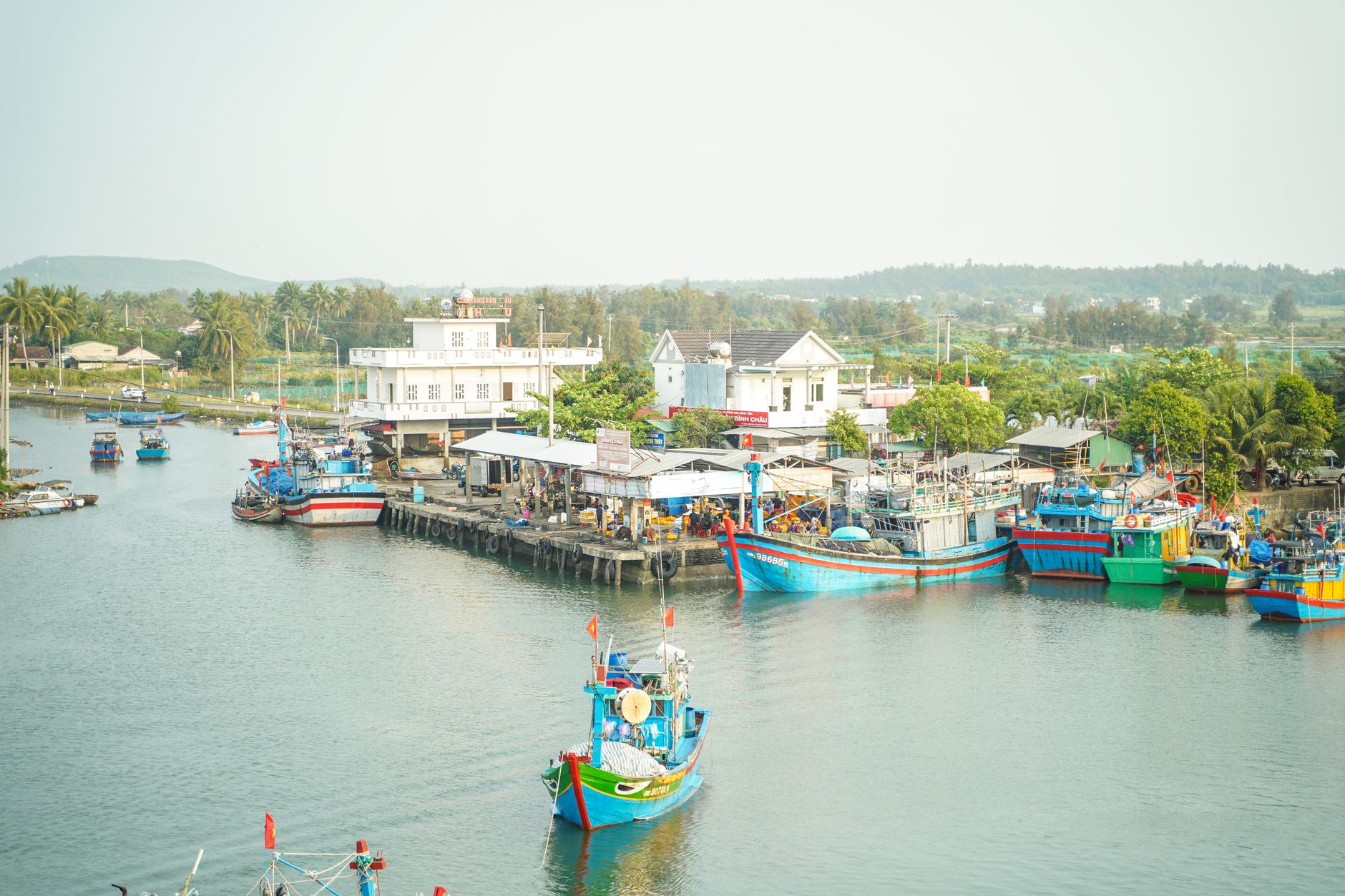
The small harbor on the north side of Truong Le mountain is active in the early morning. Fishermen unload the night's catch, and you can buy seafood directly if you're cooking or want to take it to a nearby restaurant for preparation.
Sit on the rocks at sunset
The western-facing side of the headland catches good late afternoon light. It's not a dramatic ocean sunset — the town is behind you — but the colors on the rock and water are worth the wait.
Where to eat nearby
Sam Son is a seafood town. The strip of restaurants along Truong Le street and the beachfront road serve fresh crab, clams, grilled squid, and fish hotpot at reasonable prices — expect 150,000-300,000 VND per person for a full seafood meal.
Two things worth seeking out specifically: "nem chua" from Thanh Hoa province is some of the best in the country — fermented pork wrapped in banana leaf, tangy and slightly sour, sold everywhere for 5,000-10,000 VND per piece. And "banh canh" — thick tapioca noodle soup with crab — is a regional specialty you'll find at small shops near the market for around 30,000-40,000 VND a bowl.
Where to stay
Sam Son has hundreds of hotels and guesthouses, mostly catering to Vietnamese tourists. Budget rooms run 200,000-400,000 VND per night. Mid-range places with sea views go for 500,000-900,000 VND. A few newer resort-style hotels charge 1,200,000-2,500,000 VND. Book ahead if visiting on summer weekends (June-August) — the town fills up fast.
Staying on Truong Le street puts you within walking distance of Den Doc Cuoc and the quieter north end of the beach.

Photo by Quang Nguyen Vinh on Pexels
Practical tips locals would tell you
- Dress modestly at the temple. Covered shoulders and knees. This is enforced informally but taken seriously.
- Bring incense if you want to make an offering — vendors outside sell bundles for 10,000 VND. It's not required, but it's a respectful gesture.
- The rocks around the headland are slippery when wet. Wear shoes with grip, not flip-flops, especially after rain.
- There's no entrance fee for the temple itself, but you'll see donation boxes inside.
- Combine this with a half-day at Sam Son Beach. The temple alone doesn't justify a full day unless you're deeply into temple architecture.
Common mistakes to avoid
- Coming only in peak summer: July and August mean crowds, inflated prices, and a beach town atmosphere that's more karaoke and party than peaceful temple visit. Shoulder season is better in every way.
- Skipping Thanh Hoa city entirely: The city itself has good "bun cha" spots and the Ho Citadel (a UNESCO World Heritage Site) is only 45 minutes west. If you've come this far from Hanoi, make a day of the province.
- Rushing through: The temple is small, but sitting on the rocks for 20 minutes watching the waves changes the experience entirely. Don't just snap photos and leave.
Practical notes
Den Doc Cuoc works best as part of a longer trip through Thanh Hoa province or as a stop on a north-to-central Vietnam road trip. Pair it with Sam Son Beach, the Ho Citadel, and Thanh Hoa's food scene for a solid two-day side trip from Hanoi. It's not a place that needs a detailed itinerary — just show up early, bring good shoes, and give it the slow visit it deserves.
Last updated · May 26, 2026 · independently researched, never sponsored.