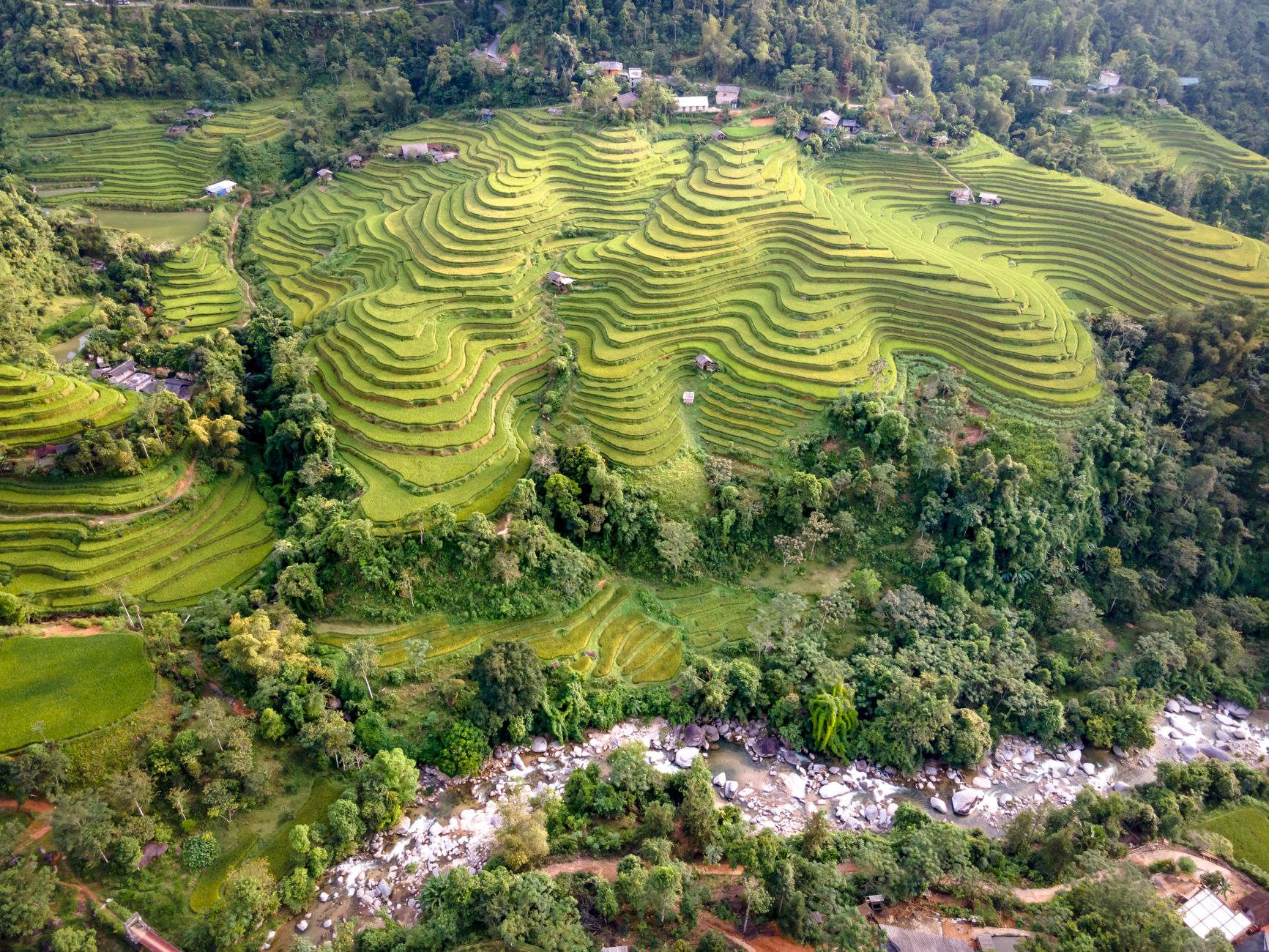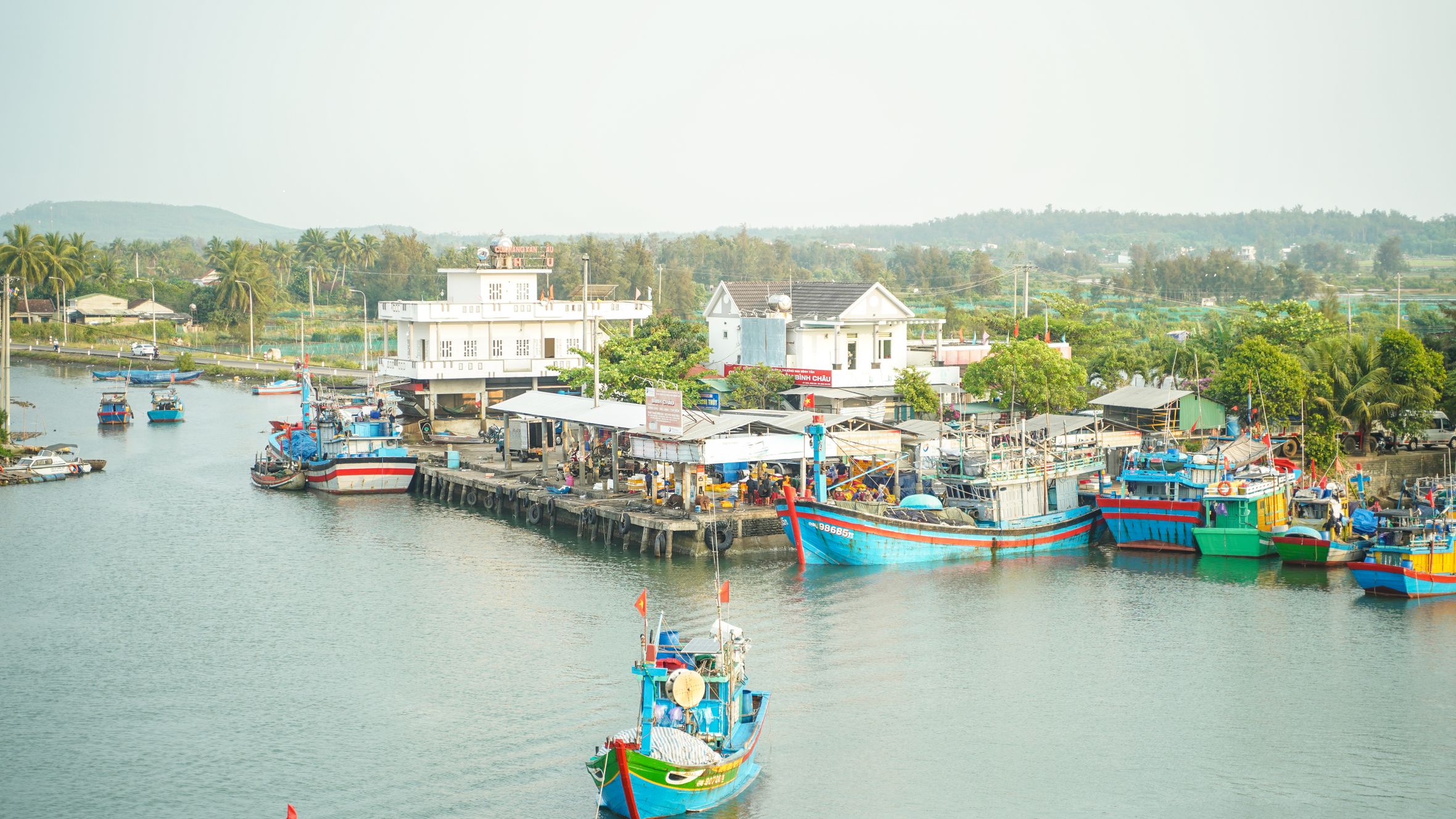
Cua Ha sits where the Ma River empties into the Gulf of Tonkin, about 16 km east of Thanh Hoa city center. It's not on most tourist radars, which is exactly why it's worth knowing about — a working fishing coast with good seafood, uncrowded sand, and the kind of slow tempo that central Vietnam (베트남 / 越南 / ベトナム)'s bigger beach towns lost a decade ago.
What Cua Ha actually is
Cua Ha (literally "Ha Estuary") is a coastal zone in Hoang Hoa district, Thanh Hoa province. The area covers the mouth of the Ma River system and a stretch of shoreline that local families have fished for generations. There's no resort strip here. What you get instead is a fishing port, a handful of seafood restaurants built right on the sand, a long beach that runs north toward Sam Son, and a few modest guesthouses.
Historically, Cua Ha has functioned as a river port and fishing hub for the surrounding villages. The Thanh Hoa coast played a role during various periods of Vietnamese history, and you'll see a few small temples and communal houses near the estuary that date back several hundred years. None of them are major heritage sites, but they give the area texture that a pure beach destination wouldn't have.
Why travelers go
Three reasons, mostly. First, seafood — Cua Ha is a working port, so what you eat came out of the water that morning. Second, the beach here is wide, flat, and genuinely quiet outside of Vietnamese holiday weekends. Third, it works as a half-day detour if you're passing through Thanh Hoa on the north-south route between Hanoi and Hue or Phong Nha. Most people driving or taking the train between those cities blow right through Thanh Hoa province. Cua Ha gives you a reason to stop.
Best time to visit
April through September is swimming season. The water is warmest from June to August, but that also overlaps with the hottest months (35°C+) and occasional afternoon storms. May and September sit in a sweet spot — warm water, fewer domestic tourists, lower humidity than midsummer. October and November bring cooler weather and occasional typhoon-season rain; the beach is less appealing but the seafood restaurants stay open year-round. December through February is chilly by Vietnamese coastal standards (15-20°C) and windy. Locals still eat seafood on the beach in winter, just with jackets on.
How to get there
From Thanh Hoa city, Cua Ha is roughly 16 km east. A taxi or Grab car takes 25-30 minutes and costs around 120,000-150,000 VND one way. If you're on a motorbike, follow the road east through Hoang Hoa district — it's flat, straightforward, and signed once you get close.
From Hanoi (하노이 / 河内 / ハノイ), the fastest option is the train to Thanh Hoa station (about 2.5-3 hours on the SE express trains, tickets from 150,000 VND for a hard seat up to 400,000 VND for a soft seat). From Thanh Hoa station, grab a taxi east. Buses from Hanoi's Giap Bat or Nuoc Ngam stations also run to Thanh Hoa city (3-3.5 hours, around 100,000-150,000 VND), but the train is more comfortable. If you're coming from the south — say, from Hue or Da Nang — the Reunification Express stops in Thanh Hoa too.
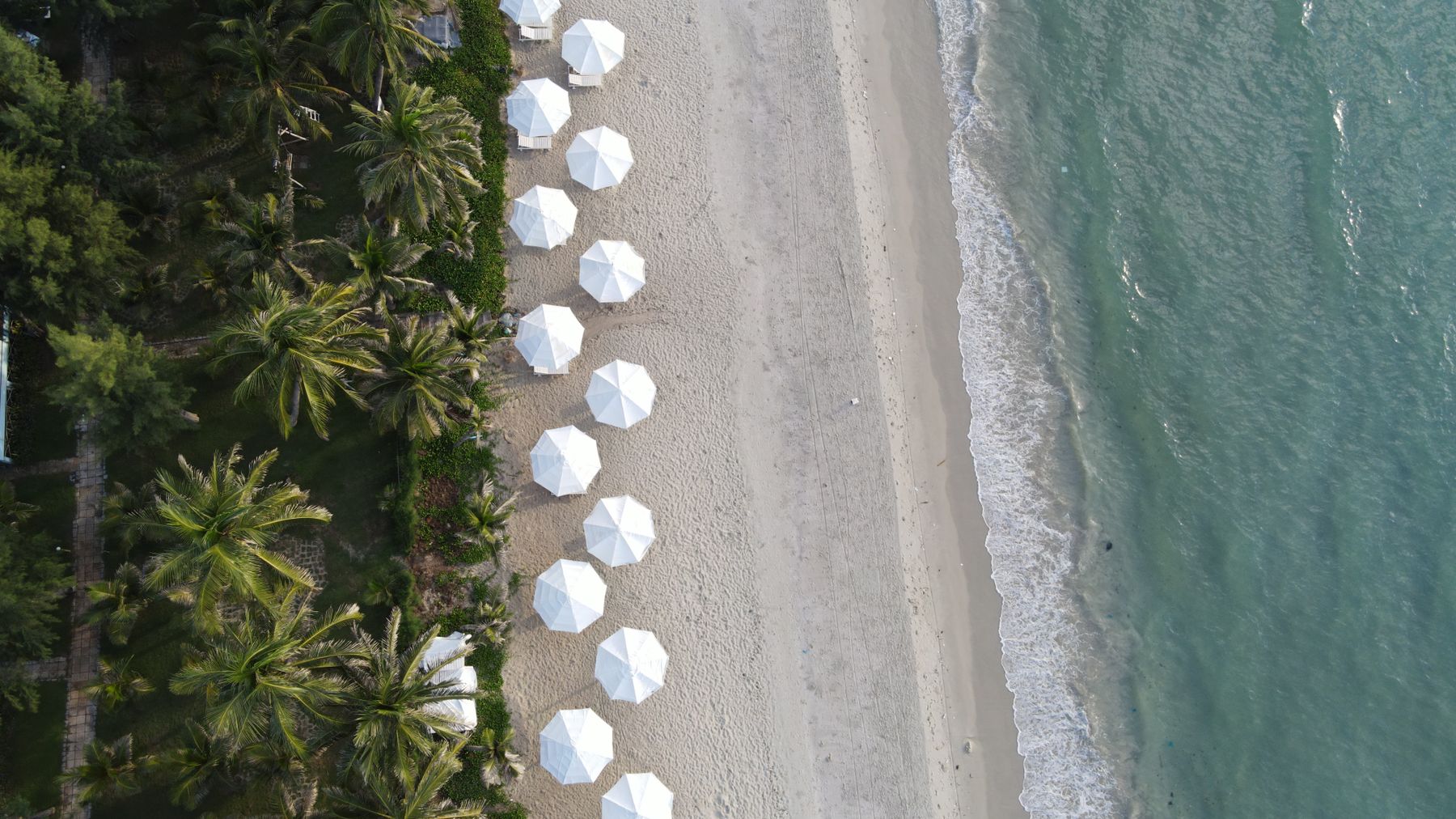
Photo by Quang Nguyen Vinh on Pexels
What to do
Walk the estuary and fishing port
The port area is most active in the early morning (5-7 AM) when boats come in with the night's catch. Walk along the riverbank and watch the sorting and selling. Nobody minds if you photograph, but buying a bag of shrimp for one of the nearby restaurants to cook earns you goodwill.
Spend time on the beach
The beach north of the estuary mouth stretches for several kilometers. The sand is hard-packed and tan-colored — not white powder, but clean and good for walking. Bring your own shade; there are some beach shelters near the restaurants but the further you walk, the emptier it gets. Swimming is fine in calm weather, though the river current near the estuary mouth means you should stick to the beach sections further north.
Visit the local temples and communal houses
A few villages near Cua Ha have "dinh" (communal houses) that are several centuries old. They're small, not ticketed, and usually open. Ask around for Dinh Yen — it's one of the better-preserved ones. These aren't on the scale of the Imperial Citadel Thang Long or Temple of Literature in Hanoi, but they're genuine and you'll likely be the only visitor.
Take a boat on the Ma River
Local fishermen sometimes offer short boat rides on the estuary for negotiable prices — expect to pay around 200,000-300,000 VND for 30-45 minutes. There's no formal tour; you're just riding in a fishing boat. The river scenery is calm and you get a good look at the mangrove areas and fish traps.
Day-trip to Sam Son Beach
Sam Son is about 10 km south of Cua Ha and is Thanh Hoa's main beach resort town. It's busier and more developed — rows of hotels, karaoke bars, seafood restaurants with neon signs. Worth a look for contrast, but Cua Ha is the quieter alternative.
Where to eat nearby
Seafood is the obvious play. The restaurants clustered near the port serve whatever came in that morning — grilled fish, steamed clams, stir-fried squid, shrimp in tamarind sauce. Expect to pay 80,000-200,000 VND per dish depending on the catch. Point at what looks good in the tanks.
The local specialty worth seeking out is "nem chua" Thanh Hoa — fermented pork wrapped in banana leaves. Thanh Hoa province makes some of the best in the country, and you'll find it at most restaurants as a side dish or sold in bundles at roadside stalls for 5,000-10,000 VND per piece. Pair it with cold beer. "Bia hoi" (fresh draft beer) is available at some of the casual spots near the port for around 10,000-15,000 VND a glass.
Where to stay
Accommodation around Cua Ha is basic. A few local guesthouses ("nha nghi") charge 200,000-400,000 VND per night for a clean room with air conditioning and hot water. Don't expect English-speaking staff or booking platforms — you may need to just show up or call ahead. For more comfort, stay in Thanh Hoa city (15-20 minutes away) where you'll find mid-range hotels in the 500,000-900,000 VND range, or in Sam Son where beachfront hotels run 400,000-1,200,000 VND depending on season.

Photo by Đạt Nguyễn on Pexels
Practical tips locals would tell you
- Bring cash. There are no ATMs at Cua Ha itself. The nearest reliable ATMs are in Thanh Hoa city or Sam Son.
- Sunscreen and a hat are essential May through September. Shade is scarce on the beach.
- If you want the freshest seafood, go to the restaurants by the port before 10 AM. By afternoon, the best catch is already gone.
- The road from Thanh Hoa city is flat and easy on a motorbike, but watch for slow-moving trucks near the port area.
- A few words of Vietnamese go a long way here. "Bao nhieu?" (how much?) and "Ngon qua" (very tasty) cover most restaurant interactions.
Common mistakes to avoid
Don't come expecting a resort experience. There are no beach clubs, no cocktail bars, no infinity pools. This is a fishing coast with good food and empty sand — enjoy it on those terms. Don't swim near the estuary mouth where currents are unpredictable. Don't visit only on a Vietnamese public holiday weekend (especially around Tet / 越南春节 / テト) or September 2) when domestic tourists fill every restaurant and guesthouse for miles. And don't skip the "nem chua" — it's the single best edible souvenir in Thanh Hoa province.
Practical notes
Cua Ha works best as a half-day or overnight stop, not a multi-day destination. Combine it with a night in Thanh Hoa city, or slot it in on a longer route between Hanoi and Phong Nha or Hue. If you're the kind of traveler who'd rather eat fresh clams on a quiet beach than fight for a sun lounger, this stretch of coast delivers.
Last updated · May 29, 2026 · independently researched, never sponsored.