What Am Tien Nua actually is
Am Tien Nua is a cave-pagoda complex carved into the limestone cliffs of Nua Mountain (Nui Nua), about 70 km southwest of Thanh Hoa city in Nong Cong district. The site sits at roughly 500 meters elevation, combining a Buddhist pagoda, a system of natural caves, and a ridgeline trail that opens to views across the Thanh Hoa plain.
The name translates loosely to "Fairy Grotto of Nua Mountain," and the site has been a place of worship and retreat since at least the Ly dynasty period, around the 11th century. Local tradition ties it to a Cham-era hermit who meditated in the caves, though the pagoda structures you see today are more recent — rebuilt and expanded over the last few hundred years. A large white Buddha statue was added to the summit area in the early 2000s.
What makes it interesting isn't any single feature. It's the combination: a genuine religious site that still functions as a local pilgrimage destination, layered onto karst geology that creates dramatic overhangs and cave chambers, all connected by stone-cut paths up a mountain that most foreign visitors have never heard of.
Why travelers go
Am Tien Nua draws a mix of Vietnamese pilgrims (especially around Tet and the spring festival season) and a small trickle of independent travelers looking for something off the standard Hanoi-to-Hue route. The appeal is simple: it's a legitimate half-day hike with cultural content, and you'll likely be one of very few non-Vietnamese visitors.
The cave system is the centerpiece. Several chambers contain Buddhist altars, incense, and statues arranged in the half-light — the kind of atmosphere that feels earned after the climb up. The main cave, Am Tien, is large enough to hold a small congregation and stays cool even in summer. From the ridgeline, on a clear day, you can see the patchwork of rice paddies stretching toward the coast.
This is not a polished tourist attraction. There's no ticket booth with an English-language brochure. That's part of the draw.
Best time to visit
The sweet spot is February through April. The spring months bring cooler temperatures (18-25°C), lower humidity, and the landscape is green from winter rains. This also overlaps with the spring pilgrimage season, so you'll see the site at its most alive — incense smoke, local families making offerings, monks in residence.
Avoid June through August if you can. Thanh Hoa gets hammered by heat (regularly above 37°C) and afternoon downpours. The stone steps up to the caves get slippery, and the humidity makes the climb genuinely unpleasant. September and October bring typhoon risk.
November through January is fine if you don't mind overcast skies and occasional drizzle. The upside: near-total solitude.
How to get there
From Thanh Hoa city, Am Tien Nua is about 70 km southwest, reachable in roughly 90 minutes by motorbike or car.
By motorbike: The most practical option. Rentals in Thanh Hoa city run 120,000-180,000 VND per day for a semi-automatic (Honda Wave or similar). Head south on QL45 toward Nong Cong town, then follow local signage to Nui Nua. The final stretch is a narrow concrete road that winds to the base of the mountain. Google Maps has the route marked — search "Am Tien Nui Nua."
By car/taxi: A return trip with waiting time from Thanh Hoa city costs around 800,000-1,200,000 VND depending on your negotiation skills. Book through your hotel or use a Grab car if one is available (coverage is spotty outside the city).
By bus + xe om: Catch a local bus from Thanh Hoa bus station toward Nong Cong (about 30,000 VND, 1 hour). From Nong Cong town, hire a "xe om" (motorbike taxi) for the remaining 15 km — expect to pay 60,000-80,000 VND each way. Agree on a pickup time, or get the driver's phone number.
From Hanoi (하노이 / 河内 / ハノイ), Thanh Hoa city is about 150 km south — roughly 3 hours by car or 2.5 hours on the train. Several daily trains run from Hanoi station.

Photo by Quý Hoàng on Pexels
What to do
Hike the mountain trail
The main path from the base to the summit caves takes 45-60 minutes at a moderate pace. It's mostly stone steps — over 600 of them — cut into the mountainside. Wear proper shoes, not sandals. The trail passes through forest canopy for the first section, then opens onto exposed rock near the top.
Explore the cave system
The main Am Tien cave is the highlight, but there are several smaller grottos along the trail worth ducking into. Bring a phone flashlight. Some chambers go back 20-30 meters and contain older altar arrangements that feel untouched. The air inside is noticeably cooler — a relief if you're visiting in warmer months.
Visit the pagoda and summit Buddha
The pagoda complex sits partway up the mountain, with a courtyard and main worship hall. The white Buddha statue at the summit is visible from kilometers away. It's not ancient, but the panoramic view from its base is the best on the mountain.
Catch the spring festival
If you visit in the second lunar month (usually March), you may overlap with the Am Tien Nua festival. Expect processions, chanting, and a lot more foot traffic on the trail. It's a window into local religious life that hasn't been packaged for tourism.
Walk the rice paddies at the base
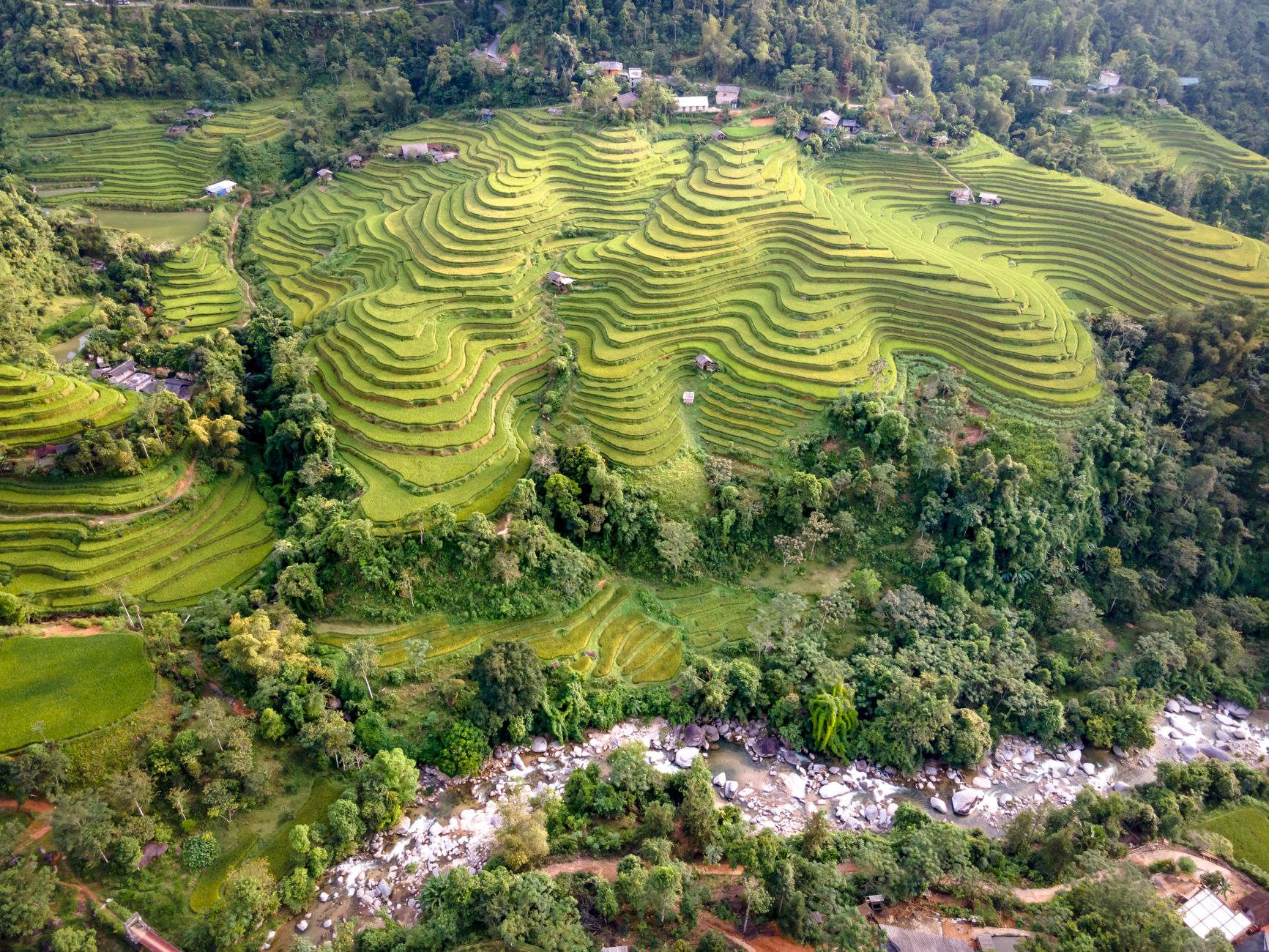
Before or after the climb, the flat land around Nui Nua is worth a slow motorbike ride. The paddies are especially photogenic in spring (bright green) and late September (golden before harvest).
Where to eat nearby
Nong Cong town, about 15 km from the mountain, has basic "com binh dan" (everyday rice) shops — expect to pay 35,000-50,000 VND for a plate of rice with grilled meat, vegetables, and broth. Nothing fancy, all good.
Thanh Hoa province is known for "nem chua" — fermented pork wrapped in banana leaves. You'll find it sold at roadside stalls on the way back to Thanh Hoa city. It's tart, slightly funky, and pairs well with cold beer. Also worth trying: "banh cuon" here is made with a thicker wrapper than the Hanoi version, often stuffed with minced pork and wood ear mushroom.
Where to stay
There's no accommodation at Am Tien Nua itself. Your options:
- Thanh Hoa city: The practical base. Budget hotels and guesthouses along Le Loi street start at 250,000-400,000 VND per night. Mid-range options (Muong Thanh chain, for example) run 600,000-900,000 VND.
- Nong Cong town: A couple of basic "nha nghi" (guesthouses) exist for 150,000-250,000 VND, but don't expect English-speaking staff or hot water.
Most visitors do Am Tien Nua as a day trip from Thanh Hoa city. That's the right call unless you're specifically exploring the broader Nong Cong area.
Photo by Bid on Pexels
Practical tips locals would tell you
- Bring water and snacks. There's no shop on the mountain. A small vendor at the base sometimes sells drinks, but don't count on it.
- Start early. Aim to be at the trailhead by 7:00-7:30 AM, especially in warmer months. The climb is significantly more comfortable before the midday heat.
- Dress modestly at the pagoda. Covered shoulders and knees. This is an active religious site, not a ruin.
- Cash only. No ATMs near the mountain. Load up in Thanh Hoa city or Nong Cong.
- Bring a basic first aid kit. The stone steps can be uneven, and the nearest pharmacy is back in town.
Common mistakes to avoid
- Wearing flip-flops on the climb. The steps are steep and often damp. You'll regret it by the halfway point.
- Skipping the smaller caves. Most visitors beeline for the main grotto and miss the side chambers, which are often more atmospheric.
- Arriving midday. The combination of heat and a 600-step climb is punishing between 11 AM and 3 PM.
- Not confirming transport back. If you came by xe om, make sure your driver knows when to return. Phone signal can be weak on the mountain.
Practical notes
Am Tien Nua works well as a half-day side trip if you're passing through Thanh Hoa on the north-south route between Hanoi and Hue (후에 / 顺化 / フエ). It pairs naturally with a visit to the Ho Citadel (a UNESCO site about 45 km west) for a full day of exploration. No entrance fee at the time of writing — just a small donation box at the pagoda.
Last updated · May 26, 2026 · independently researched, never sponsored.