Thac Huou — Deer Waterfall — sits in the forested highlands of Thuong Xuan district, about 130 km west of Thanh Hoa city. It's not on most tourist radars, which is precisely why it's worth the drive.
What it is
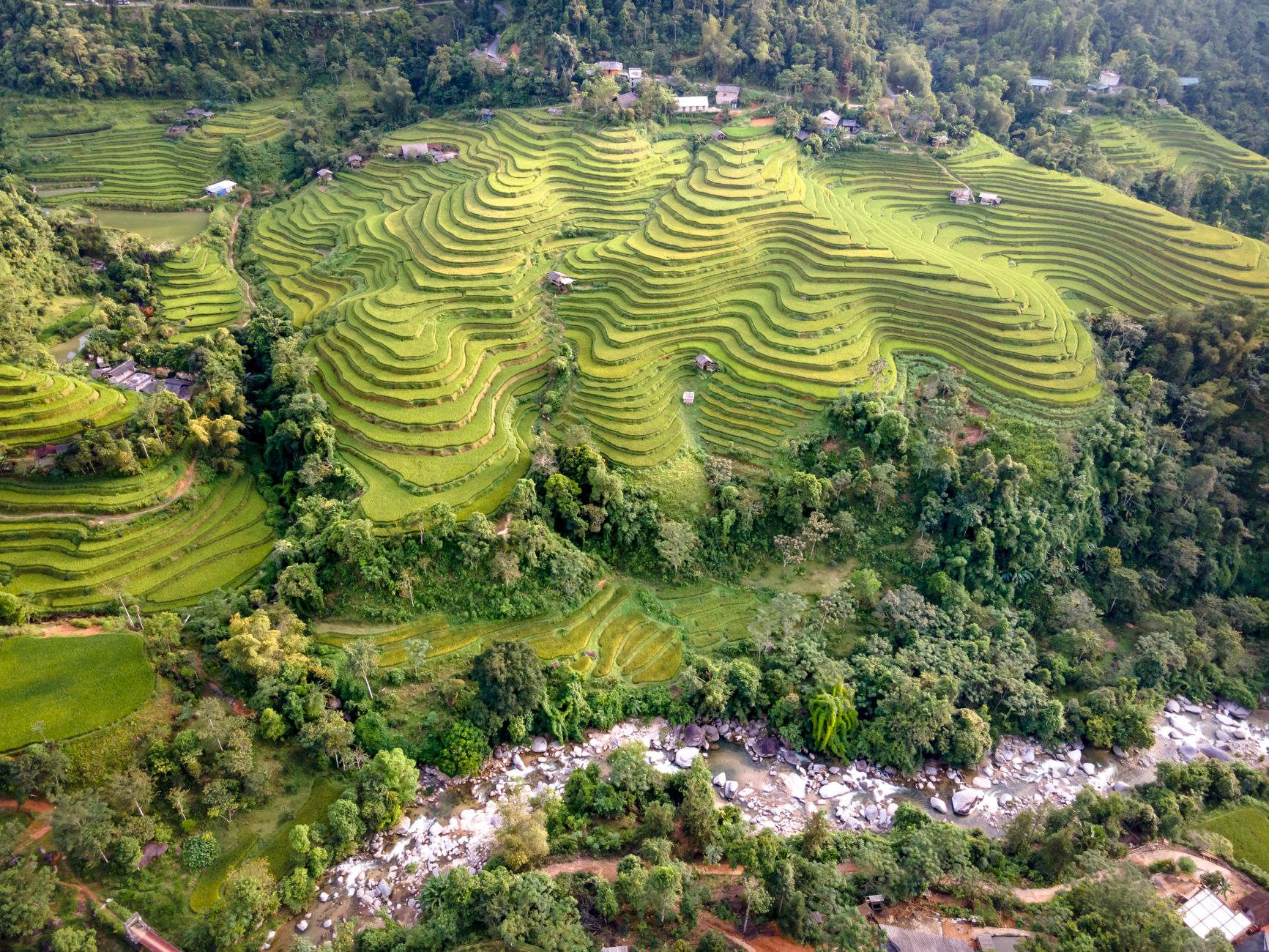
Thac Huou is a multi-tiered waterfall that drops roughly 100 meters across several cascades through dense subtropical forest in the Ben En National Park buffer zone. The name comes from a local legend about deer gathering at the falls to drink — whether or not you'll spot wildlife, the setting feels properly remote. The surrounding area is home to Thai and Muong ethnic communities who've lived in these valleys for generations, and their presence shapes the food, architecture, and general atmosphere more than any tourism board ever could.
The falls were relatively unknown outside Thanh Hoa province until the mid-2010s, when better road access and social media brought a slow trickle of domestic visitors. Infrastructure remains basic. That's part of the appeal.
Why travelers go
People come here to get out of the coastal Thanh Hoa circuit — Sam Son beach, the Ho Dynasty Citadel — and into the mountains. The waterfall itself is genuinely impressive during rainy season, when the volume turns the cascades white and the surrounding jungle gets so green it almost hurts your eyes. But beyond the falls, it's the drive through the valley, the quiet, and the chance to eat with local families that make the trip worthwhile. If you've already done Sapa or Mai Chau and want something with fewer guesthouses and zero souvenir shops, Thac Huou delivers that.
Best time to visit
The sweet spot is June through September, when monsoon rains feed the falls and the forest canopy is at its densest. August and September give you the most water volume, but trails get slippery and leeches come out in force — long pants and proper shoes are non-negotiable.
October to November offers a compromise: water flow is still decent, trails are drying out, and the heat has broken. Temperatures hover around 22-26°C, comfortable for hiking.
Avoid March through May unless you're okay with a disappointing trickle. The falls can slow to almost nothing during dry season, and the 35°C-plus heat in the valley makes the ride out unpleasant.
How to get there
From Thanh Hoa city, you're looking at roughly 130 km west, mostly on QL47 through Lang Chanh district before turning toward Thuong Xuan. The road is paved the whole way but narrow and winding in the last 30 km. Budget 3 to 3.5 hours by motorbike, less by car.
By motorbike: Rent in Thanh Hoa city for 150,000-200,000 VND/day. This is the best option — you control your schedule and can stop at the valley viewpoints along the way. Fill up before Lang Chanh; fuel stations thin out after that.
By car/private driver: Arrange through your hotel in Thanh Hoa. Expect 1,200,000-1,500,000 VND round-trip for a full day, including waiting time. Worth it if you're not confident on mountain roads.
By bus: Take a local bus from Thanh Hoa bus station toward Thuong Xuan (around 80,000 VND, 3 hours). From Thuong Xuan town center, you'll need a "xe om" (motorbike taxi) for the final 15 km to the falls — negotiate 100,000-150,000 VND round-trip including wait time. This route works but eats most of your day.
There's no direct public transport from Hanoi to Thac Huou. The easiest connection is Hanoi to Thanh Hoa by train (2.5 hours on the SE express, 150,000-300,000 VND depending on seat class), then onward from there.

Photo by Quý Hoàng on Pexels
What to do
Hike the cascade trail
A rough trail follows the falls from the base pool up through three main tiers. It takes about 45 minutes to reach the top if you're moderately fit. The path is unmarked in places — look for where the vegetation is beaten down. The second tier has the best swimming pool, a natural basin about waist-deep with a sandy bottom.
Swim at the base pool
The pool at the bottom of the main cascade is wide enough to swim properly and stays cool even in summer. Locals come here on weekends; weekdays you might have it to yourself. No changing facilities — bring a sarong or change behind the rocks like everyone else.
Visit a Thai village
Several Thai ethnic minority villages sit within a few kilometers of the falls. Stilt houses, rice paddies, weaving looms — this isn't staged for tourists. If you're polite and curious, families are generally welcoming. Bringing small gifts (fruit, snacks from town) goes a long way. Some households offer basic homestay accommodation.
Explore Ben En National Park
Ben En is about 40 km east of Thac Huou on the road back toward Thanh Hoa. The park has a large reservoir, limestone karst scenery, and boat trips (around 200,000 VND per person for a short tour). It pairs well with the waterfall as a two-day loop.
Catch sunrise from the valley road
If you stay overnight near the falls, ride out to the ridgeline between Lang Chanh and Thuong Xuan around 5:30 AM. The mist fills the valley below and the light through the mountains is the kind of thing that makes you pull over and just stand there.
Where to eat nearby
Don't expect restaurants. Thuong Xuan town has a handful of "com binh dan" (everyday rice) shops along the main road — 30,000-50,000 VND for a plate of rice with pork, greens, and broth.
The dish worth seeking is "com lam" — sticky rice cooked inside bamboo tubes over charcoal, a Thai and Muong staple in this region. You'll find it at roadside stalls between Lang Chanh and Thuong Xuan, especially on weekends. Pair it with grilled stream fish if available. Some homestay families will cook meals on request — expect to pay 80,000-120,000 VND per person for a home-cooked spread that's better than anything in town.
Where to stay
Budget (200,000-400,000 VND/night): Basic "nha nghi" guesthouses in Thuong Xuan town center. Clean enough, fan rooms, cold water. Don't expect English.
Homestay (150,000-300,000 VND/night): Thai stilt house stays near the falls. You sleep on a mat on the floor, share meals with the family, and wake up to roosters. This is the better experience. Ask around when you arrive or have your hotel in Thanh Hoa call ahead.
Mid-range (500,000-800,000 VND/night): A few newer guesthouses along QL47 between Lang Chanh and Thuong Xuan offer private rooms with hot water and air conditioning. Limited availability — book by phone, not apps.

Photo by Quang Nguyen Vinh on Pexels
Practical tips locals would tell you
- Bring cash. There are no ATMs past Lang Chanh and nobody takes cards.
- Pack insect repellent with DEET. The mosquitoes near the falls at dusk are aggressive.
- Wear shoes with grip, not flip-flops. The rocks around the falls are covered in algae.
- Carry a dry bag for your phone and wallet if you plan to swim.
- If you ride a motorbike, check your brakes before the descent into the valley. The road drops steeply.
Common mistakes to avoid
- Coming in dry season and expecting a waterfall. Check with locals or look for recent photos on Vietnamese social media (search "Thac Huou Thanh Hoa") before committing to the trip.
- Trying to do it as a day trip from Hanoi (하노이 / 河内 / ハノイ). It's technically possible but miserable — 6+ hours of travel each way. Stay at least one night in Thuong Xuan or Thanh Hoa.
- Leaving trash at the falls. There are no bins. Pack out everything you bring in. This isn't a managed tourist site.
- Skipping the villages. The waterfall alone is worth an hour or two. The villages and valley scenery are what make the trip worth a full day or more.
Practical notes
Thac Huou works best as part of a broader Thanh Hoa province loop — combine it with Ben En National Park, the Ho Dynasty Citadel, and a night in Thanh Hoa city for "banh cuon" and the local version of "nem chua," a fermented pork roll that Thanh Hoa is famous for across Vietnam. Two to three days gives you a comfortable pace without rushing the mountain roads.
Last updated · May 26, 2026 · independently researched, never sponsored.