What it is
Den Mau Lao Cai sits on a low hill overlooking the Red River in the center of Lao Cai city, about 3 km from the Chinese border crossing at Lao Cai International Border Gate. It's a temple dedicated to the Mother Goddess — part of the "Dao Mau" (Mother Goddess worship) tradition that runs deep in northern Vietnam (베트남 / 越南 / ベトナム). The current structure dates from a reconstruction in the 1990s after the original was destroyed during the 1979 border conflict, but locals trace the site's spiritual significance back several hundred years.
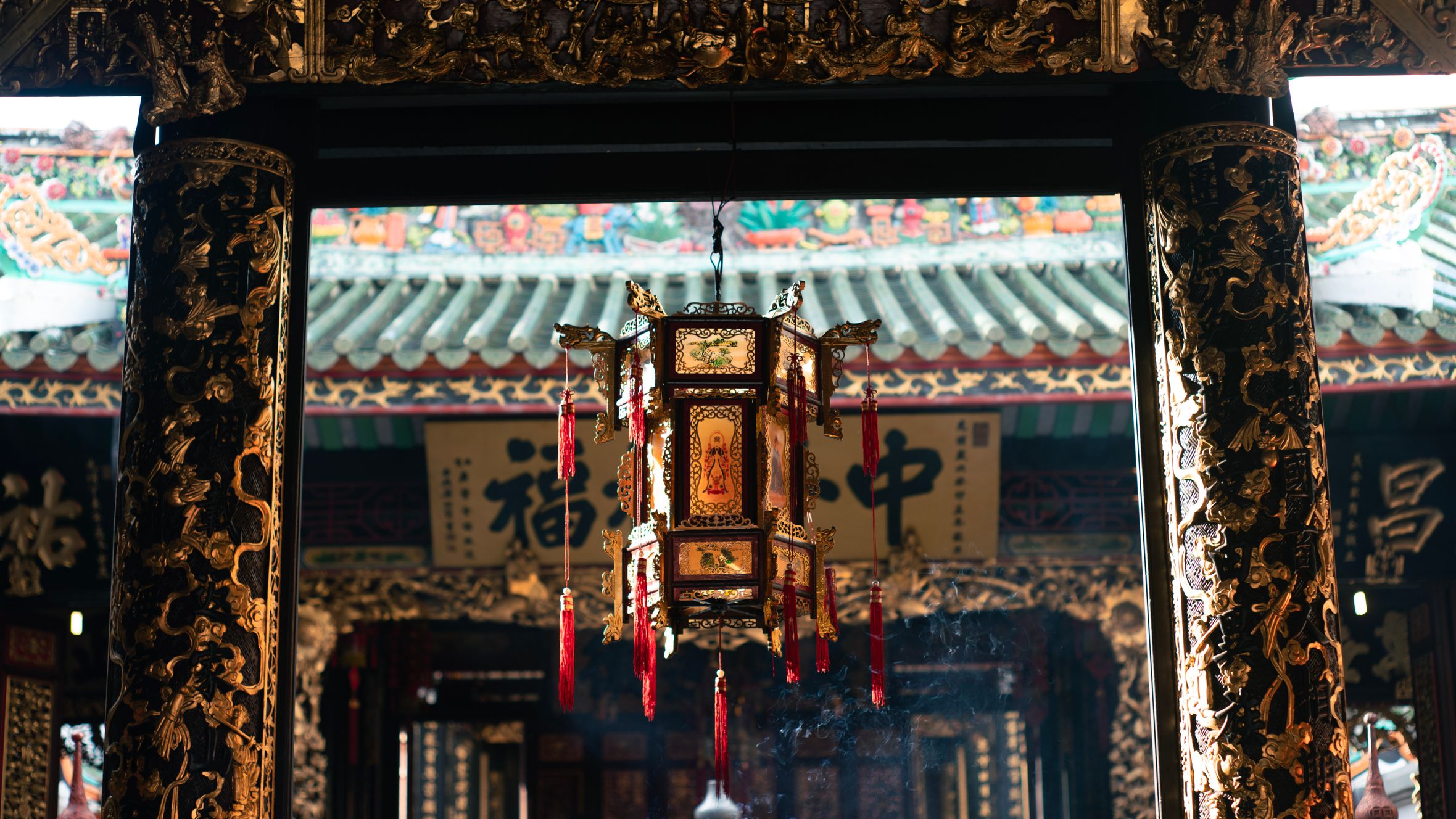
The temple complex is compact — you can walk the grounds in 20 minutes — but it punches above its weight architecturally. Curved rooflines, dragon-wrapped columns, and a tiered hillside layout give it a sense of vertical drama that most lowland temples lack.
Why travelers go
Most foreign visitors pass through Lao Cai city on the way to Sapa, spending maybe one night before catching a bus up the mountain road. Den Mau is the single best reason to slow down in the city itself. A few reasons:
- It's genuinely atmospheric. The hilltop position means incense smoke drifts out over the river valley. Early mornings and late afternoons, when local worshippers come to pray, the place feels alive in a way that tourist-circuit temples often don't.
- It contextualizes the region. Dao Mau worship connects to "ca tru" singing traditions and the broader spiritual culture of the northern highlands. If you're heading to Sapa (사파 / 沙坝 / サパ) to see ethnic minority villages, Den Mau gives you a Han-Viet spiritual counterpoint.
- It costs nothing. Free entry, no ticket booth, no roped-off sections.
Best time to visit
The temple is open year-round, but two windows stand out:
- [Lunar New Year](/posts/tet / 越南春节 / テト)-lunar-new-year-guide) (Tet) through the 3rd lunar month (roughly February–April): This is festival season. The main temple festival falls on the 15th of the first lunar month, with processions, ritual chanting, and offerings. The hillside gets packed with locals — chaotic, colorful, worth it.
- September–November: Cooler weather, thinner crowds, clear skies over the river valley. Good light for photography.
Avoid midday in summer (June–August). Lao Cai city bakes at 35°C+ and the hillside has limited shade.
How to get there
Den Mau is on Thuy Hoa hill, about 1.5 km from Lao Cai train station. If you've arrived on the overnight sleeper from Hanoi (which deposits you around 5:30–6:00 AM), it's a 25,000 VND xe om ride or a 15-minute walk heading northeast along the river.
From Sapa, local buses run to Lao Cai city every 20–30 minutes (35,000–50,000 VND, 45 minutes). Get off at the main bus station and grab a taxi for about 30,000 VND.
If you're driving a motorbike from Hanoi via the highway, Lao Cai city is roughly 295 km — a full day's ride through tea country around Yen Bai and Bao Thang.

Photo by Haneul Trac on Pexels
What to do
Walk the three levels
The complex is built on three ascending tiers. The lowest courtyard has a lotus pond and a small shrine. The middle terrace houses the main worship hall with the Mother Goddess altar — look for the red-robed statue flanked by attendant spirits. The top level has a smaller shrine and the best river views.
Watch a ritual (if your timing is right)
Dao Mau ceremonies involve spirit mediumship — "len dong" — where devotees channel spirits through trance, costume changes, and music. These aren't scheduled for tourists, but if you visit during a festival or stumble on a private ceremony, you're generally welcome to observe quietly from the back. Don't photograph without asking.
Cross to Coc Leu Market
A 10-minute walk from the temple takes you to Coc Leu Market, a sprawling border-trade market where Chinese and Vietnamese goods mix. Good for cheap electronics, dried goods, and people-watching. Not a tourist market — expect zero English.
Where to eat
Lao Cai city isn't a food destination, but a few options near the temple area work:
- "Pho" stalls along Nguyen Hue Street — standard northern-style pho with thin-sliced beef, about 40,000–50,000 VND. Nothing fancy, reliably good.
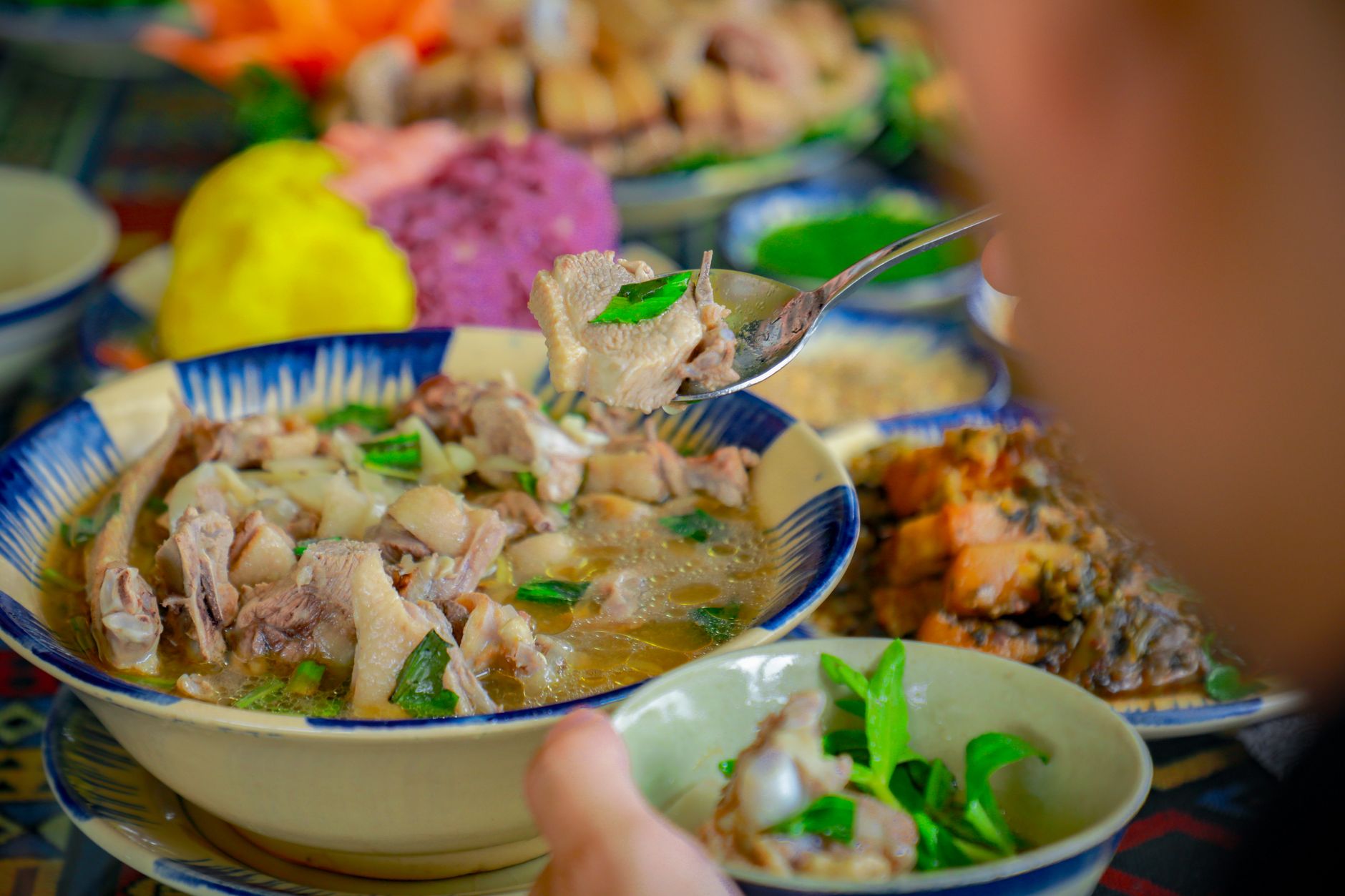
- Thang Co corner on Coc Leu Street — "thang co" is a horse-meat stew from the Hmong highlands. It's an acquired taste — organ-heavy, heavily spiced with cardamom and lemongrass. A bowl runs 50,000–60,000 VND.
- Quan Bia on Hoang Lien Street — a local "bia hoi" joint with grilled river fish and morning glory. Expect 150,000–200,000 VND for two people with beers.
Where to stay
Most travelers sleep one night in Lao Cai before or after Sapa. Options near the station and temple:
- Budget (300,000–500,000 VND): Guesthouses clustered around the train station. Basic but functional — hot water, wifi, thin walls. Try Nha Nghi Thanh Binh on Pho Moi Street.
- Mid-range (600,000–900,000 VND): Sapaly Hotel or Lao Cai Star Hotel both have river-view rooms and decent breakfast spreads.
- Skip the luxury tier. There isn't one here. If you want a nice hotel, head up to Sapa.

Photo by Vietnam Hidden Light on Pexels
Practical tips
- Dress modestly. Shoulders and knees covered. This is an active worship site, not a ruin.
- Shoes off inside the main hall. Carry them or leave them on the rack outside.
- Incense is available at a small stall at the base of the stairs (10,000–20,000 VND for a bundle). Lighting some is a respectful gesture even if you aren't religious.
- No drones. The border proximity makes authorities twitchy about anything airborne.
- ATMs are available at the base of the hill and near the train station (Vietcombank, Agribank).
Common mistakes
- Skipping it entirely. Most Sapa-bound travelers don't even know the temple exists. Budget 45 minutes.
- Visiting at noon. The gates stay open but the atmosphere is dead. Early morning or late afternoon only.
- Confusing it with Den Thuong or Den Ha. Lao Cai has multiple temples. Den Mau is the one on Thuy Hoa hill overlooking the river — look for the tall gate with red columns.
Final note
Den Mau won't rearrange your travel plans, but it rewards the small effort of stopping. If you're passing through Lao Cai anyway — and almost everyone heading to Sapa does — a pre-breakfast visit sets up the day well. Incense, river fog, and zero crowds at 6:30 AM.
Last updated · May 29, 2026 · independently researched, never sponsored.