What it is
Dinh Hoang A Tuong is a colonial-era mansion perched on a hill in Bac Ha town, about 60 km northeast of Sapa in Lao Cai province. Built between 1914 and 1921 under French supervision, it served as the residence of Hoang A Tuong — a Hmong feudal lord who controlled much of the Bac Ha plateau during the early 20th century. The architecture is an odd but compelling hybrid: French colonial symmetry married to thick stone fortress walls, watchtowers, and interior courtyards designed for highland defense. Think of it as a warlord's villa dressed in European clothing.
The compound covers roughly 4,000 square meters. Two stories, yellow-washed walls, arched windows, and a rooftop terrace that overlooks the valley. Inside, the rooms are mostly bare now — some period furniture, a few photo displays — but the bones of the place tell the story. This was built to project power in a remote mountain district, and it still does.
Why travelers go
Most visitors to Bac Ha come for the Sunday market — one of the most genuine ethnic minority markets left in northern Vietnam (베트남 / 越南 / ベトナム). Dinh Hoang A Tuong sits just a few hundred meters from the market grounds, making it an easy pairing. But the mansion deserves more than a quick walk-through between market stalls.
The draw is threefold: unusual architecture you won't find anywhere else in the northern highlands, a window into the complicated colonial-era power dynamics of the region, and a hilltop vantage point with views across the Bac Ha valley. If you've been to Sapa (사파 / 沙坝 / サパ) and felt it was too developed, Bac Ha — and this mansion — offer a quieter counterpoint.
Best time to visit
Bac Ha sits at around 900 meters elevation, so it's cooler than the lowlands year-round. The best window is September through November — dry skies, terraced rice turning gold in the surrounding valleys, and comfortable daytime temperatures around 20-25°C.
Sunday is the obvious day to visit if you want to combine the mansion with Bac Ha Market. The market runs from early morning until roughly 14:00. Hit the mansion first thing (it opens at 07:30) before the market crowds peak, or visit after lunch when the tour groups have cleared out.
Avoid January-February if you dislike cold drizzle — Bac Ha gets foggy and temperatures can drop to 5-8°C at night.

Photo by Kirandeep Singh Walia on Pexels
How to get there
From Sapa, the most common route is a 60 km drive east along winding mountain roads — roughly 2 hours by motorbike or 1.5 hours by car. The road is paved but narrow with sharp switchbacks. Not for nervous riders.
From Lao Cai city, take the road northeast toward Bac Ha (about 65 km, 1.5-2 hours). Local buses run this route daily, departing from Lao Cai bus station in the morning — expect to pay around 60,000-80,000 VND per person.
If you're coming from Hanoi, the overnight train to Lao Cai station is the classic approach (about 8 hours, from 350,000 VND for a hard seat to 800,000+ VND for a soft sleeper). From there, arrange onward transport to Bac Ha.
Once in Bac Ha town, Dinh Hoang A Tuong is walkable — about 500 meters uphill from the central market area. Follow the signs or ask anyone; it's the most prominent building in town.
What to do
Explore the compound
Budget 45 minutes to an hour. Walk the ground floor rooms, climb to the second-story terrace, and circle the exterior walls. The watchtowers at the corners are worth noting — functional military architecture wrapped in decorative French trim. Entry fee is 20,000 VND (as of early 2024).
Photograph the architecture
The yellow facade against green hills makes for strong photos, especially in morning light. The interior courtyards and arched doorways frame well. Best light: before 09:00 or after 15:00.
Pair with Bac Ha Sunday Market
The market is the real anchor of any Bac Ha visit. Flower Hmong, Phu La, and Tay minority groups come down from surrounding villages to trade livestock, produce, and textiles. It's louder, messier, and more authentic than most tourist markets. Arrive by 08:00 for the full experience.
Walk the surrounding hills
Bac Ha has several easy walks to nearby Hmong and Tay villages — Ban Pho (known for corn wine) is about 3 km out. No guide strictly needed for the main paths, though a local guide adds context.
Where to eat
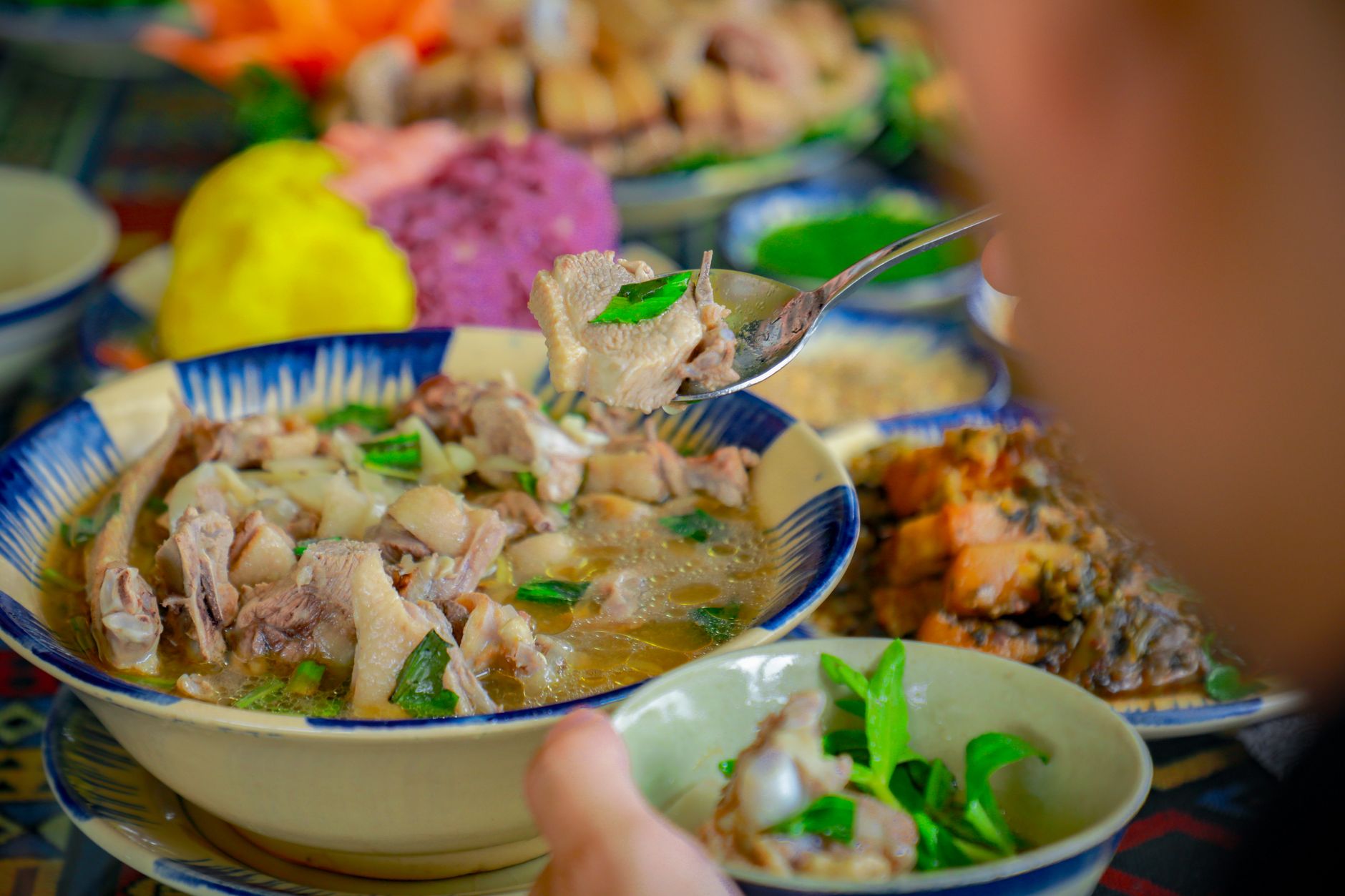
Bac Ha town has a handful of simple restaurants along the main road. "Thang co" — a Hmong horse-meat hot pot — is the local specialty, available at market stalls on Sundays and at a few permanent shops during the week. It's an acquired taste: earthy, pungent, served with fresh herbs.
For something more familiar, look for "pho" or rice-and-meat plates ("com binh dan") at the small eateries near the market. Meals run 30,000-60,000 VND. Corn wine is everywhere — ask for "ruou ngo" — and costs almost nothing.
If you're passing through Sapa before or after, that's where you'll find more variety, including good Vietnamese coffee shops.
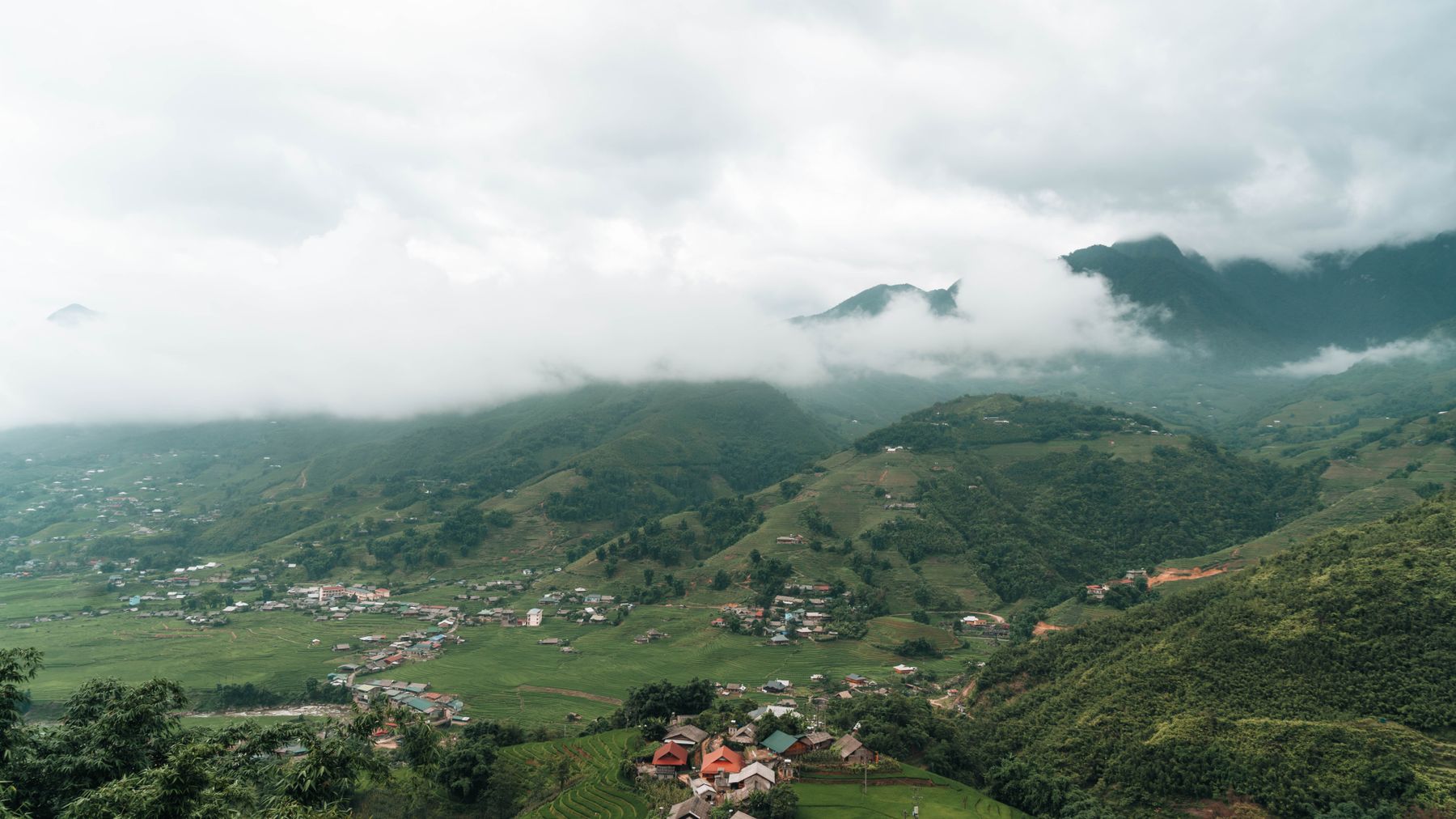
Photo by Quang Vuong on Pexels
Where to stay
Bac Ha has a growing number of guesthouses and homestays. Options range from basic rooms at 150,000-250,000 VND per night to newer boutique homestays in surrounding villages at 400,000-700,000 VND. Most accommodation is simple but clean.
If you're only here for a day trip from Sapa, you don't need to stay overnight — but spending a night lets you experience the town after the Sunday tourists leave, which is a different (quieter) Bac Ha entirely.
Practical tips
- Bring cash. There's one ATM in Bac Ha town center, but it's unreliable. Card payments are essentially nonexistent here.
- Wear layers. Even in summer, mornings are cool at this elevation.
- The mansion occasionally closes without notice for maintenance — confirm it's open if you're making a special trip on a non-Sunday.
- Motorbike rental in Sapa costs 120,000-180,000 VND per day. The Sapa-to-Bac-Ha road is scenic but demands confidence on mountain roads.
- If you're combining with Ha Giang or other northern destinations, Bac Ha works as a logical stop between Lao Cai and the eastern highlands.
Common mistakes
Arriving on a non-Sunday and expecting the market — it only operates on Sundays. The mansion alone doesn't justify a rushed day trip from Hanoi; pair it with broader Lao Cai or Sapa exploration. Skipping the compound's exterior walls and watchtowers (most visitors only see the interior rooms). Underestimating travel time on mountain roads — Google Maps times are optimistic here.
Last updated · May 29, 2026 · independently researched, never sponsored.