Hanoi's "egg coffee (에그커피 / 蛋咖啡 / エッグコーヒー)" — ca phe trung in Vietnamese — is one of those drinks that sounds wrong until you try it, and then you immediately wonder why the rest of the world hasn't caught on. It was invented out of necessity, it's been refined over decades, and it's now copied by cafes from Saigon to Seoul. Not all of them get it right.
The 1946 Origin at Cafe Giang
The story starts with Nguyen Van Giang, a bartender at the Sofitel Legend Metropole Hanoi (하노이 / 河内 / ハノイ) during the French colonial period. Milk was scarce during the war years, so Giang started whisking egg yolk with sugar and a little condensed milk to create a thick, creamy foam — a substitute topping for his coffee. The result was richer and more interesting than milk ever was.
In 1946, Giang opened his own place, Cafe Giang, in a narrow alley off Hang Gai Street — 39 Nguyen Huu Huan, to be precise. The cafe is still there, still run by his family, and still serving the same recipe. You'd walk past the entrance without noticing it if you didn't know to look. Climb the stairs, find a low table, and order. A cup runs about 35,000–45,000 VND depending on whether you go hot or iced.
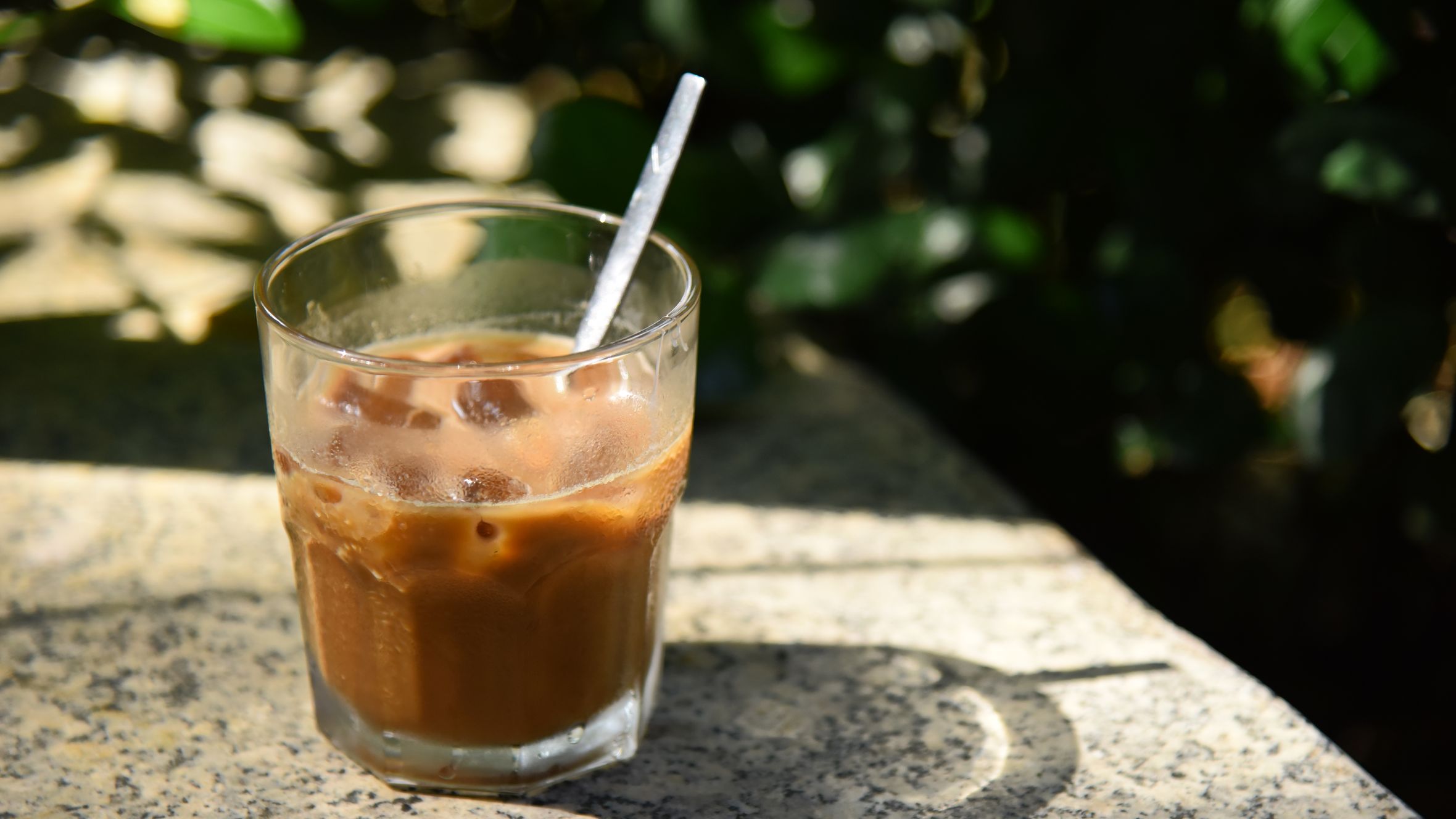
The hot version arrives in a small ceramic cup nested in a bowl of warm water to keep the temperature steady. The drink is dense at the top — almost like a warm sabayon — with strong Vietnamese drip coffee underneath. You're supposed to stir it partially, not fully, so you get the contrast of creamy sweetness and bitter coffee in each sip. The iced version is lighter and easier to drink quickly, but the hot one is the original experience.
How the Technique Works
The base is Vietnamese robusta coffee, brewed strong through a "phin" filter drip. The topping is egg yolk beaten with condensed milk and sometimes a small amount of coffee or cheese, depending on who's making it. The whisking process — done by hand at Giang, though some newer cafes use a mixer — creates a stable emulsion that holds its shape for several minutes before it starts to collapse into the coffee below.
The key variable is the ratio. Too much condensed milk and the drink is cloying. Too little egg and you lose the custard-like body. The Giang family recipe is not public, but the technique is simple enough that it's been reverse-engineered dozens of times across the city. That's both the compliment and the problem.

Photo by Nimit N on Pexels
Where Else to Drink It in Hanoi
Cafe Giang deserves its reputation, but it's also perpetually packed with tourists now, and the seating is cramped even on a slow day. There are other options worth knowing.
Giang Ca Phe — the Second Location
The family opened a second, larger location at 39 Dinh Tien Hoang, near Hoan Kiem Lake. Easier to find, better seating, same recipe. Prices are identical. If you're staying near the Old Quarter, this is the more relaxed option.
Cafe Dinh
At 13 Dinh Tien Hoang, Cafe Dinh is a floor-to-ceiling chaos of old furniture, peeling paint, and Vietnamese coffee culture in its most unfiltered form. Their egg coffee is good — not identical to Giang's, slightly sweeter — and the setting is worth the visit on its own. Around 30,000–40,000 VND.
Loading T Cafe
A newer entrant with locations across Hanoi, Loading T serves a more polished version aimed at a younger local crowd. Their ca phe trung is consistent and uses quality beans, but it leans sweeter and the atmosphere is Instagram-optimized in a way that Giang's alley is not. Fine if you're in a neighborhood without better options. Around 55,000–65,000 VND.
The Hotel Lobby Versions
Several upscale Hanoi hotels now serve egg coffee in their lobbies, sometimes with coconut milk variations or matcha additions. Skip these. They're expensive (90,000–130,000 VND) and the novelty-menu framing misses the point of what the drink actually is.

Photo by Ama Journey on Pexels
Why It Works
Egg coffee succeeds because robusta Vietnamese coffee is aggressive — high caffeine, heavy bitterness, low acidity — and the egg-yolk foam smooths all of that out without diluting it the way milk does. You're not softening the coffee; you're layering it. The result is a drink that functions as both dessert and caffeine delivery in one small cup.
It also makes sense in the context of how Vietnamese coffee culture operates generally. Vietnamese coffee — whether it's "ca phe sua da" over ice or egg coffee in winter — tends toward intensity and sweetness in combination, rather than the restraint-focused approach of third-wave specialty coffee. Egg coffee is just the most theatrical expression of that logic.
The drink has traveled well outside Hanoi — you'll find credible versions in Hoi An and Saigon now — but Hanoi is where the ingredients, the altitude (none, actually), and the culture align. Drinking it in a low chair in a cold-season alley, with the city noise filtering up from the street, is a different experience than drinking it from a mason jar on a Da Lat cafe terrace.
Practical Notes
Cafe Giang's original alley location (39 Nguyen Huu Huan) gets busy from around 9am and again from 3–5pm. Go early morning or mid-afternoon to find a seat without waiting. Egg coffee is best consumed on-site — it doesn't travel well, and to-go cups collapse the foam within a few minutes. Most places in Hanoi serve it year-round, but it makes the most sense between November and February, when the city actually gets cold enough to warrant something warm and dense.
Last updated · May 29, 2026 · independently researched, never sponsored.