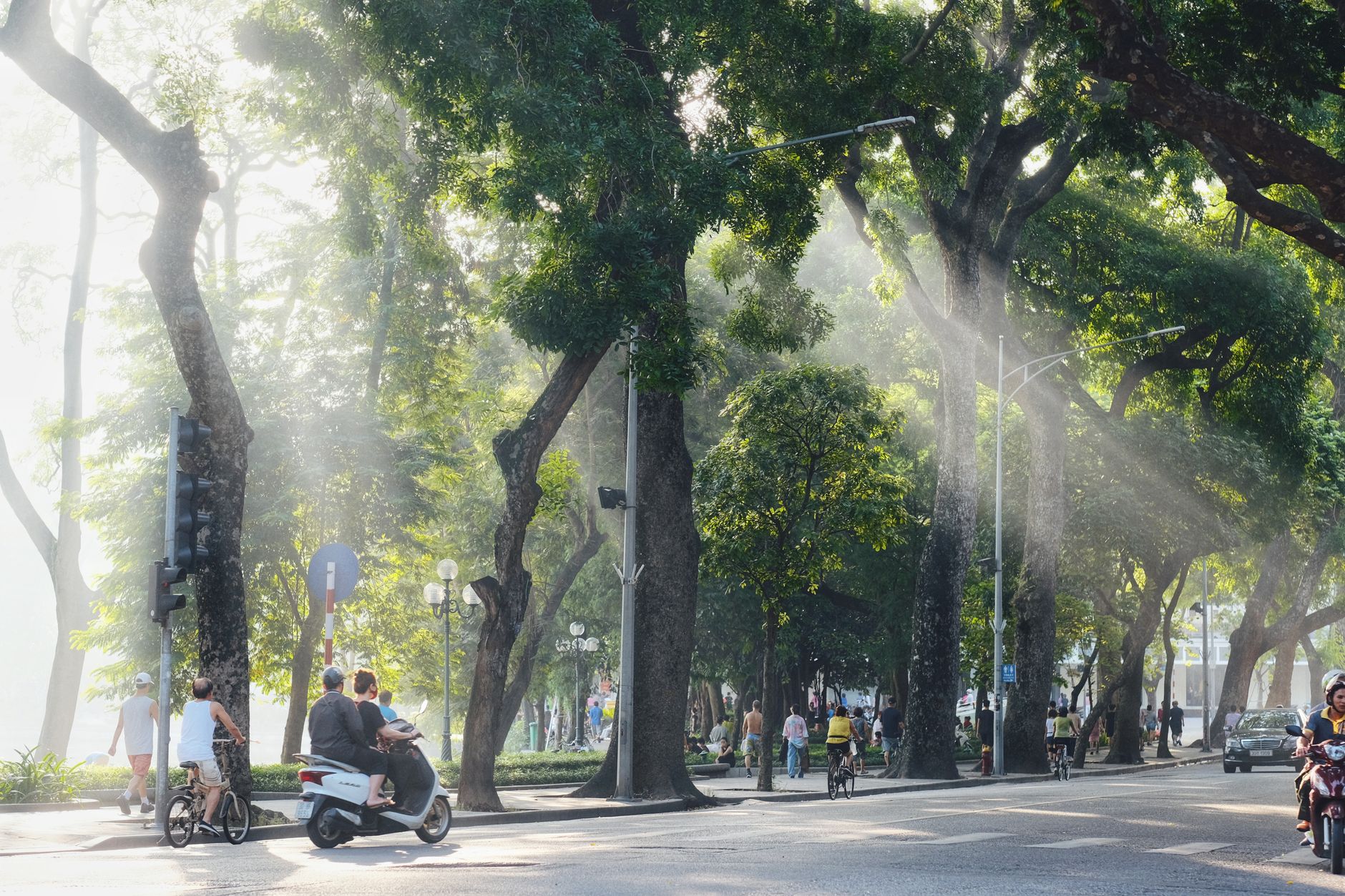
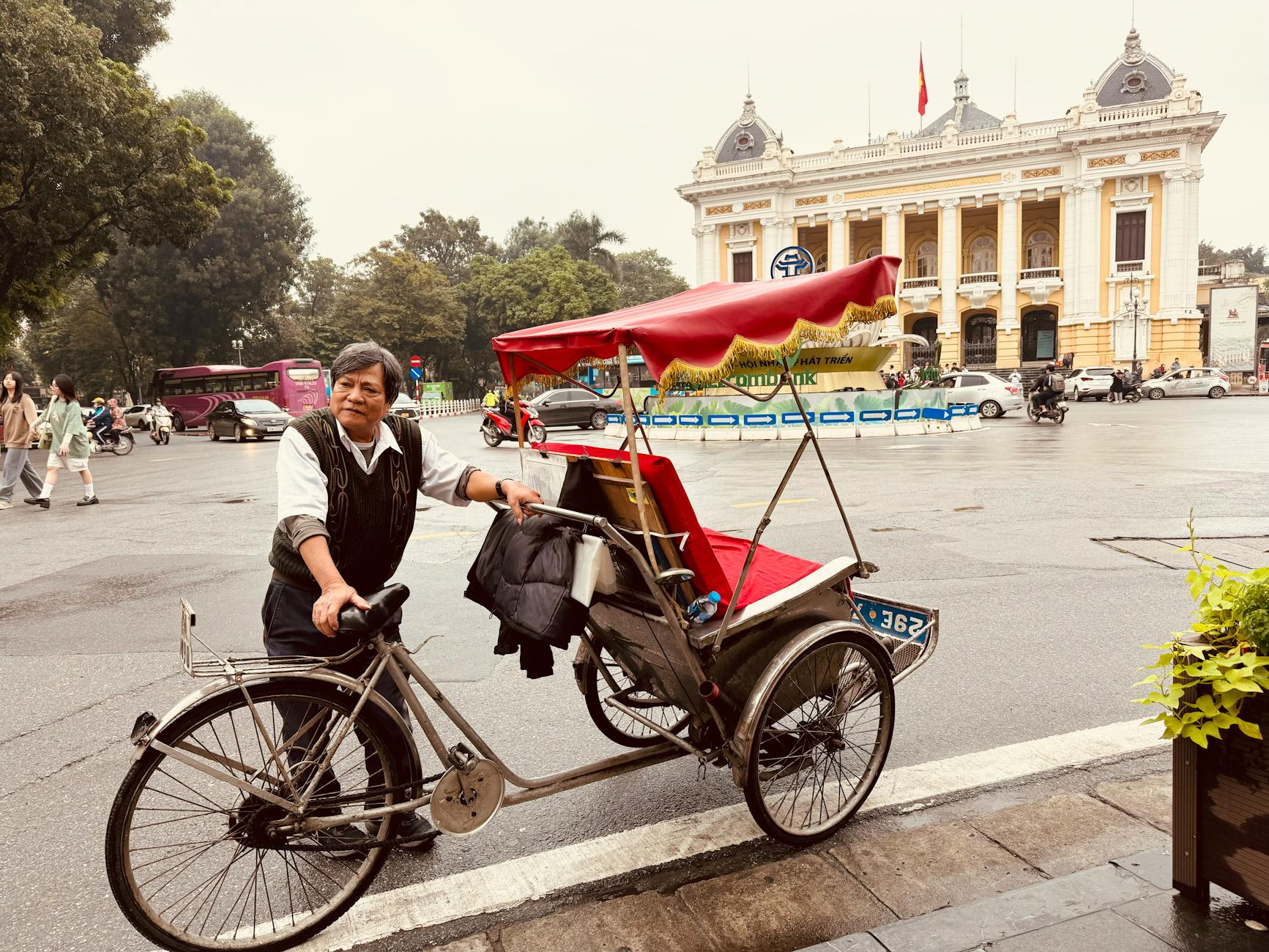
Grab: the safest, most expensive option
Grab is your default if you want zero friction. The app is in English, the driver ratings are visible before you book, and surge pricing is transparent on the screen. In Hanoi, a 3 km trip during off-peak runs 30,000–50,000 VND; same distance in Saigon costs 40,000–70,000 VND. During rush hour or rain, expect 50–100% markups.
Grab's strength is consistency. Every driver has a verifiable rating and license plate. No haggling, no surprises about the route. In touristy areas, many drivers speak basic English or Mandarin. You can rate them afterward, which actually matters—low-rated drivers lose work.
Grab offers several vehicle tiers worth understanding. GrabBike (motorcycle) is the cheapest and fastest through traffic—ideal for solo riders without heavy luggage. GrabCar is a standard four-seat sedan. GrabCar 7 fits larger groups. In Saigon and Hanoi, you'll also see GrabCar Plus, which guarantees a newer vehicle with more legroom, typically 15–25% more than standard GrabCar. For airport runs or intercity transfers, GrabCar is almost always the right call. For a 2 km hop from your hotel in the Old Quarter to Pho Gia Truyen on Bat Dan Street, a GrabBike gets you there in five minutes for around 15,000 VND.
The downside is cost. Grab premiums are real. If you're staying long-term or traveling on a tight budget, you'll notice. A week of daily Grab rides in Hanoi (하노이 / 河内 / ハノイ) can easily run 500,000–700,000 VND, while the same trips on Be might cost 350,000–500,000 VND.
Be: the local choice, sharper learning curve
Be is Vietnam (베트남 / 越南 / ベトナム)'s homegrown rival. Prices run 20–40% cheaper than Grab on comparable trips. Same 3 km in Hanoi often costs 20,000–35,000 VND on Be. The catch: the UI is Vietnamese-first, though English mode exists and is improving.
Be drivers are mostly locals; fewer speak English. The rating system exists but feels less strict than Grab's. Some drivers take longer or unexpected routes to pick up additional passengers (a feature, not a bug—it's cheaper because of shared micro-rides).
Be works brilliantly if you know basic Vietnamese navigation terms or can show the driver a location pin on Google Maps. It's a comfortable middle ground between Grab and street taxis for anyone staying more than a week.
One practical advantage: Be occasionally runs heavy promotions—flat-rate 10,000 VND rides within central districts, or 50% off your first ten rides. These rotate, so check the app's home screen after registering. The promotions tend to be strongest in Hanoi and Saigon, less common in smaller cities like Da Nang or Da Lat.
Traditional taxi fleets: Vinasun and Mai Linh
Vinasun and Mai Linh are the established names—white-and-green and red-and-white vehicles, respectively. Both are legitimate, metered, and widely available. Flag one on the street or call ahead.
Prices sit between Be and Grab. A 3 km trip in Hanoi runs roughly 25,000–45,000 VND depending on time of day and traffic. No surge pricing nonsense, just the meter. The driver won't have a smartphone app rating, but the car's registration number is on the door.
The trade-off is speed. You're not pre-booking a specific vehicle—you're hoping the next Vinasun or Mai Linh that passes is actually heading your direction. In tourist hubs, they're everywhere. In quieter neighborhoods or late at night, they're less common.
Worth noting: Vinasun operates mainly in the south (Saigon and surrounding provinces), while Mai Linh has national coverage. If you're traveling between cities—say, flying from Saigon to Hue or Hoi An—Mai Linh is the name you'll recognize at both ends. In Hanoi, you'll also see Thanh Nga and Taxi Group meters on the street; both are reputable. The key rule is simple: if the car has a company name, a visible meter, and a door number, you're fine.
What to avoid
Unmarked taxis, especially those that approach you at Noi Bai Airport (Hanoi) or Tan Son Nhat (Saigon), often use rigged meters or take circuitous routes to inflate fares. Stick to Grab, Be, or the official Mai Linh and Vinasun stands inside the terminal. Airport Grab rides are more expensive than street fares but honest.
Ditto for any taxi offering a flat rate before you ride—that's a negotiation trap. Apps and meters exist for a reason.
Watch for fake company cars too. Some unregistered drivers paint their vehicles to look like Mai Linh or Vinasun but with slightly altered names—"Mai Lin" or "Vina Sun" with an extra space. Check the door number and the spelling before you get in. A real Vinasun car has a consistent six-digit fleet number printed below the logo.
Tipping, payment, and logistics
Grab includes a tip option in the app (0%, 10%, 20%, or custom). Most users tip 0–5% for short rides, 10% if the driver was helpful. Payment is digital by default—your card or wallet is already linked.
Be also has in-app tipping, similar structure. Payments are cashless on Be.
Traditional taxis require cash (VND). Not all accept cards. If you're relying on metered taxis, keep small bills on hand.
No Vietnamese ride-hailing app requires you to tip. It's optional and genuinely appreciated, not expected. Drivers on Grab and Be would rather you give zero than feel pressured.
For Grab and Be, international Visa and Mastercard work. Some travelers link a Vietnamese e-wallet like MoMo or ZaloPay for faster checkout and occasional cashback—this is easy to set up with a local SIM card and takes about five minutes. Cash payment is also an option on both apps if you toggle it before booking, which is useful when your card gets declined by a foreign-transaction filter.
When ride-hailing won't work (and what to use instead)
Apps are king in Hanoi, Saigon, Da Nang, and most provincial capitals. But Vietnam has plenty of places where Grab and Be coverage thins out or disappears entirely.
In Sapa, Grab exists but drivers are scarce—you might wait 15–20 minutes, or the app simply won't find a match. Same story in Ha Giang town and much of the northern highlands. In rural Ninh Binh, you can get a Grab from the town center to Tam Coc (about 7 km, roughly 40,000–60,000 VND), but from Tam Coc back, good luck finding a driver at dusk.
For these situations, your options are:
- "Xe om" (motorcycle taxi): the original ride-hailing, human-powered. Drivers wait near markets, bus stations, and tourist spots. Negotiate the price before you sit down. A 5 km xe om ride in a small town runs 20,000–40,000 VND. Say "bao nhieu?" (how much?) and show Google Maps if needed.
- Hotel or homestay pickup: most accommodations outside major cities will arrange a car or motorbike for you. Prices are fixed and usually fair—ask at check-in.
- Renting your own motorbike: common in Ha Giang, Da Lat, and Phu Quoc. Expect 120,000–200,000 VND per day for a semi-automatic Honda Wave. Only do this if you're confident riding in Vietnamese traffic. An international driving permit technically applies, though enforcement is inconsistent outside cities.
Common mistakes and what surprises foreigners
Booking GrabCar during rush hour in Saigon. Between 5:00 and 7:30 p.m., a GrabCar from District 1 to District 7 (about 8 km) can take 45–60 minutes and cost 120,000–180,000 VND with surge. A GrabBike covers the same distance in 20 minutes for a third of the price. If you don't have bulky luggage, the bike is the smarter move.
Assuming Grab works the same everywhere. Grab in Hoi An is not Grab in Saigon. The town is small enough that most Grab rides are under 15,000 VND, but driver availability drops sharply after 10 p.m. In Da Nang, coverage is solid across the city, including the Son Tra peninsula and the route to Ba Na Hills. In Hue, Grab works in the central districts but gets patchy once you cross toward the royal tombs south of the Perfume River.
Not setting the pickup pin precisely. Vietnamese addresses can be confusing—alleys branch off alleys, and Google Maps sometimes drops you on the wrong side of a divided boulevard. Zoom in on the map and place the pin at your exact door. If you're in a "hem" (alley), type the alley number in the notes. This saves you and the driver five minutes of phone calls you can't understand.
Paying with large bills in metered taxis. Handing a driver a 500,000 VND note for a 35,000 VND ride almost guarantees the "no change" routine. Keep 10,000 and 20,000 VND notes in a separate pocket for taxis. ATMs dispense 500,000 and 200,000 VND bills by default—break them at a convenience store or when paying for a meal of "pho" or "banh mi" at a sit-down restaurant before you ride.
Ignoring the plate color. White plates are private vehicles (Grab, Be, personal cars). Yellow plates are registered commercial vehicles (taxis, buses). If someone in a white-plate car pulls up and claims to be a taxi without a visible app interface, walk away.
Quick reference at a glance
- Grab GrabBike (motorcycle), 3 km, off-peak: Hanoi 15,000–25,000 VND / Saigon 20,000–30,000 VND
- Grab GrabCar (sedan), 3 km, off-peak: Hanoi 30,000–50,000 VND / Saigon 40,000–70,000 VND
- Be bike, 3 km, off-peak: Hanoi 12,000–20,000 VND / Saigon 15,000–25,000 VND
- Be car, 3 km, off-peak: Hanoi 20,000–35,000 VND / Saigon 30,000–55,000 VND
- Mai Linh / Vinasun meter, 3 km: 25,000–45,000 VND (no surge)
- Xe om (street motorcycle taxi), 5 km: 20,000–40,000 VND (negotiated)
- Airport to city center (Grab): Noi Bai to Hanoi Old Quarter ~250,000–350,000 VND (32 km) / Tan Son Nhat to District 1 ~100,000–150,000 VND (7 km)
- Useful phrases: "Di dau?" (where are you going?), "Bao nhieu?" (how much?), "Dung day" (stop here), "Re trai / Re phai" (turn left / turn right)
- Apps to download before arrival: Grab, Be, Google Maps (offline maps for your region), MoMo or ZaloPay (optional, for cashless payments)
Quick decision tree
First-time visitor, unfamiliar with the city? Grab. English, predictable, traceable.
Staying 2+ weeks, want to save money, basic phone navigation? Be + Google Maps pin. You'll save enough for meals.
Downtown, familiar area, short hop? Flag a Vinasun or Mai Linh. Faster than waiting for an app ride, comparable price.
Late night, remote neighborhood, or unsure? Grab. You're paying for certainty. Worth it at 2 a.m. in a strange area.
Airport arrival? Grab through the app before you land. Official taxi stand if you prefer human interaction and don't mind waiting. Avoid unmarked cabs entirely.
Small town or rural area with no app coverage? Xe om, hotel-arranged car, or your own rented motorbike. Ask your host what works locally.
Final note
Getting around Vietnam is cheap by any international standard—even the "expensive" option (Grab) rarely costs more than a few dollars per ride. The real question isn't which service is best; it's which one fits the moment. Use Grab when you want certainty, Be when you want savings, metered taxis when one's right there, and xe om when the apps give up. After a few days, switching between them becomes second nature, like choosing between "ca phe sua da" and an "egg coffee"—both get the job done, just differently.
Last updated · May 29, 2026 · independently researched, never sponsored.