Hoi An after dark is a different city. The lanterns come on around 5:30 p.m., the motorbikes thin out, and the stretch of stalls running from An Hoi Bridge along Bach Dang and into the pedestrian lanes fills with smoke, sizzle, and the particular chaos of people deciding what to eat next. If you walk it without a plan, you'll spend 200,000 VND on mediocre spring rolls and call it a night. Walk it with one, and it's one of the better cheap meals in central Vietnam (베트남 / 越南 / ベトナム).
Starting Point — An Hoi Bridge, 5:30 p.m.
Cross from the Ancient Town side at An Hoi Bridge and pause at the top. The peninsula directly ahead is the An Hoi night market proper — a grid of perhaps 60 to 80 stalls that runs nightly regardless of weather. It's more local-facing than the tourist-optimized restaurants along Tran Phu Street, which is exactly why it's worth your time.
Resist buying anything at the first three or four stalls. They're often the most expensive and the least interesting — vendors positioned to catch people who haven't yet calibrated their hunger. Keep walking south toward the river edge.
First Stop — White Rose Dumplings and Banh Xeo, 5:45 p.m.
Look for the stalls with steamer baskets stacked four or five high. This is where you want your first bites. "Banh vac" — what locals call white rose dumplings, thin rice-dough parcels filled with shrimp and topped with fried shallots — runs about 25,000 to 35,000 VND for a plate of eight. They're a Hoi An (호이안 / 会安 / ホイアン) original and you won't find them done well anywhere else in Vietnam.
Right alongside, you'll almost certainly spot a woman working a cast-iron pan the size of a hubcap. "Banh xeo" here is the central Vietnamese version: smaller and crispier than the southern style, folded over bean sprouts, shrimp, and pork, and wrapped in rice paper with herbs before eating. One portion is around 30,000 VND and worth every dong.
Second Stop — Cao Lau, 6:15 p.m.
This is non-negotiable. Cao lau — the thick, chewy noodles with sliced pork, croutons, and a minimal broth — is specific to Hoi An in a way that borders on myth. The noodles are traditionally made with water drawn from a particular local well, which is either true or a very good story, depending on who you ask. Either way, the dish doesn't travel well and this is the place to have it.
At the night market, several stalls offer it for 40,000 to 55,000 VND a bowl. Skip the ones with laminated photo menus — find a stall where the cook is actually assembling bowls to order. The texture should be slightly chewy, the pork char-edged, the herbs generous.

Photo by VANNGO Ng on Pexels
Mid-Walk Drink Break — Bia Hoi or Fresh Coconut, 6:45 p.m.
By now you've covered the core of the peninsula. Walk back toward the river-facing edge where a row of low plastic stools faces the Thu Bon. Several vendors sell "bia hoi" — draft beer brewed fresh daily, light and cheap at around 10,000 to 15,000 VND a glass — as well as fresh coconut for about 20,000 VND. Sit for ten minutes. Watch the lantern boats drift. This is not wasted time.
Third Stop — Grilled Corn, Quail Eggs, and Skewers, 7:00 p.m.
The western edge of the market gets livelier as the evening goes on. Charcoal grills line the lane and the smoke is thick enough to smell from 50 meters away. Grilled corn slathered in spring onion oil runs 15,000 VND. Skewers of quail eggs, pork balls, and sweet potato go for 5,000 to 10,000 VND each. These are snacking food, not a meal, but they fill the gap between the heavier dishes well.
If you want something more substantial, a few stalls toward the northern end of the market do grilled pork skewers over rice — closer to a plate of "com tam" logic, minus the broken rice — for around 50,000 VND.
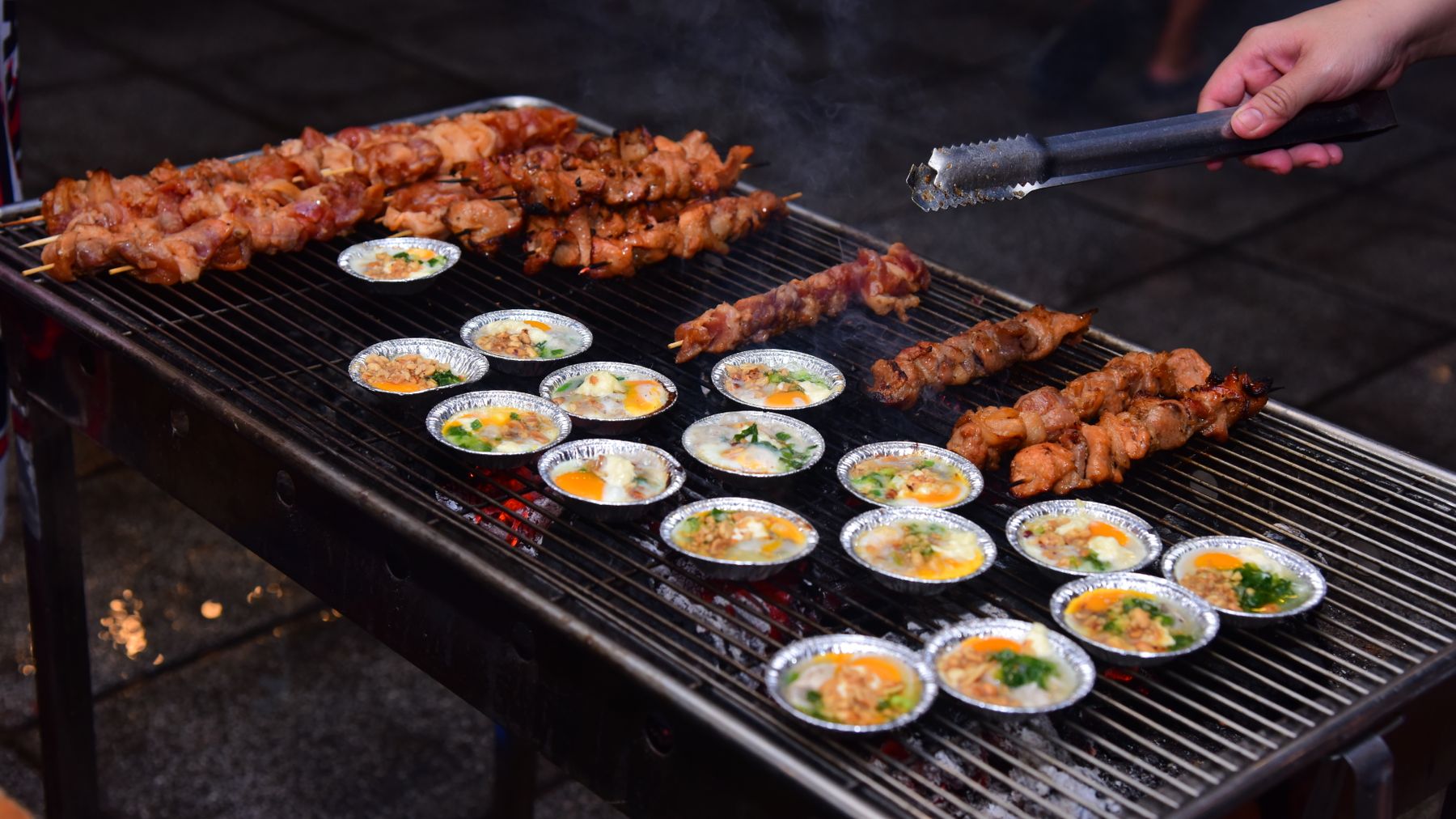
Photo by Sóc Năng Động on Pexels
Fourth Stop — Sweet Endings, 7:30 p.m.
Dessert in Hoi An's night market means "che" — sweet soup in more variations than anyone needs. Black bean, lotus seed, mixed fruit with coconut milk, pandan jelly. A cup runs 15,000 to 20,000 VND. There's also grilled banana with coconut cream for 20,000 VND, which sounds like a tourist invention but is genuinely good.
If you'd rather end with coffee, walk back across An Hoi Bridge and turn right along Bach Dang — several riverside cafes do Vietnamese coffee properly, including a solid "ca phe sua da" for under 30,000 VND with a view of the lantern reflections on the water.
Working the Lantern Stalls
The paper lanterns sold along the market's edges — silk, paper, round, teardrop — are everywhere and the quality varies wildly. If you want one, check that the wire frame is rigid and the seams aren't fraying. Prices start around 30,000 VND and the vendors expect a small negotiation. Don't push too hard; the margins aren't large.
Practical Notes
Bring cash — small bills preferred, though most stalls can break a 100,000 VND note without drama. The market runs every evening from roughly 5:00 p.m. to 10:30 p.m. and is busiest between 6:30 and 8:30 p.m. On full-moon nights, the Ancient Town goes car- and motorbike-free and the atmosphere shifts considerably — worth timing your visit if you can.
Last updated · May 29, 2026 · independently researched, never sponsored.