
Vietnam (베트남 / 越南 / ベトナム) is not Thailand. Most northern dishes barely register on a heat scale — a bowl of "pho" in Hanoi arrives with fresh chilies on the side, and whether those go in is entirely your call. But travel south, or sit down in front of a bowl of "bun bo hue" or "mi quang", and the game changes. Knowing how to communicate your spice tolerance before the food arrives will save you a lot of suffering and a lot of awkward smiling while your eyes water.
The phrase you actually need
The key phrase is: "It cay" (pronounced roughly eet kai), which means "less spicy." More specifically:
- "Khong cay" — no chili at all
- "It cay thoi" — just a little spicy (the thoi softens it, roughly "just a little, that's all")
- "Cay vua thoi" — medium spicy
- "It ot thoi" — fewer chilies, please (ot = chili pepper)
Of these, "it cay" or "khong cay" are the most universally understood. Write them on your phone, show the screen if your pronunciation isn't landing. Most vendors in tourist-frequented areas have seen this enough times that a gesture — fingers pinched together, a small motion — combined with "it cay" will get the message across.
Note that in some central Vietnamese dialects, especially in Hue, pronunciation shifts enough that "cay" can sound different to your ear. Don't overthink it. Say it, show it, and gesture.
Dishes that come hot by default
Not everything in Vietnam arrives spiced. But these dishes are worth flagging before you order:
Bun bo Hue
This is the one that catches people the most. "Bun bo hue (분보후에 / 顺化牛肉粉 / ブンボーフエ)" is a Central Vietnamese beef and pork noodle soup, and it is built on a lemongrass-and-shrimp-paste broth that often includes a scoop of sate — a chili oil paste — stirred directly in during cooking. The heat is baked into the broth, not just a side garnish. Ask for "it cay" or "khong cho sate" (no sate) when you order.
Mi quang
"Mi quang" from Quang Nam province uses a small amount of broth and a lot of toppings, sometimes including fresh and dried chilies. The heat level varies by cook, but central Vietnamese versions tend to run hotter than what you'll find adapted for tourist menus in Hoi An.
Bun rieu
"Bun rieu" — the tomato and crab paste noodle soup — is often finished with a spoonful of mam tom (shrimp paste) and fresh chili. The base isn't spicy, but the toppings can add up. Point at the chili and say "it thoi" (just a little) or "khong" (none).
Hu tieu Nam Vang
"Hu tieu" is generally mild, but Saigon stalls often put a bottle of fresh-sliced chilies and chili sauce tableside and sometimes add them liberally to the broth before serving. Ask them to hold the chili when ordering.
Banh canh
"Banh canh" — thick udon-like noodles in broth — varies enormously by region. Central Vietnamese versions can be quite spicy. Worth asking.
Ca phe and drinks: not a concern
For what it's worth, "ca phe sua da" and other Vietnamese coffee drinks are blissfully spice-free. If you need a recovery drink after accidentally eating a bowl of full-sate bun bo hue, iced milk coffee is your friend.
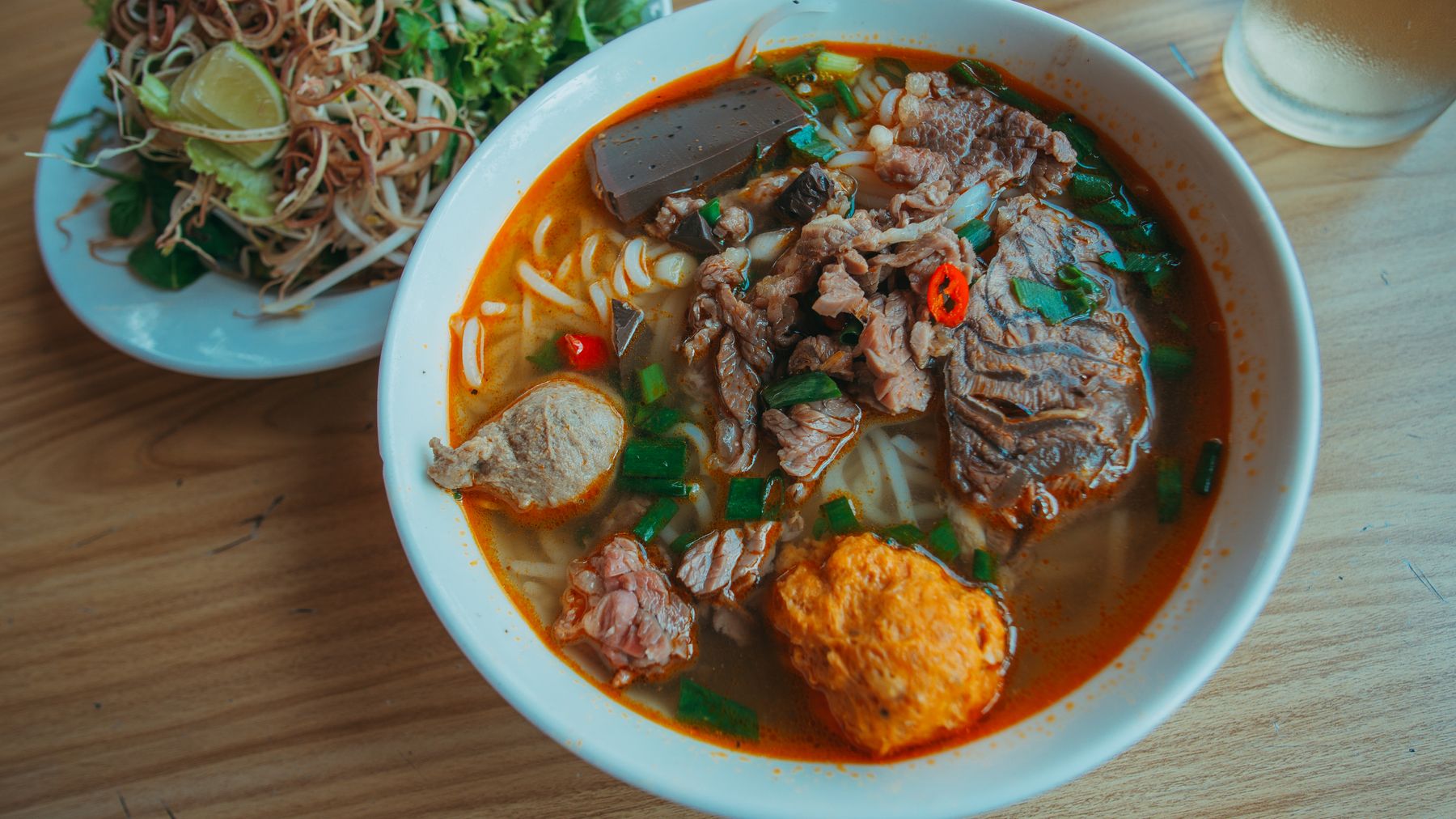
Photo by FOX ^.ᆽ.^= ∫ on Pexels
The "bot ot" situation
"Bot ot" is dried chili powder, and it shows up as a condiment at many Vietnamese restaurants, especially in the south and center. It often sits in a small dish next to salt and pepper. It looks mild and benign. It is not always mild. If a cook sees you as someone who might want heat, they may add a pinch during cooking — this is especially common with some stir-fried dishes and broken rice") shops that add seasoning to the meat marinade.
Unlike the fresh chili garnish you can push to the side, bot ot goes into the pan. Your protection is the ordering moment: "khong cay" before the cooking starts.
Regional heat map, roughly
- Hanoi and the north: Generally mild. Pho, "banh cuon", "bun cha" — these dishes are not spicy. Fresh chili is always available tableside, but it's your choice.
- Hue and central Vietnam: Spiciest region in the country. The cuisine here has a real relationship with heat. Always ask.
- Hoi An: Tourist-softened versions of central dishes are common, but don't assume. Ask.
- Da Nang: Mix of northern-style and central-style cooking. Check per dish.
- Saigon and the south: The base cuisine is milder than Hue, with more sugar and coconut in the flavor profile. But chili is always nearby and often added.

Photo by Pragyan Bezbaruah on Pexels
What if they still bring it spicy?
It happens. Kitchens are busy, and "it cay" sometimes gets lost. A few strategies:
- Order fresh lime and sugar: A squeeze of lime and a pinch of sugar (duong) on top of a dish can temper heat without ruining it.
- Ask for extra broth: In noodle soups, asking for more broth ("cho them nuoc dung") will dilute the spice level.
- Plain rice on the side: A bowl of steamed white rice costs around 5,000–10,000 VND at most restaurants and gives you something neutral to alternate with.
- Don't mix the table condiments in until you've tasted the dish. This sounds obvious, but the small dish of sliced chilies floating in fish sauce looks like a dipping sauce. It's not. It's chili.
Bottom line
Master "it cay" and "khong cay" and you'll handle 90 percent of situations without drama. Central Vietnam — especially Hue — is where you'll need these phrases most. The rest of the country is more forgiving, but asking never hurts.
Last updated · May 29, 2026 · independently researched, never sponsored.




