Hue does not need to borrow food culture from anywhere else. The city has its own version of almost everything, and "banh khoai" — the thick, turmeric-yellow sizzling pancake that predates and arguably outclasses the southern "banh xeo" — is a perfect example. Smaller in diameter (typically 15–18 cm versus the crepe-sized banh xeo), cooked in a individual cast-iron pan with a lid so the top steams while the bottom crisps, and eaten wrapped in fresh rice paper with "rau song" (raw herbs) and a peanut-sesame dipping sauce that Hue locals call "nuoc leo," it is a different eating experience entirely. Here is where to actually eat it.
Lac Thien — The Institution You Should Still Visit
Address: 6 Dinh Tien Hoang, Phu Cat Ward Hours: 10:00–21:30 daily Price: 45,000–55,000 VND per banh khoai
Lac Thien has been on every tourist list for decades, and the family running it — a multi-generational deaf family who communicate orders via a laminated card menu — has not changed much about the recipe in that time. The pancake is genuinely good: battered properly with rice flour and turmeric, loaded with shrimp, pork belly, and bean sprouts, properly crispy on the bottom. The nuoc leo here leans heavier on peanut than sesame and has a slight chilli back note that most other versions skip.
The criticism of Lac Thien — that it is too tourist-facing — is fair in terms of atmosphere, but the food has not been dumbed down. Worth going at least once, ideally before noon when the oil is fresh.
Quan Hanh — The Local Benchmark
Address: 11 Pho Duc Chinh, Phu Nhuan Ward Hours: 09:00–19:00, closed Tuesdays Price: 35,000–40,000 VND per banh khoai
This is the place most Hue (후에 / 顺化 / フエ) residents point to when they want the real thing without any tourist theatre. It is a narrow two-table setup in a residential alley, and the owner — a woman in her 60s who has been doing this since at least the early 1990s — uses lard in the pan rather than vegetable oil, which gives the crust a depth of flavour that most other versions cannot replicate. The herb plate here is notably generous: you get fish mint ("rau diep ca"), perilla, banana flower, and green star fruit slices. That combination of bitter, sour, and herbal against the fatty crisp pancake is exactly what banh khoai is supposed to feel like.
Cash only. No English spoken. Point and smile.
Ba Do — Best Nuoc Leo in the City
Address: 8 Nguyen Binh Khiem, Vinh Ninh Ward Hours: 10:30–20:00 daily Price: 40,000 VND flat rate
Some stalls treat the dipping sauce as an afterthought. Ba Do treats it as the main event. The nuoc leo here is made in-house daily using roasted peanuts, sesame, fermented soybean paste ("tuong hat"), and a small amount of pork liver that gives it an almost velvet texture. The banh khoai itself is solid — good crisp, fair filling — but you are coming here for the sauce. Order two or three pancakes so you have enough excuse to keep dipping. The owner will bring a small extra cup of sauce if you finish the first one, no charge.

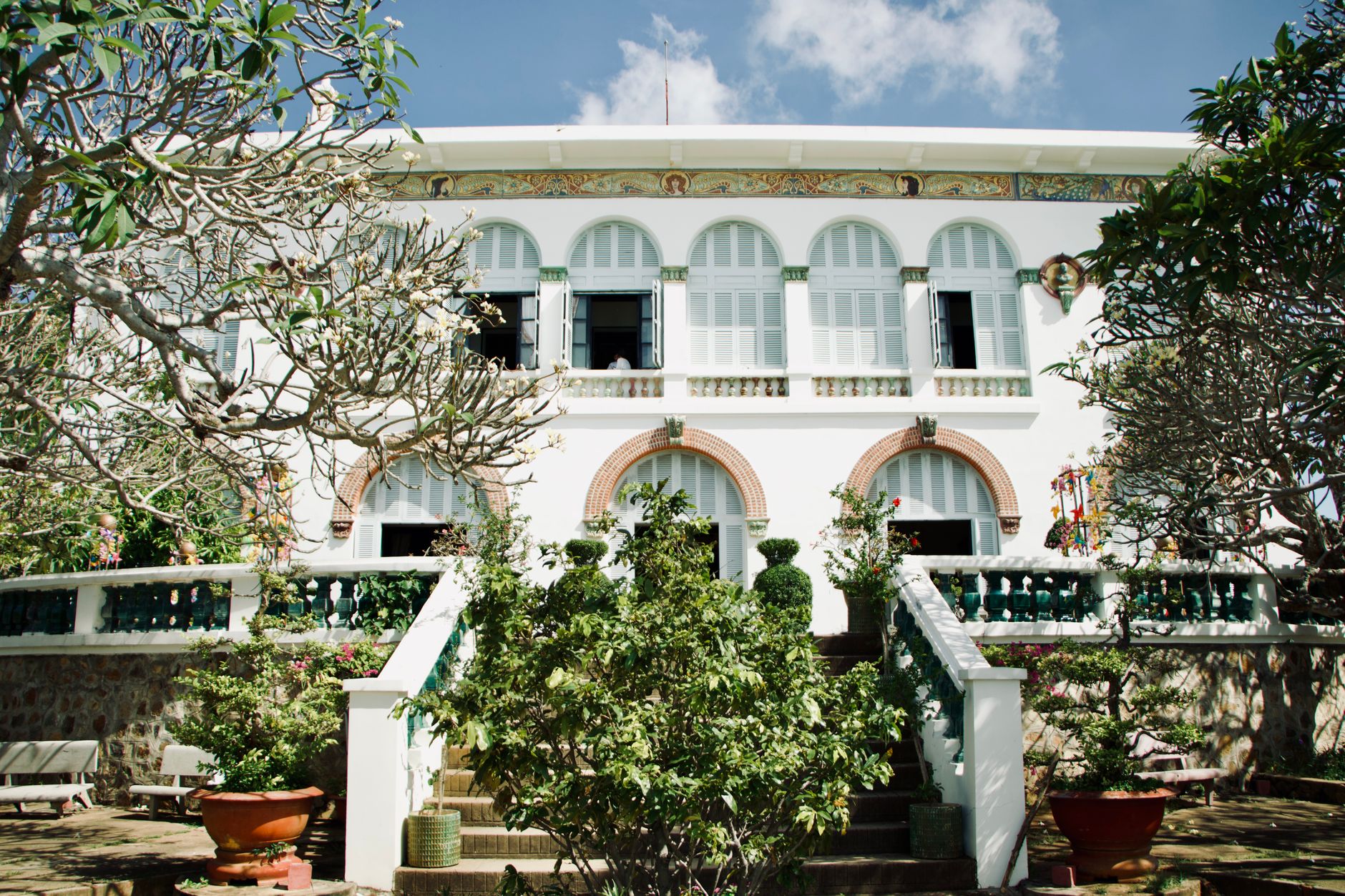
Photo by Pew Nguyen on Pexels
Quan Co Cam — Best for Breakfast Crowds
Address: Cho An Cuu market entrance, Phuoc Vinh Ward Hours: 07:00–12:00, often sold out by 11:00 Price: 25,000–30,000 VND per banh khoai
If you are already up early and heading through Hue's market circuit, this is the morning option. The stall is set up at the An Cuu market entrance and runs until the batter and filling run out — usually around 11:00. The pancakes are slightly thinner here than the Pho (쌀국수 / 越南河粉 / フォー) Duc Chinh standard, which makes them crispier all the way through rather than crispy-outside-steamed-inside. Filling is minimal by design: shrimp, sprouts, a sliver of pork. It is less filling than a full sit-down plate, which makes it work well as a breakfast snack before moving on. Eat standing at the plastic tables by the stall.
Co Ut Banh Khoai — Honest But Skip the Peak Hours
Address: 46 Nguyen Cong Tru, Phu Hoi Ward Hours: 11:00–21:00 daily Price: 40,000–50,000 VND per banh khoai
Co Ut is competent and consistent, which in Hue's banh khoai scene puts it solidly in the middle tier. The filling is generous — more pork than shrimp, which some people prefer — and the dipping sauce is decent. The problem is between 12:00 and 13:30 when the lunch rush means pancakes come out of pans that have not been wiped clean between batches. The batter picks up an acrid note from the old oil. Go before noon or after 14:00 and it is a fine choice, especially if you are staying in Phu Hoi and do not want to cross the river.
Skip this place note: Several stalls around the Thien Mu Pagoda tourist corridor sell something labelled banh khoai, but the versions served to tour groups come pre-cooked and reheated on a griddle. The texture is wrong — soggy in the middle, leathery on the outside — and the dipping sauce is usually a watered-down sweet chilli that has nothing to do with nuoc leo. If you see a stall that is cooking six pancakes simultaneously in identical small pans and serving a tour bus, walk past it.
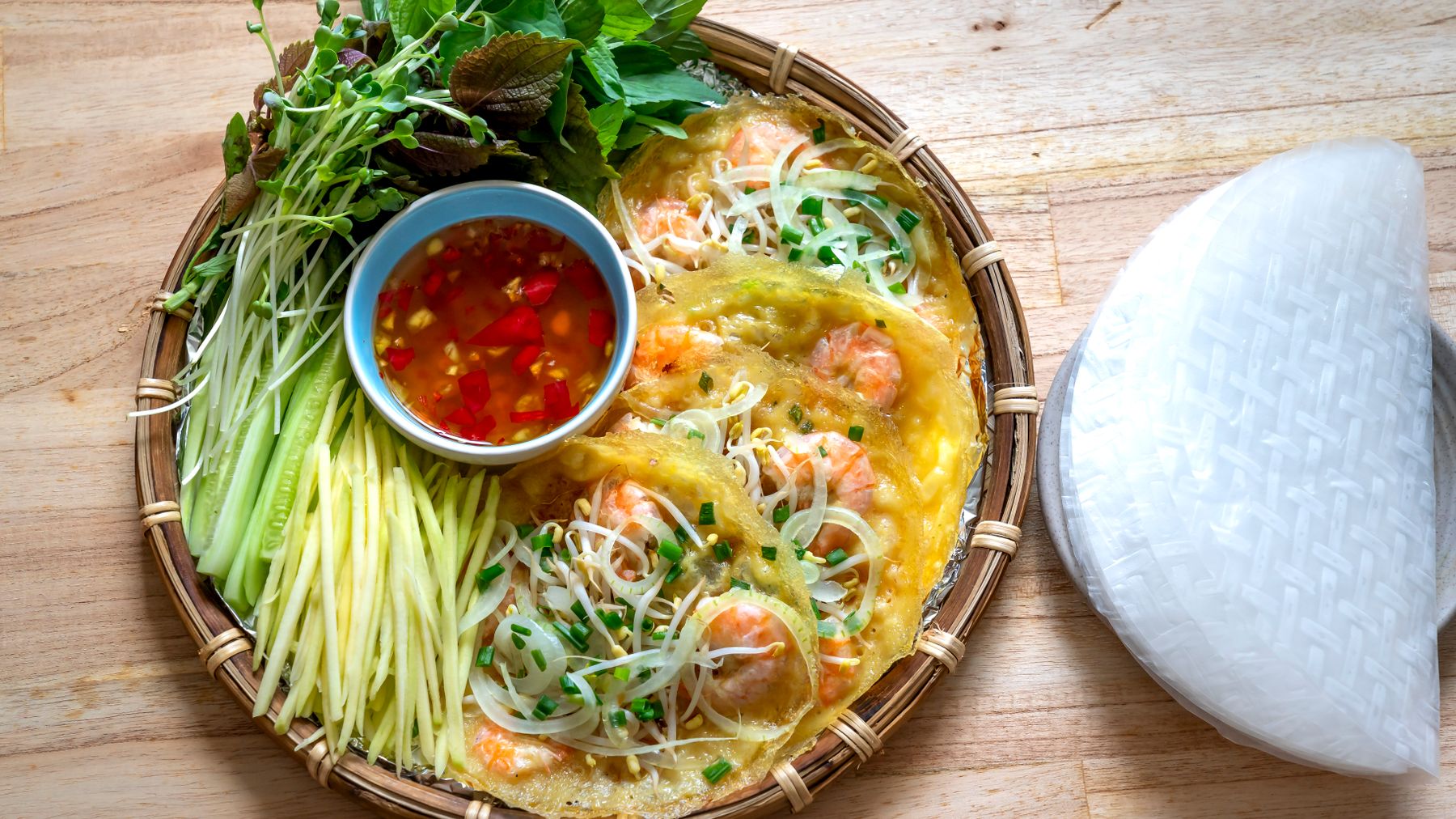
Photo by Quang Nguyen Vinh on Pexels
What Makes Hue Banh Khoai Different
The gap between Hue's banh khoai and the southern banh xeo is not just size. The cast-iron individual pans concentrate heat differently than the large woks used for banh xeo, creating a thicker, more structured crust. The turmeric content in the batter is higher here, which contributes to colour and a faint earthiness. And the nuoc leo dipping sauce — peanut-sesame-fermented soybean — is a completely different flavour register from the fish-sauce-lime dipping sauce used in the south. It is richer, nuttier, and slightly heavier, which suits the smaller portion size.
If you are curious about how Hue's approach to rice-flour dishes differs more broadly, the city's "banh cuon" and other wrapped preparations follow similar logic — restrained, technique-focused, built around the sauce as much as the wrapper.
Practical Notes
Most banh khoai stalls are busiest between 11:00 and 13:00 and again from 17:00 to 19:00. Prices at all recommended spots are between 25,000 and 55,000 VND per pancake — expect to eat two or three to feel full. Bring small bills; change for 100,000 VND notes is often a problem at market stalls.
Last updated · May 29, 2026 · independently researched, never sponsored.