
What it is
Tan Trao Historical Site sits in a quiet valley about 40 km northeast of Tuyen Quang city, surrounded by limestone karst and dense forest. This is where Ho Chi Minh (호치민 / 胡志明 / ホーチミン) based operations in 1945 before the August Revolution, and where the National People's Congress convened under a banyan tree that still stands today. The complex sprawls across several villages in Son Duong district — it's not one building but a landscape of memorials, reconstructed stilt houses, trails, and living villages spread over roughly 600 hectares.
For travelers, it's a chance to see a slice of Vietnamese history preserved in its natural setting rather than behind museum glass. The surrounding countryside — terraced rice fields, bamboo groves, minority villages — makes the journey feel worthwhile even if revolutionary history isn't your main interest.
Why travelers go
Most foreign visitors end up here because they're already exploring the mountains between Hanoi and Ha Giang and want something off the standard circuit. Tan Trao offers a few things you won't find elsewhere:
- The "cay da Tan Trao" (Tan Trao banyan tree), a massive 300-year-old specimen where the 1945 congress was held outdoors
- Hong Thai stilt house where Ho Chi Minh lived and worked — a simple wooden structure on stilts, remarkably modest
- Khuan Tat cave, Ho Chi Minh's shelter during bombing raids, set into a hillside with forest trails leading up
- Nha Ong village, a Tay minority settlement that's been here for generations
- Genuine quiet — this isn't a crowded tourist zone
Vietnamese school groups visit regularly, but foreign travelers are rare enough that locals notice you. That's part of the appeal.
Best time to visit
September through November is ideal — dry, cool mornings, clear skies. The rice terraces in the surrounding valley turn gold in late September and early October. March to May is pleasant but hazier. Avoid June through August if you dislike heat and afternoon downpours, though the landscape is lush green.
Weekdays are quieter. Weekend mornings bring domestic tour buses, mostly departing by early afternoon.
How to get there
From Hanoi
Tuyen Quang city is about 165 km northwest of Hanoi (하노이 / 河内 / ハノイ) — roughly 3.5 hours by car or bus via the new expressway sections and QL2. From My Dinh bus station, buses to Tuyen Quang run every 30-45 minutes (around 120,000-150,000 VND). From Tuyen Quang city, Tan Trao is another 40 km northeast along provincial roads.
From Tuyen Quang city to Tan Trao
Hire a motorbike (150,000-200,000 VND/day from guesthouses near the market) or arrange a "xe om" for the day (around 400,000-500,000 VND round trip with waiting time). The road is paved but narrow in sections. No public bus runs directly to the site — you need your own wheels or a hired driver.
From Ha Giang direction
If you're coming south from Ha Giang, the drive through Bac Me and Chiem Hoa to Tan Trao takes about 4 hours on winding mountain roads. Beautiful drive, but tiring on a motorbike.
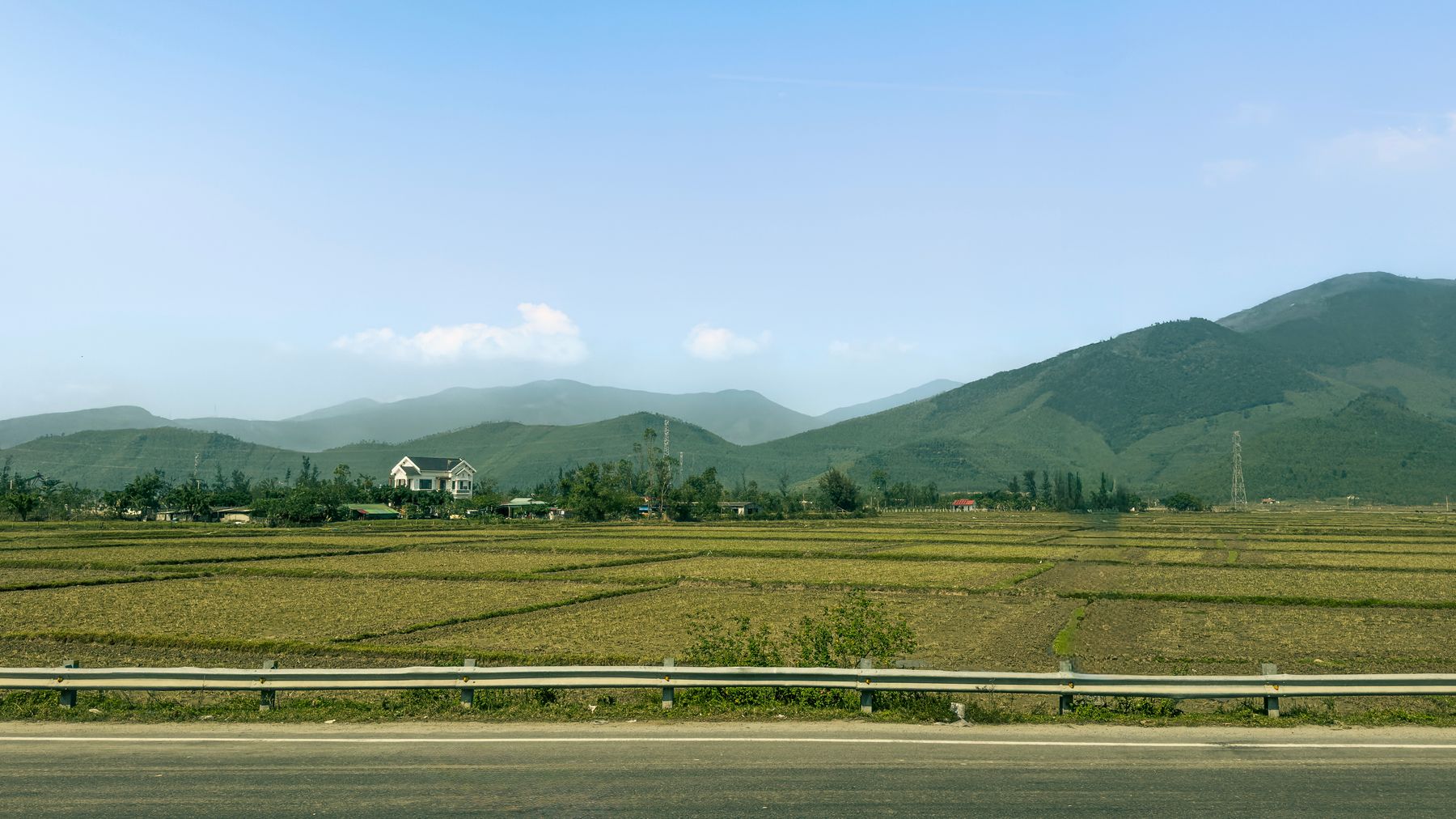
Photo by Tuấn Vũ on Pexels
What to do
Budget at least half a day. The key sites are spread across a few kilometers, connected by village roads and walking paths.
The main circuit
- Tan Trao banyan tree and congress site — Start here. The tree is genuinely impressive, its canopy shading a wide clearing. Information panels explain the 1945 congress in Vietnamese and English.
- Hong Thai stilt house — A 10-minute walk from the banyan tree. Small, simple, elevated on wooden posts. You can go inside.
- Tan Trao temple (Dinh Tan Trao) — A communal house nearby, rebuilt in traditional northern style. Quiet courtyard.
- Khuan Tat cave — About 1.5 km uphill from the main area. The trail is shaded and manageable in sneakers. The cave itself is modest but the forest walk is the real reward.
- Museum — A modern building near the entrance with artifacts, photographs, and maps. Labeling is mostly Vietnamese with some English summaries.
Beyond the site
Rent a bicycle or motorbike and ride through the surrounding Tay and Dao minority villages. The valley roads pass through rice paddies, bamboo bridges, and small markets. Nobody's hawking souvenirs — it's just daily life.
Where to eat
Don't expect restaurants. Options near the site are limited to a couple of small "quan com" (rice shops) at the entrance area serving basic plates — rice, stir-fried vegetables, pork, soup — for 30,000-50,000 VND. Decent, unfussy food.
For better variety, eat in Tuyen Quang city before or after. Try "thang co" (a hearty minority meat stew) at the morning market near Tan Ha ward, or grab "pho" and "banh cuon" along Tran Hung Dao street. Tuyen Quang's "com lam" (bamboo-tube rice) is worth seeking out — sold at a few stalls along the road toward Son Duong.
Where to stay
There's a basic guesthouse near the Tan Trao site entrance (around 250,000-350,000 VND/night) but most travelers base in Tuyen Quang city, where you'll find proper hotels in the 300,000-600,000 VND range. Minh Quang Hotel and Hung Vuong Hotel are both clean, central, and have motorbike rental connections.
If you're heading toward Ha Giang afterward, consider staying in Chiem Hoa town (30 km north of Tan Trao) — a few small hotels line the main road.

Photo by Minh Trần on Pexels
Practical tips
- Entry fee: Around 20,000 VND per person (may change). Parking is free.
- Language: Very little English spoken. Download offline Vietnamese on Google Translate.
- Cash only: No ATMs at the site. Withdraw in Tuyen Quang city.
- Footwear: Sneakers or sandals with grip for the cave trail. Flip-flops are fine for the flatland sites.
- Respectful dress: This is a national heritage site. Shoulders covered, no swimwear — common sense applies.
- Combine trips: Tan Trao works well as a stop between Hanoi and Ha Giang, breaking up what's otherwise a long drive.
Common mistakes
- Rushing it. People drive out, snap a photo of the banyan tree, and leave within 30 minutes. The site rewards slower exploration — walk the trails, sit in the villages, watch the rice fields.
- Coming without transport arranged. There's no reliable taxi or ride-hail coverage here. Sort your motorbike or driver in Tuyen Quang city beforehand.
- Expecting English signage everywhere. The museum has some, but most site markers are Vietnamese only. Read up before you go or you'll miss context.
- Skipping Tuyen Quang city entirely. The city itself has a pleasant riverfront, a night market, and genuinely good street food. It's not a place to avoid — just small and unhurried.
Final note
Tan Trao won't make anyone's top-ten Instagram list, and that's precisely its value. It's a real place with real history, set in countryside that hasn't been reshaped for tourism. If you're already exploring the north beyond Hanoi — heading toward Ha Giang or looping through the northeast — half a day here adds texture to your trip without adding complexity.
Last updated · May 29, 2026 · independently researched, never sponsored.





