What La Pan Tan is
La Pan Tan is a highland commune sitting at roughly 1,000-1,400 meters elevation in Mu Cang Chai district, now administered under the expanded Lao Cai province (following its merger with the former Yen Bai province). The commune is home to Hmong communities who've carved layer upon layer of rice terraces into near-vertical mountainsides over generations. In 2007, these terraces — shared across La Pan Tan, Che Cu Nha, and De Xu Phinh — were recognized as a national heritage landscape.
This isn't a manicured tourist attraction. It's a working agricultural commune where families plant, harvest, and burn fields on seasonal cycles. The terraces exist because people need to eat, not because someone built a viewpoint.
Why travelers go
Three reasons, honestly:
-
The terraces themselves. During water season (May-June) and golden season (September-October), the layered paddies shift between mirrored pools and heavy amber. The scale is difficult to photograph — you just have to stand there and take it in.
-
The quiet. La Pan Tan gets a fraction of the visitors that Sapa draws. No tour buses, no ticket counters, no one selling you a walking stick. You'll see more water buffalo than backpackers.
-
Hmong village life. Indigo-dyed textiles drying on fences, kids running between houses, rice drying on tarps in the road. It's not performative — it's Tuesday.
Best time to visit
Golden season (late September - mid October)
This is the marquee window. Rice turns from green to gold to amber in about three weeks, and the harvest begins. Light is warm, skies are often clear in the mornings with clouds rolling through valleys by afternoon. Expect more visitors during this period — "more" meaning maybe 30-50 people in the whole commune on a weekend.
Water season (late May - June)
Terraces are flooded and freshly planted. Reflections of sky and cloud in the paddies. Fewer visitors, more rain. Bring waterproof layers.
Off-season (November - April)
Terraces are brown or burnt. Still beautiful in a stark way, especially when fog wraps the ridgelines, but not the postcard shot most people come for. Roads can be slippery December through February.
How to get there
From Hanoi: The most common route is Hanoi to Mu Cang Chai town (about 280 km, 6-7 hours by motorbike or private car via the Hanoi-Lao Cai expressway, then cutting south). From Mu Cang Chai town center, La Pan Tan is roughly 15 km southeast on a paved but narrow mountain road.
By bus: Catch a bus from Hanoi (하노이 / 河内 / ハノイ)'s My Dinh station toward Mu Cang Chai (around 200,000-250,000 VND one way, 5-6 hours). From Mu Cang Chai, hire a local "xe om" (motorbike taxi) for 50,000-80,000 VND to reach La Pan Tan.
By motorbike: This is the preferred option for most independent travelers. The ride from Mu Cang Chai to La Pan Tan follows TL132 — winding, scenic, manageable for anyone comfortable on a semi-auto. The stretch from Hanoi through Tu Le and Khau Pha Pass is one of northern Vietnam (베트남 / 越南 / ベトナム)'s best riding days.
From Sapa: About 150 km and 4-5 hours by road. Not a day trip — commit to staying overnight in Mu Cang Chai.
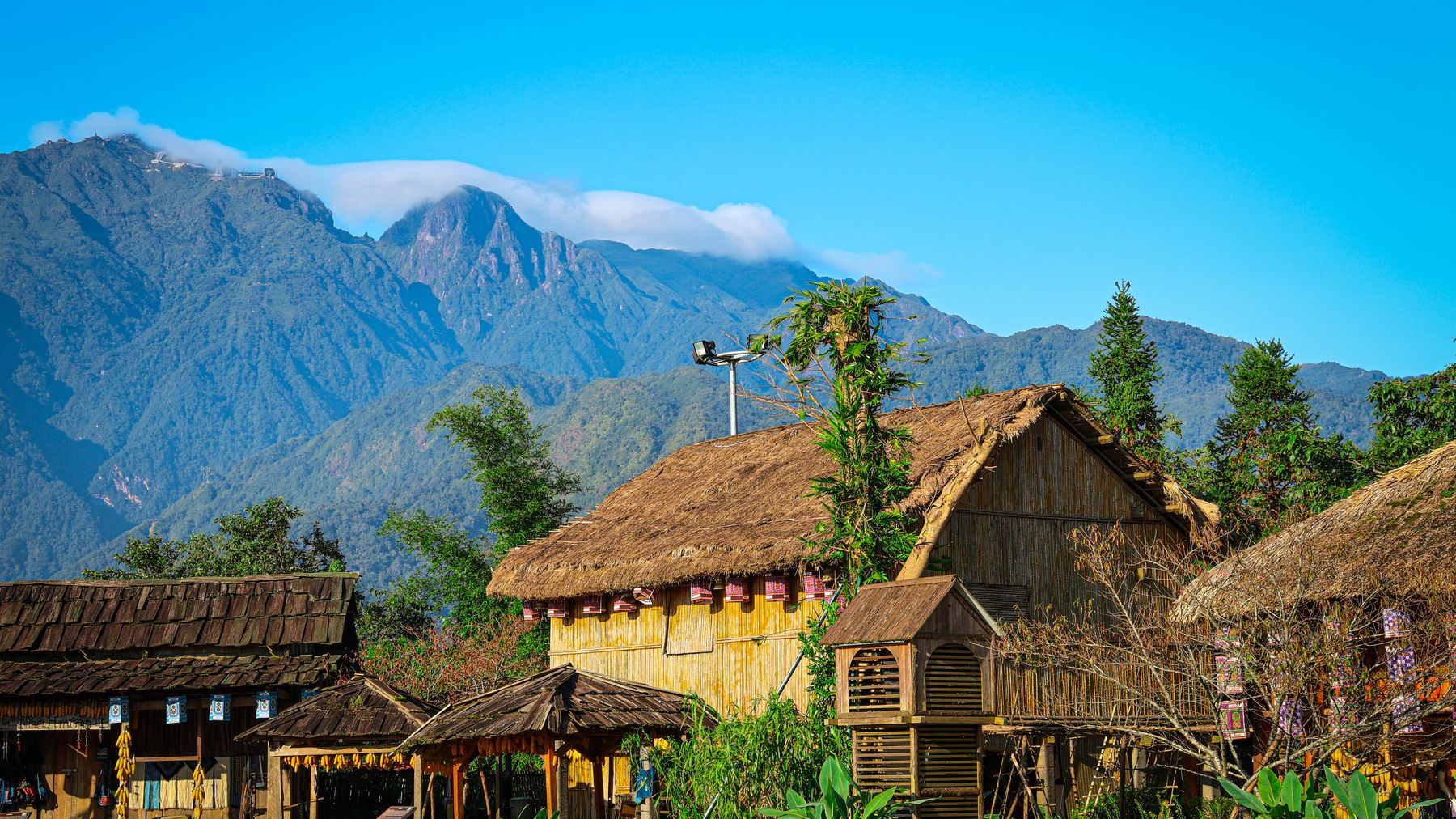
Photo by Haneul Trac on Pexels
What to do
Walk the terraces
No formal trail system exists. You walk along paddy dikes, dirt paths between houses, and the road itself. The best viewpoints are along the road between La Pan Tan and Che Cu Nha — pull over anywhere that looks good. A half-day of slow walking covers the main terrace areas.
Khau Pha Pass
If you're arriving from Tu Le, you'll ride over Khau Pha — one of the four great passes of the northwest. It's steep, foggy, and genuinely dramatic. Stop at the overlooks on the descent toward Mu Cang Chai for wide valley views.
Visit Tu Le
A small town about 30 km before Mu Cang Chai with natural hot springs and excellent "com lam" (bamboo-tube rice). Good for a lunch stop or overnight if you want to break the drive.
Market days
Mu Cang Chai's Sunday market draws Hmong families from surrounding communes, including La Pan Tan. Textiles, livestock, produce, street food. Arrive before 9 AM — it winds down by noon.
Where to eat
La Pan Tan itself has no restaurants. Eating options:
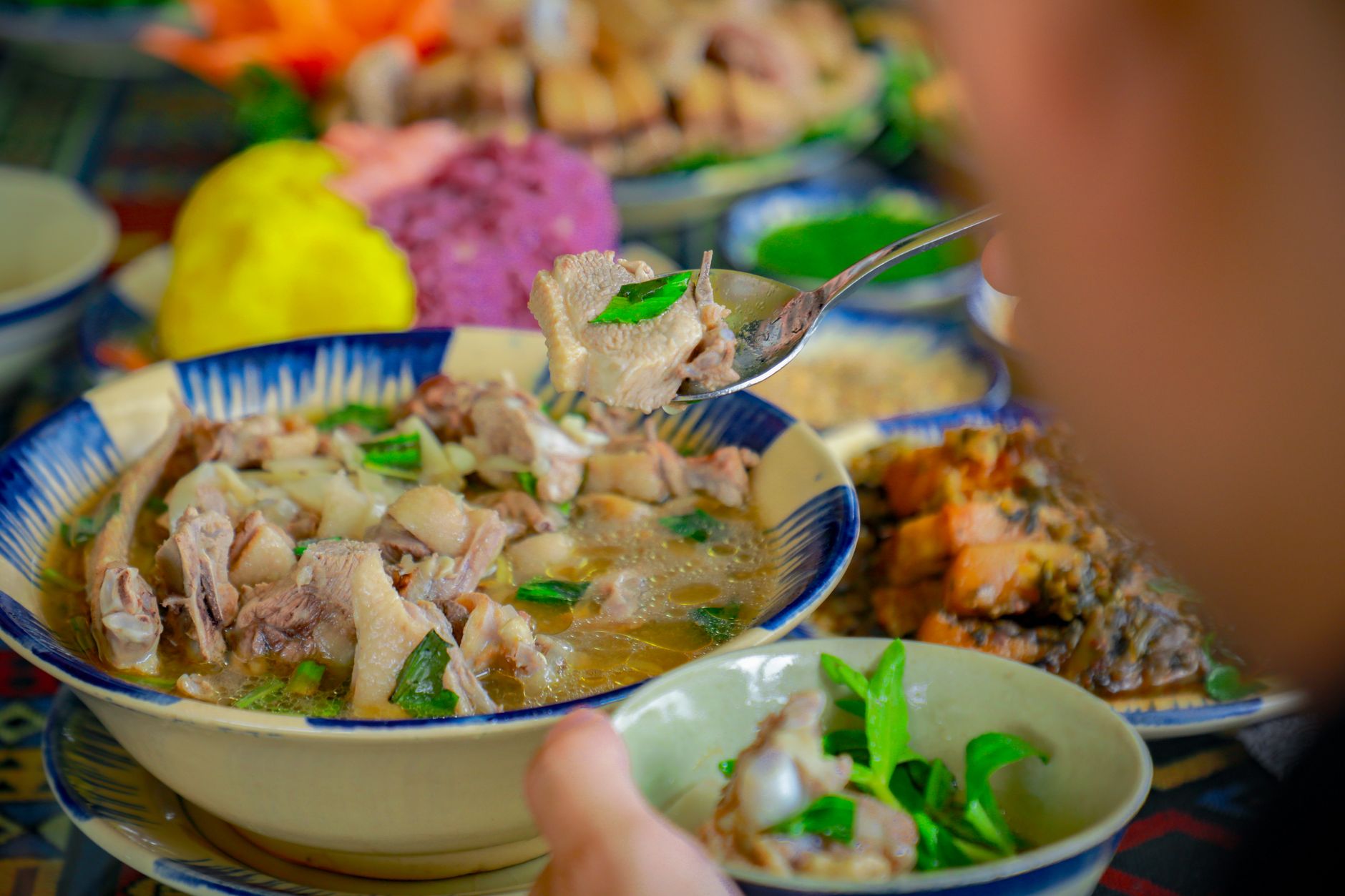
- Homestays in the commune serve family-style meals — rice, stir-fried greens, pork, sometimes grilled stream fish. Expect 80,000-120,000 VND per meal.
- Mu Cang Chai town has a handful of "com binh dan" (everyday rice shops) along the main road. Plates run 35,000-50,000 VND.
- Tu Le is known for "com lam" and sticky rice cooked with local spring water — it's worth planning a meal here.
If you're riding from Hanoi, the town of Nghia Lo (about 180 km from Hanoi) has better restaurant variety for a proper sit-down lunch.
Where to stay
In La Pan Tan: A few family-run homestays offer mattresses on the floor, mosquito nets, and shared bathrooms. Basic but clean. Around 150,000-250,000 VND per night including dinner and breakfast. Book through local contacts or just show up — availability is rarely an issue outside golden season weekends.
In Mu Cang Chai town: Several guesthouses and small hotels. Rooms with hot water and Wi-Fi from 300,000-500,000 VND. Nothing fancy, but functional.
In Tu Le: A couple of homestays near the hot springs. Good middle-ground comfort.

Photo by chiến bá on Pexels
Practical tips
- Cash only. No ATMs in La Pan Tan. The nearest is in Mu Cang Chai town, and even that one sometimes runs dry. Withdraw in Nghia Lo or before leaving Hanoi.
- Fuel up. Fill your tank in Mu Cang Chai. No petrol stations between there and La Pan Tan.
- Phone signal is spotty. Viettel has the best coverage in the highlands — grab a SIM in Hanoi before heading north.
- Respect the fields. Don't walk through planted paddies. Stick to dikes and paths. These aren't decorative — they're someone's livelihood.
- Leeches are common on wet trails May-August. Tuck your pants into socks. They're harmless but unsettling.
Common mistakes
- Trying to day-trip from Sapa. It's too far. The drive alone will eat your day. Stay in Mu Cang Chai at least one night.
- Coming in December expecting green terraces. The fields are harvested and bare. Check the season before booking.
- Relying on Google Maps for exact routing. Road names change, small paths don't appear. Ask locals when in doubt — pointing at your phone map and saying "La Pan Tan?" works fine.
- Overpacking the itinerary. This area rewards slowness. One full day of walking and watching light move across the terraces is enough. Don't rush through trying to hit five viewpoints.
Final note
La Pan Tan isn't trying to be the next big destination, and that's the whole point. If you want polished tourism infrastructure, head to Ha Long Bay or Sapa. If you want to sit on a hillside watching a grandmother lead a buffalo down a terrace path while clouds fill the valley below — this is the place.
Last updated · May 29, 2026 · independently researched, never sponsored.