Mui Ne (무이네 / 美奈 / ムイネー)'s fishing village sits right on the main coastal road, which means most travelers drive past it without stopping. That's a mistake. "Lang chai" — literally "fishing village" — is one of the few places along this coastline where daily life hasn't been packaged for tourists, and the early-morning fish market here is worth dragging yourself out of bed for.
What It Is
Lang Chai Mui Ne is a working fishing village spread along the shoreline near the eastern end of Mui Ne's main strip, roughly 20 km from Phan Thiet city center. Hundreds of round basket boats — "thung chai" — crowd the shallows each morning alongside larger wooden trawlers. Fishermen have worked this beach for generations, long before Mui Ne became known for its sand dunes and kite surfing.
The village now falls under the expanded Lam Dong province following recent administrative changes, though geographically it's still the same stretch of coast between Phan Thiet and the famous sand dunes. Nothing about the place itself has changed — the bureaucratic lines just moved on a map.
Why Travelers Go
Three reasons, mostly. First, the morning fish market is chaotic and real — women sorting the catch into baskets, buyers haggling over squid and red snapper, ice being shoveled onto styrofoam boxes. Second, the fleet of blue and red basket boats packed into the bay makes for genuinely interesting photography, especially at sunrise. Third, it's free and requires zero planning. You just show up.
It's not a museum or a curated experience. Some mornings are busier than others. If the catch was bad, the energy is different. That's the point.
Best Time to Visit
Best months: November through March. The dry season means calmer seas, clearer skies, and more consistent fishing activity. The light at dawn during these months is particularly good for photography — warm and low-angled.
Best time of day: Between 5:30 and 7:00 AM. By 8:00 AM the market is winding down, boats are beached, and the heat is already building. If you show up at 10:00 AM expecting action, you'll find drying nets and not much else.
Avoid: October and early November can bring heavy rain and rough seas. Fewer boats go out, and the market thins considerably.
How to Get There
If you're coming from Saigon (the nearest major hub), you have a few options:
- Bus: Sleeper buses from Ben Xe Mien Dong run to Phan Thiet in about 4-5 hours. Tickets cost 150,000-200,000 VND with operators like Phuong Trang. From Phan Thiet, a taxi or Grab to the fishing village is another 20 km (around 150,000 VND).
- Train: The Saigon (사이공 / 西贡 / サイゴン)-Phan Thiet train takes roughly 4 hours. Soft seat tickets run 120,000-180,000 VND. The Phan Thiet station is about 15 km from Mui Ne's fishing village.
- Private car/motorbike: The drive from Saigon is around 200 km via the QL1A or the newer expressway, taking 3.5-4 hours depending on traffic.
If you're already staying in the Mui Ne resort strip, the fishing village is a 5-10 minute motorbike ride east along Nguyen Dinh Chieu street. Most hotels can arrange a motorbike rental for 120,000-150,000 VND per day.
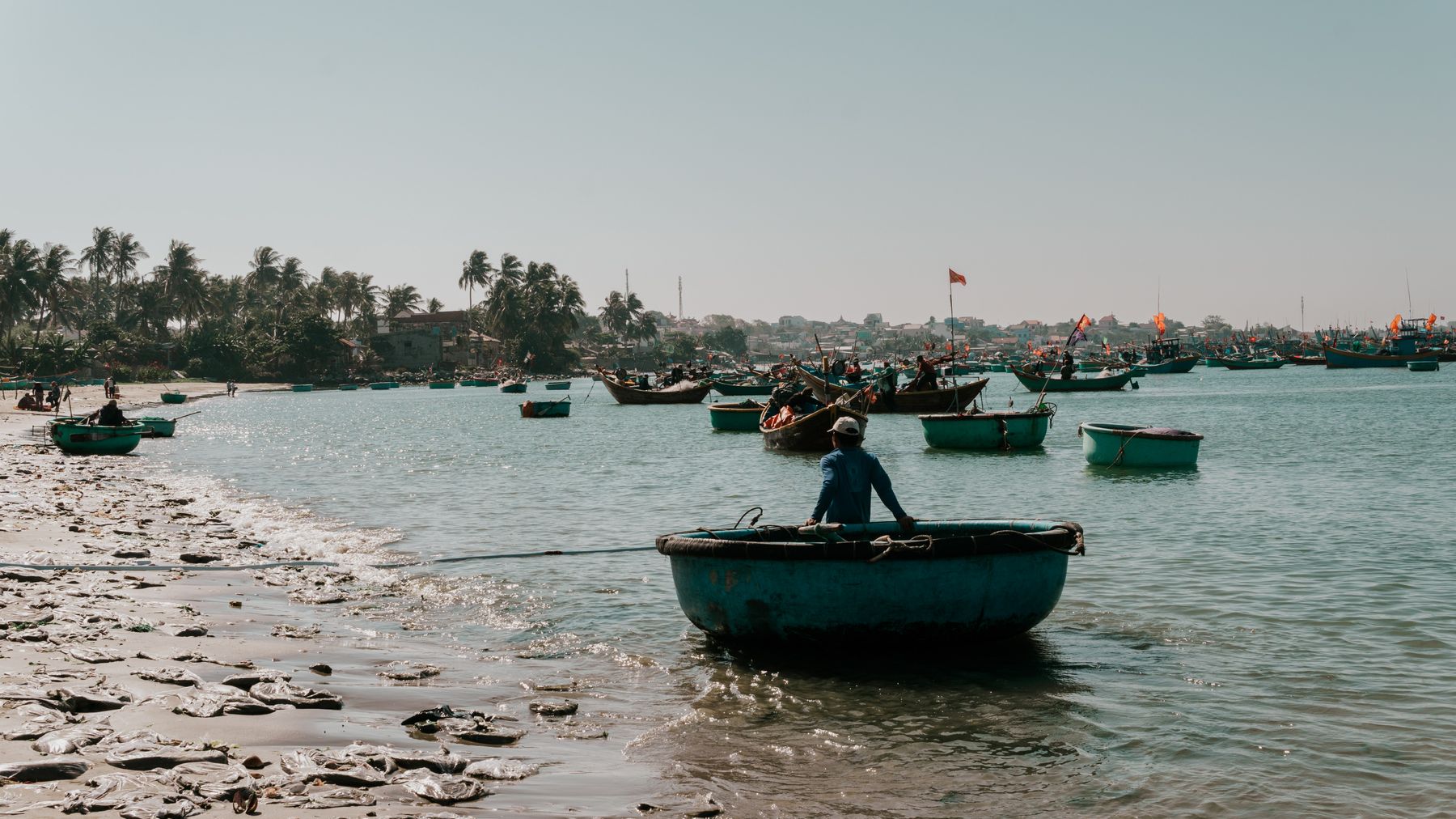
Photo by Long Bà Mùi on Pexels
What to Do
Watch the Morning Market
This is the main event. Arrive before 6:00 AM and find a spot near the waterline. The sorting and selling happens fast — within an hour, most of the catch is loaded onto motorbikes and trucks heading to restaurants and markets across the region. Don't be shy about walking closer, but stay out of the way of people carrying heavy loads.
Walk the Basket Boat Beach
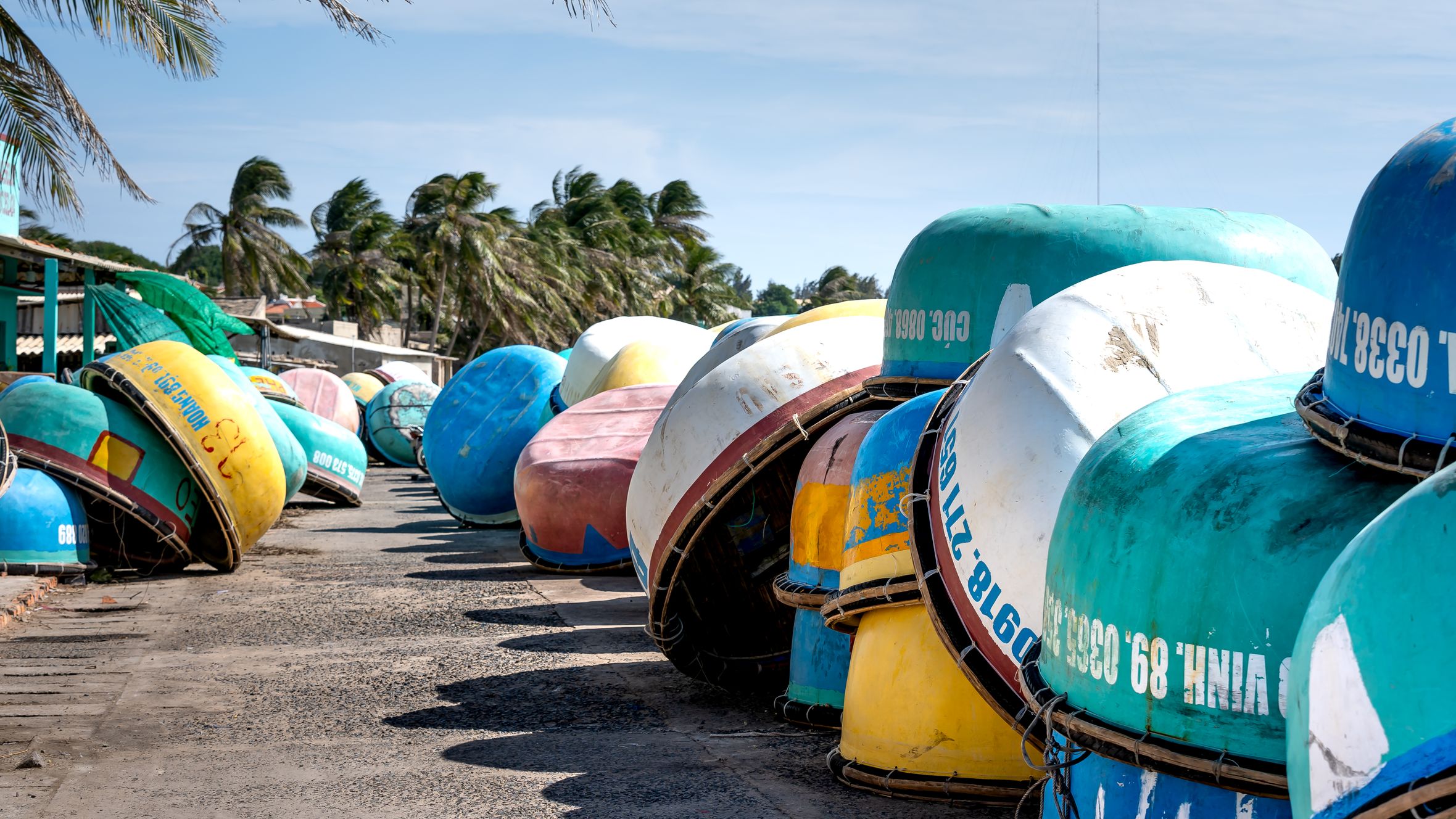
The section of shoreline where the "thung chai" are parked is worth a slow walk. These round bamboo-and-tar boats are unique to central and southern Vietnam, and Mui Ne has one of the largest concentrations. Fishermen sometimes paddle them out with a distinctive twisting motion — if you catch someone heading out, watch how they handle the current.
Photograph the Fleet at Sunrise
The bay faces east, which means direct sunrise light hits the boats and water. Bring a longer lens if you have one — the compressed perspective of dozens of colorful boats stacked in the frame works well from the road above the beach.
Visit the Nearby Fish Sauce Workshops
Phan Thiet is one of Vietnam's fish sauce capitals. A few small-scale producers operate near the village and will show you the fermentation barrels if you ask. The smell is intense. The product is excellent.
Combine with the Sand Dunes
The Red Sand Dunes are about 2 km north of the fishing village — close enough to hit both in a single early morning. The White Sand Dunes are further out (roughly 30 km northeast) and need a separate trip, but they pair well if you're spending a full day in the area.
Where to Eat Nearby
The streets around the fishing village have several seafood spots that buy directly from the morning catch. Look for places where locals are eating — plastic chairs, no English menu, fish displayed on ice out front.
"Banh canh" with crab is the local breakfast worth seeking. The thick tapioca noodles in crab broth are a Phan Thiet staple, and you'll find vendors along the road near the village for 30,000-45,000 VND a bowl.
Fresh grilled squid and scallops are everywhere along the Mui Ne strip. A full seafood spread for two at a local place runs 200,000-400,000 VND — a fraction of what the resort restaurants charge for the same fish.
Where to Stay
Mui Ne's accommodation runs the full range:
- Budget: Guesthouses and hostels along Nguyen Dinh Chieu from 200,000-400,000 VND per night. Basic but functional, and close to the fishing village.
- Mid-range: Smaller resorts and boutique hotels from 600,000-1,200,000 VND. Many have pools and beach access.
- High-end: Full-service resorts from 2,000,000 VND and up, mostly clustered in the western end of the strip, further from the village.
Staying on the eastern end of Mui Ne puts you closer to the fishing village and the Red Sand Dunes, which is more convenient for early mornings.

Photo by Quang Nguyen Vinh on Pexels
Practical Tips
- Wear shoes you don't mind getting wet and smelly. The beach near the market is a working waterfront — fish guts, seawater, and diesel are part of the deal.
- Bring cash in small denominations. If you want to buy seafood directly, vendors don't use card machines.
- Don't fly a drone without checking. Drone regulations in Vietnam are strict, and flying over a working harbor with fishing lines and boats is asking for trouble.
- Respect the workspace. This isn't a tourist attraction — it's people's livelihood. Ask before photographing someone's face up close. A smile and a nod go a long way.
Common Mistakes
Arriving too late. The single biggest mistake. After 7:30 AM, you've missed most of the action.
Expecting a clean, curated experience. This is a real fishing village. It smells like fish. The ground is wet. That's the appeal — if you want sanitized, there are plenty of resort lobbies nearby.
Skipping it entirely. Many travelers rush straight to the sand dunes and never see the village. The dunes are fine, but the fishing village is the part of Mui Ne with an actual pulse.
Practical Notes
Lang Chai Mui Ne doesn't charge admission and has no set hours — it's a public beach and a working village. Plan your visit around the 5:30-7:00 AM window for the best experience. If you're combining Mui Ne with a longer trip through central Vietnam, Da Nang and Hoi An are reachable by train or bus heading north along the coast.
Last updated · May 26, 2026 · independently researched, never sponsored.