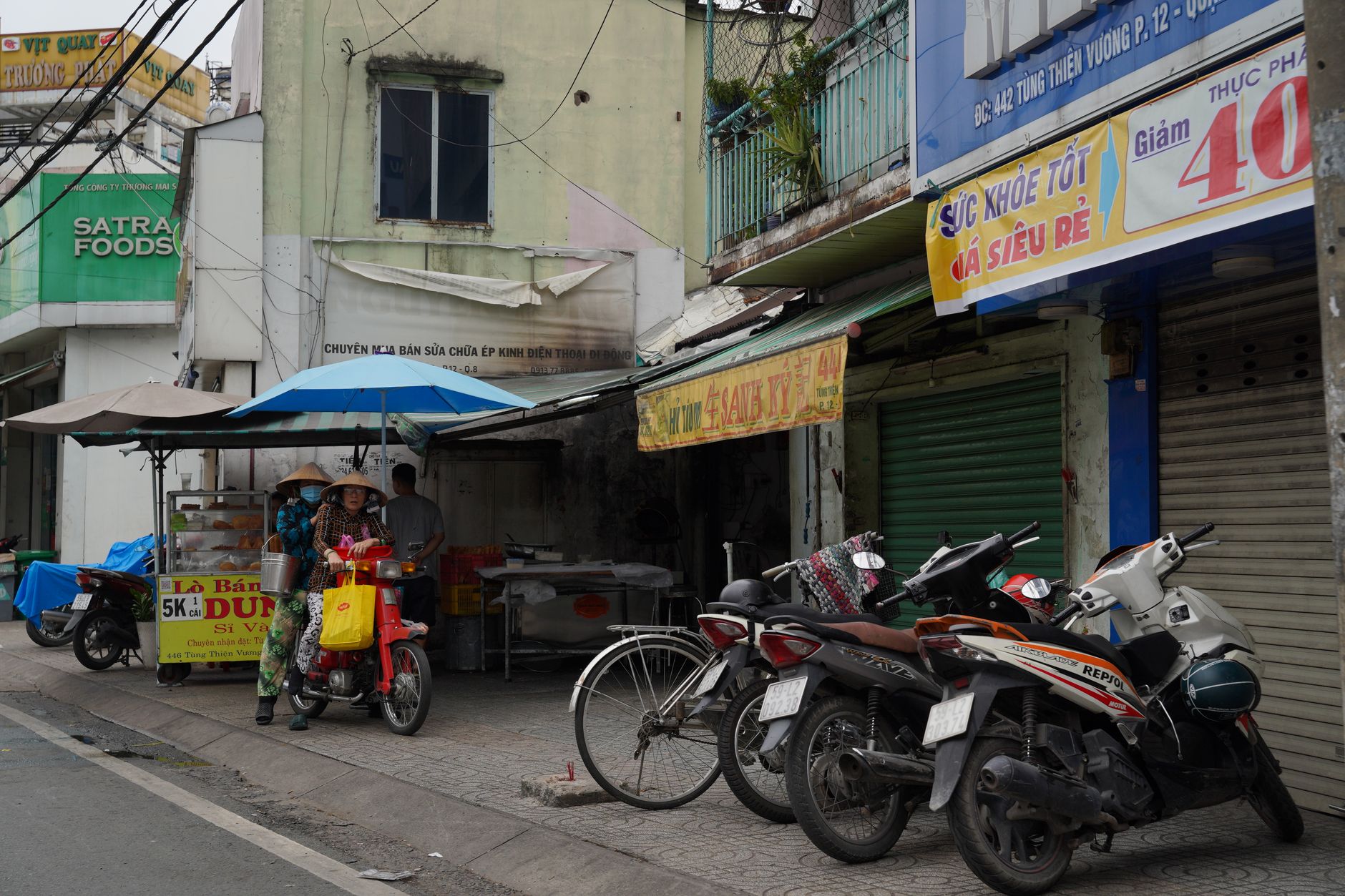
Mui Ne (무이네 / 美奈 / ムイネー) is better known for its sand dunes and kite surfers, but the fishing village at the western end of the strip runs on a completely different schedule — one that starts around 5 a.m. and is mostly done by 8. Get the timing right and you'll see one of the more honest, unscripted food scenes on the south-central coast.
The Landing: What Happens at Dawn
The boats come in on the stretch of beach near Ham Tien, roughly 3–4 km west of the main resort zone. These are the round "thung chai" — woven bamboo coracle boats — that Mui Ne is visually famous for. They ferry the catch from larger vessels anchored offshore to the beach, where buyers, processors, and market sellers are already waiting.
Arrive by 5:30 a.m. if you want to see the full handoff. By 6:15 the energy is already thinning. Bring cash and comfortable shoes — the sand is wet and the crowd moves fast. Nobody is performing for tourists here; the transactions happen quickly between people who do this every single day.
What comes off the boats depends on the season, but you'll reliably see squid (muc), shrimp of various sizes, mackerel, red snapper, and sea crabs. In the drier months between November and April, the haul tends to be larger and the market runs longer.
The Seafood Market: How It Works
The informal market sets up directly on the beach and spills onto the access lane behind it. Sellers squat beside plastic bins and styrofoam boxes, calling prices and holding up their best pieces. There's no fixed stall layout — it shifts slightly each morning depending on who shows up.
Prices move fast and aren't posted anywhere. As a reference point: whole squid runs around 80,000–120,000 VND per kg depending on size, tiger prawns sit at 250,000–350,000 VND per kg, and smaller mixed shrimp go for 60,000–80,000 VND per kg. If you're buying to cook, these are genuinely good prices. If you're just looking, that's fine too — most sellers don't pressure browsers.
Bargaining is normal but don't go low enough to be insulting. A 10–15% negotiation is reasonable. Going in at half the asking price will just get you ignored.
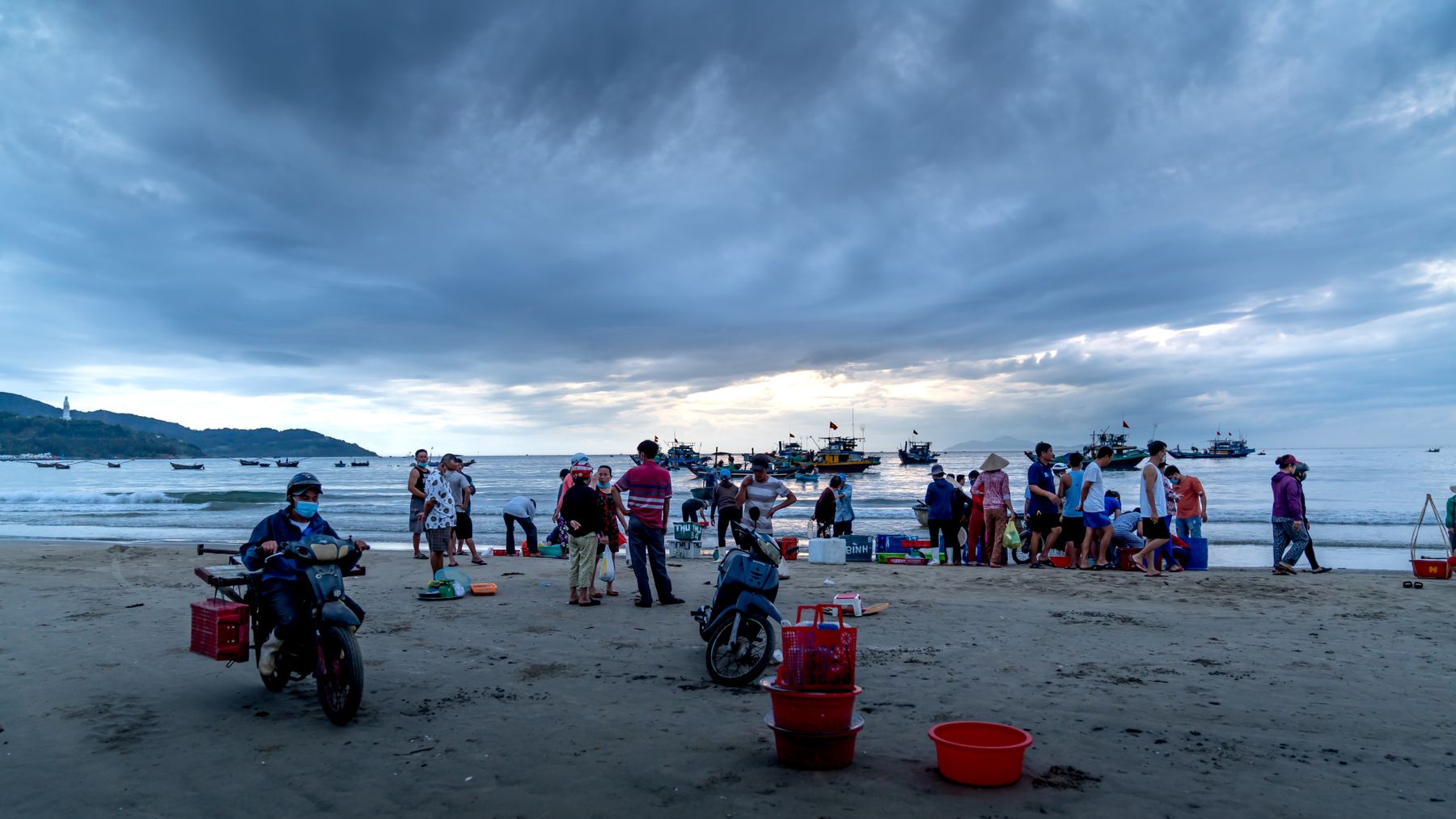
Photo by Quang Nguyen Vinh on Pexels
Where to Eat: Fresh Off the Boat
Breakfast at the Village Stalls
A cluster of simple eating stalls operates just off the beach near the landing zone, catering mostly to fishermen and early-morning workers. This is where you want to eat if you're already up at dawn. The signature here is "bun ca" — fish noodle soup — made with the morning's catch. A bowl costs 25,000–35,000 VND and it's exactly what it should be: clear, slightly sweet broth, fresh fish, rice vermicelli, a pile of herbs on the side. No frills, no English menu.
You'll also find "banh mi" vendors cycling through with loaded baskets around 6 a.m. The fillings lean toward fried egg and pate rather than cold cuts this early, but for 15,000 VND it's a good reason to be awake.
Lunch: Grilled Seafood Along the Strip
For a more relaxed seafood meal, the restaurants along Nguyen Dinh Chieu Street (the main Mui Ne strip) do live-tank seafood where you pick your own and agree on a price before cooking. This is how most visitors end up eating seafood in Mui Ne, and it works fine as long as you confirm the price per 100g before anything goes to the kitchen.
Quan 888 and Phuong Nam are two spots locals actually use rather than just tourists. Both have outdoor seating, visible grills, and the standard Mui Ne lineup: grilled clams with scallion oil and peanuts (so nut mo hanh), steamed crab with ginger, and whole grilled fish with salt and chili. Budget around 200,000–350,000 VND per person for a proper meal with rice and a cold Saigon beer.
The One Dish to Order
If you only eat one thing in Mui Ne, make it the grilled squid. The squid caught here is firm and slightly sweet — meaningfully different from what you'll find in Hanoi or even Da Nang. Grilled whole over charcoal and served with a lime-salt-chili dip, it needs nothing else. Order it as an appetizer before anything else hits the table.

Photo by Marcus Luu on Pexels
Logistics Worth Knowing
Mui Ne's fishing village is not walkable from the resort end of the strip — it's a 3–4 km ride west. A xe om (motorbike taxi) costs around 30,000–50,000 VND one-way, or rent your own motorbike for the day (around 100,000–150,000 VND) and go at your own pace. Grab-style apps work here but coverage is thinner than in Da Nang (다낭 / 岘港 / ダナン) or Saigon, so a local xe om driver at the hotel is often more reliable at 5 a.m.
The market is at its fullest between May and September when the fishing season peaks, though the weather during those months is also more unpredictable. The November–April window gives calmer seas, cleaner skies, and a crowd that includes more Vietnamese domestic tourists who know exactly what to do with a morning seafood market.
Practical Notes
Bring cash in small denominations — nobody at the beach market has change for 500,000 VND notes at 6 a.m. A light jacket helps in the early morning even in summer, since the sea breeze off the South China Sea runs cool before the heat builds. The walk between stalls is short but the ground is uneven and wet, so sandals you don't mind getting dirty are the right call.
Last updated · May 26, 2026 · independently researched, never sponsored.