
What it is
Lang Mac Cuu — sometimes called Nui Lang or the Binh San Hill Tombs — is a cemetery complex on a low limestone hill at the edge of Ha Tien town. The site holds roughly 50 tombs belonging to the Mac family, ethnic Chinese traders and administrators who developed Ha Tien as a port settlement in the early 1700s. The most prominent tomb belongs to Mac Cuu himself (1655–1735), a merchant from Guangdong who established Ha Tien under the protection of the Nguyen Lords and turned it into a prosperous trading post.
The tombs were classified as a national historical monument in 1989. They sit across several terraces carved into the hillside, surrounded by frangipani trees and overgrown tropical vegetation. The architecture mixes southern Chinese tomb design — horseshoe-shaped enclosures, carved dragons, granite tablets — with Vietnamese decorative touches that reflect the family's assimilation over generations.
Why travelers go
Ha Tien itself is an undervisited border town, and Lang Mac Cuu is its most distinctive cultural site. The tombs offer something you won't find elsewhere in the Mekong Delta (메콩 델타 / 湄公河三角洲 / メコンデルタ): a physical record of the region's Chinese-Vietnamese hybrid past, built into a hillside with views over rice paddies and the distant coastline.
It's not a grand monument. The appeal is quieter than that — weathered stone carvings, the stillness of a centuries-old graveyard, and the chance to understand how the deep south of Vietnam (베트남 / 越南 / ベトナム) was shaped by maritime trade networks long before French colonization. If you're traveling between Phu Quoc and Can Tho, or heading to or from the Cambodian border at Xa Xia, it's worth a two-hour stop.
Best time to visit
Ha Tien has two seasons: wet (May–October) and dry (November–April). The dry season is more comfortable for climbing the hill, though even in the wet months rain tends to come in short afternoon bursts. Early morning — before 8am — is ideal. The hill faces east, so the light is good for photography, and you'll avoid the midday heat that makes the exposed stone terraces uncomfortable.
During Tet and Thanh Minh (Qing Ming, usually early April), local families still visit the tombs to burn incense. It's respectful to observe quietly if you visit during these periods.
How to get there
Ha Tien is roughly 300km from Saigon by road. The most common routes:
From Saigon
- Bus: Phuong Trang (FUTA) runs daily buses from the Western Bus Station (Ben Xe Mien Tay) to Ha Tien. Journey takes 7–8 hours. Tickets around 180,000–220,000 VND.
- Drive: Take the Lo Te–Rach Soi expressway (opened 2023) which cuts travel time to around 5.5–6 hours.
From Can Tho
- About 180km, 3.5–4 hours by bus or car via Rach Gia.
From Rach Gia
- 90km, under 2 hours. Frequent local buses, around 60,000 VND.
From Phu Quoc
- Fast ferry from Phu Quoc to Ha Tien takes about 1.5 hours. Superdong and Ngoc Thanh operate daily. Tickets 230,000–350,000 VND depending on class.
Once in Ha Tien, Lang Mac Cuu is on Binh San hill, roughly 1.5km from the town center. Walk, or take a xe om for 15,000–20,000 VND.
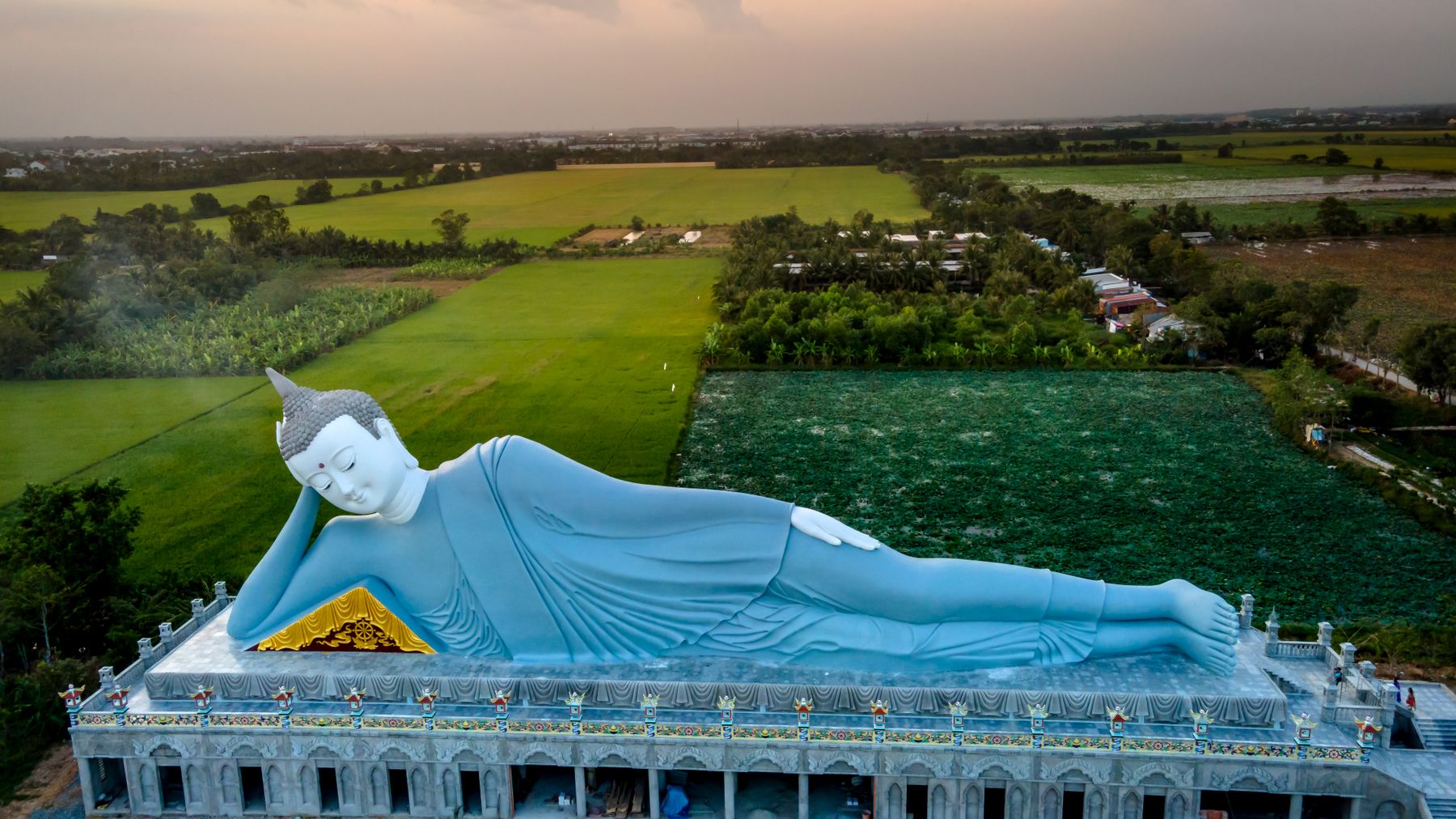
Photo by Quang Nguyen Vinh on Pexels
What to do
The site itself takes 45 minutes to an hour to explore properly. Start at the base of the hill where a gateway marks the entrance. The path winds upward through several terrace levels:
- Mac Cuu's tomb is the largest, at the highest point. Look for the carved dragons flanking the entrance and the Chinese inscriptions on the central stele.
- Mac Thien Tu's tomb (Mac Cuu's son, who made Ha Tien a center of Vietnamese literature) sits one level below. Smaller but well-preserved.
- The lower terraces hold tombs of wives, concubines, and descendants. Many have eroded inscriptions that local guides can help interpret.
Bring water — there's no shade on the upper terraces. Wear shoes with grip; the stone steps get slippery after rain.
Afterward, combine with other Ha Tien sites within walking distance:
- Thach Dong (cave pagoda), 4km north — a limestone grotto with a Buddhist shrine and views into Cambodia.
- Tam Bao Pagoda, in town — founded by Mac Cuu himself in 1730.
- Ha Tien night market along the riverfront, good for cheap seafood and "hu tieu" Nam Vang style.
Where to eat
Ha Tien's food scene is small but specific to the region:
- Hu tieu Ha Tien — the local rice noodle soup is lighter than Saigon versions, often served with pork and shrimp. Try the stalls along Tran Hau near the market. Bowls run 30,000–40,000 VND.
- Banh canh with crab — thicker noodles in a starchy broth. A few dedicated spots on Mac Cuu street (yes, the street is named after him).
- Grilled seafood at the night market — squid, scallops, and razor clams grilled over charcoal. Budget 100,000–150,000 VND for a full spread.
- For "ca phe sua da", the strip of cafes along the river promenade (Dong Ho) has decent options with water views.
Where to stay
Ha Tien has limited accommodation. Don't expect boutique hotels.
- River Hotel — the most reliable mid-range option. Clean rooms, river views, around 400,000–600,000 VND/night.
- Ha Tien Hotel — older state-run place, basic but central. 250,000–350,000 VND.
- Homestays are emerging along the coast road toward Mui Nai beach, 5km south of town. Better for atmosphere than convenience.
Most travelers use Ha Tien as a one-night stop between Phu Quoc and the mainland, which is enough time to see the tombs and eat well.

Photo by Long Bà Mùi on Pexels
Practical tips
- Entry fee: Free. The site is open and unfenced. Technically visiting hours are dawn to dusk.
- Guides: No official guide service. If you want context, read up beforehand or ask at your hotel — some owners know the history well.
- Language: Very little English spoken in Ha Tien. Google Translate's camera mode helps with signs and menus.
- ATMs: Available in town (Vietcombank, Agribank near the market). Don't rely on card payments at restaurants.
- Combine with: A trip to Ha Tien pairs naturally with Phu Quoc (ferry) or a loop through the western Mekong Delta via Can Tho and Chau Doc.
Common mistakes
- Skipping it entirely because Ha Tien "isn't on the backpacker trail." That's precisely why it's worth visiting — you'll likely be the only foreigner on the hill.
- Arriving midday. The hill is exposed and south-facing at the top. In March–April heat, it's genuinely unpleasant after 10am.
- Not bringing water. There's no vendor on the hill itself.
- Rushing through. The individual carvings and inscriptions reward slow looking. Budget a full hour, not 20 minutes.
Final note
Lang Mac Cuu won't be the highlight of anyone's Vietnam trip in the way Ha Long Bay or Hoi An might be. But it's the kind of site that rewards curiosity — a quiet, well-preserved piece of southern Vietnam's layered history, in a town that feels genuinely off the tourist circuit. If you're passing through Ha Tien anyway, give it the morning.
Last updated · May 29, 2026 · independently researched, never sponsored.









