What is Song Chay - Hang Toi?
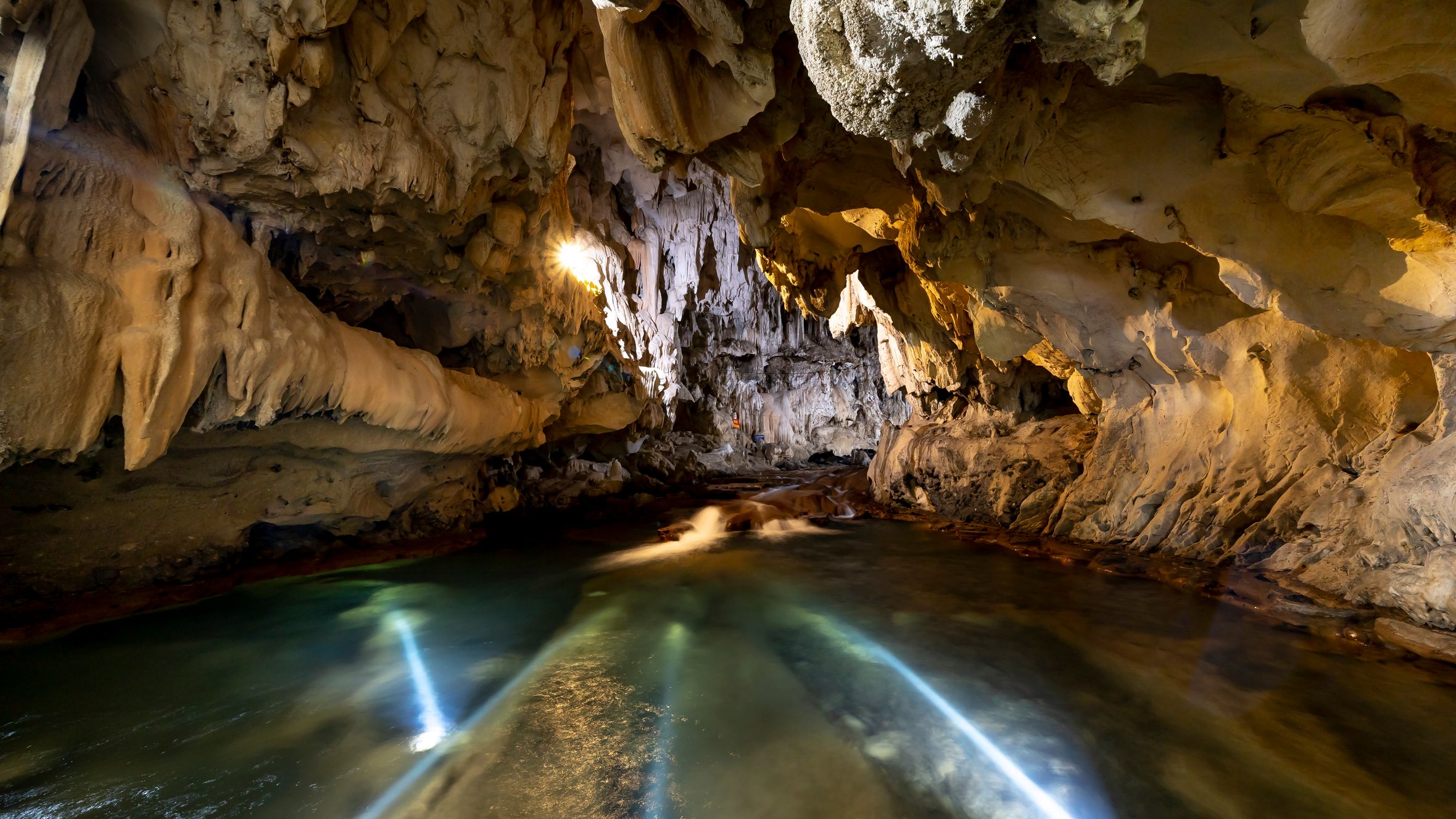
Song Chay - Hang Toi translates roughly to "stream cave - dark cave," and the name is literal. It's a cave system fed by the Chay River, located about 8 km from the center of Phong Nha town in what was formerly Quang Binh province (now part of the merged Quang Tri administrative area). The cave sits within the Phong Nha - Ke Bang National Park, a UNESCO World Heritage Site, and has been open to visitors since around 2014.
Unlike the more famous Phong Nha (퐁냐 / 峰牙 / フォンニャ) Cave or Paradise Cave, Song Chay - Hang Toi is not a sightseeing-and-photograph kind of place. You come here to get muddy, swim in the dark, and do things that would make your travel insurance provider nervous. The cave system is part adventure course, part geology lesson — stalactites and limestone formations that are genuinely old, formed over hundreds of millions of years in the karst bedrock that defines this entire region.
Why travelers go
Phong Nha has no shortage of caves. What sets Song Chay - Hang Toi apart is that it's active rather than passive. You're not walking along a lit boardwalk. You're ziplining over a river, kayaking into a cave mouth, wading chest-deep in water, and crawling through mud pools in near-total darkness. It's the kind of experience that's hard to replicate elsewhere, and it costs a fraction of what the more famous Son Doong expedition runs.
It also works as a half-day activity, which makes it easy to combine with other Phong Nha attractions without burning a full day. Most visitors pair it with a morning visit to Paradise Cave or an afternoon boat trip into Phong Nha Cave.
Best time to visit
The dry season — February through August — is when conditions are best. Water levels in the Chay River are manageable, visibility is decent, and the zipline and kayaking portions run without interruption.
September through January brings heavy rain to this part of central Vietnam (베트남 / 越南 / ベトナム), and the cave can close temporarily when water levels rise too high. November and December are the wettest months. If you're visiting during this period, check with tour operators the morning of — closures happen with little advance notice. Even in shoulder months like September, you might get lucky with a dry spell, but don't plan your entire trip around it.
How to get there
The nearest major hub is Dong Hoi, about 45 km south of Phong Nha town.
- From Dong Hoi: Rent a motorbike (150,000-200,000 VND/day) and ride northwest on the Ho Chi Minh Highway West Branch. It takes about 50 minutes. Alternatively, arrange a car transfer through your hotel for around 350,000-500,000 VND one way.
- From Hanoi: The Reunification Express train runs to Dong Hoi station. A seat in a soft sleeper berth costs 500,000-750,000 VND and takes roughly 10-11 hours overnight. Vietnam Airlines and Bamboo Airways also fly Hanoi to Dong Hoi in about 1 hour 15 minutes; fares start around 800,000 VND if booked early.
- From Hue: Dong Hoi is about 170 km north. The train takes around 3 hours (from 120,000 VND), or you can take a bus for similar cost. Some travelers ride motorbikes along the coast road, which is a solid day trip in itself.
Once in Phong Nha, Song Chay - Hang Toi is accessed through organized tours. You don't walk up independently — the zipline, kayaks, and safety equipment are managed by the national park's authorized operators.

Photo by Trinh Tuoi on Pexels
What to do
Zipline across the Chay River
The experience starts with a 400-meter zipline that drops you over the river and deposits you on the far bank near the cave entrance. It's fast, it's loud, and the view of the jungle canopy below is worth the brief terror. Harnesses and helmets are provided.
Kayak into the cave mouth
After the zipline, you board a kayak and paddle into the cave opening. The river narrows as you enter, and the light fades quickly. Headlamps go on. The water is cool — around 20-22°C even in summer — and the acoustics inside amplify every paddle stroke.
Mud bath in the dark
Deep inside Hang Toi, there's a natural mud pool. The mud is thick, mineral-rich, and genuinely fun to wallow in. Guides encourage you to coat yourself head to toe. It's silly and messy and one of those things you wouldn't do anywhere else. You rinse off in the underground river afterward.
Swim through the cave system
Beyond the mud pool, you can swim further into the cave wearing a life jacket and headlamp. The formations here — stalactites, flowstone, and curtain formations — are impressive in the beam of a headlamp. The water is deep enough that you're floating, not wading.
Explore the dry section
A separate dry passage branches off with more conventional cave formations. This is where the geology gets interesting — layered rock that tells you something about the 400-million-year history of this limestone karst. Guides will point out key features, though the explanations vary in quality.
Where to eat nearby
Phong Nha town has a surprisingly good food scene for its size, driven by the backpacker economy.
- "Banh xeo" — the crispy turmeric pancakes stuffed with shrimp, pork, and bean sprouts — are a central Vietnam staple. Several small restaurants along the main road in Phong Nha serve them for 30,000-50,000 VND each.
- For something more filling, look for "com tam" (broken rice plates) or bowls of "bun bo Hue" — the spicy, lemongrass-laced beef noodle soup that originated up the road in Hue but is done well here too. Expect to pay 35,000-55,000 VND per bowl.
The Pub with Cold Beer, despite the tourist-trap name, has been a Phong Nha institution for years and serves decent Vietnamese food alongside Western options.
Where to stay
- Budget: Hostels and guesthouses in Phong Nha town run 150,000-300,000 VND/night for a dorm bed or basic private room. Phong Nha Farmstay and Easy Tiger are well-known backpacker spots.
- Mid-range: Boutique homestays along the river charge 500,000-900,000 VND/night with breakfast included. Rooms are clean, most have air conditioning, and several have river views.
- Upper range: A few newer resorts have opened closer to the national park entrance, starting around 1,200,000 VND/night. They're comfortable but not luxurious — this is still a small town.
Photo by Bid on Pexels
Practical tips locals would tell you
- Bring water shoes. The cave floor is slippery and rocky. Flip-flops will come off. Proper water sandals with a heel strap are ideal.
- Wear swimwear under your clothes. You will get completely soaked and muddy. Leave anything you care about at the locker area before the zipline.
- Book through your hotel or a Phong Nha-based operator, not a Dong Hoi city tour desk. Local operators charge 450,000-550,000 VND per person for the full Song Chay - Hang Toi experience including equipment and guide. Dong Hoi agencies often mark this up significantly.
- Waterproof phone cases are sold cheaply in town (20,000-30,000 VND). Buy one. The mud pool is not where you want to test your phone's IP rating.
- Go early. The first groups enter around 8:30-9:00 AM. By midday, the cave gets crowded and the mud pool resembles a communal bath. Morning visits are calmer and cooler.
Common mistakes to avoid
- Skipping it because you've "already done Phong Nha Cave." They're completely different experiences. Phong Nha Cave is a boat ride through a lit cavern. This is adventure tourism.
- Not checking seasonal closures. Showing up in November without confirming availability is a recipe for disappointment.
- Underestimating the physical element. You don't need to be an athlete, but you do need to be comfortable swimming in deep water while wearing a life jacket and headlamp. If that sounds stressful, this might not be the right activity.
Practical notes
Song Chay - Hang Toi operates daily during the dry season, weather permitting. The full experience takes about 3-4 hours including transport from Phong Nha town. It pairs well with a visit to Paradise Cave in the same day if you start early. Keep your Phong Nha time flexible — caves close, weather shifts, and the best days here are the ones you didn't over-plan.
Last updated · May 29, 2026 · independently researched, never sponsored.