Le Cong Kieu is about 200 meters long and runs parallel to the Ben Thanh Market chaos without absorbing any of it. Most visitors come for the antique shops — bronze Buddhas, old French enamelware, colonial-era medicine cabinets, Soviet-surplus cameras — but the street has a quieter second life that most people miss entirely: a genuinely good pho-and-coffee morning, best experienced before the shop owners roll up their shutters.
What Le Cong Kieu Actually Is
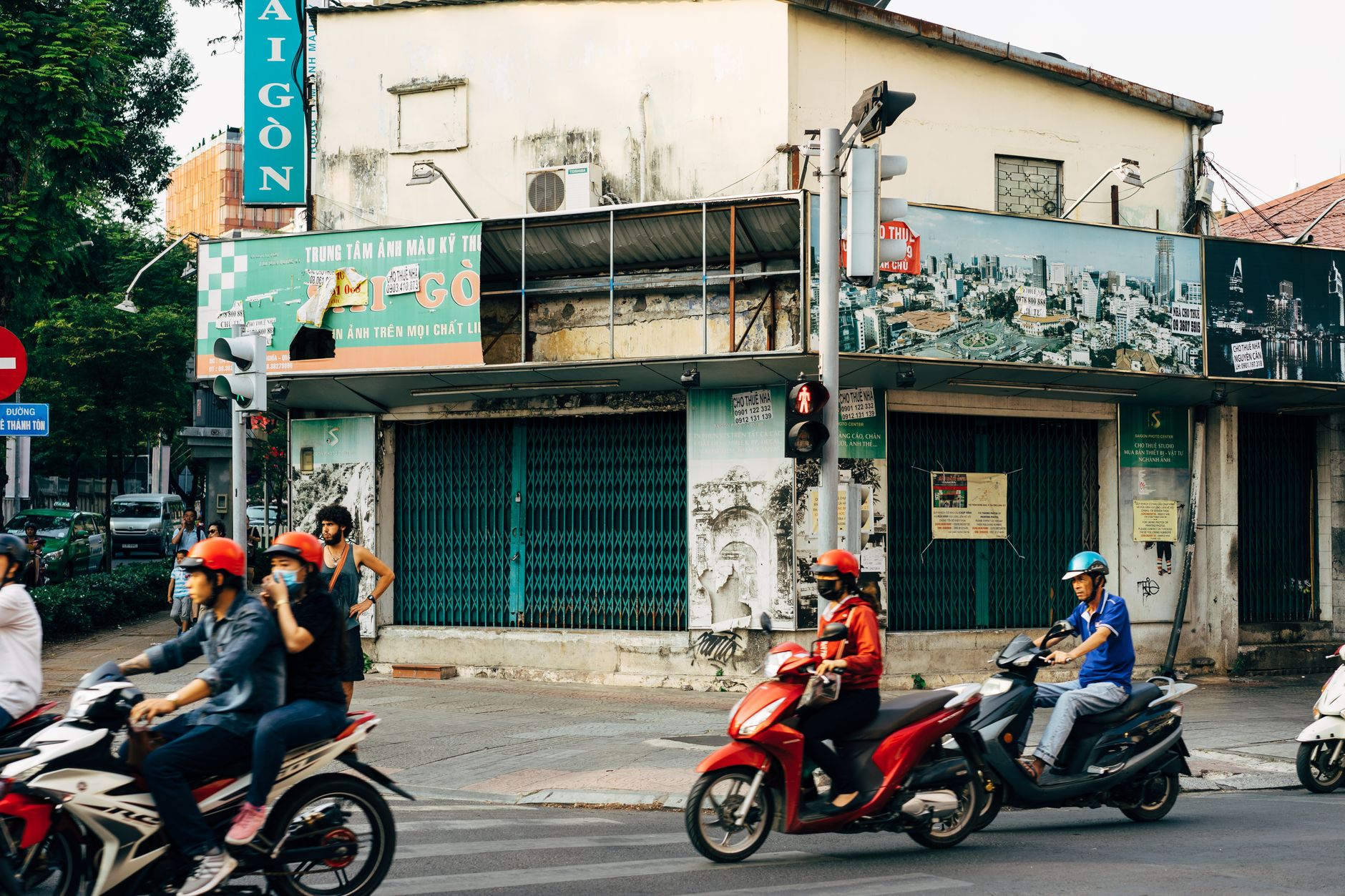
The street sits in District 1, tucked between Le Thanh Ton and Pho (쌀국수 / 越南河粉 / フォー) Duc Chinh, a short walk southwest of Ben Thanh Market. It has been Saigon's de facto antique corridor since the 1990s, when dealers consolidated here after being moved off scattered pavements elsewhere in the city. Around 30 to 40 shops operate along the strip, selling everything from genuine French Indochina-era ceramics to pieces that are antique in spirit only. Haggling is standard and expected. No one pays the first price.
But before any of that opens — most shops don't bother before 9am — the street belongs to a different crowd entirely.
The Pho Before the Antiques Open
By 6:30am, the pavement at the Pho Duc Chinh end of Le Cong Kieu already has a few plastic stools out and steam rising from a cart that has been here, in various forms, for years. The "pho" here is the southern style: broth that leans sweeter than Hanoi's, a plate of fresh herbs and bean sprouts on the side, hoisin and sriracha on the table whether you want them or not. A bowl runs 50,000 to 65,000 VND depending on the cut of beef you point at — chin, brisket, tendon, or a mix.
The crowd at this hour is not tourists. It is the guys who run the antique shops, security guards from the nearby apartment blocks, and a rotating cast of motorbike delivery riders taking a break before the app pings again. This matters, because it tells you the food is actually good rather than geographically convenient.
If you want something lighter, a few stalls along the same stretch do "banh mi" — the Saigon (사이공 / 西贡 / サイゴン) version loaded with pate, head cheese, pickled daikon and carrot, and a smear of chili. Expect to pay around 25,000 to 35,000 VND. Eat it standing, or perch on a low stool and watch the street slowly come to life.
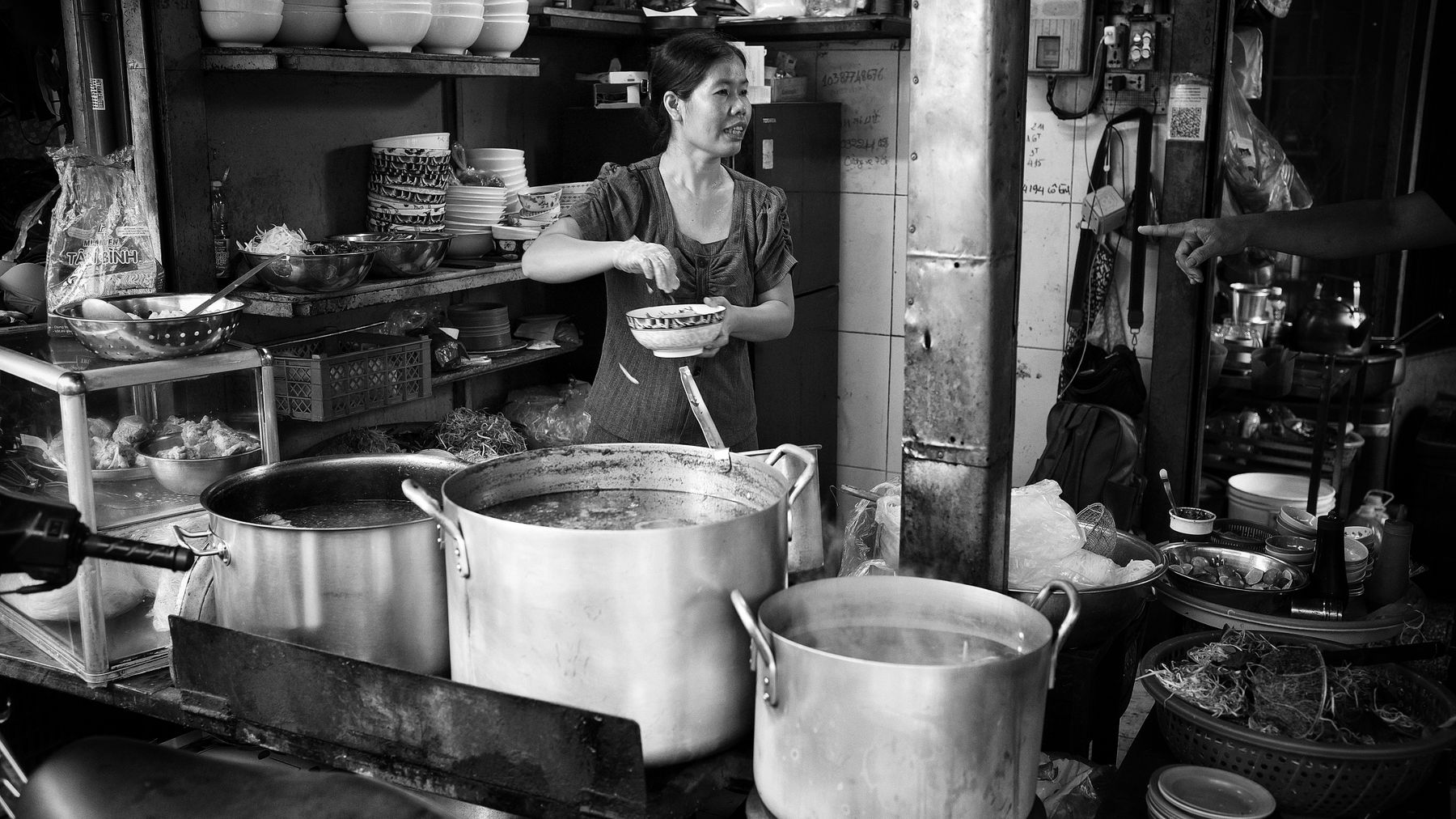
Photo by Alfred Rosales on Pexels
Coffee on Le Cong Kieu
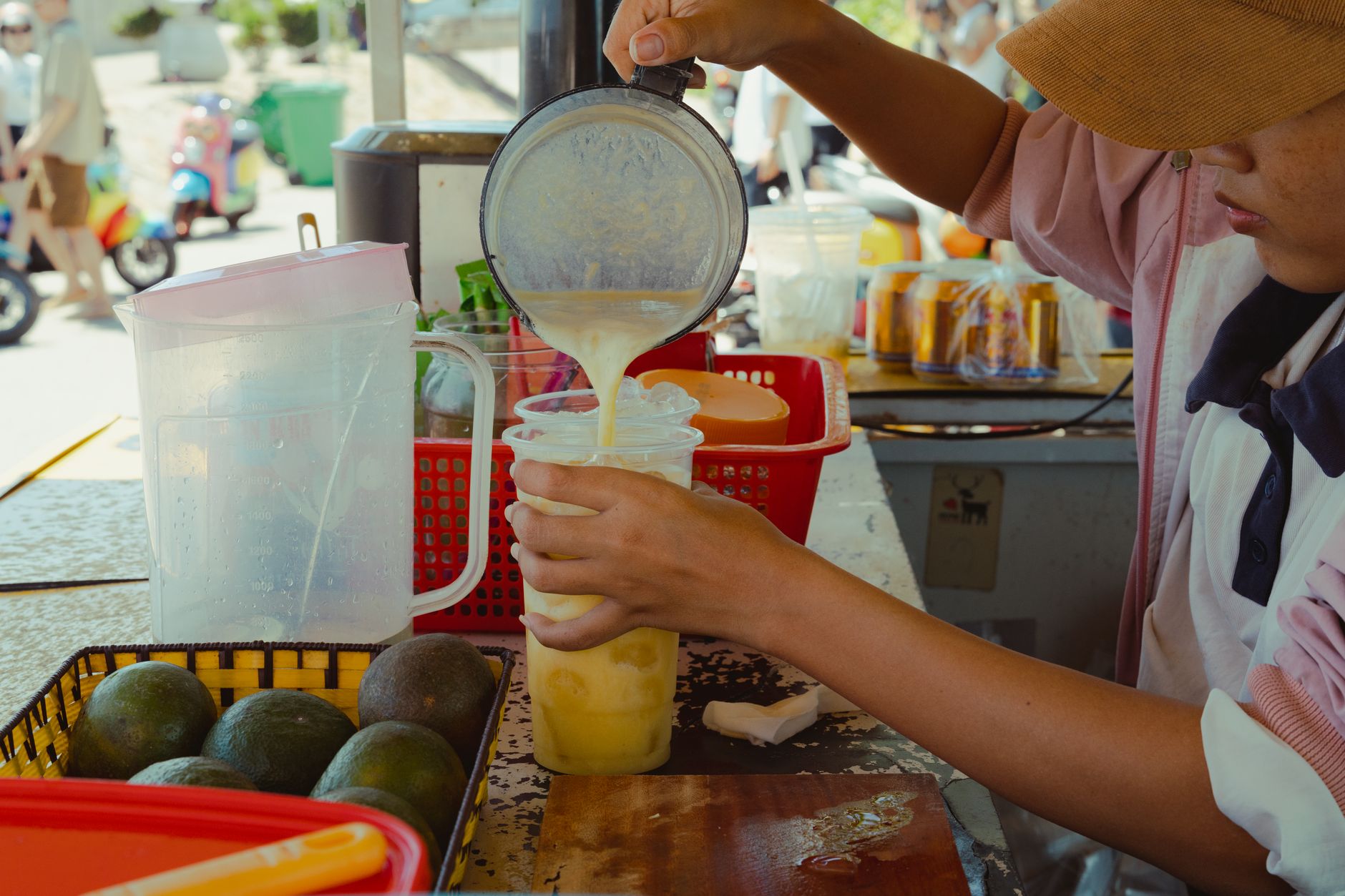
The coffee situation here deserves its own mention. There is a small, permanently crowded place near the midpoint of the street — no sign in English, plastic chairs, a hand-written menu board — that does "ca phe sua da" the right way: dark robusta drip, condensed milk stirred in, poured over a glass packed with ice. It costs 20,000 VND. They also do black iced coffee for the same price and a thick, slightly sweet "Vietnamese coffee" in the drip-filter style if you want to sit and wait for the slow drip.
This is not the place for egg coffee — that belongs to Hanoi. Down here, the morning drink is iced, strong, and over before the ice fully melts if you're not paying attention.
Walking the Antique Shops (After Breakfast)
Once you've eaten, give the shops an hour to fully open — most are properly running by 9:30am. The density of genuinely interesting objects here is higher than at Ben Thanh Market, which has drifted toward mass-produced souvenirs. Le Cong Kieu still has dealers who know what they're selling.
A few things worth looking for: old "non la" (the conical hat) in lacquered display versions, vintage propaganda posters in varying conditions, French pharmacy bottles in cobalt and amber glass, and old Indochine-era postcards that occasionally surface in the flat drawers at the back of the deeper shops. Prices on the postcards range wildly — 50,000 VND for a common one, 300,000 or more for anything showing recognizable Saigon street scenes.
Don't expect air conditioning or organized displays. The shops are small and dense. Browsing requires patience and a willingness to ask to see things that are stacked behind other things.
What to Skip
The reproductions are everywhere and not always labeled as such. Anything that looks too clean — lacquered boxes with perfectly uniform distressing, "antique" door hardware in suspiciously consistent sets — is almost certainly a reproduction. That is not necessarily a problem if you just want something decorative, but go in clear-eyed about what you're buying.

Photo by Ama Journey on Pexels
Getting There and When to Go
Le Cong Kieu is walkable from most District 1 hotels — around 10 minutes on foot from Bui Vien, 12 to 15 minutes from the Dong Khoi area. Grab bikes are a sensible option if you're coming from further out. Parking a motorbike on the street itself is tight; there's a pay lot one block away on Pho Duc Chinh.
Timing: arrive by 7am if the pho is the point. Arrive by 9:30am if you want the shops open and the street at full energy but not yet crowded. By noon it gets warm, the tourist foot traffic picks up, and the atmosphere shifts noticeably.
Practical Notes
Bring cash — most antique dealers don't take cards, and the street food stalls certainly don't. The nearest ATMs are on Le Thanh Ton, a two-minute walk north. Weekday mornings are quieter than weekends, when the antique browsers arrive in numbers and the pho stalls sell out faster.
Last updated · May 29, 2026 · independently researched, never sponsored.