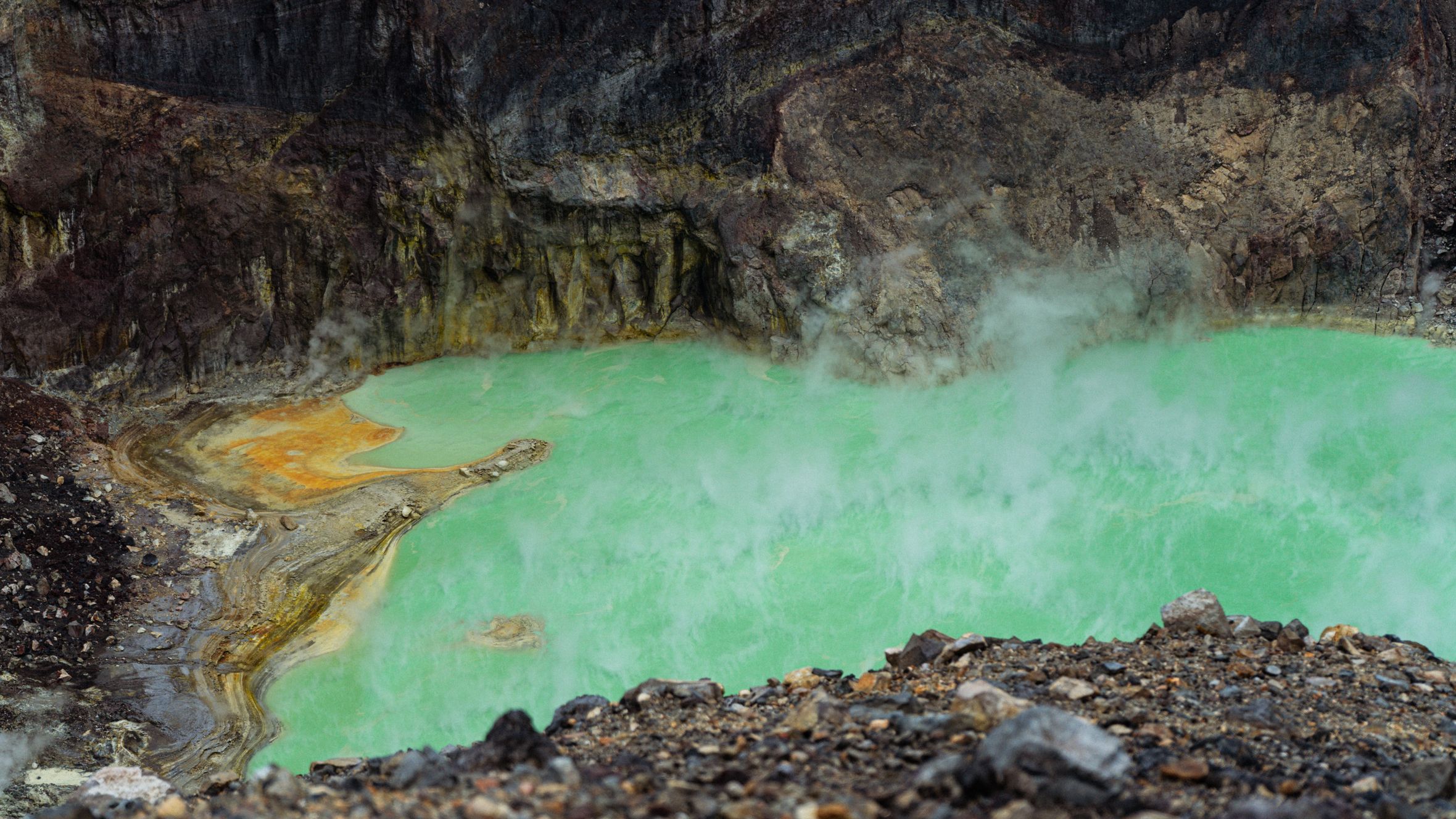
What it is
Lung Cot Cau (Khu du lich Lung Cot Cau) is an eco-tourism area set among the cajuput forests and wetlands on the outskirts of Can Tho, in the transitional zone where the old Hau Giang and Soc Trang provincial boundaries once met before administrative mergers reshaped the map. It's not a polished theme park — think flooded forest, narrow wooden bridges threading between cajuput trunks, fish ponds, and thatched-roof pavilions where local families come for weekend picnics. The area developed in the early 2010s as a community tourism project, built around the natural "lung" (flooded depression) that collects rainwater during the wet season and becomes a bird habitat.
For travelers who've already done the Cai Rang floating market circuit and want something quieter, Lung Cot Cau is a half-day detour that feels genuinely rural without requiring a multi-day expedition into deeper delta provinces.
Why travelers go
Three reasons, mostly:
- The landscape — cajuput forest reflected in still water, wooden walkways at canopy level, and the kind of flat-light photography conditions that make the Mekong Delta (메콩 델타 / 湄公河三角洲 / メコンデルタ) visually distinct from anywhere else in Vietnam.
- The food — this is a place where you eat "ca loc nuong trui" (snakehead fish grilled in straw) pulled from ponds 20 meters away, drink coconut water from trees overhead, and pay 80,000–150,000 VND for a full rural meal.
- The silence — no karaoke boats, no tour buses, no souvenir hawkers. On weekdays you might share the site with a handful of domestic visitors and nobody else.
It's not a destination you'd build a whole trip around. But paired with a morning at Cai Rang or an afternoon cycling through Phong Dien commune, it rounds out a Can Tho (껀터 / 芹苴 / カントー) stay nicely.
Best time to visit
The wet season (June–November) fills the flooded forest and brings migratory birds — egrets, cormorants, the occasional painted stork. The landscape is at its most photogenic in September and October when water levels peak and the cajuput roots are fully submerged. Downside: afternoon downpours are almost guaranteed, so go in the morning.
Dry season (December–May) means lower water, exposed mudflats, and fewer birds, but easier walking and no rain gear needed. The wooden bridges stay accessible year-round.
Weekdays are dramatically quieter than weekends. Saturday afternoons bring local families; Sunday mornings bring student groups.
How to get there
From central Can Tho (Ninh Kieu district), Lung Cot Cau is roughly 35–40 km south, depending on your exact route. Options:
- Motorbike — the most practical choice. Take QL1A south toward Soc Trang, then turn off at the signed junction. Total ride: 50–60 minutes. Rental bikes in Can Tho run 120,000–150,000 VND/day.
- Grab car — expect 250,000–350,000 VND one way. Getting a return ride from the site can be tricky; negotiate a wait or arrange pickup in advance.
- Tour — some Can Tho guesthouses offer half-day Mekong countryside tours that include Lung Cot Cau as a stop. Prices vary, typically 400,000–600,000 VND per person including lunch.
The final 3 km is on a narrow concrete village road between rice paddies. Go slow, watch for chickens and children.
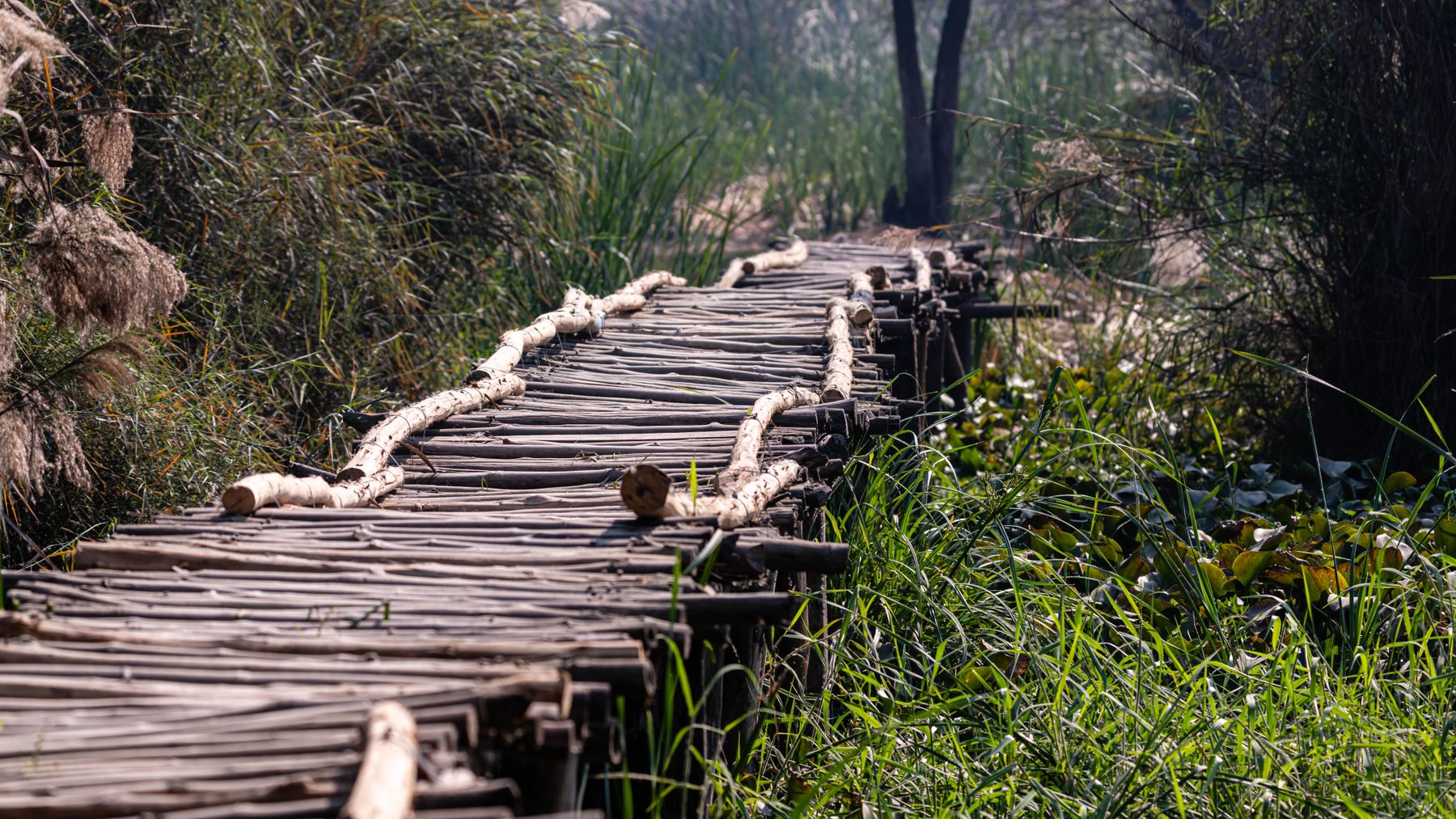
Photo by Manish Sharma on Pexels
What to do
Walk the cajuput bridges
The main attraction: a network of elevated wooden walkways stretching several hundred meters through the flooded forest. Some sections hover just above the water; others climb to rudimentary observation platforms. The wood is weathered and occasionally slippery — wear shoes with grip, not sandals.
Fish
Pond fishing is offered for 50,000–100,000 VND (rod rental plus bait). Whatever you catch, the kitchen will cook for you — grilled, fried, or in a sour soup. It's not sport fishing; the ponds are stocked and even impatient anglers catch something within 20 minutes.
Paddle
Small sampans (hand-paddled wooden boats) take you through the flooded channels. Usually 30,000–50,000 VND for a 15-minute loop. The boatman does the paddling; you sit low and watch waterbirds scatter.
Hammock
Seriously. Half the pavilions have hammocks strung between posts. After a meal and a Vietnamese coffee, this is the appropriate activity. The delta pace is the point.
Where to eat
The on-site kitchen handles the basics well:
- Ca loc nuong trui — whole snakehead fish packed in straw and lit on fire. Smoky, flaky, dipped in fish sauce with green mango. Around 100,000–120,000 VND per fish.
- Lau mam — fermented fish hotpot with water spinach, eggplant, and river prawns. Feeds 2–3 people for 150,000–200,000 VND.
- Com tam with grilled pork and a fried egg — the default if you want something quick and familiar. 40,000–50,000 VND.
Bring your own beer or buy on-site (Saigon Lager cans, 15,000 VND). No cocktail bar. No craft coffee. This is rural delta dining — plastic chairs, metal tables, excellent food.
For more variety, eat in Can Tho proper. The Ninh Kieu waterfront area has dozens of spots serving "hu tieu" (the southern noodle soup that rivals pho for breakfast loyalty) and "banh xeo" (crispy crepes stuffed with prawns and bean sprouts).
Where to stay
Lung Cot Cau itself has basic homestay rooms and a few stilt-house bungalows — functional, clean enough, 200,000–400,000 VND per night. Air conditioning is not guaranteed. Mosquito nets are.
Most travelers base in Can Tho city and visit Lung Cot Cau as a day trip. Budget guesthouses near Ninh Kieu wharf start at 250,000 VND; mid-range hotels with pools run 600,000–1,200,000 VND. Can Tho has enough accommodation density that you don't need to book ahead except during Tet / 越南春节 / テト).
Photo by Quang Nguyen Vinh on Pexels
Practical tips
- Bring cash. No card machines here. ATMs are back in town.
- Mosquito repellent is non-negotiable during wet season, especially near the flooded forest at dusk.
- Sunscreen and a hat — shade exists on the walkways but the open areas are fully exposed.
- Charge your phone before leaving Can Tho. No reliable power outlets at the site unless you're staying overnight.
- Language — very little English spoken. Basic Vietnamese phrases or a translation app will help. Staff are friendly regardless.
Common mistakes
- Arriving after 3 PM — the site winds down early. Kitchen stops cooking around 4–5 PM on weekdays. Aim to arrive by 10 AM for the best light and full menu availability.
- Wearing flip-flops on the bridges — they're slippery when wet. One wrong step and you're in knee-deep water. Trail shoes or even old sneakers work fine.
- Expecting a resort — this is community-level tourism. Infrastructure is simple. If you need air conditioning and hot showers, sleep in Can Tho and visit here for the afternoon.
- Skipping weekdays — weekend crowds (by local standards) diminish the calm that makes this place worth visiting. Tuesday through Thursday is ideal.
Final note
Lung Cot Cau won't appear on most international itineraries, and that's part of what keeps it honest. It's a place where the Mekong Delta does what it does best — slow you down, feed you well, and remind you that not every destination needs to compete for your attention. A half-day here, paired with the rest of a Can Tho stay, gives you a more complete picture of how the south actually lives.
Last updated · May 29, 2026 · independently researched, never sponsored.










