What Lung Cu Is and Why It Matters
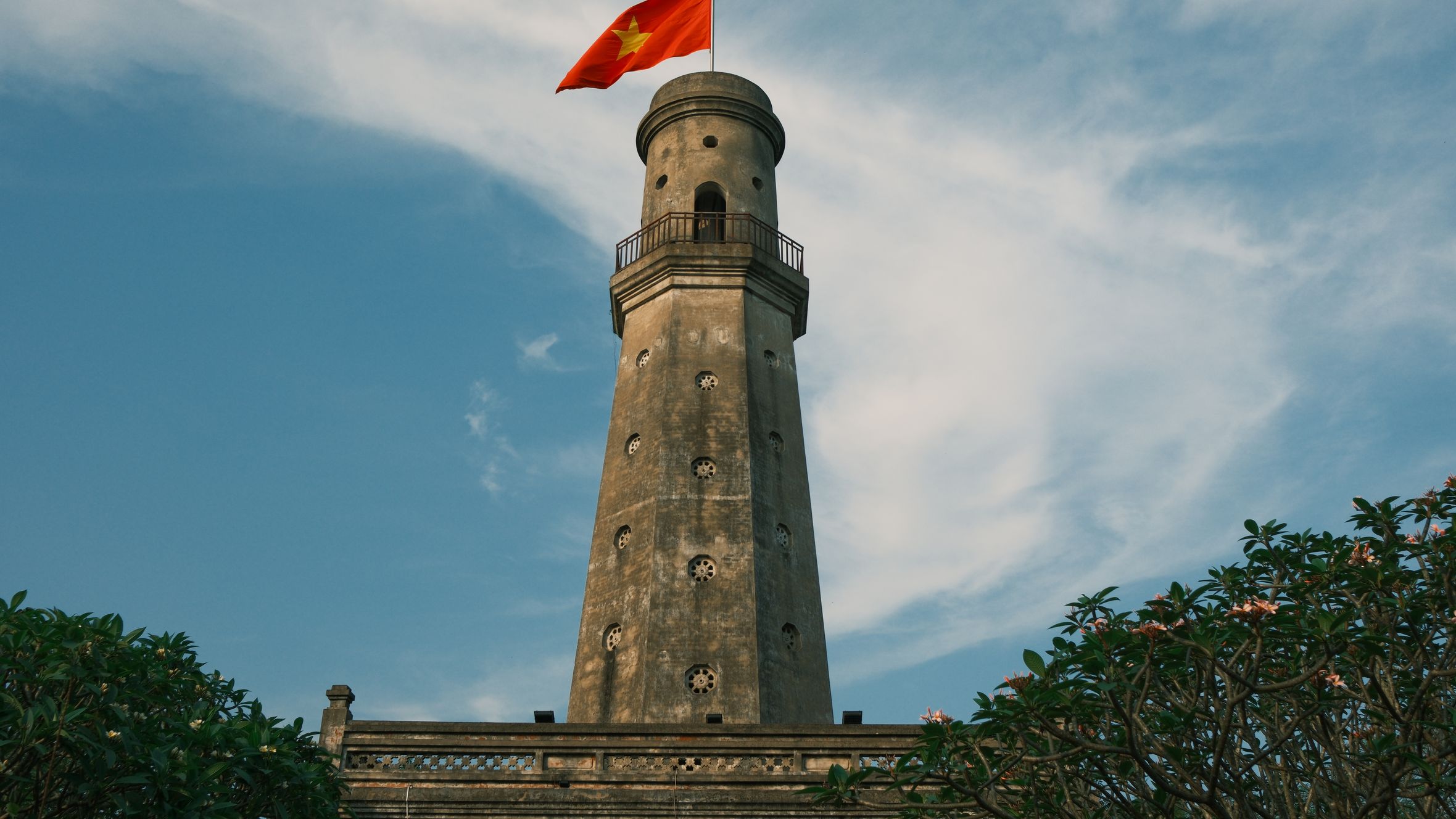
Lung Cu Flag Tower sits on top of Lung Cu peak (also called Dragon Mountain) at roughly 1,470 meters above sea level, marking the northernmost point of Vietnam (베트남 / 越南 / ベトナム). The tower you see today was rebuilt in 2010, but a flag post has stood on this spot since the early Ly dynasty — over a thousand years ago. The current structure is a hexagonal tower modeled loosely after the Imperial Citadel Thang Long in Hanoi, with a 54-square-meter Vietnamese flag at the top representing the country's 54 ethnic groups.
For most travelers, Lung Cu is the symbolic finish line of the Ha Giang loop — the moment where you've literally reached the top of the country. But beyond the flag, it's the surrounding landscape and the Hmong and Lo Lo villages in the valley below that make the trip worth the effort.
Why Travelers Go
Let's be direct: the flag tower itself takes about 30 minutes to visit. You climb 389 steps from the base, look out over the valley and the border area, take your photos, and come back down. The real draw is everything around it — the drive up through Dong Van Karst Plateau, the terraced fields dropping into deep valleys, and the village life that feels genuinely remote. Lung Cu sits at the tail end of one of the best motorbike routes in Southeast Asia, and the sense of arrival here is hard to replicate elsewhere.
If you're doing the Ha Giang loop, Lung Cu is a natural stop. If you're not doing the loop, it's probably not worth the journey on its own — the access roads demand commitment.
Best Time to Visit
September to November is the sweet spot. The rice terraces around Lung Cu turn gold in late September and early October, and the weather is dry enough for comfortable riding. Mornings are cool — expect 12-18°C — and skies are generally clear.
March to May is a solid second choice. Temperatures warm up, and you'll catch the tail end of buckwheat flower season (the pink and white fields the region is known for, peaking around November-December but lingering into early spring at higher altitudes).
Avoid June through August if you can. Heavy rain makes the mountain roads slick, fog can kill visibility for hours, and landslides occasionally close sections of the route. December through February is dry but bitterly cold — temperatures at Lung Cu drop to 3-5°C at night, and frost isn't unusual.
How to Get There
Lung Cu is about 150 km north of Ha Giang city, which remains the main staging hub.
Hanoi to Ha Giang
Overnight sleeper buses run daily from My Dinh bus station in Hanoi (하노이 / 河内 / ハノイ). The trip takes 6-7 hours and costs 250,000-350,000 VND. Limousine vans (Cau Me, Hung Thanh) are more comfortable at 300,000-400,000 VND. There's no train or commercial flight.
Ha Giang to Lung Cu
Most travelers ride motorbikes — either their own rental (150,000-250,000 VND/day for a Honda Wave, 350,000-500,000 VND/day for a Honda XR150) or with an "easy rider" guide (600,000-900,000 VND/day including bike and driver). The route follows the standard Ha Giang loop: Ha Giang → Quan Ba → Yen Minh → Dong Van → Lung Cu. That's roughly 150 km and takes a full day with stops.
If you don't ride, hire a private car and driver in Ha Giang city for about 1,500,000-2,000,000 VND per day. Shared jeep tours also run the loop over 3-4 days for 2,500,000-4,000,000 VND per person all-inclusive.
The final 24 km from Dong Van to Lung Cu is a winding mountain road — paved but narrow, with some steep sections. Budget 45-60 minutes one way.

Photo by Vietnam Hidden Light on Pexels
What to Do at Lung Cu
Climb the Flag Tower
The 389 steps are straightforward. At the top, you get a 360-degree view of the valley, the border mountains, and the patchwork of farms below. Entry fee is 20,000 VND. Go early morning — by 10 a.m., tour groups start arriving and the platform gets crowded.
Walk Down to Lo Lo Chai Village
From the base of the tower, a path leads down to Lo Lo Chai, a small village of the Lo Lo ethnic minority. The traditional "trinh tuong" rammed-earth houses here are some of the best-preserved in the region. Villagers sometimes offer homestay accommodation and local meals. Be respectful — this is someone's home, not a theme park.
Visit the Lung Cu Market
If your timing lines up with a Sunday, the local market draws Hmong, Tay, and Lo Lo families from surrounding villages. It's small and unhurried — mostly livestock, produce, and "thang co" (horse meat hot pot) simmering in big pots. Nothing like the tourist-oriented markets further south.
Ride to the Ma Pi Leng Pass
Ma Pi Leng is about 70 km south of Lung Cu, back toward Dong Van and then on to Meo Vac. Most loop itineraries hit both, and you should too. The 20-km stretch of road carved into the cliff face above the Nho Que River is the highlight of the entire Ha Giang loop.
Hike the Surrounding Hills
There's no marked trail system, but local guides in Dong Van or Lo Lo Chai can lead walks through terraced fields and to viewpoints above the valley. Expect to pay around 300,000-500,000 VND for a half-day guided walk.
Where to Eat Nearby
Dong Van (24 km south) is your best bet for a real meal. Look for "thang co" — a Hmong soup made from horse organs and bones, simmered with herbs. It's an acquired taste but very much the local signature. "Chao au tau" (porridge made from a mildly toxic local plant, detoxified through careful preparation) is another specialty worth trying if a restaurant offers it.
For something more familiar, most guesthouses in Dong Van serve "pho" and fried rice. A bowl of pho here runs 30,000-40,000 VND. There are a couple of basic restaurants at the Lung Cu parking area, but the food is mediocre tourist fare — eat in Dong Van instead.
Where to Stay
There's no hotel at Lung Cu itself. Your options:
- Lo Lo Chai homestays: 150,000-250,000 VND/night. Basic — mattress on the floor, shared bathroom, home-cooked dinner included. The experience is the point.
- Dong Van town: The nearest proper accommodation hub. Guesthouses run 200,000-400,000 VND/night. A few newer boutique spots charge 600,000-1,200,000 VND with heated rooms and hot water that actually works.
- Dong Van market area: A handful of hostels cater to backpackers at 100,000-150,000 VND for a dorm bed.
Book ahead on weekends from September to November — the loop gets busy during rice season.
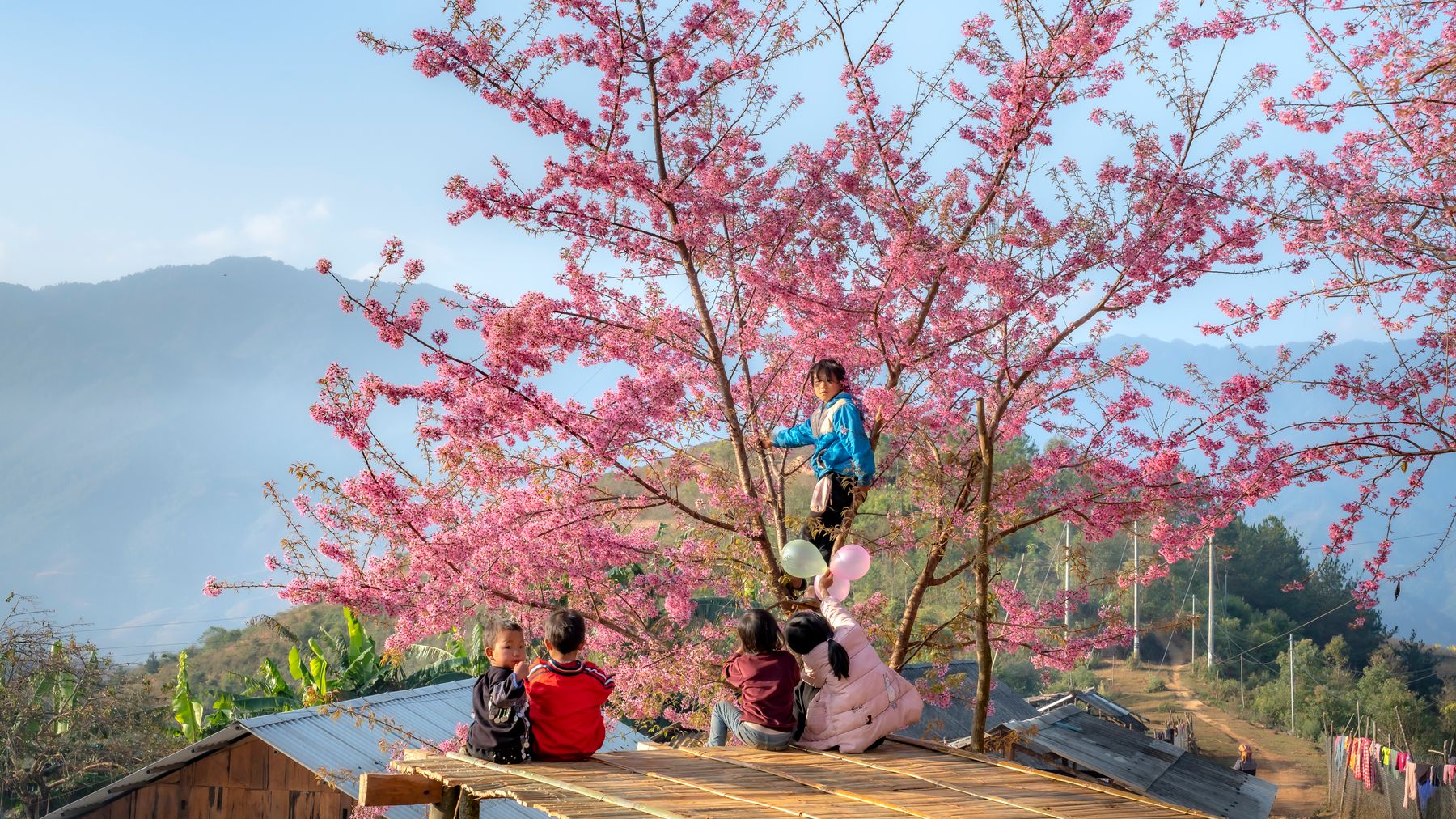
Photo by Quang Nguyen Vinh on Pexels
Practical Tips Locals Would Tell You
- Carry cash. There's one ATM in Dong Van and it's unreliable. Load up in Ha Giang city before heading north.
- Bring layers. Even in October, mornings at 1,400 meters are cold. A decent windbreaker and fleece make the motorbike ride bearable.
- Fill your fuel tank in Dong Van. There's no reliable petrol station between Dong Van and Lung Cu — just a couple of roadside sellers charging a premium.
- If you're riding yourself, check your brakes before the Dong Van-Lung Cu road. The descents are steep and the surface gets loose gravel in spots.
Common Mistakes to Avoid
- Rushing the loop: Some travelers try to do Ha Giang to Lung Cu and back in two days. Three days minimum, four is better. The roads are slow and the scenery deserves more than a blur through a visor.
- Skipping Lung Cu because it's "just a flag": Fair point on the tower alone, but Lo Lo Chai and the surrounding area add real depth. Budget at least a half day.
- Wearing flip-flops on the tower steps: The stone gets slippery with morning dew. Proper shoes make the climb safer and more comfortable.
- Expecting phone signal: Coverage is patchy north of Dong Van. Download offline maps before you leave Ha Giang city.
Practical Notes
Lung Cu works best as part of a 3-4 day Ha Giang loop rather than a standalone destination. The journey is genuinely the point — the flag tower is just the punctuation mark at the end. Start planning from Ha Giang city and give yourself enough days to ride slowly.
Last updated · May 29, 2026 · independently researched, never sponsored.





