What it is
Nha Co Binh Thuy is a French-colonial residence built in 1870 by the Duong family, a wealthy merchant clan who traded rice along the Mekong Delta (메콩 델타 / 湄公河三角洲 / メコンデルタ) waterways. The house sits on Bui Huu Nghia Street in Binh Thuy district, about 6 km north of central Can Tho. It's one of the best-preserved colonial-era homes in southern Vietnam — not a museum reconstruction, but an actual family house still maintained by fifth-generation descendants.
The architecture blends French structural design with Chinese and Vietnamese decorative elements. Think European floor tiles imported from 19th-century France, carved rosewood furniture, ancestral altars with mother-of-pearl inlay, and a facade with neoclassical columns framed by tropical fruit trees. The house gained international recognition when director Jean-Jacques Annaud filmed scenes from "The Lover" (1992) here, based on Marguerite Duras's novel about a French girl's affair with a Chinese-Vietnamese man in 1920s Saigon.
Why travelers go
Most visitors to Can Tho (껀터 / 芹苴 / カントー) focus on floating markets — Cai Rang mainly — then leave. Nha Co Binh Thuy offers something different: a quiet, unhurried look at how Mekong Delta elites actually lived during the colonial period. The house is small enough to explore in 30-45 minutes, but the details reward attention. Original ceramic vases from Jingdezhen, French crystal chandeliers, a courtyard garden that hasn't changed layout in over a century.
For film fans, it's a low-key pilgrimage site. The front room where key scenes from "The Lover" were shot looks almost identical to how it appeared on screen thirty years ago.
Best time to visit
The house is open daily from 8:00 to 17:00. Mornings before 10:00 are best — fewer tour groups, cooler temperatures, and better light for photographs through the wooden shutters. Avoid arriving between 11:30 and 13:30 when the family sometimes closes for lunch.
Season-wise, the dry months (December through April) mean you won't get caught in a downpour cycling there. But honestly, Can Tho's rain showers are short and dramatic — if you visit during wet season (May–November), just wait 20 minutes under the veranda.
How to get there
From central Can Tho (Ninh Kieu district), Nha Co Binh Thuy is about 6 km north along Cach Mang Thang Tam Street, then a right turn onto Bui Huu Nghia. Options:
- Grab bike/car: 25,000–40,000 VND one way. Fastest option.
- Bicycle: Many guesthouses in Ninh Kieu rent bikes for 50,000–80,000 VND/day. The ride is flat, follows the river for part of the way, and takes about 25 minutes.
- Xe om (motorbike taxi): Negotiate 30,000–50,000 VND. Ask them to wait — the visit is short.
The entrance is marked by a gate on Bui Huu Nghia Street, number 26/1A. There's a small sign in Vietnamese and English. Admission is 20,000 VND per person (as of early 2024).

Photo by VINVIVU ® on Pexels
What to do
Inside the house
Take your time in the main hall. The furniture arrangement follows feng shui principles — the ancestral altar faces south, reception chairs are positioned for formal visits. Look up at the ceiling beams: they're ironwood, hand-carved with dragon and phoenix motifs. The floor tiles are original French encaustic cement, each one shipped from Europe.
The family keeps a small photo display showing the house through different decades, including stills from "The Lover" filming.
The garden and surroundings
The front courtyard has longan and mangosteen trees that are older than most buildings in Can Tho. Behind the house, a smaller garden leads toward the river. Just across Bui Huu Nghia Street sits Binh Thuy Communal Hall (Dinh Binh Thuy), a 19th-century temple worth five minutes of your time — ornate woodwork, quieter than the house itself.
Combine with Cai Rang
Most travelers pair this with an early-morning Cai Rang floating market trip. Hit the market at 5:30–6:30, return to your hotel for breakfast, then cycle to Binh Thuy mid-morning. It makes for a full Can Tho day without rushing.
Where to eat nearby
Binh Thuy district isn't a dining destination, but a few spots work:
- Quan Nem Nuong Thanh Van (a 10-minute ride back toward center): grilled pork sausage wraps, a Mekong Delta staple. Sets from 60,000 VND.
- Cho Binh Thuy (Binh Thuy Market): street food stalls selling "hu tieu" (clear pork noodle soup, the delta's signature breakfast) for 25,000–35,000 VND.
- Back in Ninh Kieu, try "banh xeo" at Quan Banh Xeo Binh Dan on Hai Ba Trung Street — crispy turmeric crepes stuffed with shrimp and bean sprouts, 30,000 VND each.
Can Tho is also strong on "com tam" (broken rice) and river fish hotpot if you're staying for dinner.
Where to stay
Stay in Ninh Kieu ward (central Can Tho) for the best access to restaurants, the riverfront promenade, and boat departures:
- Budget: Mekong My Tho Hostel or similar — 150,000–250,000 VND/night for a private room.
- Mid-range: Kim Tho Hotel or Iris Hotel — 500,000–800,000 VND, river views, solid breakfast.
- Splurge: Azerai Can Tho (designed by Bill Bensley, set on Hau River) — from 2,500,000 VND/night. Worth it if you want a resort feel without leaving the delta.
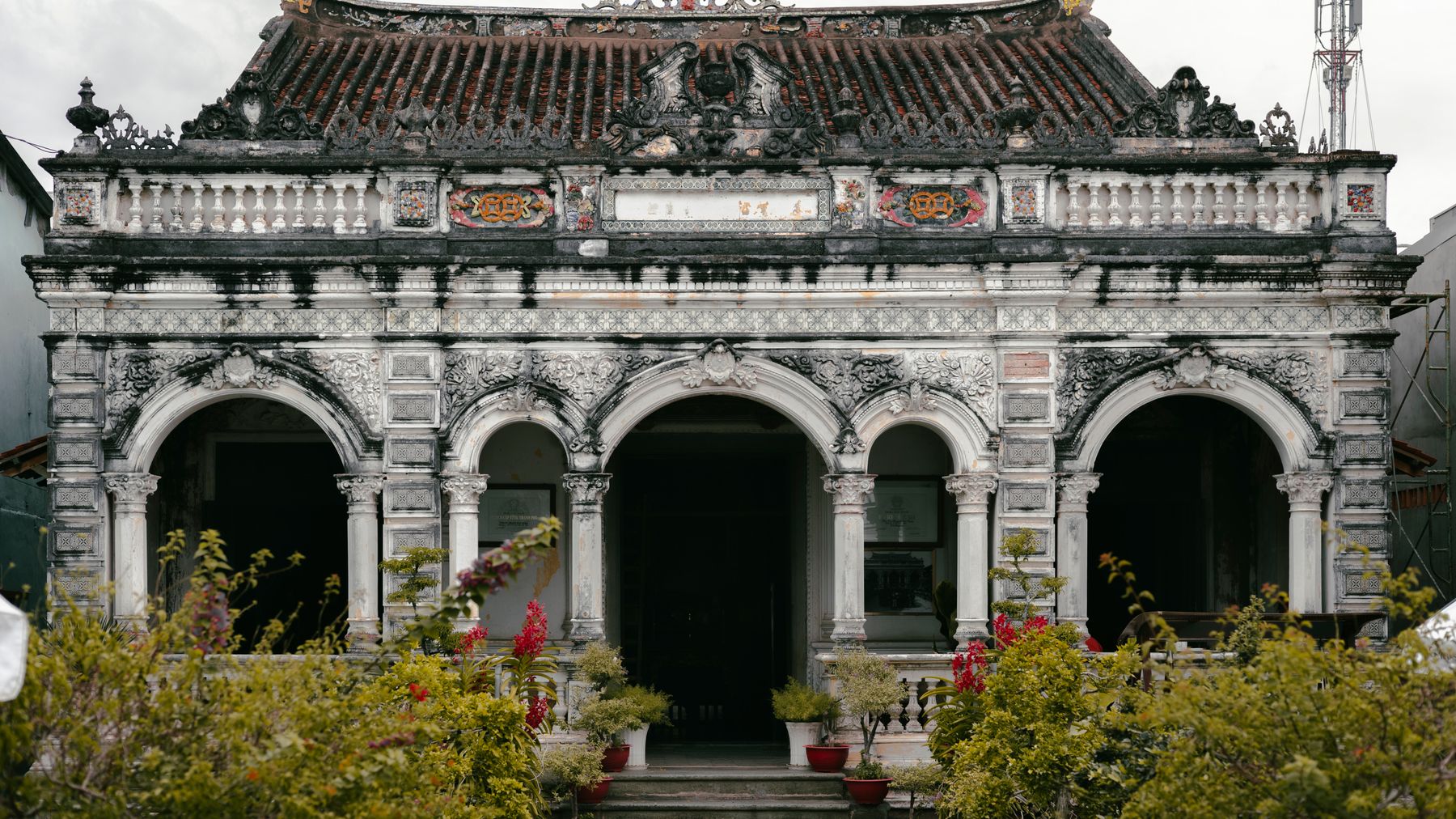
Photo by DUYTRG TRUONG on Pexels
Practical tips
- Dress modestly — this is a family home with an active ancestral altar. Shoulders covered, no super-short shorts.
- Photography is allowed inside but don't use flash. The wood and lacquer are fragile.
- There's no English-language guide on site. Read up beforehand or the visit will feel brief and opaque.
- The house is small. If a tour bus arrives while you're there, step into the garden and wait ten minutes.
- Bring cash for the entrance fee — no card payment.
Common mistakes
- Skipping it because it sounds minor. On paper, "old house" doesn't compete with floating markets. In practice, it's one of the most atmospheric heritage sites in the entire Mekong Delta.
- Arriving midday. The heat flattens the experience and the family may be on lunch break.
- Not combining with Binh Thuy Communal Hall. It's literally across the street. Five extra minutes gives you context on the neighborhood's history.
- Taking a taxi both ways. The bicycle ride from Ninh Kieu is half the experience — flat roads, river views, fruit orchards. Rent a bike.
Final note
Nha Co Binh Thuy won't take your whole day. That's part of its appeal. It's a pause — a slow, quiet look at a delta family's century-and-a-half story told through furniture, tiles, and fruit trees. In a region where most tourism moves fast (boat engines, market crowds, bus schedules), thirty minutes in this house reminds you why Can Tho is worth more than a one-night stopover.
Last updated · May 29, 2026 · independently researched, never sponsored.