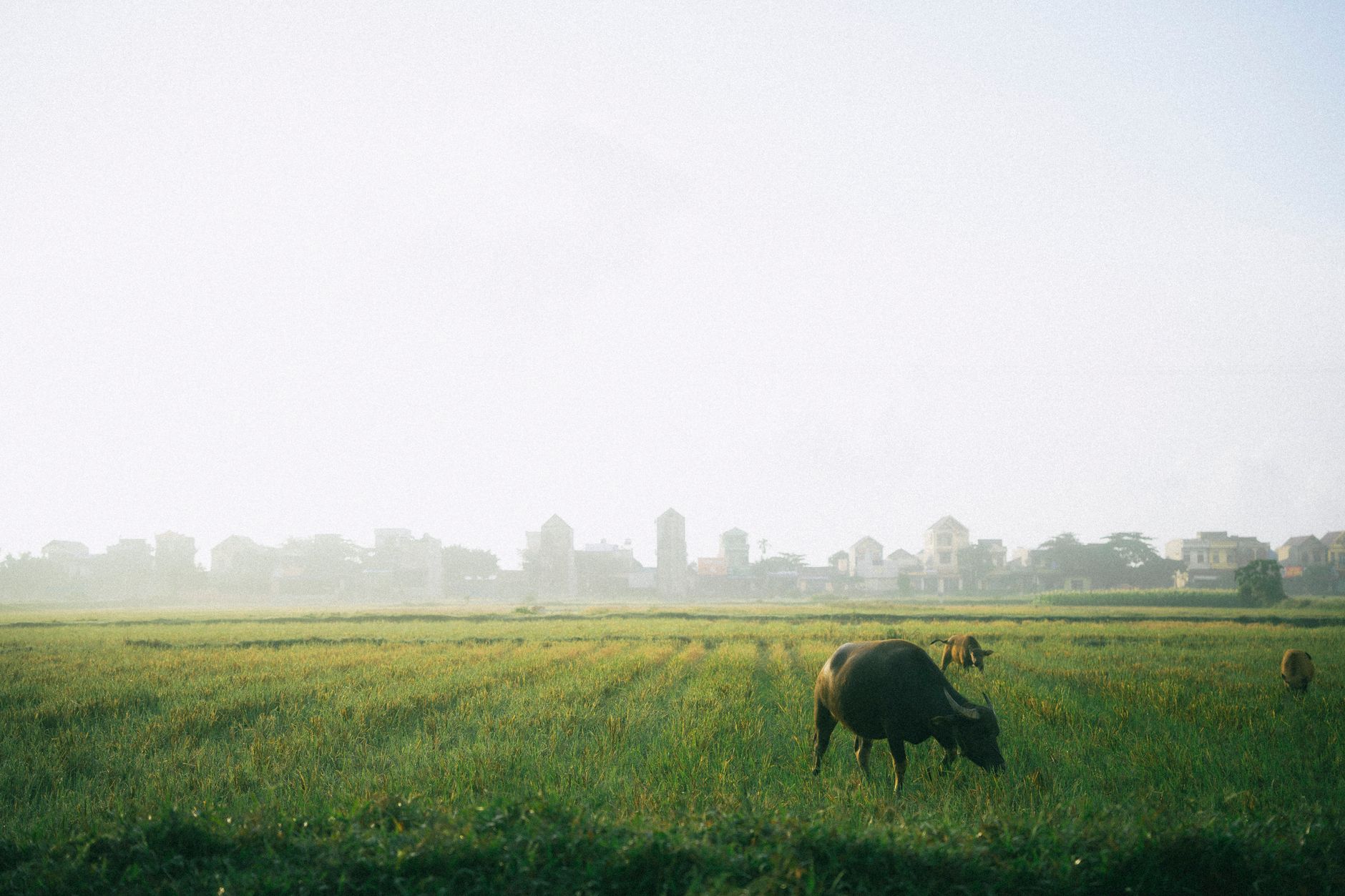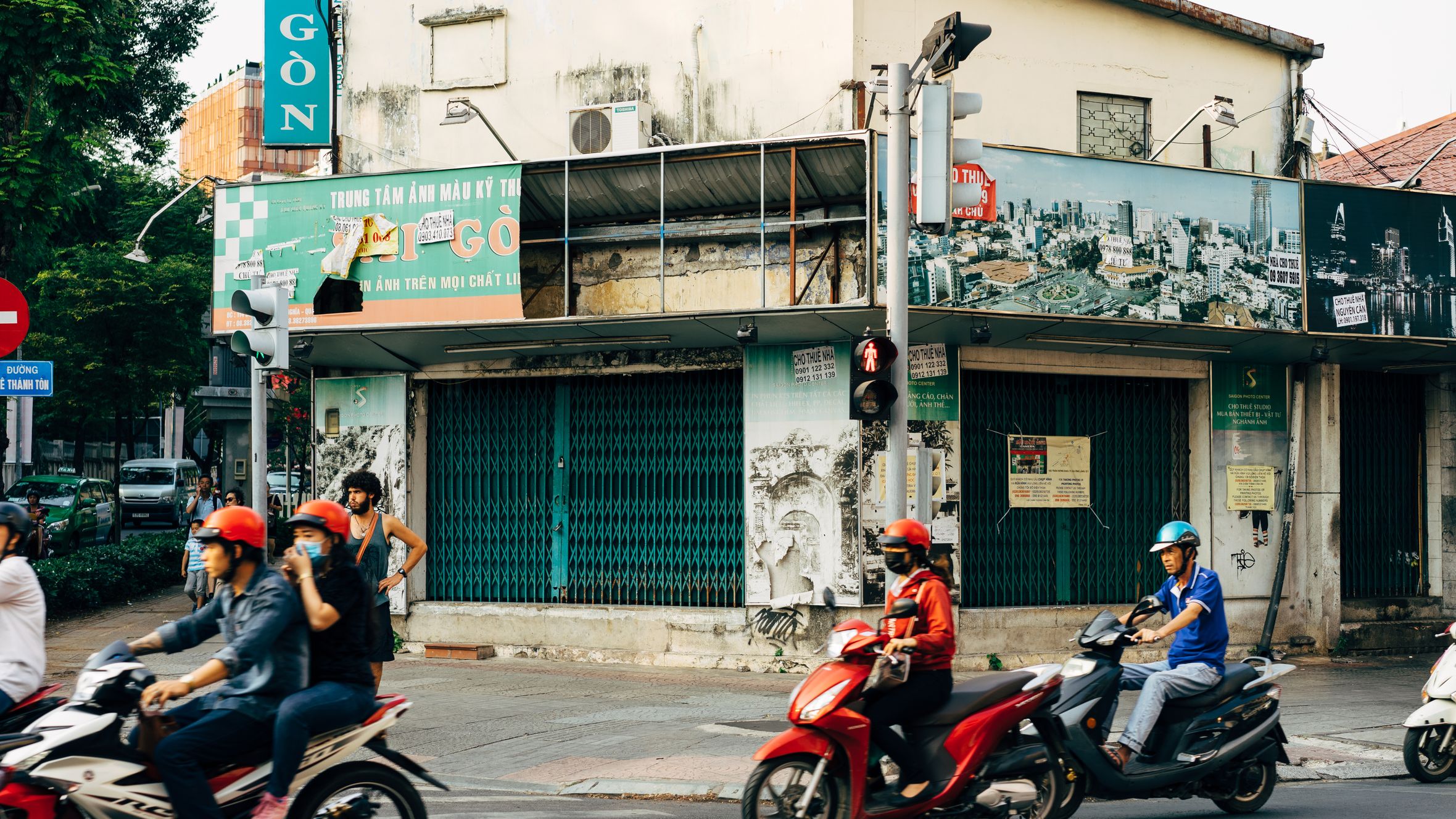
Nguyen Hue Walking Street is the closest thing Saigon has to a public living room. Every evening, thousands of people — families, couples, teenagers on rented hoverboards, tourists with dripping ice cream cones — fill this 670-metre granite promenade in the heart of District 1.
What it is
Nguyen Hue is a broad boulevard running from the Saigon River waterfront up to the People's Committee building (the old Hotel de Ville, built 1908). The city pedestrianised it in 2015, ripping out traffic lanes and laying down polished granite tiles, fountains, and a row of trees down the centre. It's now officially "Pho di bo Nguyen Hue" — the Nguyen Hue Walking Street.
The street has older roots. Under French colonial rule it was Boulevard Charner, one of Saigon's grandest avenues. After reunification it was renamed for Nguyen Hue, a historical figure from the Tay Son dynasty. Today it sits at the centre of the expanded Ho Chi Minh City (호치민시 / 胡志明市 / ホーチミン市), which since mid-2025 incorporates the former provinces of Binh Duong and Ba Ria - Vung Tau — but the walking street itself remains in the same District 1 core it's always occupied.
Why travelers go
It's not a single attraction so much as an atmosphere. Nguyen Hue is where Saigon (사이공 / 西贡 / サイゴン) shows off its energy without trying. There's no entry fee, no queue, no itinerary. You walk, you sit on the granite steps, you people-watch. The backdrop — French-colonial facades, glass towers, the illuminated People's Committee building — is photogenic without being theme-park-ish. On weekends and holidays, the fountains run, street performers set up, and the whole strip turns into an open-air party.
Best time to visit
Time of day: After 6 PM. The street is technically open all day, but before sunset it's a hot granite slab with little shade. The real scene starts at dusk when the lights come on and the temperature drops to something bearable.
Time of year: The dry season (December–April) is most comfortable. Tet — Vietnamese New Year, usually late January or early February — transforms Nguyen Hue into a massive flower festival. The entire boulevard fills with elaborate floral displays and tens of thousands of visitors over several nights. It's packed but worth seeing once. Rainy season (May–November) means sudden downpours most afternoons, though evenings often clear up.
How to get there
Nguyen Hue is in the dead centre of District 1, about 7 km from Tan Son Nhat Airport.
- Taxi/Grab from the airport: 30–50 minutes depending on traffic. Around 120,000–160,000 VND by Grab car.
- From anywhere in District 1: Walk. If you're staying in the Pham Ngu Lao backpacker area, it's a 15-minute walk east.
- Metro Line 1: The Ben Thanh station (opening in stages from late 2024 into 2025) sits at the southern end of the street, near Ben Thanh Market. This will eventually be the easiest way to reach the area from Thu Duc or Binh Thanh districts.

Photo by Vuong on Pexels
What to do
Walk the full length at night
Start at the river end (near the new Saigon waterfront developments) and walk uphill toward the People's Committee building. The whole thing takes about 10 minutes at a slow pace. Stop at the Ho Chi Minh statue for the obligatory photo with the lit-up building behind it.
Sit at a cafe and watch the chaos
The apartment block at 42 Nguyen Hue has become a vertical cafe complex — dozens of small coffee shops stacked on multiple floors, most with balconies overlooking the street. Grab a window seat, order a "ca phe sua da" (iced milk coffee) for 35,000–50,000 VND, and watch the promenade from above. It's the best vantage point on the street.
Check out the Cafe Apartment building
That same 42 Nguyen Hue building deserves its own mention. Originally a 1960s residential block, it's been colonially repurposed into a honeycomb of independent shops, galleries, and cafes. Each apartment is a different business. Wander the hallways — it feels like exploring someone's eccentric building rather than a mall.
Catch the weekend energy
Friday and Saturday nights bring the most action. Street dancers, buskers, balloon sellers, couples doing photo shoots in "ao dai" (traditional dress). The vibe is distinctly Saigon — loud, crowded, warm, unselfconscious.
Visit during Tet flower festival
If your timing lines up with Tet / 越南春节 / テト), don't miss it. The floral displays change theme every year, and the craftsmanship is genuinely impressive. Arrive early evening before the heaviest crowds.
Where to eat nearby
Nguyen Hue itself is mostly chain cafes and upscale restaurants at street level. For better food, step one or two blocks off the boulevard.
- "Com tam" (broken rice with grilled pork): Com Tam Ba Ghien on Dang Van Ngu is a short taxi ride away in District Phu Nhuan, but for something closer, several com tam stalls operate on side streets off Nguyen Hue and along Ly Tu Trong. A plate runs 40,000–55,000 VND.
- "Banh mi": Banh Mi Huynh Hoa at 26 Le Thi Rieng (about a 10-minute walk) is Saigon's most famous banh mi shop. Expect a queue. One sandwich costs around 55,000 VND and is absurdly overstuffed.
- "Egg coffee": Several of the cafes inside 42 Nguyen Hue serve egg coffee, originally a Hanoi specialty but now available across the south. Worth trying if you haven't had it yet — a thick, sweet custard-like layer over strong coffee.
Where to stay
District 1 near Nguyen Hue has every price range.
- Budget: Hostels and guesthouses around Bui Vien and Pham Ngu Lao, 200,000–400,000 VND/night for a dorm bed, 500,000–800,000 VND for a private room.
- Mid-range: Plenty of 3-star hotels within a 5-minute walk of Nguyen Hue. Expect 800,000–1,500,000 VND/night.
- High-end: Hotel Continental (right on the corner of Nguyen Hue and Dong Khoi) is a colonial-era classic. The Rex Hotel faces the top of the boulevard. Rates start around 2,500,000 VND/night.

Photo by Quang Vuong on Pexels
Tips locals would tell you
- Watch your phone. Nguyen Hue's crowds attract snatch-and-grab thieves on motorbikes along the edges. Keep your phone in a zipped pocket or hold it with both hands. Don't stand near the street edge while looking at your screen.
- Rent a hoverboard if you want. Vendors along the strip rent them for about 50,000 VND per session. Mostly aimed at kids, but no one will judge.
- The street floods. During heavy rainy-season downpours, the lower end near the river can flood knee-deep. It's become something of a local spectacle — people splash around and take selfies — but if you'd rather stay dry, check the weather before heading out.
- Skip the overpriced restaurants at street level. Most ground-floor spots on Nguyen Hue charge tourist premiums. Walk one block to parallel streets like Hai Ba Trung or Mac Thi Buoi for better value.
Common mistakes
- Going at midday. There's zero shade and the granite radiates heat. You'll last about five minutes.
- Expecting a curated experience. This isn't a night market or a planned attraction. It's a public space. Some nights it's electric; some Tuesday evenings it's quiet. That unpredictability is the point.
- Only staying on the boulevard. The side streets — especially toward Dong Khoi — have more character, older architecture, and better food. Use Nguyen Hue as a starting point, not the whole visit.
Practical notes
Nguyen Hue Walking Street is free, open 24 hours, and best experienced after dark. Give it at least an evening — combine it with dinner nearby and a coffee at 42 Nguyen Hue, and you've got a solid first night in Saigon.
Last updated · May 29, 2026 · independently researched, never sponsored.