Phu Quoc's fish sauce carries a European Union geographical indication — the same category as Champagne or Parmigiano-Reggiano. That matters because most bottles labeled "nuoc mam" in Vietnamese supermarkets are industrial blends, not the real thing aged in ironwood barrels on this island. If you're here and you skip the factories, you've missed the point.
What Makes It Different
"Nuoc mam" is Vietnam's foundational condiment — fermented anchovy sauce used in almost every savory dish in the country. The Phu Quoc (푸꾸옥 / 富国岛 / フーコック) designation, known locally as "nuoc mam Phu Quoc," requires the fish to be caught in the waters around the island and fermented on-island in wooden barrels for a minimum of twelve months, often longer. The result is a sauce with a protein content above 30 degrees (measured in nitrogen), deeper amber color, and none of the harsh ammonia edge you get from mass-produced versions. It's rounder, saltier in a way that lingers rather than spikes.
Morning — Go to the Factory First
The best time to visit a working fish sauce factory is before 10:00. Production facilities line Duong Dong's northwestern outskirts, concentrated along Nguyen Van Cu and the roads near Cau Sau Bridge. Khai Hoan Factory at 58 Nguyen Van Cu is one of the more accessible — they allow visitors to walk among the barrels without a booking, and staff will usually pour a small sample if you ask. No entry fee. Barrels here hold up to ten tons of fish and salt, stacked in rows under corrugated iron roofing. The smell is strong but not unpleasant once you adjust, more umami than rot.
Mornings work for two reasons: it's cooler, so the fermentation smell is less intense, and factory workers are active, which means you can actually watch the extraction process — a tap opened at the barrel base, dark liquid pooling into a measuring vessel. By midday, the heat drives most activity indoors.
Bring cash if you want to buy directly. A 500ml bottle of first-press, 40-degree nuoc mam at the factory gate runs 80,000–120,000 VND depending on the label and nitrogen rating. The same product in Duong Dong's tourist shops costs 30–50% more.

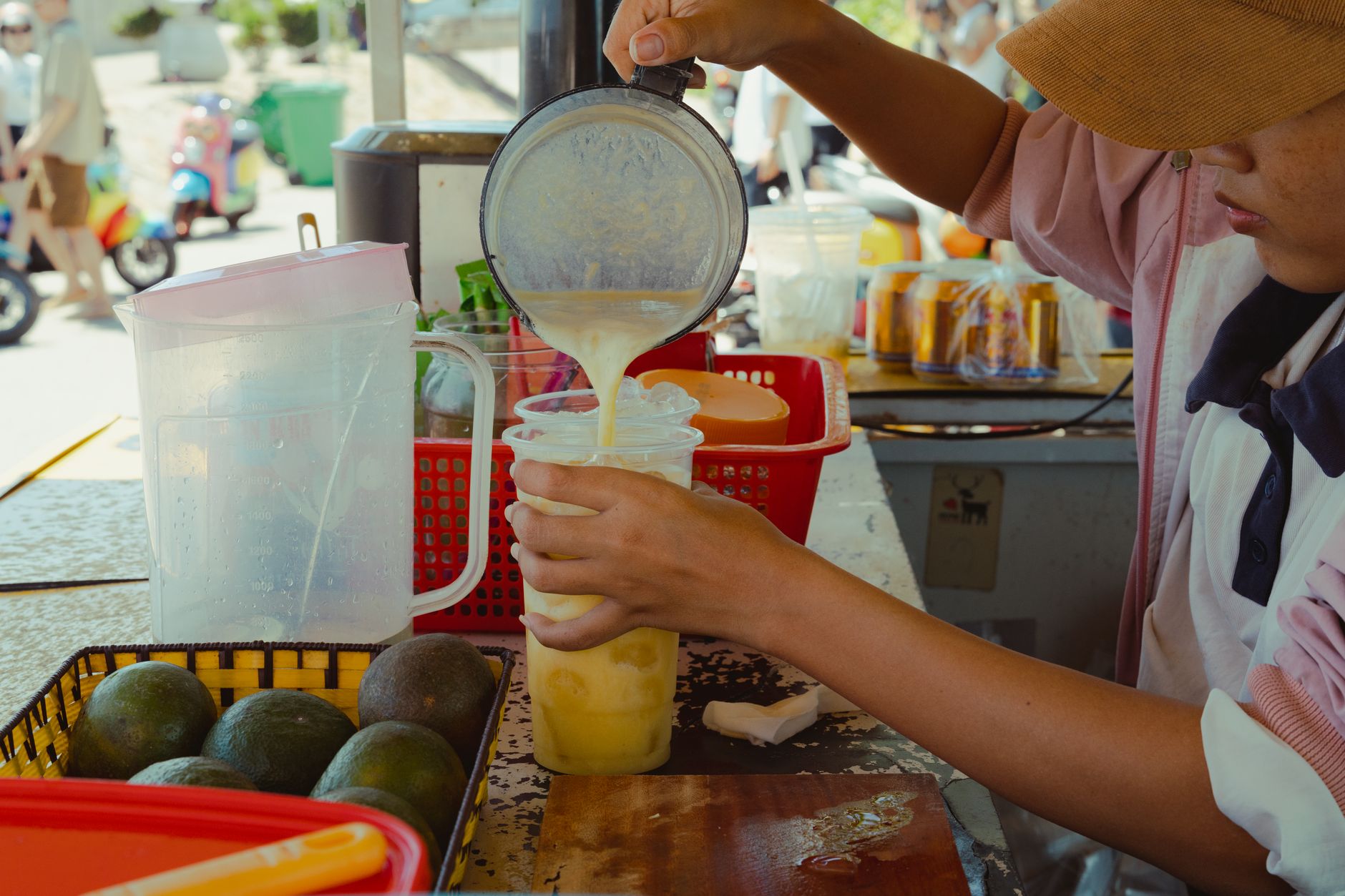
Photo by sl wong on Pexels
Lunch — Where the Sauce Belongs on the Table
Fish sauce is not a standalone experience. You need food around it. Lunch is where nuoc mam Phu Quoc earns its reputation because the island's midday staples are built around it.
"Goi cuon" — fresh rice paper rolls — arrive at your table with a dipping sauce that, if the restaurant sources locally, is a thinned nuoc mam with lime, garlic, and chili. Quan Oc Phu Quoc near the night market area does this correctly. A plate of four rolls with sauce costs around 45,000 VND.
The other pairing worth ordering at lunch is grilled seafood. Any of the seafood restaurants along Tran Hung Dao serve whole fish — usually snapper or mackerel — with a nuoc mam cham dipping sauce on the side. The sauce chemistry changes completely against hot charred fish skin. Order the ca nuong (grilled fish) and ask specifically for nuoc mam Phu Quoc nhat — first-press — rather than the generic bottle that may have arrived from the mainland.
"Banh mi" with fish sauce drizzle also shows up at a few of the older bakery stalls near Duong Dong Market, and it's one of those combinations that sounds wrong until you try it. The bread absorbs the sauce differently than it does butter or pate — saltier, less rich, more immediate.

Photo by Tuan Vy on Pexels
Night — Skip the Overpriced Bottles, Order the Seafood
The night market on Vo Thi Sau Street runs from around 18:00 and the fish sauce branding is everywhere — branded tins, gift sets, decorative bottles. Most of it is fine for souvenirs but represents the commercial end of the spectrum, not the production craft. Prices here are tourist-facing.
If you want nuoc mam at night, the better call is to sit at one of the plastic-stool seafood grills near the market perimeter and eat. The sauce comes with the food. A plate of grilled scallops with scallion oil — so lo nuong mo hanh — runs 60,000–80,000 VND per plate and the dipping nuoc mam is included. You're not paying for the bottle; you're paying for the meal, and the sauce does what it was always meant to do: finish the dish.
Buying to Take Home
If you want to bring bottles back, buy from the factory gate in the morning or from Coop Mart on Tran Hung Dao, which stocks a reliable selection of island-produced brands including Thanh Ha and Khai Hoan at honest prices. Check the label for "do dan" (nitrogen degree) — 35 degrees and above is first-press quality. Anything under 25 degrees is blended or secondary press.
Vacuum-sealed bottles travel fine in checked luggage. Wrap them in clothes anyway.
Practical notes: Factory visits are generally free and informal — no booking required at most facilities, though groups above ten should call ahead. The production district is about 3 km north of Duong Dong town center; a xe om ride from the market costs around 30,000–40,000 VND one way.
Last updated · May 26, 2026 · independently researched, never sponsored.