Tea in Vietnam (베트남 / 越南 / ベトナム) is quieter than it appears. Older drinkers brew it alongside poetry, flower arranging, or simple mornings on a balcony. Younger generations are discovering it too. Most Vietnamese prefer lighter teas—green, white, subtly floral—over the heavier oxidized styles common elsewhere.
The numbers tell part of the story. Green tea accounts for more than 63% of retail volume sales. Vietnam sits on some of the world's oldest tea trees, specimens over a thousand years old. Yet outside mainland Asia, Vietnamese teas remained largely unknown until recent decades. That's changing. Free-enterprise initiatives now export Vietnamese greens to international markets, and specialty tea shops in Hanoi and Ho Chi Minh City are introducing locals and visitors alike to regional terroirs they've overlooked.
Where Vietnam's Best Tea Grows
Thai Nguyen province in the north is the heartland. During French colonial rule, Thai Nguyen tea was considered the finest in all of Indochina—a reputation it has mostly kept. The Vietnam Tea Association (VITA), founded July 19, 1998, supports growers and traders across the country.
Other notable regions:
- Ha Coi, Quang Ninh (northeast coast)
- Tan Cuong, Dong Hy, La Bang in Thai Nguyen (the benchmark)
- Tan Son, Phu Tho
- Tay Con Linh, Ha Giang (far north)
- Ta Xua, Son La (northwest highlands)
- Suoi Giang, Yen Bai
- Bao Loc, Cau Dat in Lam Dong (central highlands (중부 고원 / 中部高原 / 中部高原), near Da Lat)
- Cao Bo, Ha Giang
Most tea comes from the Northern and Central highlands, where elevation, soil, and mist create conditions that favor delicate, floral leaves.
Green Tea: The Standard
Vietnamese "xanh" (green tea) is the everyday drink. High-grade stuff—especially from Tan Cuong commune in Thai Nguyen—hits you with bitterness first, then unfolds into a deep, lingering sweetness that coats the mouth.
Tan Cuong leaves are graded by bud size: dinh non (tiny unopened buds, premium), tom non (small buds with one leaf), and moc cau (larger leaves). The leaves are rolled gently into crescent shapes with minimal handling, which keeps them potent.
Brew it right: water at 70°C (160°F), under 2 minutes. Longer steeps turn bitter—which some enthusiasts want, to feel the tea's backbone. Reuse the same leaves 3 or 4 times. Each infusion softens, revealing subtler notes the first steep masks.

Image by Binh Giang via Wikimedia Commons (CC BY-SA)
Scented and Specialty Teas
Lotus Tea
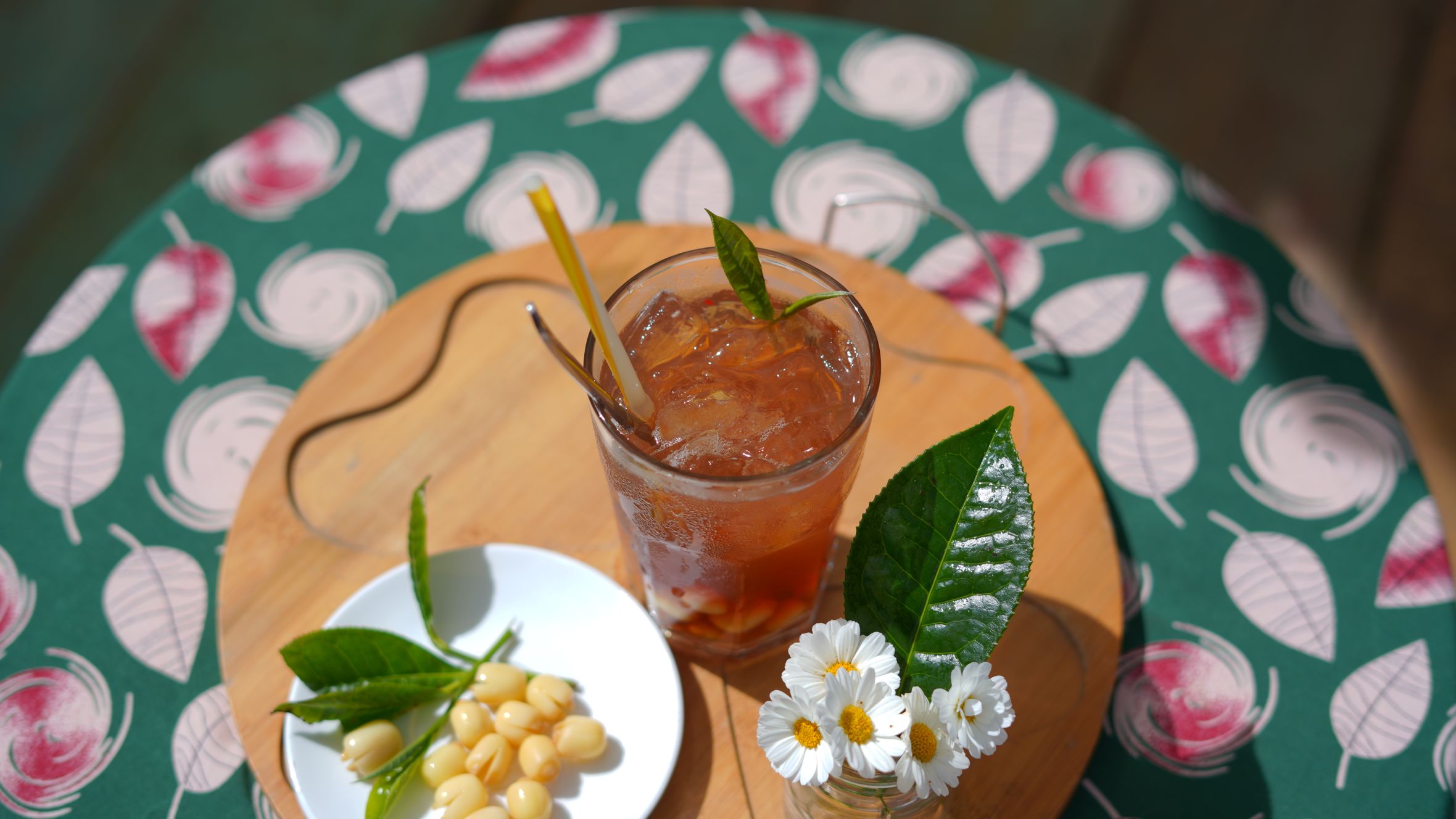
"Sen" tea is Vietnamese specialty work. High-quality green tea leaves sit inside fresh lotus flowers for a day, absorbing the flower's faint, almost invisible fragrance. Premium versions mix lotus petals directly into the leaves. It's reserved for occasions—gifts, formal visits, quiet mornings when you want something that feels like ceremony.
Jasmine Tea
"Lai" tea is more assertive than lotus. The aroma is pronounced; the taste, cleaner. In cities, jasmine tea plays a supporting role: after Vietnamese iced coffee, pour jasmine tea into the remaining coffee dregs, chill it, and drink it as a refreshing finish. On warm nights, coffee shops become social hubs, and this sequence—coffee, then tea—is ritual.
Shan Tuyet Tea
Made from leaves of ancient trees in the mountains of Lao Cai, Yen Bai, and Ha Giang, this tea carries a distinct, almost mineral quality from the old-growth plants.
Pineapple Leaf Tea
A Central Vietnam specialty: green tea blended with jasmine, "Aglaia duperreana" flowers, basil, and pandan leaves. The result is aromatic and subtly sweet—unusual, herbaceous.
Artichoke Tea
Herbal infusion of artichoke leaves, root, stalk, and flower. It's a Lam Dong product, especially around Da Lat, where artichokes thrive in the cool highlands. People drink it for health benefits—liver support, digestion.
Kuding Tea ("Bitter Tea")
"Dang" tea earns its name. Valued for antioxidants, it's sometimes prescribed in traditional medicine for headaches, high blood pressure, fever, or diabetes. The bitterness is the point—it signals potency.
Golden Flower Tea
Made from leaves of Camellia chrysantha, prized for the plant's distinctive golden blooms.
Bud Tea
"Che nui" is premium: unopened tea-flower buds only, dried and steeped. Delicate, refined, expensive.
Voi Tea
Traditional herbal tea from buds and leaves of Cleistocalyx operculatus. Drinkers value it for refreshment and digestive ease.
Other Infusions
Chrysanthemum ("cuc"), Aglaia flower ("ngau"), "giao co lam", "ha thu o", and "tra soi" (Chloranthaceae flowers) round out the roster. Vietnamese tea drinkers love floral, aromatic brews—the paler and more perfumed, the better.

Image by Tonbi ko via Wikimedia Commons (CC BY-SA)
A Tea Culture Modernizing
Tea in Vietnam is old, but it's not frozen. Younger drinkers are discovering what their grandparents knew. Specialty tea shops in major cities now source single-origin leaves and educate customers on terroir, processing, and brewing technique—language borrowed from wine but increasingly applied to tea. Export growth means Vietnamese greens, lotuses, and herbals are reaching international enthusiasts who are learning that Vietnam's tea tradition rivals any in Asia.
If you're in Thailand Nguyen, visit the tea gardens. If you're in Hanoi or Ho Chi Minh City, find a tea house serving "sen" or "lai." The ritual—the quiet, the warmth of the cup, the slow unfold of flavor—is the point.
Frequently Asked Questions
How should I brew Vietnamese green tea to avoid bitterness?
Use water at 70 degrees Celsius (160 degrees Fahrenheit) and steep for under 2 minutes. Longer steeps intensify bitterness, though some drinkers prefer this to experience the tea's full strength. The same leaves can be reused 3 or 4 times — each infusion softens and reveals subtler notes that the first steep masks. High-grade Tan Cuong leaves from Thai Nguyen hit bitter first, then settle into a lingering sweetness.
What makes Tan Cuong tea different from other Vietnamese green teas?
Tan Cuong, a commune in Thai Nguyen province — long considered Vietnam's tea heartland since French colonial rule — produces leaves graded by bud size: dinh non (tiny unopened buds, premium grade), tom non (small buds with one leaf), and moc cau (larger leaves). The leaves are rolled into crescent shapes with minimal handling to preserve potency. Thai Nguyen was once considered the finest tea region in all of Indochina, a reputation it has largely kept.
When is lotus tea typically served in Vietnamese tea culture?
Lotus tea, known as sen, is reserved for special occasions rather than daily drinking. High-quality green tea leaves absorb the fragrance of fresh lotus flowers over the course of a day. Premium versions blend lotus petals directly into the leaves. It appears at formal visits, as gifts, and during quiet mornings when the occasion calls for something that feels closer to ceremony than routine refreshment.
Last updated · May 19, 2026 · independently researched, never sponsored.