The Central Highlands (중부 고원 / 中部高原 / 中部高原) get skipped. Most itineraries run straight from Hue or Da Nang down to Hoi An and then south, leaving Pleiku and Kontum to the long-haul bus crowd and Vietnamese motorcyclists doing the Ho Chi Minh Road. That's a mistake, at least from a food perspective. These two cities sit in Gia Lai and Kon Tum provinces at roughly 800m elevation, and they eat differently — drier, smokier, rooted in the ingredients and techniques of the Bahnar and Jarai communities who have lived here for centuries.
Pho Kho — Dry Pho, Done Right
"Pho kho" is the dish that Pleiku is most quietly proud of. If you know "pho" only as the soupy Hanoi version, this will confuse you at first. The noodles arrive in a bowl with almost no liquid — just a slick of rendered fat and a dark, concentrated broth reduction coating the strands. The soup comes separately in a small cup on the side, meant for sipping between bites or pouring in gradually as you eat.
The beef here tends to be leaner and less fussed-over than Hanoi (하노이 / 河内 / ハノイ)'s carefully layered pho — you get sliced shank and a few tendon pieces, a scatter of spring onion, some fried shallots. The depth is in that coating sauce, which is richer and more savory than it looks. A bowl runs 35,000–50,000 VND at most spots. Look for stalls around Hung Vuong Street in the morning, when the pho kho places do their best business. By 9am, the good ones are running low.
Com Lam — Bamboo Rice and What Goes With It
"Com lam" is glutinous rice packed into sections of fresh bamboo and cooked over an open fire until the outside chars and the rice steams inside, picking up a faint woody sweetness. It's common across the highlands of Vietnam, Laos, and parts of southern China, but in Kontum it feels like actual daily food rather than a tourism prop.
You'll find com lam sold by the segment — each piece about 20–25 cm long — at market stalls and roadside setups near Kontum's central market on Tran Hung Dao Street. Crack it open and eat the rice with your hands. A single bamboo tube costs around 10,000–15,000 VND. The more interesting version comes served alongside "ga nuong" (grilled chicken) or "thit nuong" (grilled pork), which turns the whole thing into a proper lunch.
Ga Nuong — The Grilled Chicken Standard
Highland chicken in Gia Lai and Kon Tum provinces is typically "ga ta" — free-range birds that are smaller, tougher, and more flavorful than the commercial chickens you get in Saigon or Hanoi. The grilling here is low and slow over charcoal, often with a marinade of lemongrass, turmeric, and local chili. The skin goes properly crisp, the meat stays dense.
This isn't a restaurant dish in the formal sense. You find ga nuong at evening "quan nhau" setups — plastic tables, plastic stools, crates of local beer — mostly around the perimeter of Bien Ho (the crater lake about 7km from central Pleiku) on weekends, and along the streets south of Kontum Bridge as the sun drops. Order by half-chicken ("nua con") for around 80,000–120,000 VND, get a plate of com lam on the side, and settle in.

Photo by Chuot Anhls on Pexels
What Else the Markets Are Selling
Kontum's central market is worth an hour of your time even if you're not buying anything. The produce section has highland vegetables you won't find in the coastal cities — bitter "rau rung" (foraged greens), several varieties of banana flower, and bundles of small wild chilies that are genuinely fierce. The protein section includes smoked pork cuts and dried river fish that are staples of local cooking.
Look for "ruou can" — a fermented rice wine drunk communally through long bamboo straws from a clay jar. It's not always available for purchase to take away, but at festivals or when visiting villages near Kontum, it's offered as a gesture of welcome. The flavor is mildly sour and earthy, closer to Japanese amazake than to anything you'd call a spirit. Worth trying once.
Drinking in Pleiku
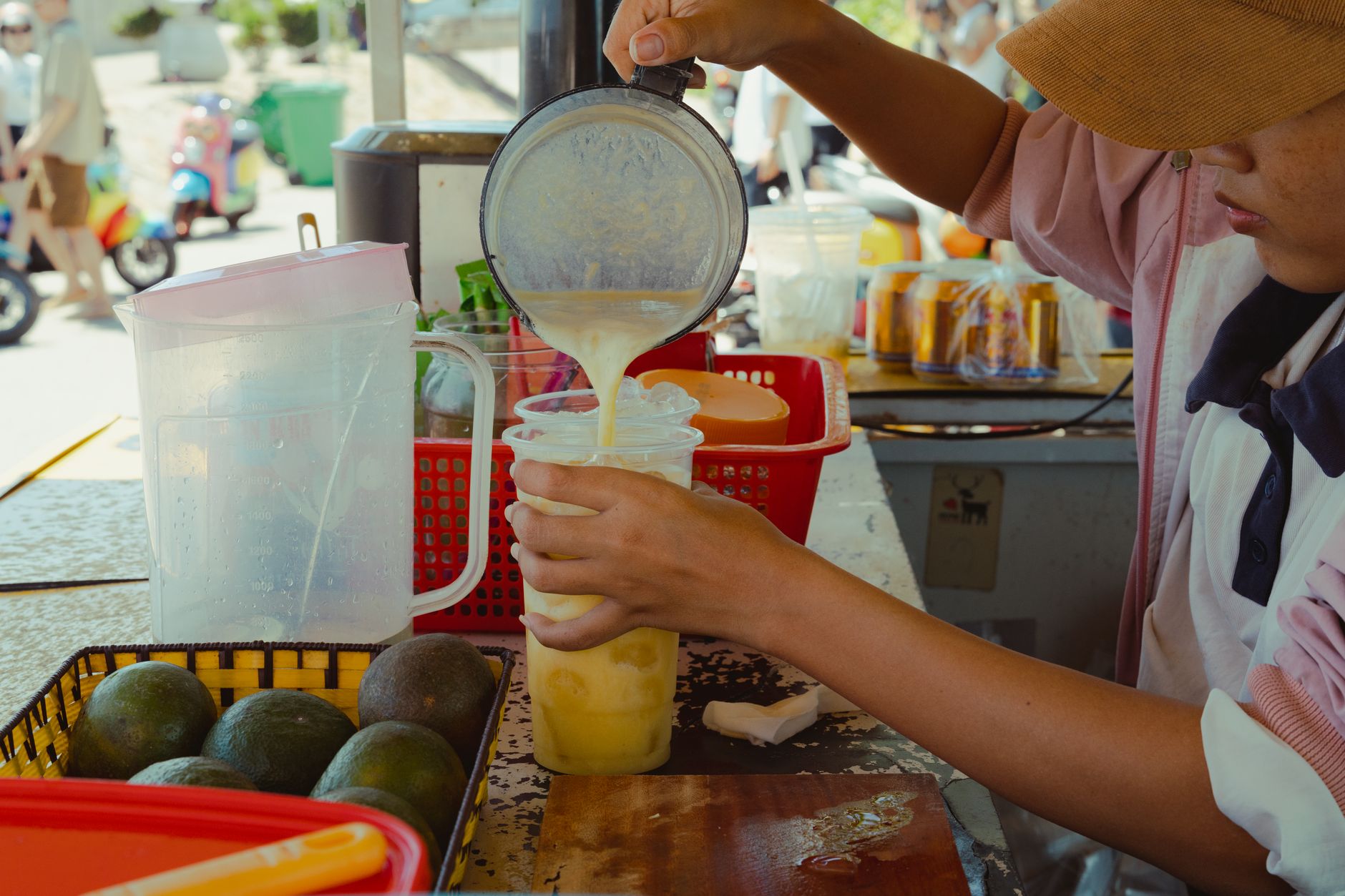
The coffee culture here is quieter than Da Lat or Hanoi but solid. Pleiku sits within the Gia Lai coffee belt — this province produces a significant share of Vietnam's robusta crop — and the local "ca phe sua da" (iced coffee with condensed milk) is thick and slightly bitter in the way robusta-forward blends are. Small family-run cafes on Nguyen Van Troi Street do it well for 20,000–30,000 VND a glass. You're not getting latte art or specialty pour-overs; you're getting honest, strong coffee in a plastic cup, and that's the point.

Photo by Nimit N on Pexels
Getting Here
Pleiku is about 200km north of Buon Ma Thuot, and Kontum sits 50km north of Pleiku — both on or near Highway 14 Road). Buses connect Pleiku to Da Nang (roughly 8–9 hours) and to Quy Nhon on the coast (about 4 hours). Flights from Hanoi and Saigon serve Pleiku's airport directly. Most travelers come through by motorbike on the Ho Chi Minh Road — which remains one of the better ways to string these highland towns together into a coherent trip.
Practical Notes
Most places in Pleiku and Kontum are cash only; bring VND before you arrive. English menus are essentially nonexistent — point, smile, and accept what comes. The best eating happens between 6–10am kho) and 5–9pm (evening grills and quan nhau), with a significant lull midday.
Last updated · May 29, 2026 · independently researched, never sponsored.