What It Is
On a 38-degree afternoon in Saigon, "sam bo luong" is one of the more sensible things you can put in your body. It's a cold herbal sweet soup — somewhere between a drink and a dessert — rooted in Cantonese tong sui tradition and long since absorbed into Saigon's street-food fabric, particularly in Cholon, the city's dense Hoa (ethnic Chinese) district.
The name comes from Cantonese: sam (three), bo (tonic/nourishing), luong (cooling). The idea is a blend of ingredients chosen not just for flavor but for their cooling, heat-clearing properties according to traditional Chinese medicine. Whether you buy into the tonic logic or not, it works as a drink — clean, lightly sweet, slightly earthy, nothing cloying.
The Ingredients
There's no single fixed recipe, but a serious bowl will typically include most of the following:
- Trai lo han (monk fruit) — the base of the broth, giving a clean, low-sugar sweetness
- Hat sen (lotus seeds) — soft, starchy, slightly bitter
- Che troi nuoc (glutinous rice balls) — chewy, sometimes filled with mung bean paste
- Nhan nhat (dried longan) — small, dark, intensely sweet
- Duong quy (Chinese angelica root) — earthy, medicinal note
- Bach hop (lily bulb) — delicate, slightly crunchy when fresh
- Khat cang (snow fungus / white wood ear) — gelatinous, neutral in flavor, slippery in the best way
- Bot bang (water chestnut starch jelly) — cubed, translucent, cooling
- Hat y di (Job's tears / coix seed) — chewy, grain-like, mildly nutty
- Tao do (red dates / jujubes) — sweet, faintly floral
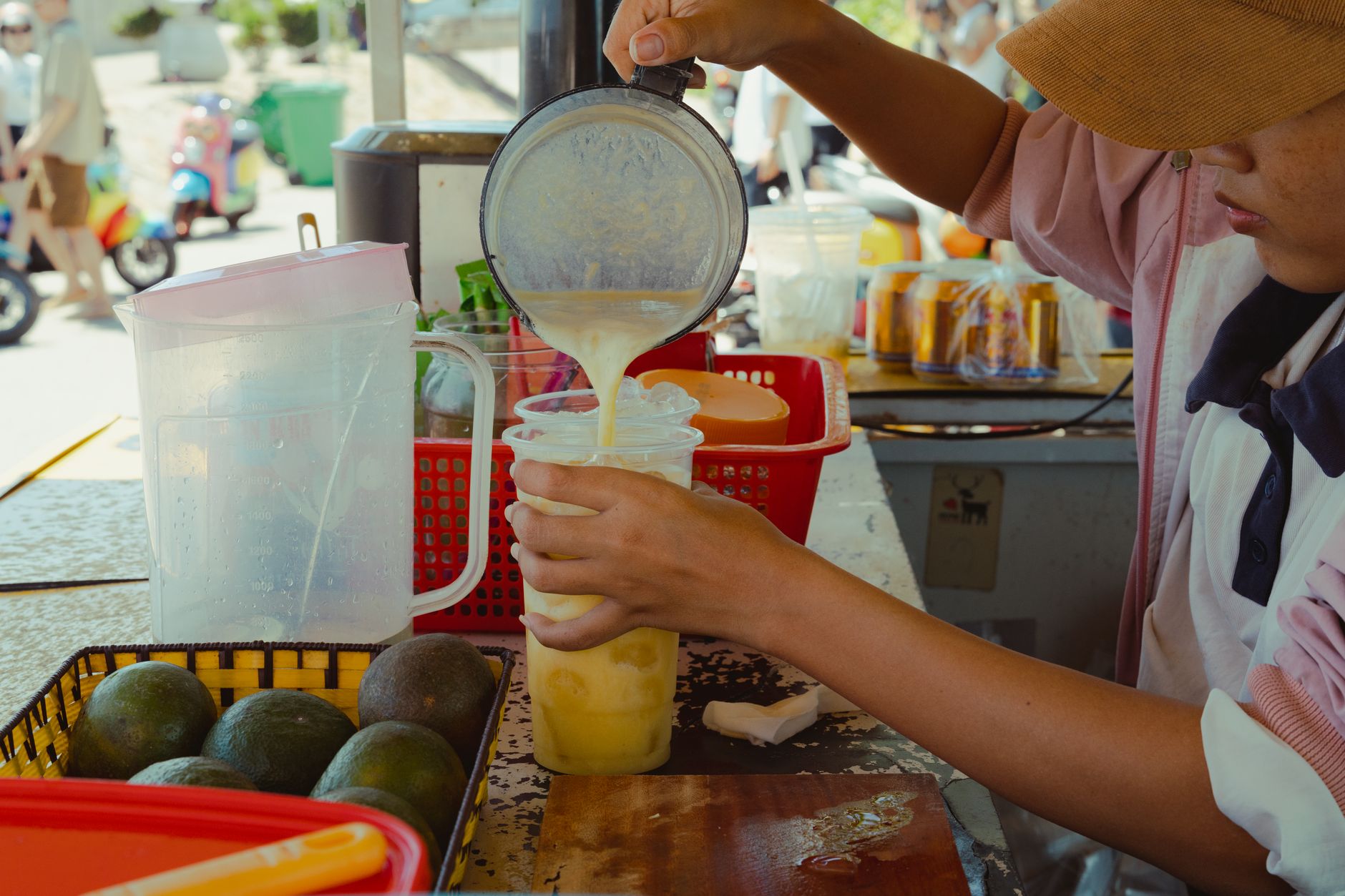
Most vendors serve it over crushed ice. The broth is usually monk-fruit-sweetened and very lightly flavored — it carries the ingredients without dominating them. The texture is the point: you're eating and drinking at the same time, getting a different combination of soft, chewy, and gelatinous in every spoonful.
Some stalls add pandan-infused jelly cubes (green, cut into small squares) or grass jelly (suong sao) for an additional cooling element. A few places serve it warm in cooler months, though in Saigon (사이공 / 西贡 / サイゴン) that's a narrow window.

Photo by Duy's House of Photo on Pexels
Where to Find It in Saigon
Cholon (Districts 5 and 6)
This is the home ground. Walk along Trieu Quang Phuc, Nguyen Trai, or Luong Nhu Hoc streets in District 5 and you'll pass multiple shops selling sam bo luong alongside other tong sui like "che" varieties and sweet bean soups. Prices here run 15,000–25,000 VND for a full bowl with ice — the same size dessert in District 1 can cost 35,000–50,000 VND at a sit-down Chinese dessert shop.
Look for small storefronts with large glass display cases showing individual ingredient jars — that's a good sign the shop mixes to order rather than ladling from a single pre-made pot. Shops near Cha Tam Church and along the stretch leading toward Binh Tay Market tend to be the most established.
District 1 and Elsewhere
Sam bo luong has spread well beyond Cholon. You'll find it at che stalls throughout the city — often listed on handwritten menus alongside "che ba mau" and "che dau xanh." Pham Ngu Lao-area dessert stalls sometimes stock it for around 30,000–40,000 VND, though ingredient variety may be thinner than what you'd get in Cholon.
Ben Thanh Market's surrounding street stalls occasionally have it, but quality is inconsistent. The indoor hawker section is a better bet than the tourist-facing perimeter.
How to Order
Walk up and ask for "mot sam bo luong da" (one sam bo luong with ice). If you want to specify toppings, point at the display case — most vendors are happy to add or skip ingredients. Sugar level is generally not customizable the way boba tea is; the broth comes pre-sweetened, though you can ask for "it duong" (less sweet) at shops that make it fresh.
It's eaten with a spoon and sipped from the bowl. There's no wrong way to approach it.

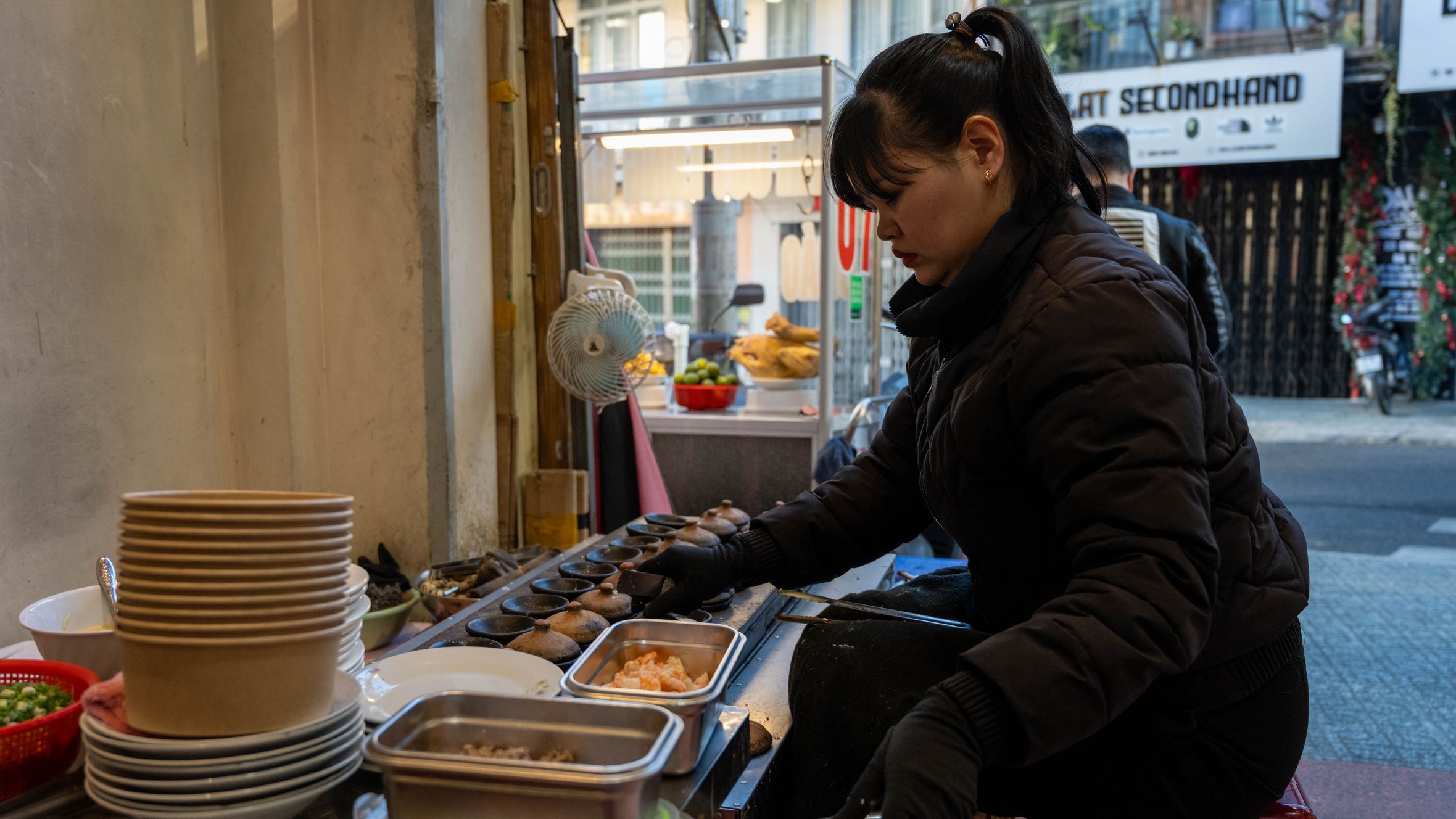
Photo by Quang Nguyen Vinh on Pexels
How It Fits into Saigon's Dessert Culture
Sam bo luong sits in a broader category of Vietnamese sweet soups sold at "che" stalls across the south — though it's distinctly Hoa in origin, not Viet. If you've already worked your way through Saigon's coffee scene ("ca phe sua da" on every corner, "egg coffee" as a northern curiosity that's migrated south), sam bo luong is the dessert equivalent of discovering a parallel culinary tradition running alongside the mainstream.
The Hoa community has shaped Saigon's food culture in ways that often go unacknowledged — not just in sam bo luong but in "hu tieu" (the pork-and-noodle soup common in the south), roast meats, and bakery goods throughout Cholon. Sam bo luong is one of the more direct windows into that heritage, unchanged enough that it still tastes like something you'd find in a Hong Kong tong sui shop.
Practical Notes
Cholon is about 4 km from the backpacker area around Pham Ngu Lao — a 15-minute Grab ride or a longer walk through Districts 1 and 5. Go in the afternoon when stalls are fully stocked and the heat makes the cold version genuinely necessary. Most shops close by 9–10 pm.
Last updated · May 26, 2026 · independently researched, never sponsored.