Ca Mau province sits at the southern tip of Vietnam, where the land finally gives way to mudflats and mangrove. San Chim Ca Mau — literally "bird garden" — is one of the largest bird sanctuaries in the Mekong Delta (메콩 델타 / 湄公河三角洲 / メコンデルタ), and one of the few places in the south where you can watch thousands of wading birds return to roost at dusk without fighting crowds.
What it is
San Chim Ca Mau is a wetland bird sanctuary spread across roughly 130 hectares of cajuput ("tram") forest and mangrove about 45 km southwest of Ca Mau city center. The sanctuary sits within U Minh Ha National Park territory, though it operates as its own site. Depending on season, the forest hosts anywhere from a few thousand to tens of thousands of birds — mostly storks, herons, cormorants, and egrets, with smaller populations of ibis and several species on Vietnam (베트남 / 越南 / ベトナム)'s Red List.
The area was once part of a much larger cajuput swamp that covered most of the Ca Mau peninsula. Land reclamation and shrimp farming have eaten into that habitat over the decades, which makes remaining patches like this one genuinely important, not just scenic. The sanctuary has been under formal protection since the early 2000s, with wooden walkways and observation towers added to handle visitors without disturbing nesting sites.
Why travelers go
Most people who make the trip down here are either birders or travelers working their way through the deep Mekong Delta beyond the usual Can Tho circuit. San Chim Ca Mau offers something different from the floating markets and fruit orchards that dominate delta tourism — it's quiet, wild, and rewards patience. Watching columns of storks spiral down into the canopy at sunset is genuinely impressive, and the cajuput forest itself has a strange, silvery beauty that photographs well.
It also pairs naturally with a visit to Dat Mui (Cape Ca Mau), the southernmost point of mainland Vietnam, which is about 50 km further south. Many travelers combine the two in a single day trip or overnight.
Best time to visit
The bird population peaks during nesting season, roughly from May through October, which overlaps with the wet season. July and August tend to have the highest concentrations. The rain actually works in your favor here — water levels rise, fish and crustaceans move into the flooded forest, and the birds follow.
Dry season (December–April) is more comfortable weather-wise but you'll see fewer birds. Early morning (before 7 AM) and late afternoon (after 4 PM) are the best windows regardless of month — midday heat sends the birds out foraging and you'll be staring at empty branches.
How to get there
Ca Mau city is the nearest hub. From Saigon, you have a few options:
- Bus: Phuong Trang (FUTA) and Thanh Buoi run daily services from Saigon's Mien Tay bus station to Ca Mau. The ride is about 8–9 hours and costs 200,000–280,000 VND depending on the operator and seat type. Overnight sleeper buses are available.
- Flight: Vietnam Airlines and Bamboo Airways operate flights from Tan Son Nhat to Ca Mau airport (CAH). Flight time is about 1 hour 15 minutes, tickets usually 800,000–1,500,000 VND if booked ahead. The airport is small and 5 km from the city center — grab taxis wait outside.
- From Can Tho: If you're already in the delta, buses from Can Tho to Ca Mau take about 3.5–4 hours, around 130,000–160,000 VND.
From Ca Mau city to San Chim, you'll need to arrange a motorbike (rent one for about 150,000 VND/day in town) or hire a car with driver through your hotel. The road is paved but narrow in places. Budget 60–75 minutes each way. Some guesthouses in Ca Mau can arrange a combined day trip to the bird sanctuary and Dat Mui for 500,000–800,000 VND per person including transport and a boat ride.

Photo by Vũ Adventures on Pexels
What to do
Walk the boardwalk at dusk
The sanctuary has a network of raised wooden walkways threading through the cajuput forest. Time your visit so you're on the observation tower by 5 PM — this is when flocks start returning. Bring binoculars if you have them. The main tower is about 15 meters high and gives a canopy-level view.
Take a boat through the flooded forest
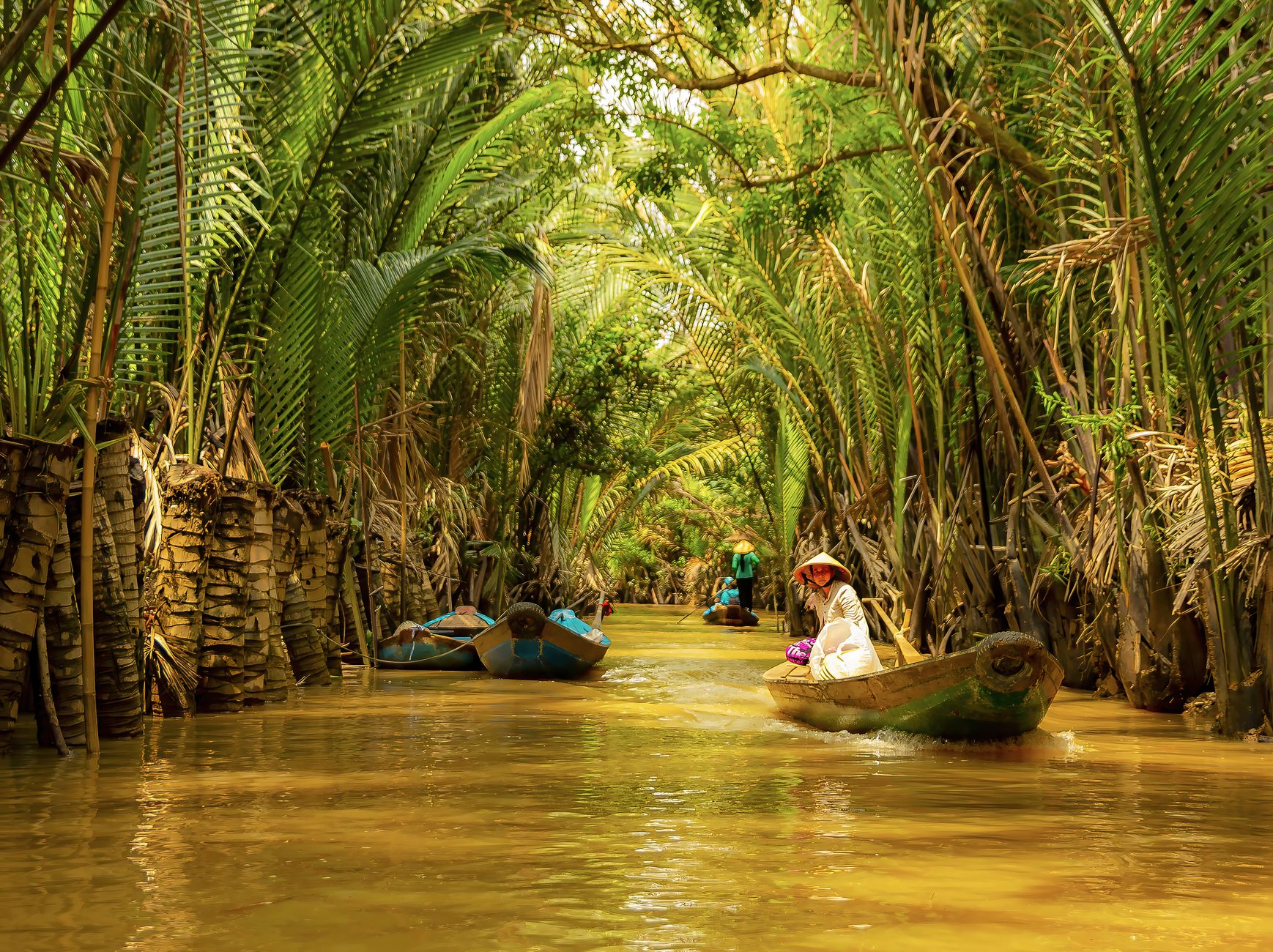
During wet season, small wooden boats ("xuong") can navigate the channels beneath the canopy. A 30–45 minute boat ride costs around 100,000–150,000 VND per person. The boatmen paddle rather than motor, which keeps things quiet enough that birds don't scatter. This is the best way to see nesting sites up close.
Photograph the cajuput forest
Even if birds aren't your thing, the cajuput trees themselves — pale, papery bark reflected in dark water — make for strong photos. Morning light filtered through the canopy is particularly good. Bring a lens longer than 100mm if you want usable bird shots.
Visit the fish ponds
Around the sanctuary's edges, local families run small aquaculture ponds. Some welcome visitors and will show you how they raise "ca loc" (snakehead fish) and freshwater shrimp. It's informal — just ask your driver or guide to stop.
Combine with Dat Mui
Cape Ca Mau — the GPS-certified southernmost point of mainland Vietnam — is reachable by boat from the Dat Mui pier, about 50 km south. The boat ride through mangrove channels takes roughly 30 minutes. There's a concrete marker, a small museum, and not much else, but the mangrove scenery along the way is worth the detour.
Where to eat nearby
Ca Mau province is famous for two things: mud crabs and shrimp. Look for "lau cua" (crab hotpot) at local restaurants along the road between Ca Mau city and the sanctuary — it's rich, slightly sweet, and nothing like crab dishes in the north. "Banh tam bi" — thick tapioca noodles with coconut cream and pork — is a southern Mekong specialty worth seeking out at market stalls in Ca Mau's central market.
For a sit-down meal, Quan Hai San Thanh Dat on Ly Thuong Kiet street in Ca Mau city does solid crab and grilled shrimp at reasonable prices — expect 150,000–300,000 VND per person for a full spread.
Where to stay
Ca Mau city has a decent range of hotels. Budget guesthouses ("nha nghi") run 200,000–350,000 VND per night. Mid-range hotels like Muong Thanh Ca Mau or Anh Nguyet Hotel sit around 500,000–900,000 VND. There's no accommodation at the sanctuary itself, so plan to base yourself in town.

Photo by Flint Huynh on Pexels
Practical tips locals would tell you
- Mosquitoes are serious here. Bring repellent with high DEET concentration, especially if visiting during wet season. Long sleeves and pants aren't optional.
- Wear shoes that can get wet. The boardwalks are generally dry but boats aren't, and the mud around the sanctuary entrance can be ankle-deep after rain.
- Bring cash. There are no ATMs near the sanctuary. Load up in Ca Mau city before heading out.
- Hire a local guide if you're interested in bird identification — the sanctuary office sometimes has guides available for 200,000–300,000 VND, but calling ahead helps. Your hotel can usually arrange this.
Common mistakes to avoid
Arriving at midday and wondering where all the birds went — this is the single most common complaint. Plan around dawn or dusk. Also, don't expect manicured boardwalks and gift shops — this is a working conservation site in a remote part of the delta, not a theme park. That rawness is exactly the appeal, but it means facilities are basic and signage is minimal.
Finally, don't skip the boat ride to save money. Walking the boardwalk alone gives you maybe 40% of the experience. The flooded forest from water level is where this place really clicks.
Practical notes
Entrance fee is currently 30,000 VND per person. The sanctuary is open daily, roughly 6 AM to 6 PM, though hours can be informal. If you're working through the deep Mekong Delta — Can Tho, Soc Trang, Ca Mau — this is a worthy stop that most travelers skip simply because they don't know it exists.
Last updated · May 29, 2026 · independently researched, never sponsored.