What it is
Ke Ga Lighthouse ("Hai dang Ke Ga") stands on a small rocky island about 500 meters off the coast, roughly 30 km south of Phan Thiet. Built by the French in 1899, it's the oldest functioning lighthouse in Vietnam (베트남 / 越南 / ベトナム) and one of the tallest in Southeast Asia at just over 35 meters. The structure is granite — shipped from France — and the original Fresnel lens still sits at the top. It took workers about two years to finish, and it's been guiding ships along this stretch of coast ever since.
The island itself is called Hon Ba, a chunk of weathered granite covered in scrubby vegetation. At low tide, you can walk across the sandbar connecting it to the mainland. At high tide, you'll need a boat.
Why travelers go
Ke Ga doesn't draw the crowds that Mui Ne (무이네 / 美奈 / ムイネー) does, and that's part of the appeal. People come here for the raw coastal scenery — big granite boulders, clear shallow water, and a lighthouse you can actually climb. It's not a beach-party destination. It's the kind of place where you spend a morning scrambling over rocks, climbing narrow spiral stairs for a panoramic view, and eating seafood at a plastic table afterward.
Photographers show up at sunrise when the light hits the granite and the island looks properly dramatic. History-minded travelers appreciate the French colonial engineering. Everyone else just wants a quiet stretch of coast that isn't wall-to-wall resort development.
Best time to visit
The dry season runs from November through April. January to March is ideal — low humidity, calm seas, and consistent sunshine. The sandbar is most reliably exposed during these months, making the walk across to the island straightforward.
Avoid September and October if you can. The monsoon brings rough seas, the boat operators sometimes refuse to run, and the sandbar disappears entirely. June through August is hit-or-miss — fine on calm days, but you might get rained out.
Early morning (before 8 AM) is the best window regardless of season. You avoid the midday heat, catch better light, and have the lighthouse mostly to yourself.
How to get there
The nearest major hub is Phan Thiet, about 30 km to the northeast.
From Phan Thiet: Rent a motorbike (150,000–200,000 VND/day) and ride south along the coastal road (DT719). The ride takes about 40 minutes and passes through fishing villages and dragon fruit plantations. It's flat, easy riding.
From Mui Ne: About 50 km southwest. Same coastal road, roughly 1 hour by motorbike. A taxi (Grab or local) runs around 350,000–450,000 VND one way.
From Saigon: Take a bus from Mien Dong station to Phan Thiet (4–5 hours, 150,000–200,000 VND), then arrange local transport. Some travelers combine Ke Ga with a longer Mui Ne trip.
Once at the coast, you'll park near the fishing hamlet of Ke Ga. If the tide is low, walk across the sandbar (free, about 10 minutes). If the tide is up, hire a round-trip boat from local fishermen — expect to pay 50,000–80,000 VND per person.

Photo by tran duy anh on Pexels
What to do
Climb the lighthouse
The main event. Entry is 20,000 VND. You'll climb a narrow spiral staircase — 183 steps — to a wraparound balcony at the top. The view covers the coastline in both directions, fishing boats scattered across the water, and the granite boulders below. The staircase is tight, so go early before it gets crowded and hot inside.
Walk the sandbar at low tide
Timing matters here. Check tide tables (ask your hotel or look online the night before). When the bar is exposed, it's a surreal walk — shallow turquoise water on both sides, sand underfoot, the lighthouse growing larger ahead. Bring waterproof sandals; some sections stay ankle-deep.
Scramble the boulders on Hon Ba
The island is covered in massive rounded granite formations. There's no marked trail, but you can spend 30–45 minutes exploring the rocks on the seaward side. Some have been carved into shapes by centuries of wind and salt. Watch your footing — the rock gets slippery near the waterline.
Photograph the fishing fleet
The mainland side of Ke Ga is a working fishing village. Colorful "thung chai" (round basket boats) line the beach. Early morning is when fishermen return with their catch — good for photos and for buying fresh seafood if you know where to take it.
Swim off the mainland beach
The beach on the mainland side (Thuan Quy area) is long, uncrowded, and swimmable most of the dry season. No lounge chairs, no vendors — just sand and water. Bring your own shade.
Where to eat nearby
The hamlet near the lighthouse parking area has a few seafood shacks. Order whatever came in that morning — grilled squid, steamed clams, or fish hot pot are reliable choices. A full seafood spread for two runs 200,000–400,000 VND.
If you're heading back toward Phan Thiet, stop for "banh canh" — thick tapioca noodle soup with crab or fish. Phan Thiet does this dish well, and a bowl costs 35,000–50,000 VND at local shops along the main road. "Banh xeo" (crispy stuffed pancakes) also shows up at roadside stalls in the area — look for the ones with shrimp and bean sprouts.
Where to stay
Ke Ga itself has limited accommodation — a few small guesthouses and one or two mid-range resorts have opened in recent years.
- Budget: Local guesthouses near Thuan Quy beach, 300,000–500,000 VND/night. Basic but clean, usually with a fan and hot water.
- Mid-range: Smaller resorts along the coast road, 800,000–1,500,000 VND/night. Pool, breakfast included, ocean-facing rooms.
- Alternative: Stay in Phan Thiet or Mui Ne and visit Ke Ga as a half-day trip. More dining and nightlife options, easy ride back.
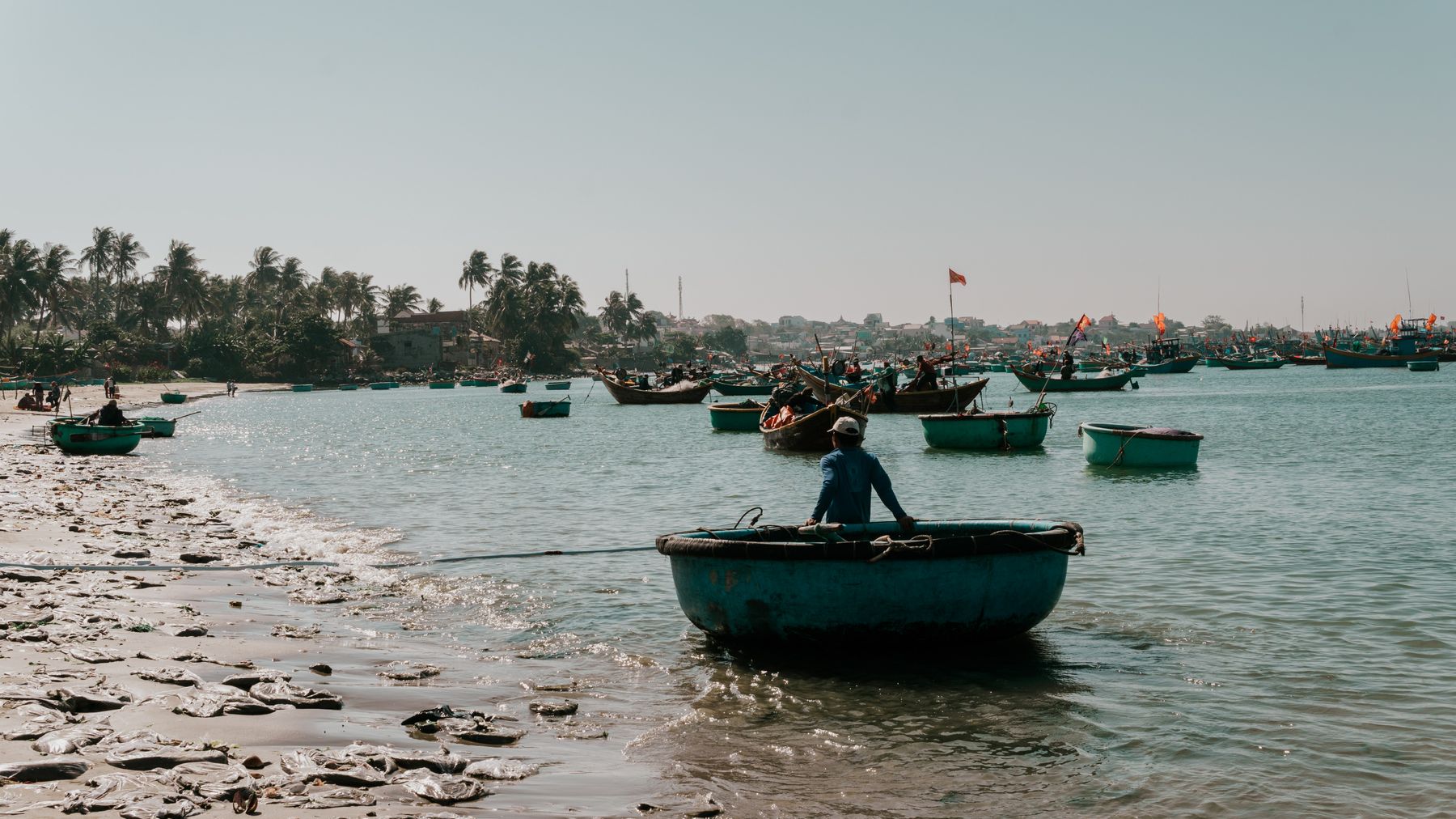
Photo by Long Bà Mùi on Pexels
Practical tips locals would tell you
- Check the tide before you go. The sandbar walk is the highlight for most visitors, and you can only do it at low tide. Mornings in the dry season usually cooperate.
- Bring cash. There's no ATM at Ke Ga. The nearest is in La Gi town, about 15 km away.
- Wear real shoes for the lighthouse. The stairs are narrow and steep. Flip-flops are a bad idea.
- Sunscreen and water. There's almost no shade on the island or the sandbar. The granite radiates heat.
- Don't rely on phone signal. Coverage is patchy on the island itself.
Common mistakes to avoid
- Arriving at high tide without checking, then paying for an overpriced boat because you didn't plan.
- Showing up at midday — the lighthouse interior becomes an oven, and the light is flat for photos.
- Expecting a developed tourist site with cafes and ticket booths. This is still low-key. Bring what you need.
- Trying to visit during a storm day in monsoon season. The boat won't run, the sandbar is gone, and you'll have wasted the trip from Phan Thiet.
Practical notes
Ke Ga works best as a morning trip — arrive by 7 AM, climb, explore, eat seafood, and head out by noon. Combine it with a wider trip along the coast between Mui Ne and La Gi if you have time. It's one of the few French-colonial structures in southern Vietnam that you can still walk inside and climb to the top.
Last updated · Aug 11, 2026 · independently researched, never sponsored.