What it is
Thap co Vinh Hung is a brick tower dating back to somewhere between the 7th and 12th centuries, depending on which archaeologist you ask. It sits in Vinh Hung commune, Vinh Loi district — historically part of Bac Lieu province, now falling under the broader Ca Mau administrative area. The tower is the only surviving piece of ancient Khmer architecture in the lower Mekong Delta (메콩 델타 / 湄公河三角洲 / メコンデルタ), which alone makes it worth the detour if you're already moving through the south.
The structure is modest — about 4 meters high, partially restored, built from laterite and brick in a style consistent with Oc Eo culture and later Khmer-Hindu religious traditions. Archaeologists have pulled Shiva lingas, statuary fragments, and ceramic pieces from the site. It was declared a national historical relic in 1992. You won't find crowds here. Most days, it's just you, a caretaker, and the surrounding rice paddies.
Why travelers go
This isn't a place you visit for spectacle. You go because it's one of the rare physical links between the modern Mekong Delta and the ancient civilizations that preceded it — centuries before the Viet people settled this far south. If you've been to Po Nagar in Nha Trang (냐짱 / 芽庄 / ニャチャン) or My Son near Hoi An and wondered whether similar sites exist in the deep south, this is your answer. It's smaller and less restored, but the isolation gives it a different quality. There's no ticket booth circus, no tour bus parking lot. Just a quiet field and a very old building.
For photographers, the tower against flat delta farmland at golden hour is genuinely good. And if you're traveling overland from Can Tho or Ca Mau city, it slots in without much schedule disruption.
Best time to visit
The dry season — December through April — is the practical window. The Mekong Delta floods during the wet months (roughly June to November), and the roads to Vinh Hung commune can get soggy. January and February overlap with Tet season, so expect higher prices on accommodation in Bac Lieu and Ca Mau city, but the weather is excellent: dry, relatively cool by southern standards (28-31°C), low humidity.
March and April are hotter (33-35°C) but still dry. If you're combining this with a wider Mekong Delta loop — say, starting from Can Tho — December through February hits the sweet spot.
How to get there
The nearest major hub is Ca Mau city, about 60 km to the southwest. From Saigon, you have two main options:
Bus from Saigon
Catch a sleeper bus from Mien Tay bus station in Saigon to Ca Mau city. The ride takes 7-8 hours and costs 200,000-280,000 VND depending on the operator. Phuong Trang (FUTA) runs the most frequent departures. From Ca Mau city, hire a local xe om (motorbike taxi) or rent a motorbike to cover the 60 km northeast to Vinh Hung. Expect to pay around 150,000-200,000 VND one-way for a xe om, or 120,000-150,000 VND per day for a rental bike.
From Can Tho
If you're already in Can Tho — which most Mekong Delta travelers pass through — it's about 180 km by road. Buses run to Bac Lieu city (3-3.5 hours, around 120,000 VND), which is actually closer to the tower than Ca Mau city is. From Bac Lieu city center, Thap co Vinh Hung is only about 20 km south — a quick motorbike ride.
The tower itself sits just off a local road. Google Maps has it pinned accurately. There's no entrance fee.
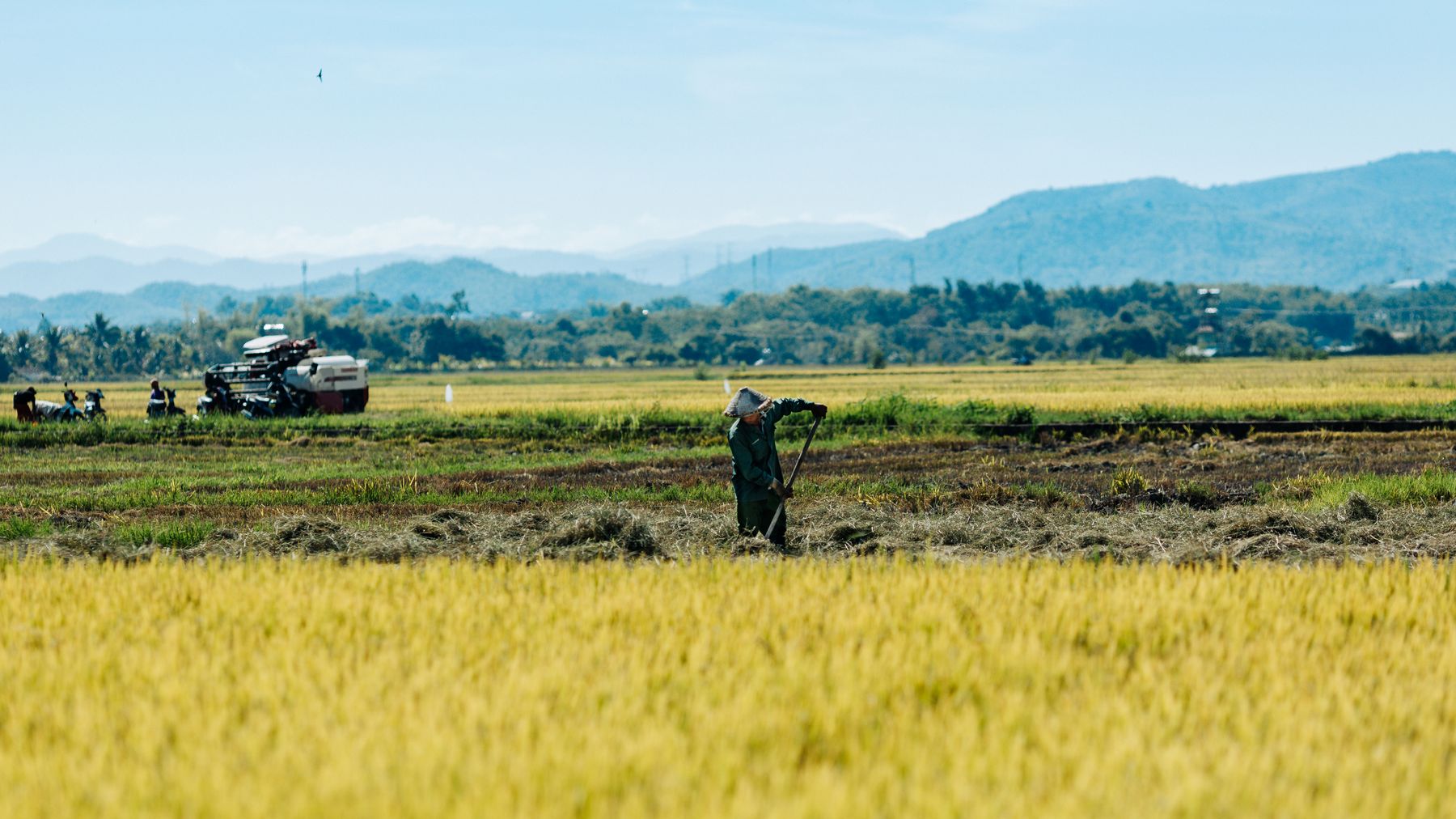
Photo by Thái Trường Giang on Pexels
What to do
Walk the site and read the plaques
The tower compound is small — you'll see everything in 30-45 minutes. The information panels (in Vietnamese, with some English) cover the excavation history and the Oc Eo connection. The brick construction technique is worth examining up close: no mortar, just precision-cut bricks fitted together, similar to Cham towers further north.
Check the small exhibition room
Adjacent to the tower, there's a modest display of artifacts recovered during excavations — ceramic fragments, stone tools, pieces of Hindu statuary. It's not a major museum, but it contextualizes what you're looking at.
Photograph the tower at dawn or late afternoon
The flat delta landscape means unobstructed light. Late afternoon, roughly 4:30-5:30 PM in dry season, gives you warm side-light on the brick. Morning mist in December and January can also produce moody shots.
Cycle the surrounding countryside
If you have a bicycle or motorbike, the roads around Vinh Hung commune are dead flat and pass through rice paddies, shrimp ponds, and small Khmer communities. It's the deep delta — unhurried, no tourist infrastructure, and genuinely rural in a way that the more popular Can Tho floating markets are not.
Combine with Bac Lieu city
Bac Lieu city is 20 km north and has its own draw: the Bac Lieu Prince's House (a French-colonial mansion) and the Bac Lieu Bird Sanctuary. You can see the tower and Bac Lieu city in a single day without rushing.
Where to eat nearby
Vinh Hung commune itself has very limited food options — a few local com tam (broken rice) stalls and basic rice-and-dish spots. For anything more interesting, head to Bac Lieu city.
Bac Lieu is known for "bun bo Cay Bang" — a local riff on rice noodle soup with beef, served at a cluster of stalls near the old banyan tree intersection downtown. A bowl runs 35,000-45,000 VND. The city also does good "banh xeo" — the southern style with generous bean sprouts and shrimp, usually 20,000-30,000 VND per pancake.
If you push back to Ca Mau city for dinner, look for "lau mam" — a pungent fermented fish hotpot that's a Mekong Delta staple. It's not subtle, but it's the real local food of this region. Expect 150,000-250,000 VND for a pot that feeds two.
Where to stay
Thap co Vinh Hung has no accommodation. Your options:
- Bac Lieu city (20 km): Budget guesthouses from 200,000-350,000 VND/night. Mid-range hotels with air-con and decent beds for 400,000-700,000 VND. The Cong Tu Bac Lieu hotel near the Prince's House is a reasonable pick.
- Ca Mau city (60 km): Wider selection. Budget rooms from 250,000 VND, mid-range 500,000-900,000 VND. Muong Thanh is the familiar chain option if you want predictable quality.
Bac Lieu makes more sense as a base — it's closer, and the city itself has enough for an evening stroll.

Photo by Vietnam Hidden Light on Pexels
Practical tips locals would tell you
- Bring water and sun protection. There's no shade at the tower site and no shop within easy walking distance.
- Dress modestly — it's a former religious site. No one will enforce a dress code, but long pants and covered shoulders are respectful.
- If you're renting a motorbike, fill up in Bac Lieu or Ca Mau city. Fuel stops get sparse on the rural roads to Vinh Hung.
- Vietnamese coffee from a roadside stall in Bac Lieu is 15,000-20,000 VND and reliably strong. Fuel up before the ride out.
Common mistakes to avoid
- Expecting a major site: This is not My Son or Po Nagar. If you arrive expecting a grand temple complex, you'll be disappointed. Calibrate your expectations — it's a small, quiet archaeological site.
- Not combining it with Bac Lieu: Going to Vinh Hung and straight back to Ca Mau wastes a day. Loop through Bac Lieu city and make it a full half-day circuit.
- Visiting in heavy rain season: The roads are passable but unpleasant in October and November. The site itself can be muddy. Dry season is significantly better.
Practical notes
Thap co Vinh Hung won't be the highlight of a Vietnam trip, and it's not trying to be. It's a quiet, specific stop for travelers interested in the deep south's layered history — a reminder that this part of the Mekong Delta was connected to Khmer and Hindu civilizations long before the modern delta took shape. If you're already doing a Ca Mau or Bac Lieu loop, it adds genuine depth to the itinerary without costing you much time or money.
Last updated · May 29, 2026 · independently researched, never sponsored.