
Sapa is better known for rice terraces and trekking boots than dessert, but the town's sweet food scene is worth a deliberate detour — especially on a cold evening when the clouds roll in off Hoang Lien Son. This is a loose five-stop route you can do in an afternoon and evening, mostly on foot around the central market and Cau May street.
Stop 1 — Che at the Night Market Stalls
Start at the Sapa (사파 / 沙坝 / サパ) night market on the lower end of town, open from around 5 p.m. The stalls along the covered walkway near Ham Rong street sell "che" — Vietnamese sweet soup — in a dozen variations. The one worth ordering here is che dau do, red bean with coconut milk and crushed ice, around 15,000–20,000 VND a cup. On colder nights, ask for the warm version; the vendors keep a pot going on a gas burner and will ladle it into a plastic bowl without blinking.
If you're new to che, it helps to know what you're looking at before pointing. The green-tinged bowls are usually che la dua (pandan and mung bean), the cloudy white ones are che dau trang (white bean with ginger syrup), and anything with a purple taro chunk floating in it is worth trying if you see it.
Stop 2 — Banh Day and Sticky Rice Cakes at the Central Market
Sapa's central market on Xuan Vien street operates morning to early afternoon, so time this stop for your next morning or plan it before the night market if you're doing the route across two days. Look for the H'mong and Dao vendors selling "banh day" — small, round glutinous rice cakes, dense and slightly sweet, sometimes filled with mung bean paste. They're about 5,000–8,000 VND each.
There's also "banh chung" sold here in the weeks around Tet, the square sticky rice cake wrapped in dong leaves — but outside the new year period you'll more likely find its northern cousin, banh tet, in cylindrical form. Either way, this is the market food that locals actually eat for breakfast, not the translated "traditional cake" on tourist menus.
Stop 3 — Mooncakes Along Cau May Street
In the weeks running up to Tet Trung Thu — the Mid-Autumn Festival — the small provision shops along Cau May street line their windows with mooncake tins. These aren't the mass-produced Kinh Đo boxes from Hanoi supermarkets; several shops stock regional varieties with lotus seed paste, salted egg yolk, or mixed nuts, sourced from local producers or carried up from Lao Cai. Even outside the festival season, a few shops keep mooncakes year-round for ethnic minority buyers who use them for ceremonial gifts.
If you're here at the right time of year, buy one and eat it with tea at the shop — most shopkeepers will oblige. A single mooncake runs 25,000–60,000 VND depending on the filling.
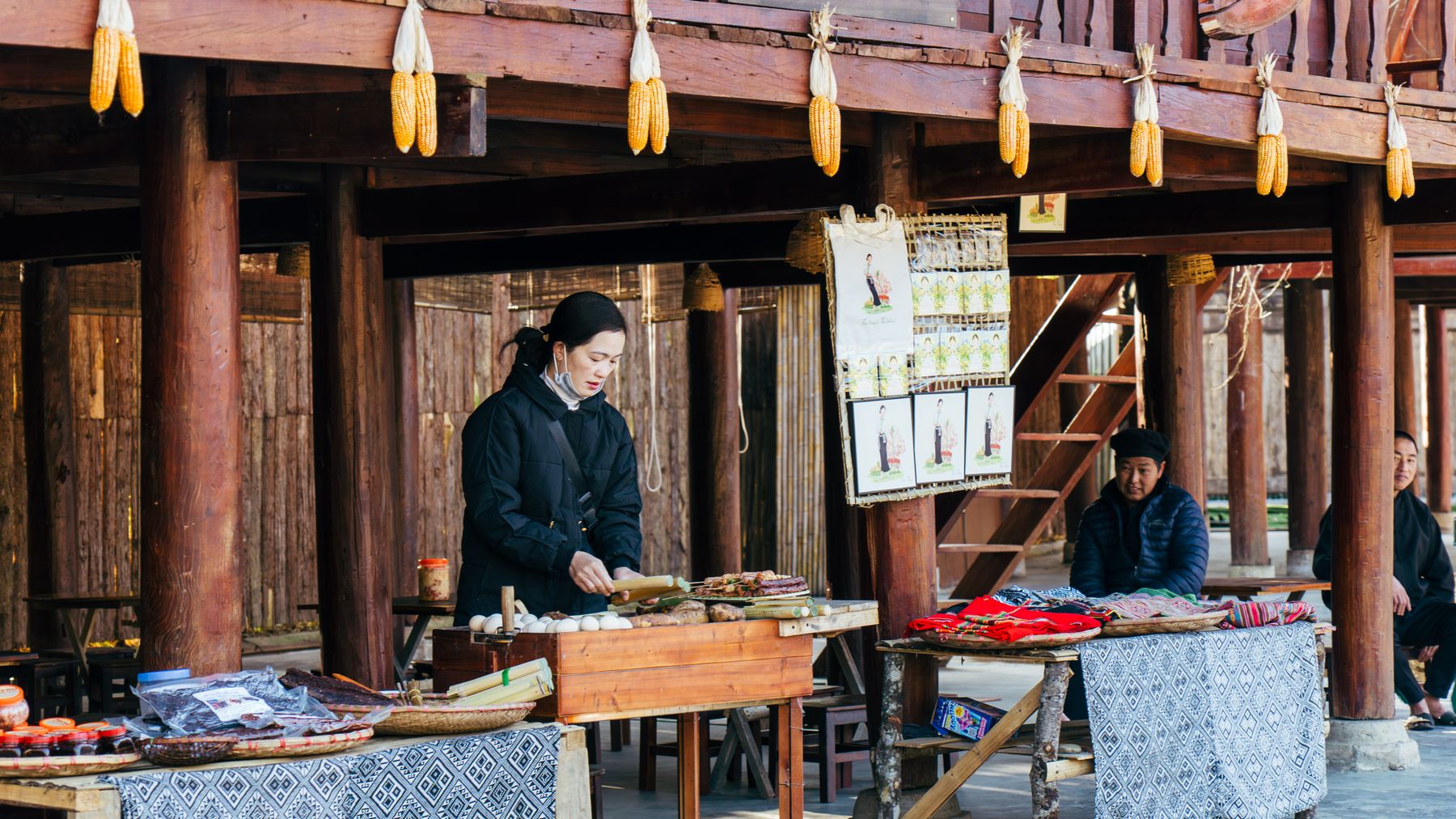
Photo by Gibson Chan on Pexels
Stop 4 — Baguette Ice Cream on Thac Bac Road
This sounds stranger than it is. A cluster of small vendors near the base of Ham Rong mountain and along Thac Bac road sell local-style ice cream — sometimes called "kem tay cam" — on a stick or in a cone, flavored with pandan, taro, or durian. Prices are 10,000–15,000 VND. The taro flavor is consistently good and pairs well with the cold air in a slightly absurd way.
There's one vendor who sometimes operates a cart near the stone church on the main square in the early evening. She's not always there, but if the cart's out, the pandan stick is the pick.
Stop 5 — Modern Dessert Cafe near the Square
For a sit-down finish, several cafes around the central square have added dessert menus in the last few years, catering to Vietnamese domestic tourists from Hanoi (하노이 / 河内 / ハノイ) who come for the weekend. The menus tend to combine Vietnamese coffee culture with soft-serve, fruit yogurt, and che-inspired parfaits. Goc Xua Cafe on a side street off Cau May is one that locals actually use, with a two-floor interior and a che com (green rice sweet soup) that costs about 35,000 VND.
If you want something warm to end on, order "ca phe sua da" or a hot "lotus tea" — the cafes here usually stock both, and lotus tea in particular sits well after a round of sweet soups and sticky rice.

Photo by Nataliya Vaitkevich on Pexels
A Note on Seasonality
Sapa's dessert scene shifts with the cold. From November through February, vendors lean into hot sweet soups and glutinous rice cakes. In warmer months (May to August), ice cream carts multiply and chilled che with shaved ice becomes more common. Mooncakes peak in September–October around Mid-Autumn Festival. If you're visiting in the wet season (June–August), the market vendors set up later in the day to avoid the midday rain, so adjust timing accordingly.
Practical Notes
All five stops are walkable within a roughly 1.5 km radius of the central square. Bring small bills — 10,000 and 20,000 VND notes — since market vendors rarely carry change for 200,000 VND. None of these spots require a reservation or advance planning; just show up and point.
Last updated · May 29, 2026 · independently researched, never sponsored.



