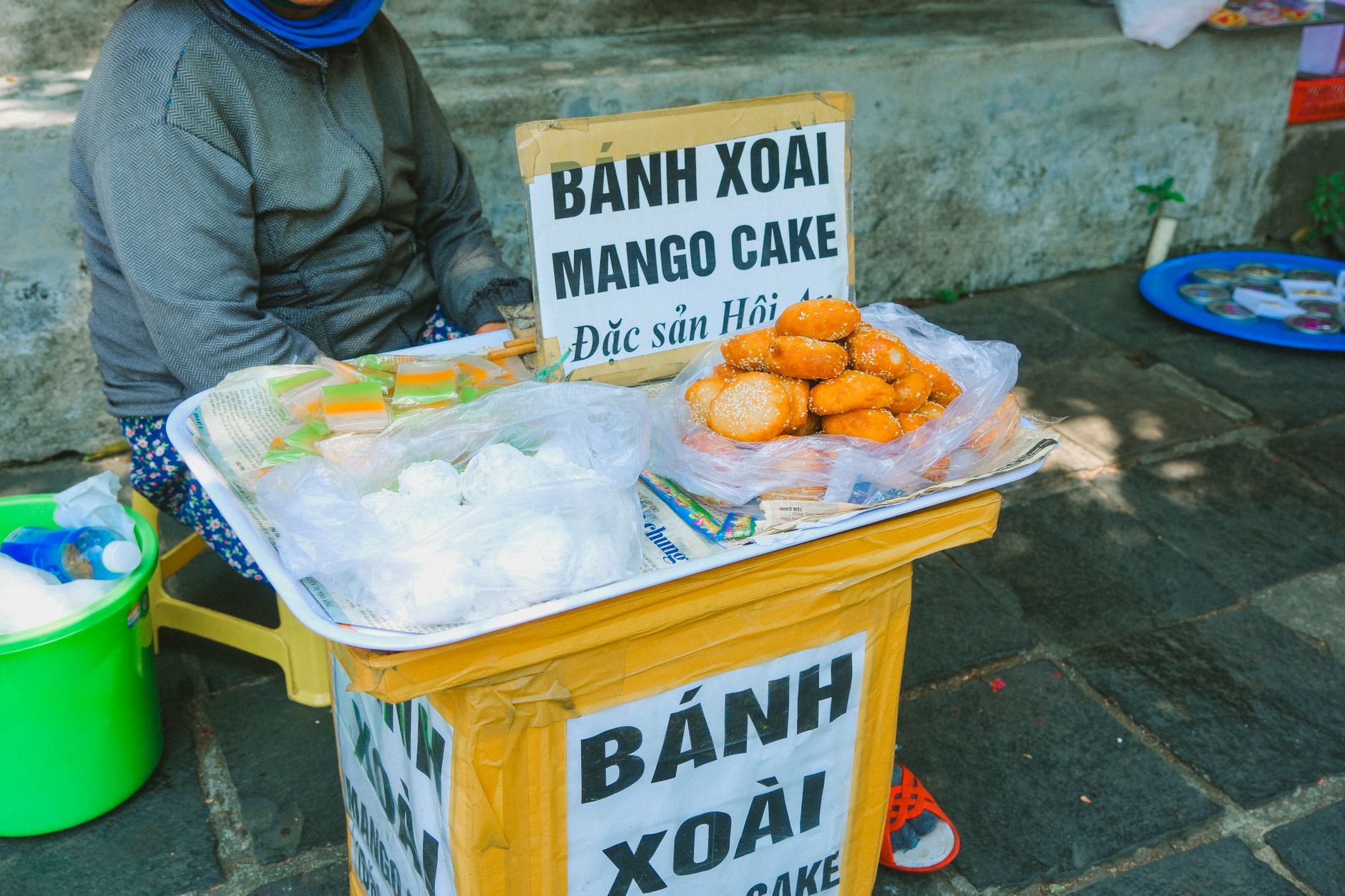
Every year for about six weeks before the Mid-Autumn Festival, Vietnam's bakeries fill with towers of lacquered boxes and the smell of warm egg wash and toasted sesame. "Banh nuong" — the baked mooncake — is the centerpiece of it all, and if you've never bought one from a sidewalk stall at 10pm in late September, you're missing one of the more specific pleasures this country offers.
What Banh Nuong Actually Is
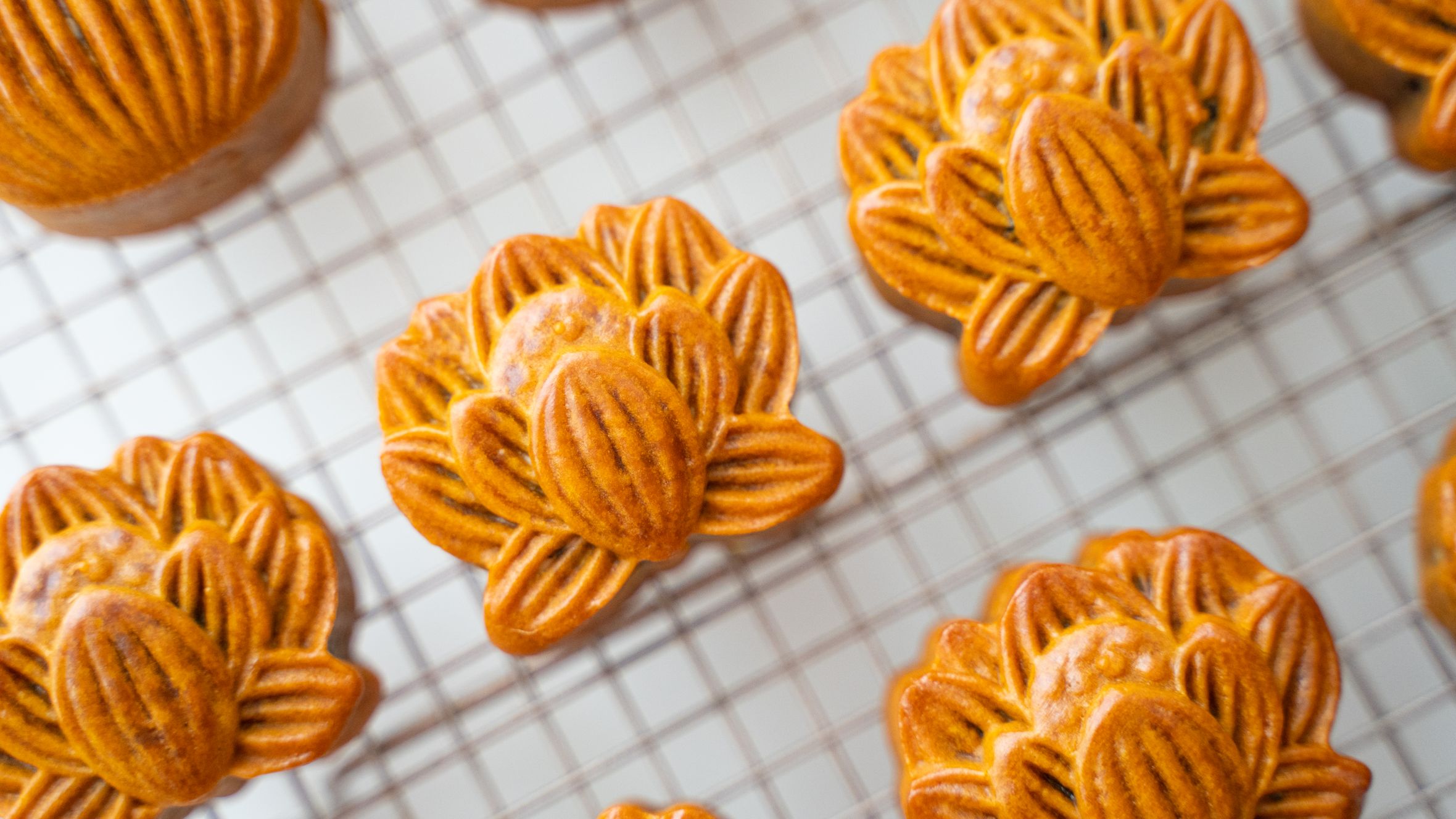
"Banh nuong" literally means baked cake, distinguishing it from its sibling "banh deo", the soft, snow-skin mooncake that requires no oven. Banh nuong has a thin pastry shell — made from flour, golden syrup, and a touch of oil — that bakes to a deep amber finish. The texture is somewhere between shortbread and a soft cookie: slightly chewy on day one, mellowing into something almost fudgy by day three.
Inside is where it gets interesting. The filling is dense, sweet, and rich enough that a single 150g cake is genuinely a shared thing, not a personal snack.
The Core Fillings
Lotus Seed Paste (Nhan Hat Sen)
This is the classical filling and the benchmark against which every other banh nuong is measured. Dried lotus seeds are soaked, cooked until soft, then blended with sugar and oil into a smooth, pale paste. Good lotus paste has a faint earthiness and a clean sweetness — not cloying. Cheap versions use too much oil and taste flat. The best versions come from bakeries that grind the paste in-house rather than buying it pre-made in bulk.
Salted Egg Yolk (Long Do Trung Muoi)
Almost every banh nuong worth ordering has at least one salted duck egg yolk buried in the center. Bite through the pastry and filling and you hit it: a dense, orange-red sphere that's simultaneously salty, fatty, and faintly sulfurous in the best way. Premium cakes have two yolks. Some have four, though at that point the filling-to-yolk ratio tips into gimmick territory.
The yolk should be cooked through but not dry — still slightly jammy when you cut the cake. If it crumbles to chalky dust, the oven temperature was too high or the yolk wasn't fresh.
Mixed Nuts and Seeds (Nhan Thap Cam)
"Thap cam" filling — literally "ten colors" — is the maximalist option: a mixture of lotus paste or mung bean paste studded with candied winter melon, roasted watermelon seeds, sesame, pumpkin seeds, dried tangerine peel, and sometimes Chinese sausage or ham. The result is chewy, aromatic, and considerably more interesting texturally than straight paste fillings. It's also the most old-school variant, associated with Cantonese-influenced recipes that came south through generations of Hoa (ethnic Chinese) communities in Saigon and the Mekong Delta (메콩 델타 / 湄公河三角洲 / メコンデルタ).
Mung Bean Paste (Nhan Dau Xanh)
Split mung bean paste is milder and slightly grainier than lotus, with a more vegetal sweetness. It's often the cheaper option and common in mass-produced supermarket versions. A well-made mung bean banh nuong is not a consolation prize — it's cleaner on the palate and pairs well with strong tea.

Photo by HONG SON on Pexels
How to Read the Label and Order
Banh nuong are sold by weight (typically 150g, 180g, or 250g) and by number of yolks ("1 long do", "2 long do"). If you're buying from a bakery rather than a supermarket, you can often choose your filling and yolk count at the counter.
Prices in 2024 range from around 35,000 VND for a basic supermarket 150g cake to 120,000–200,000 VND for handcrafted versions from specialist bakeries. Imported or designer mooncakes in gift boxes can run 500,000 VND and above per piece, but that price is mostly packaging and brand — the cake inside is rarely proportionally better.
One practical note: banh nuong has a stated shelf life of 7–14 days, but the pastry is best in days 2–4 after baking, when it has had time to "hui you" (return oil) — the process where the fat from the filling migrates into the shell, softening it. If you buy one on the day it was baked, leave it 48 hours before cutting.
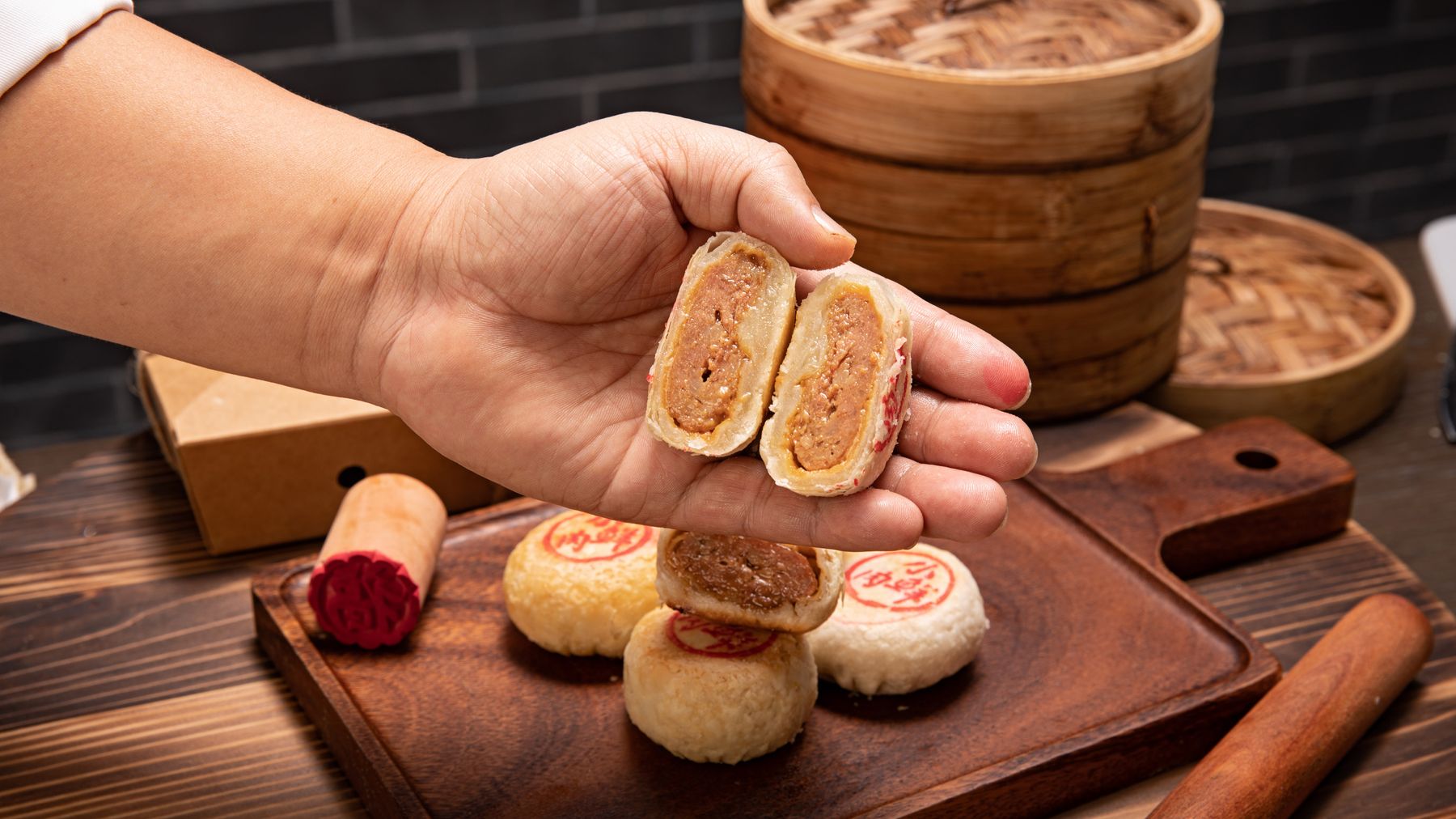
Photo by Change C.C on Pexels
Banh Nuong and Tet Trung Thu
You cannot fully understand banh nuong without understanding Tet Trung Thu, the Mid-Autumn Festival that falls on the 15th day of the eighth lunar month — usually mid-to-late September. It's a children's festival at its core: lantern processions, lion dances, and the exchange of mooncakes between families. The cakes are as much gift as food. Boxes are chosen carefully, wrapped in ribbon, stacked in front offices as corporate gifts, and left on altars as offerings.
Outside of the six-week Trung Thu season, banh nuong essentially disappears. A handful of specialty shops make them year-round by request, but the street-corner stalls, the department store pop-ups, the bakery display cases stacked three meters high with branded boxes — that's a seasonal phenomenon. Which is part of what makes it worth paying attention to.
Where to Try a Canonical Version
Kinh Do Bakery (Saigon (사이공 / 西贡 / サイゴン)): The city's most recognized mooncake brand, with outlets across Saigon. Their lotus-and-two-yolk version (around 85,000 VND for 150g) is consistent, well-balanced, and a reliable reference point. Not the most artisanal option, but it's the cake most Saigonese grew up with.
Bao Phuong Bakery, Thuy Khue Street (Hanoi): A single-shopfront institution on the lake-facing strip of Thuy Khue that draws queues stretching onto the pavement every Trung Thu. Their thap cam filling is the reason people line up. Expect to wait 20–40 minutes on peak evenings and pay 60,000–90,000 VND per cake. Worth it.
Dong Khanh Bakery (Hoi An): Smaller operation, central Vietnam, and less famous than the Hanoi or Saigon names — which is exactly why it's on this list. Their mung bean and single-yolk version uses local Hoi An ingredients and a recipe that hasn't chased trends. Around 45,000 VND per cake. Buy two.
Practical notes: Banh nuong season runs roughly from late August through the night of the Mid-Autumn Festival — after which most stalls close within 24 hours. If you're traveling Vietnam in September, budget 200,000–300,000 VND to try two or three variants side by side. Pair with lotus tea or Vietnamese coffee and cut each cake into eighths — it's richer than it looks.
Last updated · May 29, 2026 · independently researched, never sponsored.