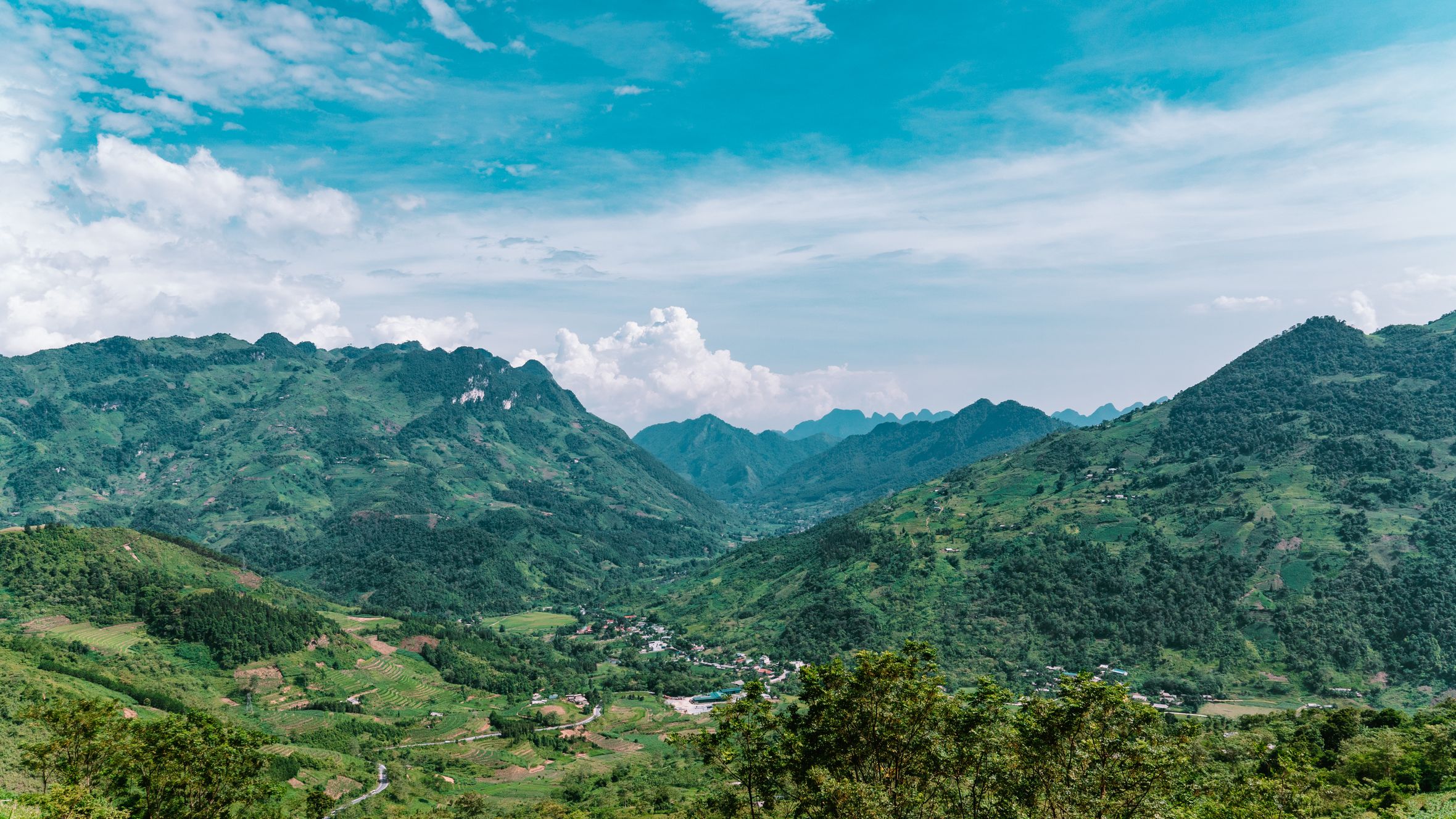
Sapa gets a lot of attention for its rice terraces and trekking trails, but the street food — especially once you move away from the main drag — is genuinely worth planning around. Mornings are cold here even in summer, which means the hot-bowl culture hits different at 1,700 meters above sea level.
The Market Zone — Sa Pa Town Center
The area fanning out from the central market (Cho Sa Pa (사파 / 沙坝 / サパ) on Cau May Street) is the densest concentration of eating in town. It's also the most chaotic between 6:00 and 9:00 AM, when H'mong and Dao vendors set up alongside local breakfast stalls.
What to eat here
"Pho" with a mountain twist. The pho around the market leans toward a darker, more intensely reduced broth than what you'd get in Hanoi — likely from longer bone cooking times suited to the altitude. Look for the stall cluster on the east side of the market building, identifiable by the stacked plastic stools and handwritten cardboard signs. A bowl runs 30,000–40,000 VND.
"Thang co". This is the dish that defines Sapa's ethnic food culture — a slow-cooked stew of horse or buffalo meat (sometimes pork) with organs, lemongrass, and mountain spices. It's not subtle. Thang co is H'mong in origin and you'll smell it before you see it. The best version in the market zone is sold by an older H'mong woman who sets up near the north entrance around 7:00 AM. She's usually sold out by 10:00. 50,000 VND for a bowl served with corn wine if you want it.
Grilled corn. Ubiquitous, cheap (10,000–15,000 VND), and exactly what you want when you're waiting for a table to open up. The vendors rotate around the market perimeter all morning.
Best time: 6:30 AM to 9:30 AM. The market zone quiets significantly by mid-morning as vendors pack up.
Muong Hoa Road Corridor
Heading southeast from town toward Muong Hoa Valley, the food stalls thin out but the quality stays high — this is where working locals eat lunch, not tourists. The walk from the town center takes about 15 minutes on foot.
What to eat here
"Banh cuon" stuffed with minced pork and wood-ear mushrooms. There's a family-run stall about 600 meters down Muong Hoa Road that's been serving these since the early 2000s. The crepe-like sheets are steamed to order and the dipping sauce has a distinctly funky, fermented edge — different from the Hanoi (하노이 / 河内 / ハノイ) style. Around 25,000–35,000 VND for a plate. Closed by 1:00 PM most days.
Grilled skewers. From around 11:00 AM onward, a few vendors along this corridor run small charcoal grills with pork belly, buffalo skin, and offal skewers. 10,000–20,000 VND per skewer. Pair with a cold Sapa beer if you're not on a tight schedule.
Best time: 10:30 AM to 1:00 PM. The lunch window here is short — most stalls wrap up by early afternoon.

Photo by Vika Glitter on Pexels
Ham Rong Mountain Foot — Hoang Lien Street
The streets immediately below Ham Rong Mountain, particularly along Hoang Lien and the lower end of Thach Son, come alive in the late afternoon. This is where the after-school and after-work crowd gravitates, which means the food is priced for locals: honest portions, no tourist markup.
What to eat here
"Bun bo Hue"-influenced noodle soup. One stall on Hoang Lien serves a spicy, lemongrass-forward noodle soup that draws obvious inspiration from the central Vietnamese version but uses local river herbs and a thinner broth. It's listed on a handwritten menu simply as "bun bo cay" (spicy beef noodle). 35,000–45,000 VND. Opens around 4:00 PM.
"Banh mi" with mountain pate. A small cart near the bottom of the Ham Rong access path sells banh mi stuffed with house-made pate — the pork here has a stronger, gamier flavor than lowland versions, likely from the diet of Sapa's mountain pigs. 20,000–25,000 VND. Runs from about 3:30 PM until sold out, usually by 6:30 PM.
"Bia hoi" doesn't have a permanent home in this neighborhood, but a rotating informal setup near the base of Hoang Lien draws a crowd of motorbike drivers and market workers from around 5:00 PM. A glass runs 5,000–8,000 VND. It's outdoor, it's loud, and the snacks (dried squid, peanuts, pickled vegetables) are excellent.
Best time: 4:00 PM to 7:00 PM. This stretch is essentially dead during the day.

Photo by Kirandeep Singh Walia on Pexels
A Few Practical Notes on Eating in Sapa
Cash only almost everywhere — bring small bills (10,000 and 20,000 VND notes). Most street vendors don't speak English beyond basic numbers, but pointing and gesturing works fine. Portions are smaller than Saigon or Hanoi equivalents, so budget to eat at two or three stalls per outing rather than committing to one large meal. In the rainy season (May through September), some outdoor stalls disappear for days at a time during heavy downpours — mornings are your safest window regardless of season.
Walking is the only sensible way to cover these neighborhoods. The market zone to Muong Hoa Road is about 20 minutes on foot; the Ham Rong area is a 10-minute walk from the market in the opposite direction. Sapa's town center is compact enough that you can cover all three zones in a single day if you pace yourself.
Practical notes: Sapa's altitude means the cold arrives earlier than you'd expect — by 6:00 PM in winter, eating outdoors requires a proper jacket. Weekends bring significantly more foot traffic to the market zone as visitors from Hanoi arrive on overnight trains; if you want the stalls to yourself, Tuesday through Thursday mornings are the quietest window.
Last updated · May 29, 2026 · independently researched, never sponsored.



