Hue residents eat breakfast with unusual seriousness. By 6am, the city's side streets and covered markets are already doing brisk business, and by 9am, half the stalls have packed up. If you sleep through this window, you've missed the best of what the city does.
The Soup You Should Know First
Hue (후에 / 顺化 / フエ)'s most famous breakfast soup is "bun bo Hue" — a beef and pork noodle soup built on a lemongrass-heavy broth with a sharp, fermented shrimp paste base. It's spicier and more complex than pho, and locals will tell you it tastes different here than anywhere else in the country. They're not wrong.
The round rice noodles come thick, the broth runs dark red-orange, and a good bowl will have sliced beef shank, a chunk of pork knuckle, and a few slices of "cha", a firm Vietnamese pork loaf. A table full of raw accompaniments — shredded banana flower, bean sprouts, saw-tooth herb, lime wedges — arrives alongside. You mix in what you like.
For a reliable bowl, head to Ba Do on Nguyen Du Street, open from around 5:30am. Expect to pay 35,000–50,000 VND. Banh Cong on Vi Da Ward is another long-running spot with a loyal neighborhood crowd. Both fill up by 7am, so arrive early or expect to wait on a plastic stool.
Sticky Rice, Done the Hue Way
"Xoi" — sticky rice — is the city's quiet second act at breakfast. Hue's version often comes with savory toppings: fried shallots, mung bean paste, shredded pork or "ruoc" (dried pork floss), and a thin drizzle of scallion oil. It's sold from baskets by women who set up along Tran Cao Van and Hung Vuong streets, usually from around 5:30am until the basket empties.
A serving — wrapped in banana leaf or scooped into a styrofoam container if you're unlucky — costs 15,000–25,000 VND. It's filling, takes two minutes to eat standing up, and is exactly what half the motorbike commuters grabbing food at the roadside are eating.
Some vendors also sell "banh chung" by the slice in the early morning, though that's more common around Tet. For sticky rice specifically, the stretch near Dong Ba Market is a reliable hunting ground.

Photo by Theodore Nguyen on Pexels
The Lighter Options
Not every Hue breakfast involves broth or rice. "Banh uot" — thin steamed rice sheets served with dried shrimp, fried shallots, and a light fish sauce dipping bowl — is a popular lighter option. It looks like "banh cuon" but isn't rolled; the sheets come flat and you eat them with chopsticks, dragging them through the sauce.
Look for banh uot carts along Le Loi Street and around the Vy Da neighborhood from 6am onward. Many vendors sell it alongside "banh beo", small steamed rice cakes served in their ceramic dishes with shrimp and scallion oil. Ordering a mix of two or three different items is normal — this is breakfast as a series of small plates rather than a single bowl.
For something closer to a snack, "banh mi (반미 / 越式法包 / バインミー)" appears at a few carts around the city, but Hue-style banh mi is rarely the star here. Locals eating banh mi for breakfast are usually grabbing it on the run, not lingering over it.
Where Coffee Fits
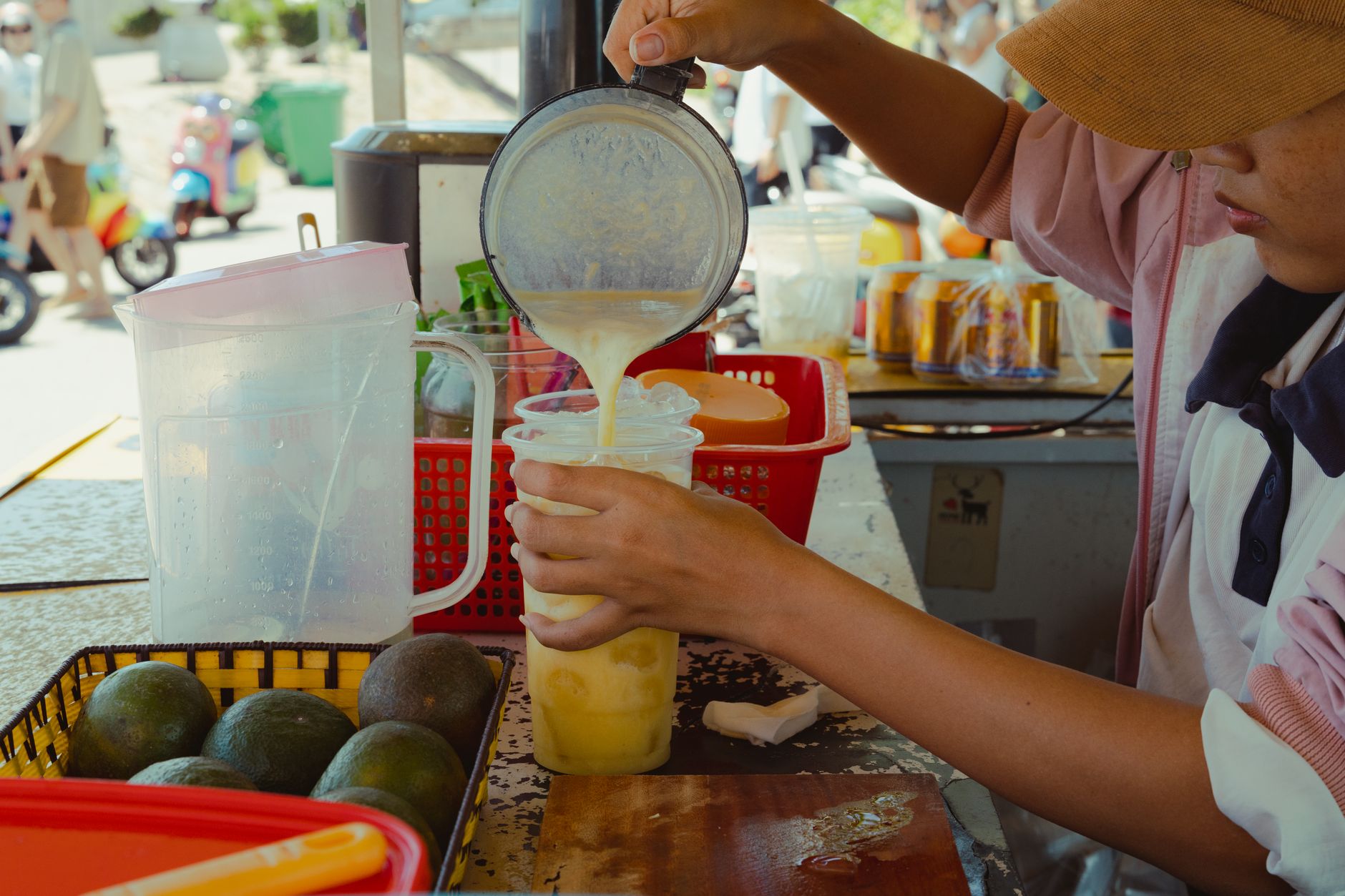
Hue has a real coffee culture, quieter than Hanoi or Saigon but deliberate. The city's older generation tends to drink "ca phe sua da" — iced coffee with condensed milk — or plain black drip coffee, seated at low plastic tables in front of shophouses.
The area around Nguyen Dinh Chieu Street has a cluster of old-school "ca phe" shops that open before 6am and fill up with retirees reading newspapers and motorbike drivers taking a break. A glass runs 15,000–20,000 VND. Nobody is in a hurry.
If you want something slightly more curated without going full tourist-cafe, Cong Ca Phe on Hung Vuong has consistent hours and reasonable prices, though the crowd skews younger. The point is to sit down, drink slowly, and watch the city organize itself in the early light.

Photo by Yuko Photography on Pexels
A Practical Route
If you want to eat the way a resident does, here's a workable order: Start at a bun bo Hue stall before 7am — Ba Do on Nguyen Du or whichever neighborhood stall is closest to where you're staying. Follow it with a short walk to find a banh uot cart and order one or two plates. Then find a street-side coffee shop and sit with a ca phe sua da until you're ready to move.
Total cost for the full run: 70,000–100,000 VND. Total time: about an hour and a half if you eat at a normal pace. The city feels different at this hour — cooler, less crowded, and less oriented around what tourists want.
Practical Notes
Most of Hue's best breakfast stalls operate 5:30am–9am and close when the food runs out, not when the clock says so. Cash only, almost universally. If a stall looks closed, check whether the vendor is just replenishing from a back kitchen — many restock once mid-morning.
Last updated · May 29, 2026 · independently researched, never sponsored.